

Twenty-three positions across seven zones — by-the-glass taps under argon, sparkling held at service temperature, flute polishing, an aperitivo station, small plates, POS and the signage out front. Every line is a catalog item you can open, read and price.
A sparkling-led bar. The equipment problem is narrower than a wine bar and harder: pressure. An open bottle of champagne loses its mousse in hours, so the dispensing wall and the service temperature do more for the list here than anything else on this page.
Quantities assume a 40-seat room with a four-meter counter. Flutes and coupes are picked separately — the shape changes what the wine does in the glass. Send the list and we adjust the counts before quoting.
Sparkling by the glass is a pressure problem, not a storage one. A dispenser under inert gas is what makes a serious list pourable one glass at a time.
Four taps per unit under argon. Eight open references at a time, each held under gas rather than a stopper — which is the difference between a glass worth its price on Friday and one poured from Tuesday.
Eight bottles with refrigeration and nitrogen built in. This is the wall for grower champagne, where a written-off bottle costs more than a night of glasses earns.
Four-bottle touchscreen unit for a self-pour tasting flight against a card.
Sparkling is served colder than still wine and drops out of condition faster when it is not.
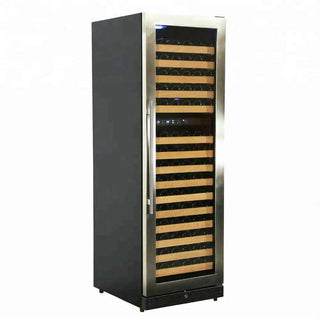
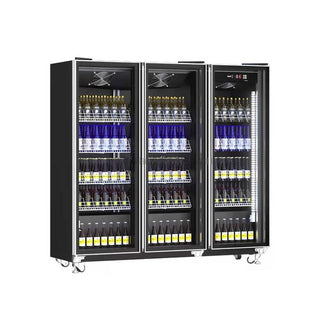
Dual-zone, 166 bottles each. Service stock held at six to eight degrees, so nothing is being rushed into an ice bucket ten minutes before it is poured.
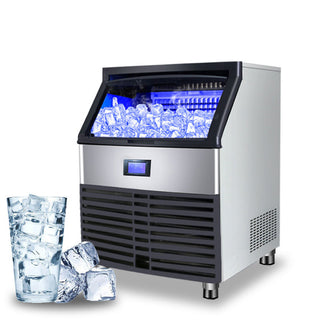
Cube ice for buckets. A champagne room goes through more ice than a cocktail bar of the same size and uses none of it in a drink.
Six-bottle chiller with three spouts on the counter — the fast lane for the house pour, at temperature and in reach.
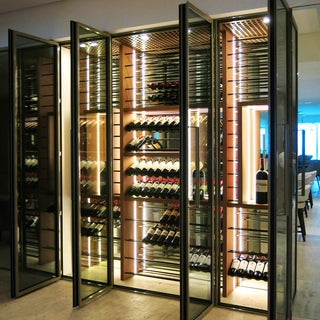
Built to your wall and priced by the square meter — storage and the room feature in the same square meters.
A flute shows every mark. This is the zone where a champagne bar quietly wins or loses.
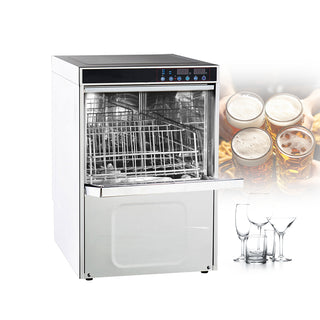
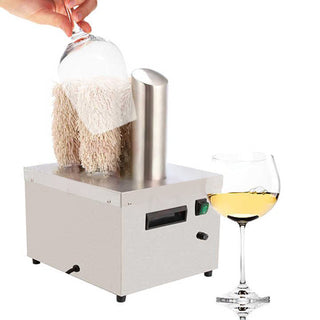
Front-loading machine on a short, gentle cycle for stemware.
Polisher for every glass leaving the machine. Detergent residue kills the bead — a polished flute is not a nicety here, it is what makes the wine behave.
The rest of the mix: spritz, cocktails built on sparkling, and something for whoever came along.
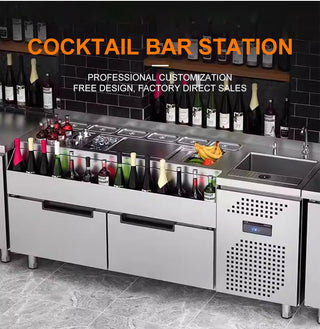
Refrigerated wells, bottle pockets and ice bin built to your counter length.
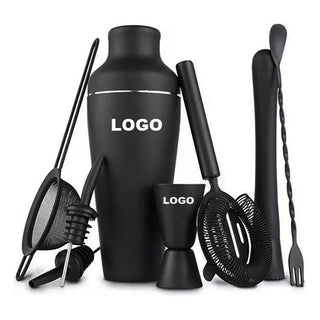
Full kit per station, plus the spares that go missing.
Back-bar cooler for mixers and the next round chilling down.
Enough food to keep a table sitting, not a kitchen.
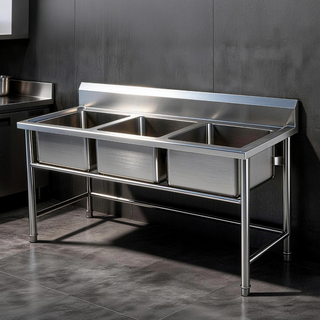
Three bowls for the wash, rinse and sanitize sequence an inspection expects to see.
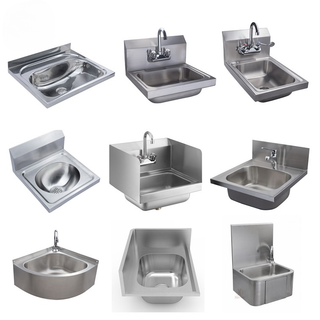
Wall-mounted hand sinks at every station. Five is the number that stops anyone washing hands in a prep sink.
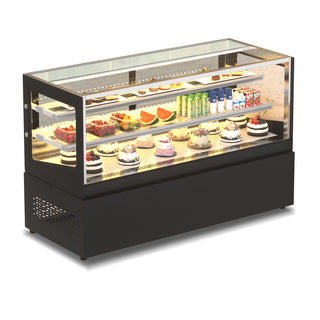
Refrigerated display for oysters, cheese and cured meat at the counter.
The part guests remember without being able to name it.
The till, the printer and the card terminal in one body — no separate boxes under the counter fighting for a socket.
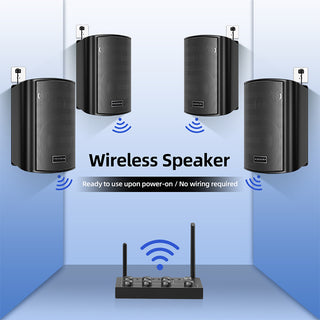
Background music wired as one zone across the room.
Scent diffuser on the air handling — held at a level that reads as the room rather than as a product.
Glass pendants over the counter. The light in the glass is half of what sparkling looks like.
What the street sees before anyone reads a menu. Signage is the last thing installed and the first thing a guest reads, so it belongs in the build list, not in the "later" pile.
Illuminated fascia sign plus the secondary plates — entrance, terrace, delivery door. Round faces read from an angle, which is what a sign on a side street has to do.
Double-sided pavement sign that charges itself — no trench, no electrician, no landlord conversation about running a cable to the kerb.
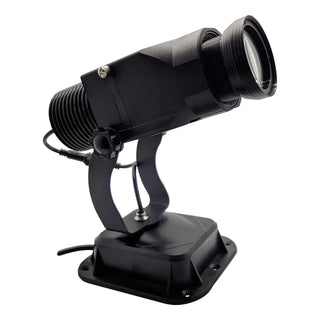
Indoor logo projector for the entrance and the bottle wall.
The glass slide that carries your logo. Projectors ship without artwork — this is the part that makes the light on the pavement say your name.
Flute, tulip and coupe are three different drinks out of the same bottle — the flute holds the bead, the tulip opens the nose, the coupe throws both away for the look of it. We stock the forms; pick the ones your room is actually for and we price them with the order.
Catalog prices at the quantities listed, excluding shipping, duties and installation. Send a request and we confirm current pricing and lead times for your build.
Request received
We are pricing the setup now and will come back with a quote and lead times, usually within one business day.
That did not go through
Something broke on the way to us. Try again, or write to sales@barequip.pro and we will pick it up from there.