

Twenty positions across six zones — a stone deck oven with extraction, spiral dough mixing, a refrigerated pizza prep table, cold storage, warewashing, drinks and POS. Every line is a catalog item you can open, read and price.
A pizzeria is an oven, a dough process and a cold prep line. Everything else is support. The setup below covers all three properly — a stone deck for the bake, a spiral mixer for the dough, and a refrigerated prep table so the build happens where the oven is.
Quantities assume a 60-seat room doing roughly 150 pizzas a service from one oven. Plates and packaging are picked separately, since they follow whether you sell mostly in or mostly out. Send your floor plan and the covers you expect, and we adjust the counts before quoting.
The bake decides the product. Stone base for the crust, and a conveyor only when volume demands it.
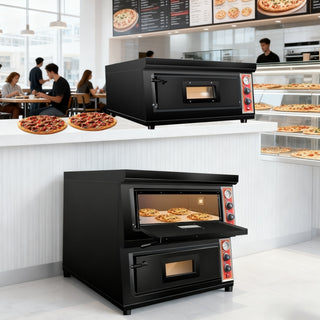
Stone-base deck oven, electric or gas. Bottom heat through stone is what produces a leopard-spotted base — a fan oven never gets there, whatever the temperature reads.
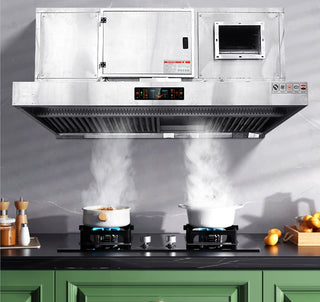
6000 m³/h over the oven line. Deck ovens push heat into the room all service, and extraction is what keeps the kitchen workable and the license valid.
A conveyor for a delivery operation — consistent bake without a pizzaiolo watching the deck, at the cost of the crust a deck gives you.
Dough is the pizzeria's only real recipe. It needs its own machine and its own cold space.
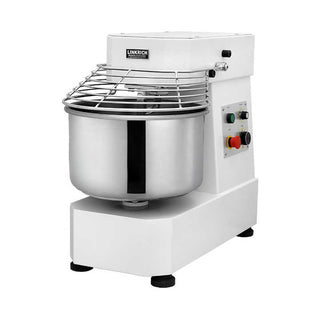
20 to 50 liters of spiral mixing. The hook develops gluten without heating the dough, which is exactly what a long-fermented pizza base needs.
10 to 30 liters for the dessert side and the sauces — a second machine so the dough bowl is never the bottleneck.
The build line. A pizza is assembled in fifteen seconds, and only if everything is within arm's reach and cold.
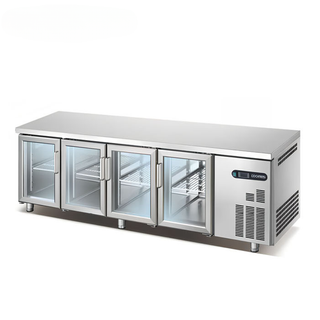
Refrigerated worktop with four doors underneath — toppings in the well, dough trays below, directly next to the oven mouth.
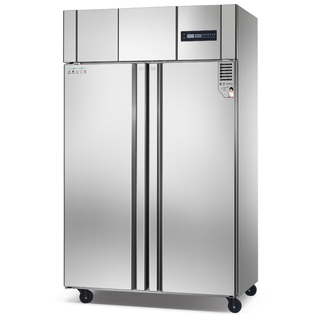
Double-door reach-in for cheese, dough trays in bulk and the day's prep.
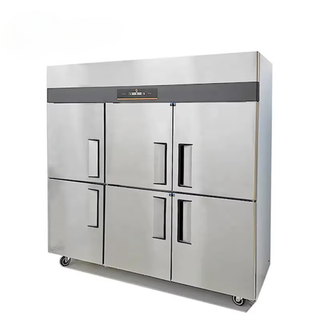
Reach-in freezer for stock, desserts and the frozen half of the menu.
850 W slicer for salumi and cured meats. Slicing to order is what separates a pizzeria from a takeaway.
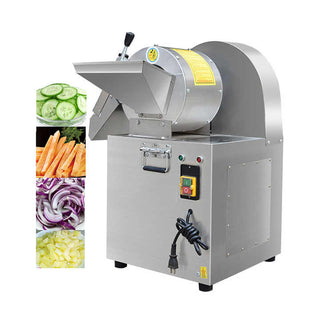
300 to 800 kg/h of vegetable prep for a kitchen that also runs a salad and antipasti list.
A short bar: soft drinks, beer, wine and coffee after the meal.
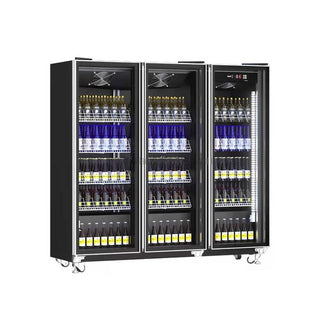
Three glass doors of bottles and cans in the guest's eyeline — the drinks list sells itself from the front of the room.
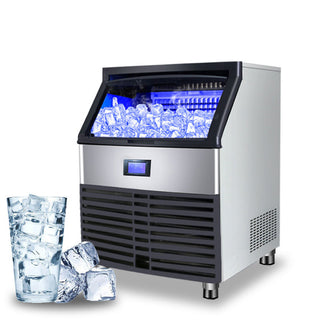
80 to 120 kg a day for soft drinks and the summer terrace.
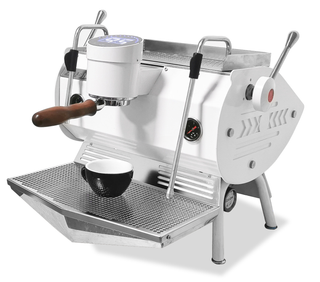
One or two groups for espresso after dinner. In an Italian room this is not an accessory, it is the last course.
Baked-on cheese and flour: the dish pit works harder here than the plate count suggests.
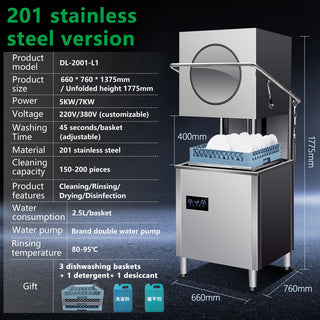
A rack a minute for plates, trays and pans. Hood-type is the smallest machine that keeps up with a full pizzeria service.
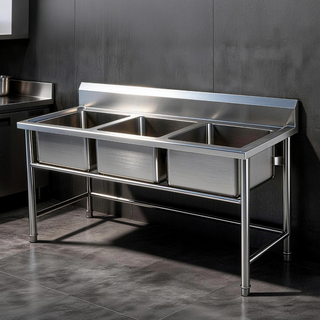
Wash, rinse and sanitize for dough bowls, peels and everything that never goes in a machine.
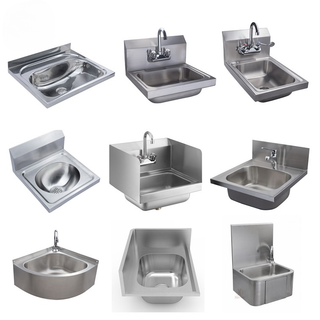
Hand sinks at the prep line, the oven and the wash-up. The fixture most often missing at a first inspection.
Ordering, payment and delivery tickets, which in a pizzeria are usually the same queue.
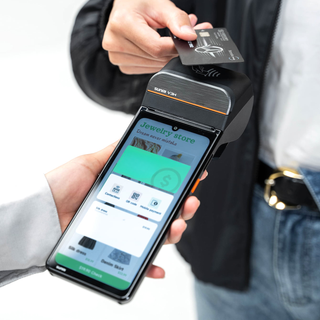
Dual screen with a built-in printer. Standard Android POS software, so the menu and delivery integrations stay yours.
Handhelds for the floor — orders fired from the table hit the oven queue immediately.
Screen menu for a counter that also sells by the slice.
Vinyl-upholstered booth runs — the seating format a family pizzeria is usually built around.
A pizzeria's plates and boxes follow its trade — a room that delivers half its covers buys differently from one that does not. We stock both sides and price them with the rest of the order.
Catalog prices at the quantities listed, excluding shipping, duties and installation. Send a request and we confirm current pricing and lead times for your build.
Request received
We are pricing the setup now and will come back with a quote and lead times, usually within one business day.
That did not go through
Something broke on the way to us. Try again, or write to sales@barequip.pro and we will pick it up from there.