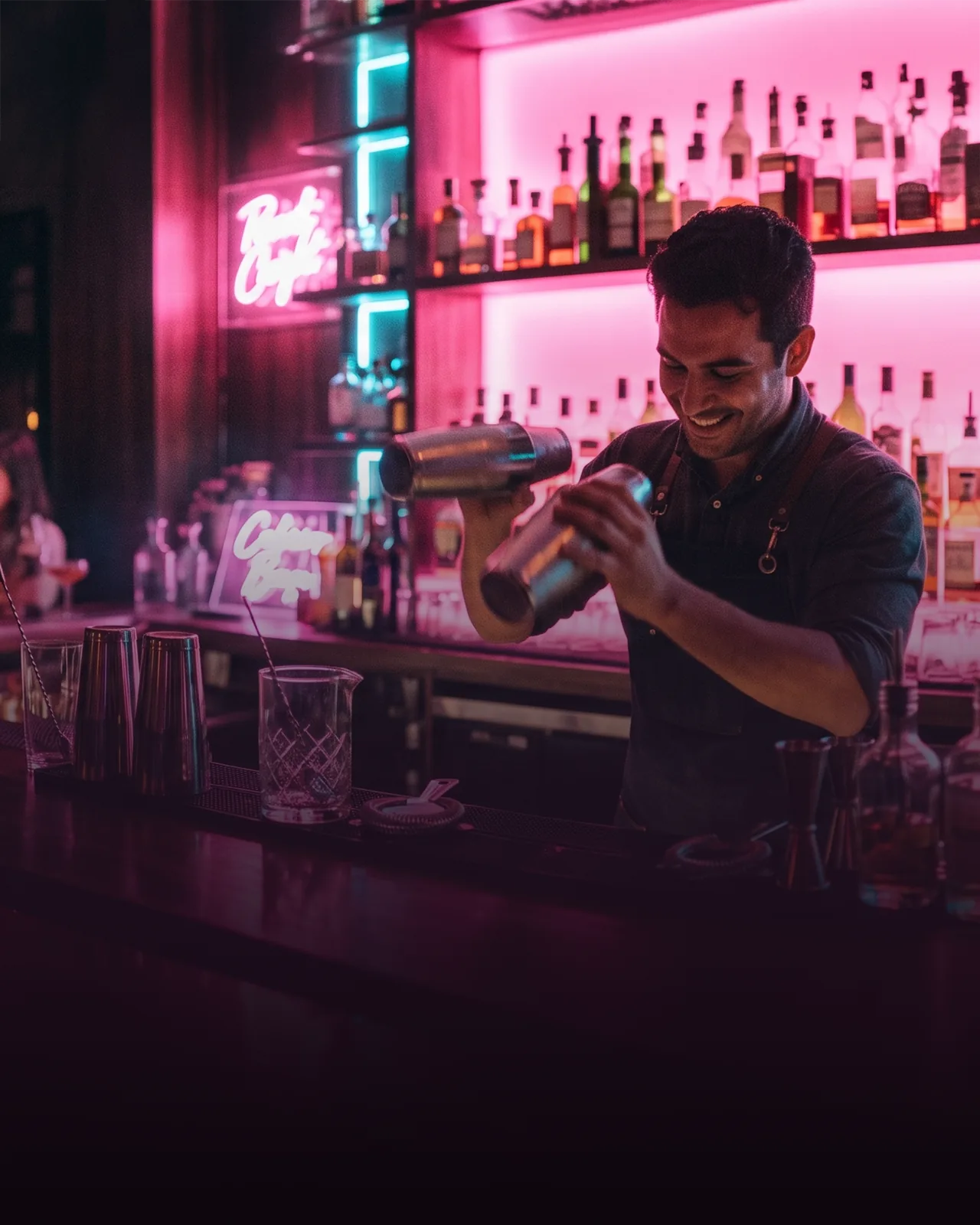


In short: how to open a private members club is a subscription business with a bar attached. Members pay monthly whether they come or not, which means the room has to feel right at eleven people on a wet Tuesday — and almost every equipment decision follows from designing for that night rather than for a full house.
Every other hospitality format is judged on its busiest night. A club is judged on its emptiest one, because that is the night a member decides whether the annual fee is worth renewing.
That single inversion changes the plan. A restaurant sizes for peak throughput; a club sizes for atmosphere at low occupancy, for storage that makes members feel resident, and for service that can be delivered properly by one person on a slow evening.
Members pay for the room being there
The subscription is the product. What a member buys is the certainty that on any given evening there is a good room, with their things in it, where they will not have to queue, and where the people are the ones they want to be around.
Consumption is secondary, and that is the part operators get wrong. A club that pushes spend per head starts to feel like a bar with a door policy, and the moment it does, the fee stops making sense — because a bar is available to everybody at no annual cost.
So the commercial model runs in this order: recruit and retain members, keep the room worth belonging to, and let spend follow. Churn is the number that matters most and the one least often modelled at planning stage.
Design for eleven people, not for a hundred
A room built for a full house feels abandoned when it is a fifth full, and that is what most evenings look like. The fix is architectural and cheap if decided early: break the space into zones that each work at their own scale, so eleven people fill something rather than scatter across everything.
Booths and enclosed seating do more for this than any other single purchase. They give a small group a room within the room, and they make a half-empty floor read as intimate rather than as quiet.

Lighting does the other half. Low, layered light with pools rather than an even wash makes an empty corner disappear instead of announcing itself, and a projected pattern on a plain surface does more for a wall than art at a fraction of the cost.

The bar has to run well on one person
On a quiet evening there is one bartender, and they are also the person greeting members, running food to a table and answering the door. The bar has to be laid out so that is possible without anything being done badly.
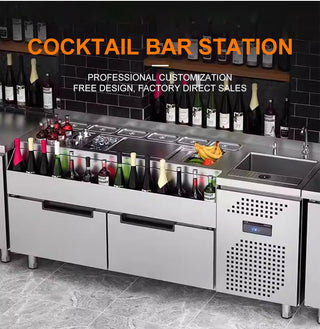
That means a station where everything for the club's most-ordered drinks is within one arm's sweep, chilled product under the pour point, and no walking. A made-to-order refrigerated underbar station is worth the lead time here precisely because a club's drink list is unusually specific to its members.
Draft beer is worth thinking about carefully. A club rarely sells enough of it to keep several lines fresh, so one or two taps that turn over properly beat six that do not — the same arithmetic a taproom runs on, at a much smaller scale.
Wine by the glass is the format's real problem: members expect a serious list, and a serious list opened by the glass at low volume goes to waste. A preservation dispenser under inert gas holds opened bottles for weeks rather than days, which is what makes an ambitious by-the-glass offer possible in a room with eleven people in it.

Member storage is a product, not a cupboard
The single most effective retention device in this format costs very little: somewhere with a member's name on it.
A whisky locker, a numbered wine bin, a cigar humidor space — anything that means part of the club physically belongs to that member. It converts a subscription into a possession, gives them a reason to come in rather than go elsewhere, and it is the thing they mention when someone asks about the club.
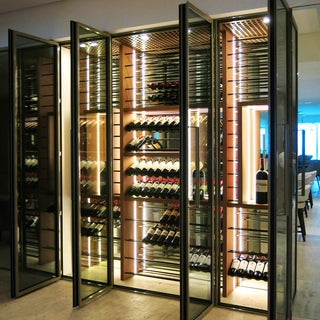
Where the room is smaller, a back-bar rack does the same job visibly rather than privately — members' bottles on display, named, is a wall that recruits.

Two practical notes. Storage has to be secured and recorded, because you are holding other people's property. And in most jurisdictions a member's own bottle being served back to them is straightforward, while anything that looks like storing stock for resale is not — worth confirming locally before offering it.
Consistency beats range
A member visits fifty times a year. What they want is the same negroni, the same table, the same person recognising them — not novelty.
That points the whole operation away from breadth. A short drinks list executed identically every time, a small food menu that never runs out, and staff retained long enough to know names. Staff churn is more damaging here than in any other format, because familiarity is the thing being sold, and it is worth paying above market to avoid it.
Glassware is part of the same argument. A club is exactly the room where crystal earns its place — low volume, careful handling, and a guest paying for the occasion. Buy a defined set for the top-shelf list rather than one grade for everything.
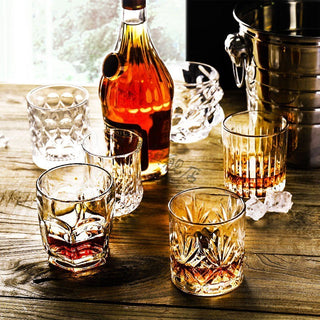
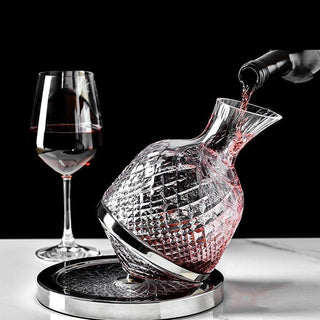
And a decanter on a table does more for a bottle service than any amount of presentation elsewhere — it is the visual difference between a drink and an occasion.
Privacy is an equipment question too
Discretion is most of what a member is buying, and it is delivered by physical decisions rather than by rules on a wall.
Sightlines first: no seat should be visible from the street, and ideally a member should not be able to photograph one table from another without it being obvious. Sound second: soft surfaces and separated zones so conversations do not carry — an acoustically live room is one where nobody says anything interesting.
A phone and camera policy is standard and only works if the room supports it. Enforcing "no photographs" in a bright open space is a fight; in a low-lit room of booths it barely needs saying.
Food: the smallest kitchen that keeps people in the building
Clubs consistently overbuild the kitchen. A full à la carte operation needs volume to justify the brigade, and volume is precisely what a members club does not have on a Tuesday.
The right answer is usually a short menu built around a limited cooking line — things that hold, reheat or assemble well, plus one or two properly cooked dishes. What it has to do is stop a member leaving at eight o'clock to eat somewhere else, because the member who leaves to eat frequently does not come back afterwards.
Scale it up later if the demand appears. A kitchen is far easier to extend than to unwind.
How to open a private members club: where the money goes
Fit-out is the dominant cost and it is front-loaded, because the room has to be finished before the first member joins — you cannot open modestly and improve, since the first impression is the sales pitch.
The revenue side has an unusual shape. Founding memberships sold before opening are how most clubs fund the fit-out, and they are also the honest market test: if a hundred people will not pay in advance for a room they have not seen, the concept needs work rather than a bigger loan.
Model churn explicitly. A club with a thousand members and thirty per cent annual churn needs three hundred new members a year just to stand still, and recruitment is a permanent cost line rather than a launch activity.
Licences: being private is a legal status, not a door policy
United Kingdom. Two routes and they are genuinely different. A Club Premises Certificate under the Licensing Act covers a qualifying members' club supplying alcohol to members and their guests — no Designated Premises Supervisor and no Personal Licence required, but the club must be genuinely non-profit-making in its constitution, with at least twenty-five members and a two-day interval between application and admission. Most modern commercial clubs do not qualify and instead hold an ordinary Premises Licence with a members-only operating model layered on top. Choose the route deliberately: the certificate is cheaper and more restrictive, and the constitution decides which one is available to you.
United States. Most states have a distinct club licence class through the ABC board, usually cheaper than a full on-premises licence and carrying real conditions: guests must be signed in by a member, alcohol cannot be served to the public, and in some states a waiting period between joining and being served. In quota states this can be the practical route to a licence when full liquor licences are unavailable.
United Arab Emirates. A trade licence with F&B activity and eligible zoning, with alcohol tightly controlled through Dubai Police GHQ and the Department of Economy and Tourism, or the DCT in Abu Dhabi — service is generally confined to hotels and licensed venues, which frequently decides the site. Add Dubai Municipality food and ventilation inspections, Civil Defence clearance, health cards for food handlers and SIRA licensing for security staff.
In all three, the recurring trap is the guest policy. A private club that in practice admits anyone who books is not private, and licensing authorities look at what actually happens rather than at the wording of the membership scheme.
What breaks in year one
The first hundred members are friends, and the second hundred are the business. Clubs that fill quickly on goodwill often discover in month eight that they have no recruitment engine, because nobody built one while it was easy.
The room gets busy and the founding members stop coming, which is the paradox at the centre of the format: the thing they paid for was not being crowded. Capping membership against capacity is a decision to make early, in writing.
And the staff who knew everyone's name leave, taking the reason people renewed with them. That is the cost line to protect above almost anything else on this page.
Planning a room that has to work at a fifth full? Tell us the size of the space and the membership you are targeting, and we will spec the bar, the storage and the seating around low-occupancy service.


