

Most restaurant wine lists pour well from two glasses, one universal bowl for still wine and one for sparkling. Separate red and white shapes pay off for pairing menus; elsewhere they mostly add stock to wash and break.
Every extra glass shape in a restaurant means another stock count and another row in the glasswasher rack. Buying wine glasses for restaurants therefore starts with the wine list, and then with a harder question: how many of those glasses will be on tables or in the washer at nine on a busy Saturday, and how many will be broken by Sunday.
Shape still matters to the wine. A bowl that is too small for a full red crushes its aroma, and a flute that is too narrow hides a good champagne. But the gap between a well-chosen universal glass and a full set of specialist shapes is smaller than the catalogs of glass makers suggest, and the costs of running three shapes are real from the first week.
Can one universal glass serve a whole wine list?
For most restaurants, yes, as long as sparkling gets its own glass. A universal bowl of roughly 400–500 ml with a slight inward taper suits whites and rosé as well as most reds, and only a trained palate will notice what it gives up.
The size matters more than the silhouette. A standard pour of 125–175 ml should fill the glass to about a third, near the widest part of the bowl, so the wine has room to be swirled and the aroma collects above it. A 300 ml glass filled halfway with a 150 ml pour looks generous on the table and gives the wine nothing to work with.
Where one shape starts to fall short is at the edges of the list. Old Burgundy and aromatic Pinot Noir open up in a wide balloon bowl. Dessert wines and fortified pours are served in 60–90 ml measures that look lost in a large glass. Sparkling loses its bubble faster in a wide bowl, which is why even the most minimal glass program keeps a flute or tulip; our guide to choosing champagne glasses covers that choice in detail.
| Glass program | What it covers | Where it falls short | Suits |
|---|---|---|---|
| One universal shape plus sparkling | Still wine of every color in one 400–500 ml bowl | Big aromatic reds, small dessert pours | Bistros, casual dining, lists under about 40 wines |
| Red and white shapes plus sparkling | A larger bowl for full reds, a smaller one for whites | Doubles the par and the rack space for still wine | Restaurants with a sommelier or a strong bottle list |
| Full set with specialist bowls | Burgundy balloon, Bordeaux bowl, white, sparkling, dessert | Five stock counts, five breakage lines, slow polishing | Fine dining with pairing menus |
| Unbreakable metal or acrylic | Wine on terraces and at outdoor events | The guest cannot see the wine's color | Outdoor areas where glass is a risk |
When separate red and white shapes earn the extra rack
They pay off when the wine does more of the selling. The clearest signs are that bottles account for a large share of wine revenue, a sommelier or trained server presents the wine at the table, or the menu offers pairings where several glasses sit in front of each guest at once.
The reverse is just as clear. A restaurant selling mostly house wine by the glass gains almost nothing from a second still-wine shape and pays for it in stock and handling. Put that money into a better universal glass with a thinner rim, which every guest feels on every pour.
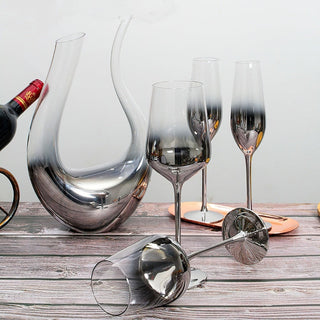
A matched line makes the two-shape step easier to manage. The Liquimetal range comes as a wine glass, a champagne glass and a decanter in one clear crystal design, so a restaurant can start with the wine glass and the flute and add the decanter for the bottle list without mixing styles on the table.
The hourglass range works the same way at a smaller size. Its tall red-wine and champagne versions hold 200–300 ml, with golden-finish variants of both, which makes them better suited to whites and sparkling than to a full-bodied red that needs a big bowl.
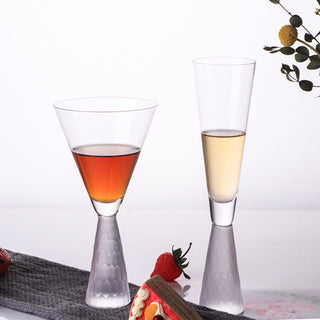
A coupe earns shelf space when the bar serves sparkling cocktails or builds champagne towers for events. This hand-blown, lead-free crystal coupe holds 240 ml and is sold in quantities that match a restaurant's stock order, with clear or pink glass and a printed logo available.

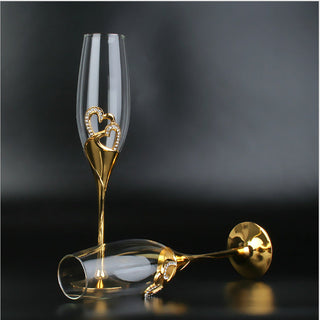
Beyond the working shapes, some restaurants keep a small stock of statement glasses for occasions. Boxed pairs of gold champagne glasses make sense for anniversaries and New Year's Eve packages, and seasonal airbrushed glasses at 575 ml can carry a signature serve. Neither belongs in the daily par; they are the glasses brought out when a table has booked a celebration.
Crystal against ordinary glass is a separate decision from shape, and our guide to crystal glassware for bars covers where the thinner rim justifies the breakage and hand-washing.
Where restaurant wine glasses break, and how to wash them
Most wine glasses leave service with a chipped rim, well before any of them shatter. A chip is a cut lip waiting to happen, so any glass with one goes in the bin, and in a busy room that retires more stock than drops on the floor.
Chips start at clearing. Glasses carried back in the same tub as plates and cutlery knock rims on every step, so the single cheapest fix is a separate glass tray or rack at every station, with glasses loaded upright and apart. Stacking wine glasses bowl-in-bowl to save a trip does the same damage faster.
The washer is the next check, and it starts with a tape measure. Before buying tall stems, compare the height of the glass with the clearance inside the machine's rack; a 220 mm glass will not stand upright in a machine built for tumblers, and glasses laid at an angle knock together through every cycle. A bar glasswasher with a short cycle also shrinks the number of glasses you need, because each one is back on the shelf sooner; the machines in our glasswashers and polishers collection finish with a hot rinse at around 85 °C that sanitizes without hand-drying.
Hard water leaves a film that makes even new glasses look cloudy, and most restaurants end up polishing every wine glass by hand. That is where stems snap. A glass polishing machine dries and buffs the bowl without anyone twisting a cloth around the stem, and it saves a server a large part of the closing shift on a room with a hundred-plus glasses.
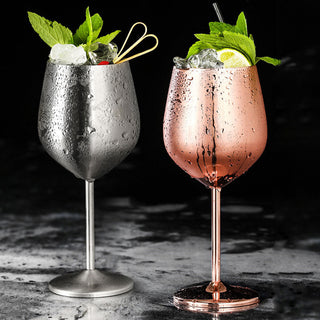
For a terrace or a pool deck, the practical answer is a glass that cannot break. This 520 ml stainless steel wine glass stands 220 mm tall and comes in plain steel as well as gold and rose-gold finishes. The guest cannot see the wine through it, which matters less at a garden party than at a tasting dinner.
Stocking wine glasses for restaurants: how many per seat?
About two per seat for the main still-wine shape in a room that turns its tables once or twice a night, and far fewer for sparkling. At peak, a glass is either on a table, somewhere in the wash loop, or in reserve for breakage, and the par has to cover all three.
On a full Saturday, assume every seat has a wine glass in front of it. The wash loop, meaning every glass between the table and the shelf, usually holds another half of that. A reserve of about a quarter of the in-use count covers breakage between orders. The sparkling glass follows the same logic at a lower share, because only some of the room drinks sparkling at the same moment.
| Seats | Universal glass (in use + wash loop + reserve) | Universal par | Sparkling par (a quarter of seats drinking) |
|---|---|---|---|
| 40 | 40 + 20 + 10 | About 70 | About 18 |
| 80 | 80 + 40 + 20 | About 140 | About 36 |
| 120 | 120 + 60 + 30 | About 210 | About 54 |
These are planning figures, and two things move them. A pairing menu multiplies the in-use count by the number of glasses on the table at once, so a four-glass pairing in an 80-seat room needs several hundred still-wine glasses. A glasswasher that sits far from the floor stretches the wash loop, and a room with one machine for plates and glasses stretches it further, because glasses queue behind the dinner rush.
Order the reserve from the same line as the working stock and keep it boxed off the floor. A glass that is replaced with a slightly different model turns one shape into two, and the whole reason for a short glass program disappears one broken glass at a time.
Before you place the order
- Write down the pour sizes first. A list poured at 125 ml and 175 ml needs a bowl big enough for the larger pour to sit at a third. In the UK, still wine by the glass is sold in 125 ml or 175 ml measures or their multiples, and the 125 ml option has to be offered.
- Measure the glasswasher. Rack clearance decides which stems you can buy, and it is easier to choose the glass than to replace the machine.
- Test a sample in service. Put a dozen glasses through a week of real washing and polishing before committing to several hundred.
- Keep the decorative glasses separate. Hand-decorated and gold-finished pieces usually belong in hand-wash only, which makes them event stock rather than daily stock.
The full range of bowls and flutes is in our wine and champagne glasses collection, and the wider glassware range covers decanters and the rest of the bar. For cocktail shapes, see our guide to types of cocktail glasses.
Working out a glass order for a new room? Send us the seat count, the wine list and how you wash glasses, and we will suggest shapes and quantities that fit your service.


