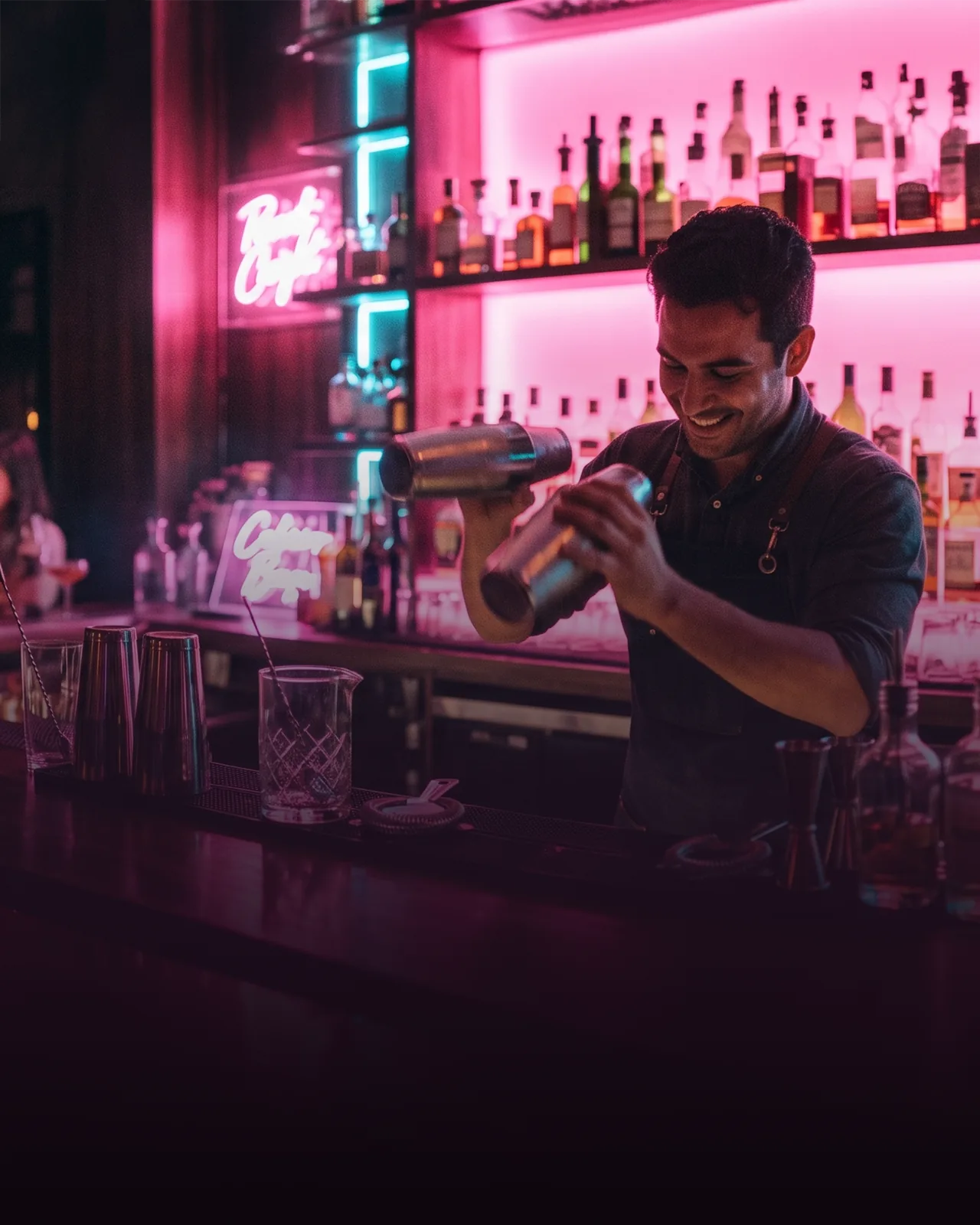


Choosing a gobo projector comes down to four things: how far it has to throw, whether it lives indoors or outdoors, whether the image moves, and how many designs you need. Here is how to match wattage, IP rating, rotation, and slide count to your venue.
A gobo projector throws your logo, a promo, or a decorative pattern onto a floor, wall, or building facade using an LED light and a printed slide. The catch is that the same idea comes in models from 15 watts to 400 watts and from $265 to over $4,000 — and picking the wrong one is expensive in both directions. Too weak and your logo washes out on a lit patio; too powerful and you have paid facade money to light a bar floor. This guide walks through how gobo projectors are graded, the specs that actually decide the buy, and which type fits which venue.
What are the main types of gobo projector?
Gobo projectors are graded first by wattage, because power sets how far the image throws and how well it holds up against ambient light. Everything else — weatherproofing, rotation, slide count — sits on top of that. Here is how the range breaks down:
| Power | Throw distance | Indoor / outdoor | Best for | Price band |
|---|---|---|---|---|
| 15–25W | 1–10 m | Indoor (IP20) or weatherproof (IP65) | Bar and restaurant interiors, logo on a nearby floor or wall | $265–$575 |
| 30–55W | 2–55 m | IP65 available | Large interiors, patios, entrances, mid-range facades | $518–$1,093 |
| 80–150W | up to 80–150 m | IP65 | Building facades, large venues, streetside branding | $1,081–$2,185 |
| 200–400W | up to 250 m | IP65 | Long-throw facades, big installations, projects | $2,001–$4,175 |
Most bars and restaurants live in the top two rows. The high-wattage models exist for buildings and long throws, not for a logo on the floor by the bar — so the first decision is honest about distance and light, not about buying the brightest box.
How much power does a gobo projector need?
Match the wattage to your throw distance and the light in the room — that is the single most important call. A 15W unit throws a crisp image 1–10 metres, which covers most indoor logos and floor projections. Step up to 30–55W for a large room, a patio, or a short facade throw, and to 80–400W only when you are lighting a building from across a street or car park, where the image travels 80 to 250 metres.
Ambient light matters as much as distance. A projector that looks sharp in a dim lounge can wash out on a sunlit terrace, so err up a tier for daylight or brightly lit spaces. Two practical notes that ride along with power: lower-wattage units cool passively and run silent, which suits a quiet dining room, while higher-wattage models use active cooling with a small fan; and the higher-power units take a larger slide (48mm vs the standard 37mm), which affects the artwork you order.
Indoor or outdoor, static or rotating: the other specs
Once power is settled, three specs decide the rest of the fit:
- IP rating — indoor or outdoor. IP20 models are for dry interiors only. Anything outdoors, on a facade, or in a humid area (a terrace, a pool bar) needs an IP65 weatherproof body, or it will not last a season.
- Static or rotating. A static projector holds one fixed image — ideal for a logo. A rotating model spins or animates the projection for a moving effect, which draws the eye on a dance floor or an entrance.
- Single or multi-slide. Single-slide units show one design until you swap the slide by hand. Multi-slide models hold 3, 4, 6, or 9 gobos and change automatically on a timer (a 5–45 second delay), so you can rotate happy-hour, seasonal, and branding messages without touching the unit.
Higher-tier models add a remote, dimming, and strobe. And one piece people forget in the spec sheet: the image itself. The gobo slide is a separate custom part — a full-color photographic print on tempered glass, from $46 — so budget for the slide (or a set of them) alongside the projector.
Which gobo projector is right for your venue?
Start from what you are lighting and where, then the model picks itself. Common cases:
A logo on the floor or wall inside the bar. A 15W indoor unit is plenty at 1–10 metres — silent and compact. The 15W indoor gobo projector from $265 is the straightforward pick.
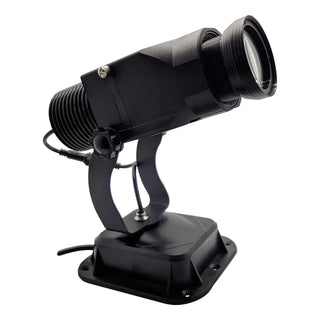
A patio, entrance, or facade exposed to weather. Step up to an IP65 body sized to the throw — a 30–55W model for a short facade, more for a taller building. Rotating promos across the season are where a multi-slide unit earns its price: the 40W 3-slide projector cycles designs automatically, no ladder required.
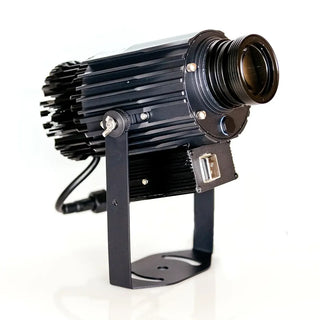
Streetside branding on a building. This is where the high-wattage models belong. A 150W IP65 projector with image rotation throws a sharp, animated logo across a facade at distance — the tool for making the building itself the sign.
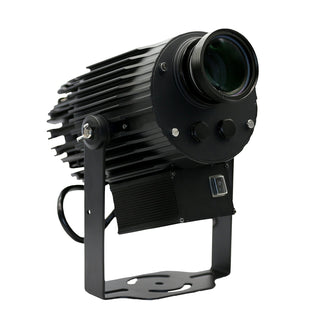
Between those, match the tier to your distance and light: interiors and close throws stay in the 15–30W range; patios and short facades in the 30–80W range; and full buildings in the 150W-and-up range. When two tiers feel close, size up for daylight and down for a dim room.
Common mistakes when choosing
- Under-powering for the light. A unit that looks bright in a dim showroom washes out in daylight. Size the wattage to the actual space, not the demo.
- Using an indoor model outdoors. IP20 will not survive a terrace or facade. Weatherproofing is IP65 or nothing outside.
- Forgetting the slide. The projector is only the light; the image is a separate custom slide. Order the artwork with the unit, not after.
- Over-buying wattage. A 150W projector on a bar floor is money spent on throw you will never use. Match the tier to the job.
- One slide when you needed several. If you plan to rotate promos or seasonal themes, a multi-slide model saves you swapping gobos by hand every week.
Not sure which tier fits your space? Tell us the throw distance, whether it is indoors or out, and whether you want one logo or rotating designs — and we will point you to the right wattage and model, plus the slide to go with it.


