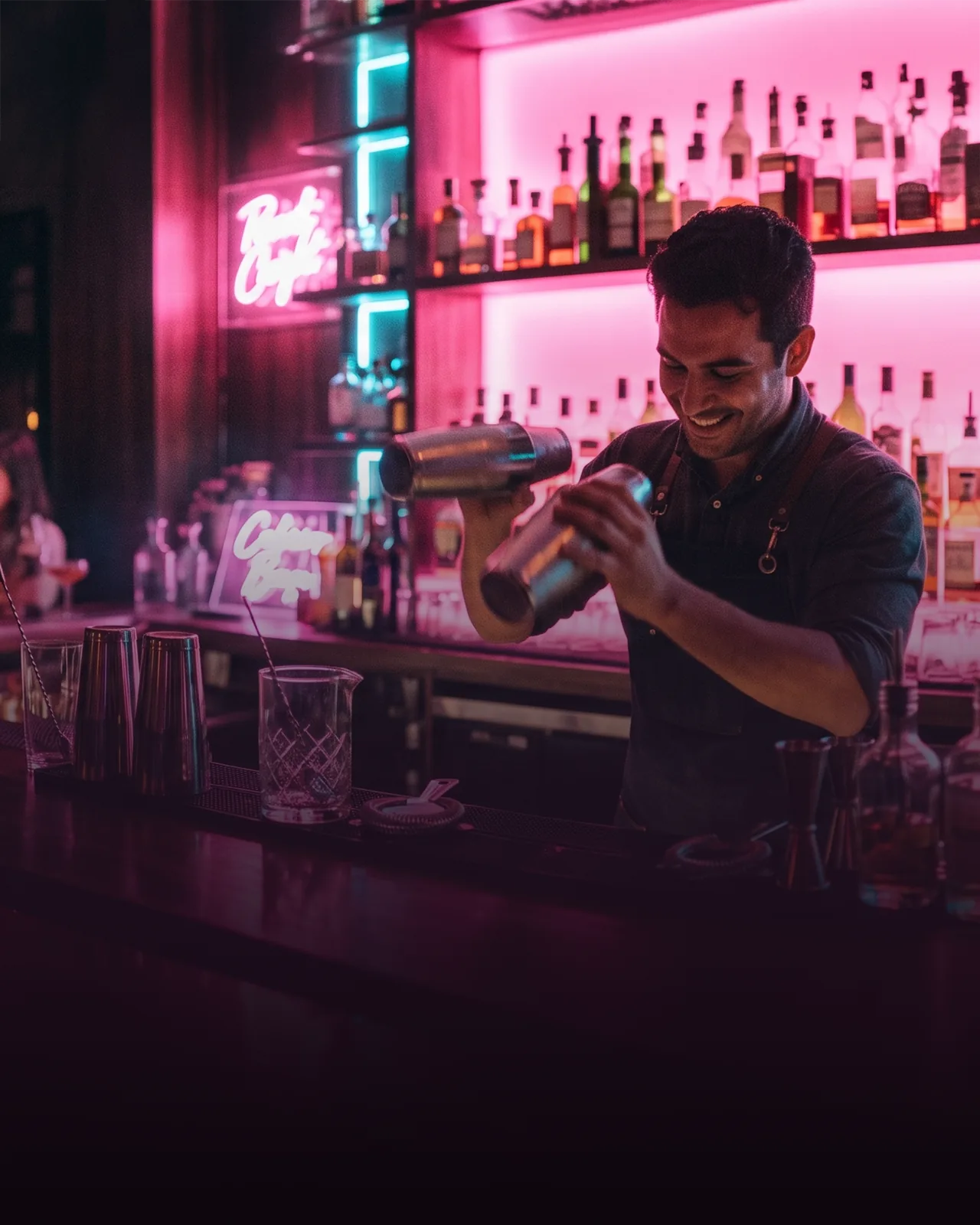


Ready-made equipment lists for the venue you are opening — built from the machines we actually ship, priced position by position, and quoted as one order instead of ten.
Most people who want to open a bar can describe the room down to the lighting, then stall on the question of what actually has to be bought. The list runs longer than it looks, a good half of it never gets seen by a guest, and whatever slips through — the glass washer, the second ice type — turns up on the first busy night.
So we wrote the lists. Each venue format was taken apart zone by zone against the machines in our catalog: what a room cannot open without, what it will want by the second month, and what it takes to keep the line moving on a busy night.
Real machines, not a checklist
Every line is a product we stock and can quote today, and it links straight to its page in the catalog — no generic entries you still have to go and source.
Priorities are marked
Must-have, recommended and optional are separated, so the opening budget goes first to the positions that decide whether you can trade at all.
One venue, one order
The whole list comes through one supplier network on one quote, with lead times that line up instead of landing three months apart.

Thirty-five setups across home bars, bars, cafés, kitchens, nightlife and hotels. The closest one is close enough; we work from there.

Room size, expected covers, the equipment you already own. Send the edits and we rebuild the list around them.

One document for the whole setup: prices, lead times, delivery, and what ships together.
Every setup below is a complete equipment list you can take as it stands. If your room works differently, open it in the setup builder: swap a machine for another one, change the counts, drop what you already own — or start from an empty list and build your own from scratch.
The same equipment, sized for a room you own. A basement bar, a man cave or a bar at the end of the garden — draft that stays cold, wine that survives the week it was opened, and nothing on the list that needs a plumber.
Drink-led rooms built on one spine — bar station, ice, cold storage, glassware, warewashing — and then whatever the concept actually pours.
Counter service, where one machine sets the concept and the rest of the line has to keep up with it — brew, cold display, prep, packaging.
The full kitchen cycle — prep, thermal line, cold storage, warewashing, pass — plus the one machine each cuisine is built around.


High-volume rooms where light, sound and how fast the floor turns around matter as much as what the bar pours.
Whole properties rather than one outlet inside them — rooms, laundry, water, wellness and back of house, whether the rooms are built or delivered on a lorry.
Sites that make what they sell. The list starts with the plant and the water that feeds it, runs through filling and packaging, and only then reaches the counter people actually buy across.
Tell us the concept, the floor area and the covers you plan for — we build the list and come back with pricing and lead times.


