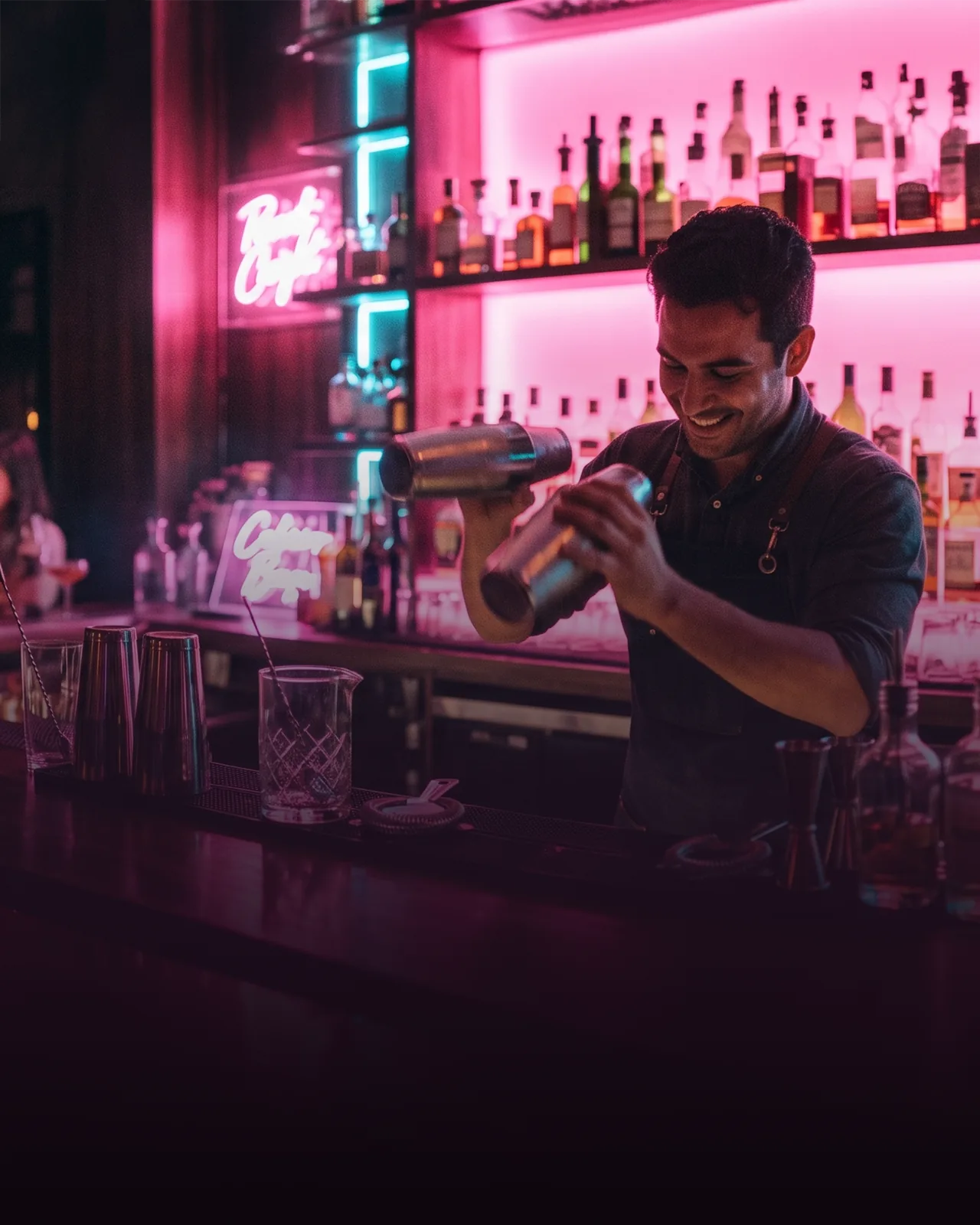


In short: The biggest restaurant lighting mistake is flooding the room with one flat, even light. Guests feel exposed, food looks dull, and they leave early. Good lighting layers warm, dimmable pools over tables and a bright bar to guide attention — that lifts dwell time and the check.
A table finishes their mains, glances around, and asks for the bill instead of the dessert menu. You blame the service or the menu. Often it's the light. One wrong lighting choice — usually too bright, too cold, or too uniform — quietly cuts how long people want to sit in your room, and shorter stays mean smaller checks. Nobody complains about lighting on their way out; they just don't come back for a second round.
What is the biggest restaurant lighting mistake?
The single most common mistake is lighting the whole room with one flat, even layer — usually bright and cool. It feels safe because everything is visible, but it kills atmosphere. A room lit like an office has no depth, no focal points, and no reason to linger. Guests read "efficient, get out" instead of "stay, order another glass."
Restaurant lighting isn't decoration you switch on and forget. It's a tool that steers attention, sets pace, and shapes mood. Get it wrong and you're fighting your own room all night.
Why does bright, cold light make guests leave early?
Bright light makes people feel watched. When every table can see every other table in full daylight-strength glare, diners feel exposed rather than relaxed. Nobody settles in for a long, indulgent meal under those conditions — they eat and go.
Cold light does its own damage. High color-temperature light (in the 5000–6500K range) drains warmth out of food and skin. A rare steak looks grey, a glass of red looks flat, and your guests catch their own washed-out reflection in the window. Warm light in the 2200–2700K range does the opposite: it makes food look richer and people look better, and people stay where they feel good about themselves.
Can a restaurant be too dark?
Yes — under-lighting is just as costly as over-lighting. A room so dim that guests hold their phone torch over the menu is not moody, it's annoying. Straining to read, misjudging a step, or not being able to see what's on the plate breaks the experience fast.
The fix isn't "more light everywhere." It's putting light where it earns its keep — on the table and the food — and letting the space between tables fall into softer shadow. Dark where it doesn't matter, bright where it does.
Why does one even light kill the room?
A single uniform light source flattens everything into one plane. Depth comes from contrast — bright pools against darker surrounds — and a room lit evenly from above has none. It's the difference between a photo shot with a flat overhead flash and one shot with directional light: one is a snapshot, the other has shape and mood.
Good lighting layers three jobs: ambient (the overall base level), accent (spotlighting the bar, art, or a feature wall), and task (the focused light on tables and prep areas). When those layers overlap, the room gets depth. When you collapse them into one flat wash, it goes dead.
How does lighting guide where guests look?
Light is the first thing the eye follows, so whatever you make brightest becomes the hero. Point that power at the wrong thing and you're advertising the service station instead of the bar. Aim it deliberately and you control the story the room tells.
- The table. A tight pool of warm light on each table makes the food the star and gives diners a sense of their own private space. This is where pendant lights earn their place — hung low, dimmable, one per table or per booth.
- The bar. The bar should read as the brightest, most energetic zone. It's your profit center and your visual anchor when someone walks in. Backlit bottles and focused downlights pull the eye straight to it.
- The plate. Directional accent light on the food is why it looks good enough to photograph — and every phone photo is free marketing.
What color temperature and dimming should a restaurant use?
Warm and dimmable, almost always. For dining rooms, a color temperature of 2400–2700K flatters both food and guests. Push slightly warmer (2200K) for late-night bars and lounges, slightly cooler (up to 3000K) for bright breakfast and daytime cafés where you want an alert, fresh feel.
Dimming is non-negotiable. The room that works at noon does not work at 9pm. Dimmable fixtures let one space play brunch, dinner, and late-drinks with a single dial — brighter and cooler early, lower and warmer as the night settles in. Without dimmers you're stuck with one setting that's wrong for most of the day.
| Zone / time | Color temperature | Level | What it does |
|---|---|---|---|
| Daytime café / breakfast | 2900–3000K | Bright | Fresh, alert, awake |
| Dining room, dinner | 2400–2700K | Medium, table-focused | Warm, intimate, long stays |
| Bar / feature zone | 2700K | Brightest in room | Draws the eye, signals energy |
| Late-night lounge | 2200–2400K | Low | Moody, drinks-forward |
| Nightclub floor | Dynamic / colored | Very low ambient | Stage lighting takes over |
How is nightclub and stage lighting different from a dining room?
In a nightclub, the mistake reverses: too much steady ambient light kills the floor. Here the room should sit dark and let dynamic fixtures — moving heads, wash bars, and stage lighting effects — do the work. The base level drops almost to nothing so that color, movement, and beat-synced light become the whole environment.
The principle is the same as the dining room, just dialed to an extreme: put light where the energy should be, keep everything else dark, and never light the space flat. Nightclub lighting steers a crowd's mood the way a warm pendant steers a couple's evening — it's the same tool aimed at a different result.
How does lighting affect the check?
Longer, more comfortable stays mean more rounds, more dessert, more coffee — and lighting directly controls how long people want to stay. Warm, layered light that flatters food and guests pushes dwell time up; flat, cold, over-bright light pushes it down. Every extra ten minutes at a comfortable table is another chance to sell.
It also protects your food's appearance. You can plate beautifully and still lose the sale if the light over the table makes it look grey. Lighting is the last filter between your kitchen's work and the guest's eyes — treat it as part of the dish, not the ceiling.
Not sure your room is lit to keep people in their seats? Tell us about your space — the layout, the vibe, and the hours you trade — and we'll help you pick fixtures that work all day and all night.


