

In short: a full room and a thin margin usually means the money left at the well, not at the door. Below are the ten leaks that cost the most over a year of service — eight of them fixed with kit, two of them fixed with a decision — each with the consequence in seconds or in product.
A packed Friday and a slow till at the end of the night is the most frustrating combination in the trade. The room was full, nobody stopped moving, and the margin still came in thin. Nothing dramatic happened. What happened was two seconds here, a heavy quarter-ounce there, a purged beer line at eleven o'clock, repeated across four hundred drinks.
That is what makes these leaks expensive: individually none of them is worth a conversation, and none of them appears on a P&L line you would ever think to check. Here they are in the order they usually cost the most, starting with the one that taxes every single drink you make.
1. The cocktail station is laid out by habit, not by reach
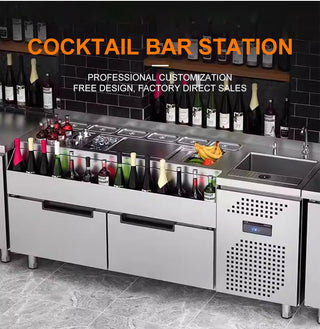
A well that grew by accident is the most expensive habit behind the bar, because every drink pays the tax. When bottles, mixers, garnish and glassware sit where they happened to end up rather than where the hand goes, a bartender loses two or three seconds hunting per drink. Over a three-hundred-cover night that is a quarter of an hour of service time gone — the difference between clearing the rail and watching a queue build behind it.
The test is not whether the well looks tidy. It is whether a bartender can build your four best-selling drinks without a single step sideways. Chilled product belongs under the pour point, not in a fridge across the floor; garnish belongs within the same sweep as the glass it goes into.
A made-to-order refrigerated underbar workstation is built around the bar run you already have, rather than forcing the layout to bend around a fixed box. Its cabinet dimensions are cut to order, so confirm the fit against your run before committing — a station that does not slot cleanly into the space solves nothing.
2. There is no speed rail, so every pour includes a walk
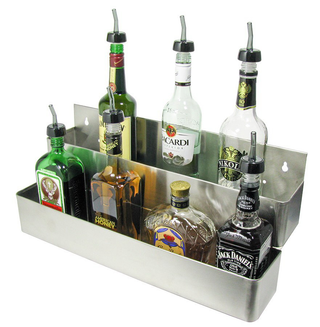
This is the cheapest fix on the list and it pays back on the first busy shift. A speed rail is a stainless trough mounted at the well holding your most-poured bottles at arm's length, top-poured and ready — no reaching to the back bar, no re-shelving between drinks.
A double rail gives two tiers: well spirits on one, backups and mixers on the other, so the back bar stays clear while the front line stays fast. Brushed 304 stainless wipes down between shifts, and lengths run from 22" to 70", so match the run to your station width and to the weight of bottles it will carry.
Skip it and every cocktail carries a reach-and-return that nobody notices individually and everybody feels at the rail on a Saturday.
3. The pour is free-handed
A spirit measure that runs a quarter-ounce heavy on every drink bleeds a real chunk of liquor cost across a year, and it is the least visible leak in the building because each individual pour looks fine. It is the sum that hurts, and the sum only shows up at stocktake as a number nobody can explain.
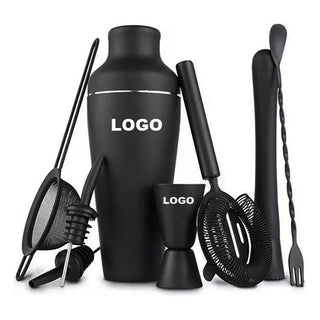
The fix is not complicated, it is just unglamorous: jiggers, drilled until they are muscle memory, and spec sheets that say what a drink actually is. A bartender kit built around a Boston shaker puts the measure in the same hand that pours, which is the only version of this discipline that survives a rush.
If bar cost is creeping while sales hold flat, look here before you look anywhere else.
4. The cocktail station only works when your best bartender is on it
This one is different from the pour, and it costs differently. A bar whose quality depends on one person has no standard — it has a person. When they are off, the Negroni is heavier on gin. When they leave, the guest who came back for that drink stops coming back, and you will not find out why for two months.
On a craft menu, the answer is training and written specs, and there is no shortcut worth taking. On a service bar clearing volume — a hotel lobby at check-in, a club's second bar, a venue with high staff turnover — an automatic machine turns the variable off. Air-pressure dosing pours a consistent 150–180 ml drink in about ten seconds, so someone hired on Thursday serves the same drink as the bartender who wrote it. Because the liquid never touches pumps or valves, syrups do not clog and carbonated mixers keep their fizz.
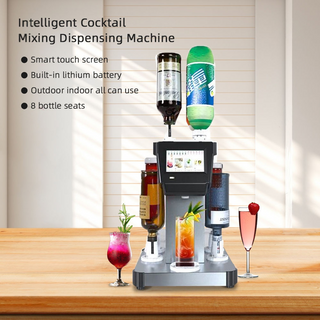
Neither model has built-in cooling, so bottles are pre-chilled and ice goes in the glass.
5. Glasses go out at room temperature
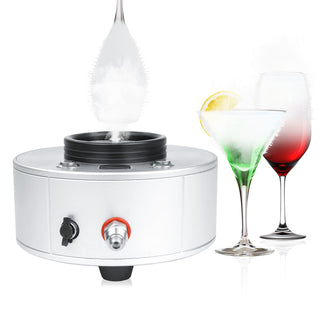
A cocktail served in a warm glass is warm before the guest reaches the table, and a warm drink is one they do not order twice. Keeping stock in a freezer is the usual answer, and it fails twice over: it surrenders scarce underbar space, and it stalls completely the moment you run out mid-rush.
A countertop CO2 froster fixes it per serve instead. A burst of liquid CO2 frosts the inside of a glass in seconds, on demand, drawing 25 W from a standard CO2 line. At 168 × 168 × 100 mm it fits cramped underbar space, and because the chill happens one glass at a time, you free the freezer and never wait for pre-chilled stock to catch up.
6. Every blown keg is purged down the drain
On a long-draw draft system this is the leak owners see least and pay for most. Each time a keg empties the line fills with foam, and purging and refilling that run sends pourable beer straight to the drain. A venue running twenty kegs a week through a thirty-metre draw can lose roughly forty-six pints a week to nothing but line clearing.
A FOB detector is an inline stop valve that shuts flow the instant a keg blows. The internal float drops and seals the outlet, so the run stays full of beer; the next keg goes live without purging the line. It typically pays for itself inside six kegs.
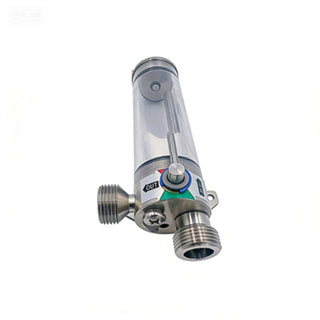
Clean it on the same schedule as your beer lines, and never bypass it during cleaning — a float-lifting device holds the float clear so cleaning fluid runs through to the faucet.
7. The rush stalls on clean glassware
A bartender waiting on glasses is a bartender not pouring, and the queue you had just cleared rebuilds in under a minute. Worse is the version where someone washes a few by hand at the sink, which takes a second person off service during the exact hour you cannot spare one. Glassware turnover looks like housekeeping and behaves like throughput.
A front-loading glasswasher keeps the line stocked without tying up a sink — thirty baskets an hour, high-pressure spray arms, an 85 °C rinse that sanitises, and a hot-air cycle that finishes glasses dry enough to pour into. At 476 × 550 × 720 mm it slides into a compact footprint, and the 304 stainless chamber takes constant moisture and daily wipe-downs.
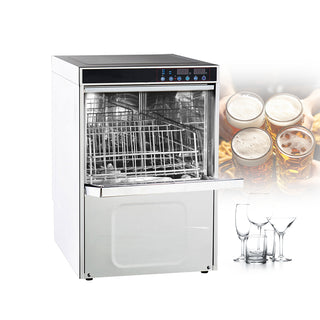
Size it to your peak rather than your average. The machine that keeps up on a quiet Tuesday is the one that falls behind on the Saturday that pays for the week — and the same logic applies to how you roster that night.
8. Glasses reach the guest cloudy
A spotted or smeared glass reads as dirty, and the guest has decided about your bar before they taste anything in it. Hand-toweling solves it and costs you a pair of hands during service, which is how most bars end up choosing between a presentable glass and a fast one.
A glass dryer and polisher takes that choice away: glassware comes out of the wash and gets buffed streak-free without anyone toweling it. At 1350 W it works through stemware and tumblers quickly, and its 330 × 292 × 508 mm body fits on a back bar. It is the step a glasswasher needs to send a genuinely presentable glass to the pass.
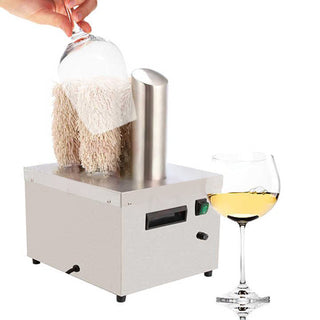
9. The menu is longer than the bar can carry
A list of forty cocktails holds more spirits, more perishable garnish and slower tickets than a tight list of twelve. Every extra line is inventory sitting still, product going off quietly, and one more decision standing between a guest and their first drink. This is the rare fix that costs nothing and improves three numbers at once: bar cost, ticket time and waste.
Cut to what actually sells. The drinks that survive the cut are usually the ones your bartenders can build without looking, which is not a coincidence.
10. Nothing gets logged, so nothing gets found
Spilled, comped and spoiled product that nobody writes down is invisible until stocktake, when the numbers refuse to reconcile and no one can say why. That is the whole problem with every leak above: the heavy pour and the purged keg hide precisely because they are never recorded.
Log it as it happens, in whatever form your staff will actually keep up. A rough number written down beats an accurate one nobody collected — you cannot fix a leak you cannot name.
Not sure which of these your bar is losing to? Tell us your layout, your covers and where service slows down, and we will help you specify the well around it.


