

Most of a tiki drink is made hours before anyone orders it. How to open a tiki bar therefore starts behind the bar, with a prep room and an ice supply sized to 60, 150 or 300 drinks an hour, and with the liquor license filed first.
Take a mai tai apart. Two rums, fresh lime, orange curaçao, orgeat, a mound of crushed ice, a spent lime shell and a sprig of mint. The bartender pours the rums and the curaçao at the moment of order. The lime was pressed that afternoon, the orgeat was made from almonds two days ago, the ice was crushed an hour ago, and someone picked through the mint before the doors opened.
That ratio holds across the whole tiki canon. A zombie, a painkiller or a jungle bird is mostly work done in advance, and the speed of the bar on a Saturday is decided by how much of that work is finished at six o'clock. When people ask us how to open a tiki bar, the conversation usually starts with the carvings and the rum wall. The owners who stay open start with a small room behind the bar that never cooks a dinner.
Where does a tiki drink actually get made?
Mostly in prep. On a busy night the station only assembles. Spirits are measured when the ticket prints, and almost everything else in the glass was made earlier in the day.
This matters for the floor plan before it matters for the equipment list. A classic cocktail bar can squeeze a few lemons at the station between orders. A tiki bar that tries the same thing stalls within twenty minutes, because its specs call for three or four fresh components per drink, and the syrups alone would need a stove at the bar.
So the building needs two working areas with different jobs. The bar handles the last ten seconds of each drink, from the shake to the garnish. The prep room handles juicing, syrup cooking and garnish cutting, and it feeds the station with ice. When a landlord shows you a unit, look for a back room with a floor drain, water and enough power for a row of countertop machines. A beautiful bar with no back room is a lease to walk away from.
A small kitchen that never cooks dinner
The tiki prep room is closer to a pastry kitchen than to a bar storeroom. It runs on a schedule, it produces batches with a shelf life, and most of its output is liquid.
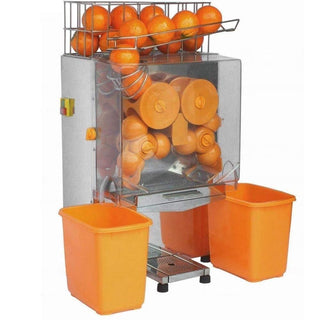
Citrus comes first by volume, since lime or lemon goes into nearly every drink on the list. Squeezing by hand works for a small opening menu and falls apart once the bar is doing a hundred drinks an hour. An automatic citrus press feeds whole fruit from a hopper and cuts and squeezes it; the one below is rated at 23 oranges a minute, takes fruit from 40 to 80 mm across, and handles lemons as well.
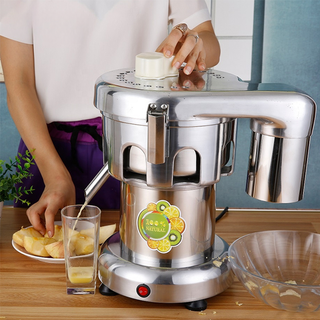
Pineapple is the second juice, and it behaves differently. It is fibrous, so a citrus press can't touch it. A centrifugal juicer spins chopped fruit against a fast-turning basket and separates the pulp as it goes. The model below runs at up to 2,800 RPM and holds around 1.5 liters of juice per batch.
Ginger is the third, and the one that surprises new owners. Ginger syrup and ginger beer turn up on plenty of modern tiki lists, and fresh ginger juice is hard to get out of a centrifugal machine without leaving a lot of pulp behind. A twin-gear cold press crushes it slowly and wrings out more juice from dense roots. Our guide to commercial juicers compares press, centrifugal and cold-press output.

Syrups are the heart of the tiki flavor and the part most bars underestimate in labor. Orgeat and falernum take hours, passion fruit and cinnamon syrups less, and every batch has its own storage life. A stovetop does the job, but a temperature-controlled water bath makes infusions and syrups repeatable: seal the ingredients in a bag, hold them at a set temperature for a set time, and the batch tastes the same whoever made it. The countertop bath below holds 13 liters and controls from 40 to 95 °C.

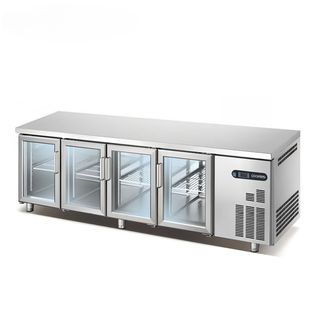
Everything the prep room makes has to stay cold until service and within reach of a work surface. A refrigerated prep table gives you a stainless worktop for cutting and bottling with chilled storage underneath. The four-door version below is 2,250 mm long, which fits along one wall of a small prep room.
Juicing throws off a lot of rinsing, and most health inspectors want a dedicated hand-wash basin in a food prep area plus a multi-compartment sink for equipment. Our commercial sinks cover both, and the juicer collection and sous vide range hold the rest of the prep kit.
How much crushed ice does a tiki bar go through?
Far more than a standard bar. We plan on 250 to 350 grams of ice per drink once the shaking ice is counted, because a tiki serve sits in a glass packed with crushed ice rather than over three cubes. At 150 drinks an hour, that is roughly 45 kilograms an hour at the peak.
Ice for tiki comes in two stages. A cube machine makes the base supply, and a crusher turns part of it into the fine crush most of the menu is built on. Size the crusher to the peak, since it has to keep pace with the station in real time, while the cube machine has all day to fill a bin.
For a room doing a few hundred drinks on a Saturday, a cube machine making 80 to 120 kg a day is the usual starting point.
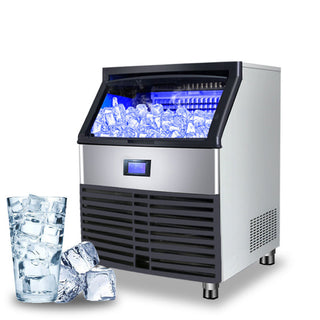
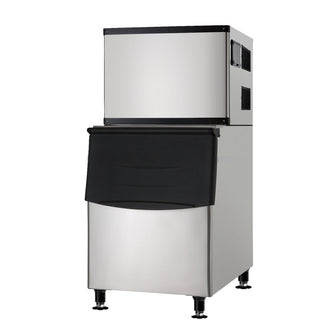
A large room, or one that also runs a frozen menu, needs the next step up, a machine making 450 kg a day with 125 kg of storage in the bin.
The crusher is the machine a tiki bar can't run without. The automatic unit below is rated at 480 kg an hour, well past the peak of any room in this guide, and its timed mode lets a barback fill a well without standing over it.
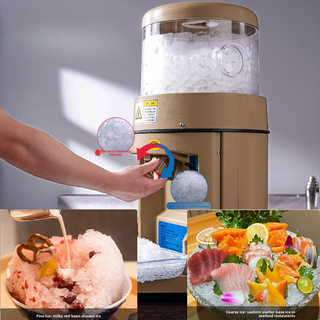
A smaller bar can work with a compact crusher that also shaves fluffy ice for snow-cone style serves.
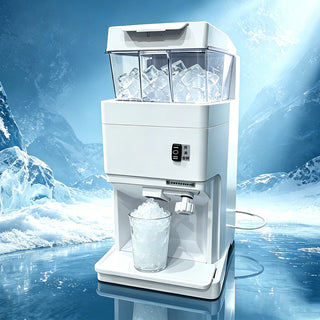
Shaved ice is its own subject, with block shavers and snow machines that sit closer to a dessert menu than a cocktail list. Our guide to shaved ice and bingsu machines covers them.
Pebble or nugget ice, the soft kind some bars prefer for swizzles, is harder to make at volume; a countertop nugget machine at 20 to 30 kg a day can supply one signature drink but not the bar. For the full sizing method, see our guide on how to choose a commercial ice machine. The ice makers and ice crushers and shavers collections carry both stages.
How to open a tiki bar at 60, 150 or 300 drinks an hour
Drinks per hour at the peak is the one number that sizes everything else, from the prep schedule to the crusher. The table below uses planning figures, not measurements from any single venue, and assumes a four-hour evening with most drinks built on crushed ice.
| 60 drinks an hour | 150 drinks an hour | 300 drinks an hour | |
|---|---|---|---|
| Typical room | Neighborhood tiki lounge, 40 to 60 seats | Busy city bar, 100 to 150 guests | Destination venue or a bar with a large terrace |
| Bartenders on the peak | Two | Three or four, plus a barback | Two stations with their own barbacks |
| Fresh juice per night | About 10 liters | About 25 liters | 50 liters or more |
| Prep before service | One person, two to three hours | A dedicated prep shift | Prep staff through the afternoon, some batching overnight |
| Ice at the peak | Around 18 kg an hour | Around 45 kg an hour | Around 90 kg an hour |
| Ice production | One 80 to 120 kg a day machine | A large cube machine or two smaller ones | 450 kg a day or more, with a big storage bin |
| Crushing | Compact crusher at the station | Automatic crusher feeding the wells | High-output crusher, filled on a schedule |
| Frozen drinks | One blender | Two blenders | Blenders plus a slush machine for the house frozen |
The jump from 60 to 150 is where most tiki bars get caught out. At 60 drinks an hour, one person can prep in the afternoon and still work the bar at night. At 150, prep becomes a job of its own, and a bar that hasn't budgeted for that shift ends up with its best bartender pressing limes at five o'clock and running late all evening.
At 300, the bar is really two bars sharing a back room. Each station needs its own ice well and garnish rail, and the prep room turns into a small production kitchen where every batch is labeled and dated.
How many blenders does a tiki bar need?
Two from about 150 drinks an hour, so one is always free while the other is rinsed. Frozen drinks also make the bar loud. A blender crushing ice at full speed is one of the noisiest machines in hospitality, and it runs in a room that is meant for sitting and talking.
A sound enclosure fixes most of that. The 2.2 kW blender below runs inside a cover, has nine speeds and a 1.8-liter jar, enough for two or three frozen drinks per cycle.
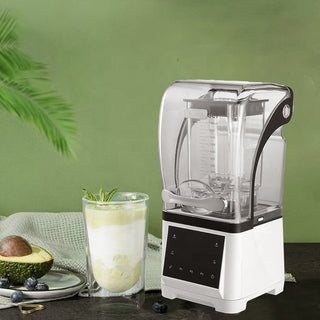
The bar blender collection lists jar sizes and motor ratings side by side. If one frozen drink outsells the rest, take it off the blender and batch it. A slush machine holds the mix at −2 to −3 °C and pours it on demand, so the house frozen piña colada takes seconds instead of a full blend cycle. The model below comes with one, two or three bowls, which lets a bar run a frozen classic next to a seasonal special.
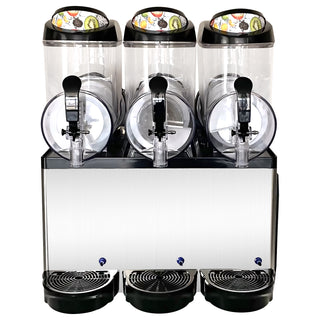
The rest of the frozen range sits in slush and granita machines.
Garnish is where the minutes go
A tiki garnish can take longer to build than the drink. Pineapple fronds, a speared cherry, a mint bouquet and a flaming lime shell add up to a minute per glass, and at 150 drinks an hour that is more than two bartenders' worth of time spent decorating.
The fix is a garnish system rather than more staff. Limit each drink to two garnish elements and prep every one of them before service. Cut fruit waits in lidded containers in the prep table and goes out to a chilled rail in small batches. Mint stands stem-down in water. Anything that needs assembling, like a pineapple wedge with a cherry pinned to it, is assembled in the afternoon.
Test the menu against a stopwatch during the soft opening. Any drink that takes more than a minute to garnish either gets a simpler garnish or comes off the list, except the one drink everybody photographs, which keeps its full treatment.
Why do tiki bars keep running out of mugs?
Because guests take them home. Tiki glassware disappears faster than any other bar glassware, and ceramic chips in a glasswasher that was sized for highballs.
Most bars end up with house mugs that carry the brand, a few novelty pieces for the signature drinks, and plain highballs and coupes for the rest of the list. Our guide to types of cocktail glasses covers the standard shapes and the hand-made pieces that bars use as a reason to charge more for a drink.
A hand-blown shell glass suits a rum drink served up or over crushed ice.

A borosilicate shark glass holds 350 ml, enough for a zombie, and is rated from −20 to 180 °C.

A stainless steel pineapple cup doesn't break, which makes it the sensible choice for a crowded terrace or a pool deck; it holds 500 ml.

Order signature pieces deeper than feels necessary. Some bars sell their mug openly at the counter, which turns a loss into a small line of revenue. The full cocktail and novelty glasses range is in one collection.
A little fog goes a long way
A tiki room sells escape, and low fog rolling out of a shared volcano bowl is the effect guests film most. The 3,000 W machine below lays a ground-hugging fog over 100 to 150 square meters and runs on water and fluid tanks.
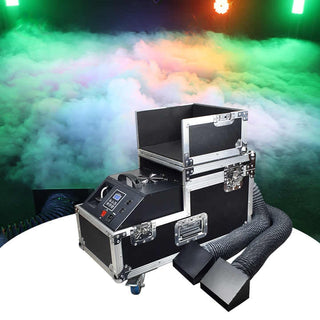
Talk to your fire alarm contractor before the first test run. Some smoke detectors react to fog and haze, and a Saturday evacuation is an expensive way to find out. Warm light on dimmers and a few spots on the rum shelf do the rest; the fog and haze machines collection has smaller units for a single bowl effect.
Licenses, in the order to file them
A tiki menu is built on rum, so a beer-and-wine license won't cover it. Tiki was born in the US and travels well, and in the four markets below the order of work is broadly the same.
- Confirm the premises can be used as a bar. Before you sign, check with the local authority that the unit's planning or zoning allows a late-trading drinks venue. In the United States that means a certificate of occupancy and the fire-code occupancy limit for the room. In Germany, noise protection matters from day one: TA Lärm sets night limits of around 35 dB(A) in residential areas, and closing hours (Sperrzeit) are set by each state.
- File for the alcohol license. This is the slowest step everywhere. In the United States it goes through the state Alcohol Beverage Control board, often with county sign-off; it can take months, some states cap the number of full liquor licenses, and a spirits-led tiki menu needs the full license. Federal TTB registration sits alongside it. In the United Kingdom you apply to the council for a Premises Licence and name a Designated Premises Supervisor who holds a Personal Licence, which requires the accredited APLH qualification and a basic DBS check. In Australia you apply to the state or territory liquor regulator for an on-premises license; in New South Wales, the Small Bar licence covers venues of up to 120 patrons. In Germany you need a Gaststättenerlaubnis (Schankerlaubnis), which is tied to both the operator and the premises.
- Register the business and the operator. In the US, a business license and an EIN. In Germany, the Gewerbeanmeldung, plus a Führungszeugnis (certificate of good conduct) and the IHK hospitality briefing (Gaststättenunterrichtung) for the license holder.
- Register the food side. Fresh juice, syrups and cut fruit make a tiki bar a food business as well as a drinks one. In the UK, register with the council at least 28 days before opening and expect a Food Hygiene Rating inspection, which will look at the prep room. In the US, get a health department permit and food-handler or ServSafe certification. In Australia, notify the council as a food business; some states also require a Food Safety Supervisor.
- Complete the fire paperwork. In the UK that is a fire risk assessment, and it is worth recording the fog machine in it. In Australia, a fire safety statement for the premises.
- License the music. A tiki room depends on its exotica soundtrack, and playing it publicly needs a license: TheMusicLicence from PPL PRS in the UK, OneMusic Australia, or ASCAP, BMI and SESAC in the US.
- Train the staff who pour. In Australia, everyone who sells or serves alcohol needs a current RSA competency card, and in New South Wales it has to be renewed every five years.
This is an overview rather than legal advice, and the details vary by council, county and state, so confirm the current requirements with your local licensing authority before you commit to a lease.
If we opened a tiki bar tomorrow
The same regrets come up when tiki owners talk about their first year. If we were opening one, the prep room would be designed before the bar top. Owners regularly wish they had given up a few seats for a larger back room, because seats earn nothing on a night when drinks take twelve minutes.
We would open with a shorter menu than we wanted. Twelve drinks that share juices and syrups are faster to serve than twenty that each need something unique, and the list can grow once the team knows its timings. The garnish rule would be set on day one, because elaborate garnishes creep back one drink at a time.
We would buy the crusher bigger than the first estimate, since ice runs out without warning, usually around ten o'clock on the first hot weekend. The house frozen drink would move onto a slush machine as soon as it proved itself.
And we would treat mugs as a consumable from the first order, with a reorder point and a price for guests who want to take one home, rather than as a one-off purchase that slowly empties the shelf.
For the parts of the build shared with every bar, see our guide on opening a bar, and for the cocktail program itself, the guide on how to open a cocktail bar.
Planning the room behind the bar? Send us your opening drinks list and your expected peak, and we will size the juicers, ice and blenders to the number of drinks you actually plan to serve.


