


In short: buy a convection oven if the menu bakes and browns. Buy a combi if it also steams, holds protein yield or regenerates plated food. The combi does more, but it brings a water supply, a drain and a descaling routine with it.
If you want the answer without the reasoning: a bakery, a pizzeria or a kitchen that mostly browns and bakes is better served by a convection oven, and the money saved goes into a second deck rather than a better single box. A restaurant cooking proteins to weight, steaming vegetables to order, or plating banquets from regenerated food should buy the combi and accept the water treatment that comes with it.
The comparison at a glance
| Convection oven | Combi oven | |
|---|---|---|
| How it heats | Fan-forced dry heat | Dry heat, steam, or both together |
| Best at | Baking, roasting, browning, finishing | Proteins, steaming, regeneration, low-temperature cooking |
| Protein yield | Higher weight loss on long roasts | Humidity control cuts shrinkage |
| Services needed | Power (or gas) and extraction | Power or gas, plus treated water and a drain |
| Maintenance | Clean the chamber and the fan | Descaling on a schedule, plus chamber cleaning |
| Operator skill | Low — temperature and time | Higher — humidity, core probe, multi-stage programs |
| Typical venue | Bakery, café, pizzeria, fast casual | Restaurant, hotel kitchen, banqueting, catering |
When a convection oven is the right buy
A convection oven moves hot dry air across the product with a fan. That is a narrow description of a very capable machine: even browning across a full rack, faster bake times than static heat, and a temperature curve that pastry and bread behave predictably in.
It wins on three grounds. It is simpler to run, so a new cook is productive on it in a shift rather than a week. It has no water side, which removes the single most common failure mode in a steam-capable oven. And for the same money you get more chamber, because you are not paying for a boiler or an injection system you would rarely use.
A commercial convection oven with digital control, covering baking and roasting on convection heat, is the standard workhorse for that kind of kitchen. Watch the electrical supply on the larger ones — a 16 kW oven is a serious connection, and it is worth confirming with the electrician before the delivery date rather than after.
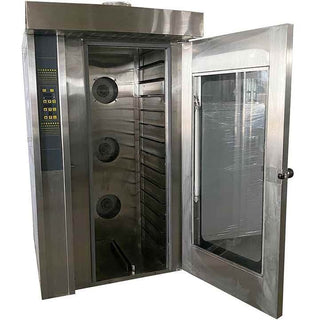
Where the convection oven falls down is moisture. Long roasts lose weight; delicate fish dries at the edges; anything reheated on a plate comes out tired. Those are exactly the jobs that pay for a combi.
When a combi oven earns its extra cost
A combi does everything the convection oven does, then adds controlled steam. In practice it is three appliances: a convection oven, a steamer, and a low-temperature cooking cabinet that can hold a humidity level for hours.
The commercial argument is yield. Roasting a joint in dry heat drives moisture out of it, and that moisture is product you paid for and cannot sell. Running the same joint with humidity in the chamber noticeably reduces that loss. On a kitchen roasting meat every day, the difference shows up in the food cost line rather than in the customer's opinion.
The operational argument is regeneration. Bringing sixty plated covers back to temperature without drying them is something a combi does routinely and a convection oven does badly, which is why hotel banqueting and event catering standardize on combis almost without exception.
A gas combi with steam and an eight-tray capacity, running from ambient up to around 350 °C, covers a mid-size restaurant kitchen. Gas heating is worth noting in its own right: where electricity is expensive or the supply is limited, it changes the install calculation entirely.
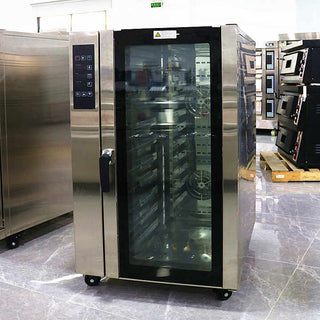
What does a combi need that a convection oven does not?
Water. A combi injects treated water into a hot chamber, and if that water is hard, scale builds on the boiler or the injection point and the oven gradually stops producing steam. Descaling is a scheduled task, not an occasional one, and a water filter or softener is part of the purchase rather than an optional extra.
It also needs a drain, which is a plumbing decision made at fit-out and expensive to retrofit. And it needs training. A combi run as a convection oven — dry mode, temperature, timer — is an expensive convection oven, and that is genuinely how a fair number of them end up being used.
Which one is cheaper to run?
Neither answer is universal, because the two ovens spend money in different places. The convection oven's cost sits almost entirely in energy: a large electric unit pulling 16 kW is the single biggest draw in many kitchens, and it draws it whenever the oven is up to temperature.
The combi spends less time at full temperature for the same work — steam transfers heat faster than dry air, so cook times shorten — but it adds water, water treatment and a descaling routine that a convection oven simply does not have. On a busy roasting kitchen the yield saving usually outweighs all of it. On a bakery running long dry bakes, it does not come close.
The decision, in four lines
- Bakery, café, pizzeria: convection oven. The steam functions would sit unused.
- Restaurant roasting proteins daily: combi. Yield alone justifies it over a few years.
- Banqueting, hotel F&B, catering: combi, without much argument — regeneration is the job.
- Tight budget, mixed menu: convection oven now, and put the difference into refrigeration or extraction, which are harder to add later.
One caveat on the middle case: a combi only pays back if someone on the team can actually run it. If your kitchen turns over cooks quickly, the simpler oven and a well-drilled routine will beat sophisticated equipment nobody has been shown how to use.
Both formats sit in the combi and convection ovens range, and the wider ovens section covers pizza, tandoor and rack formats for menus that point that way instead.
Still on the fence? Tell us what your menu cooks in volume and what services the kitchen already has, and we will tell you honestly which of the two fits — including when the cheaper one is the right answer.


