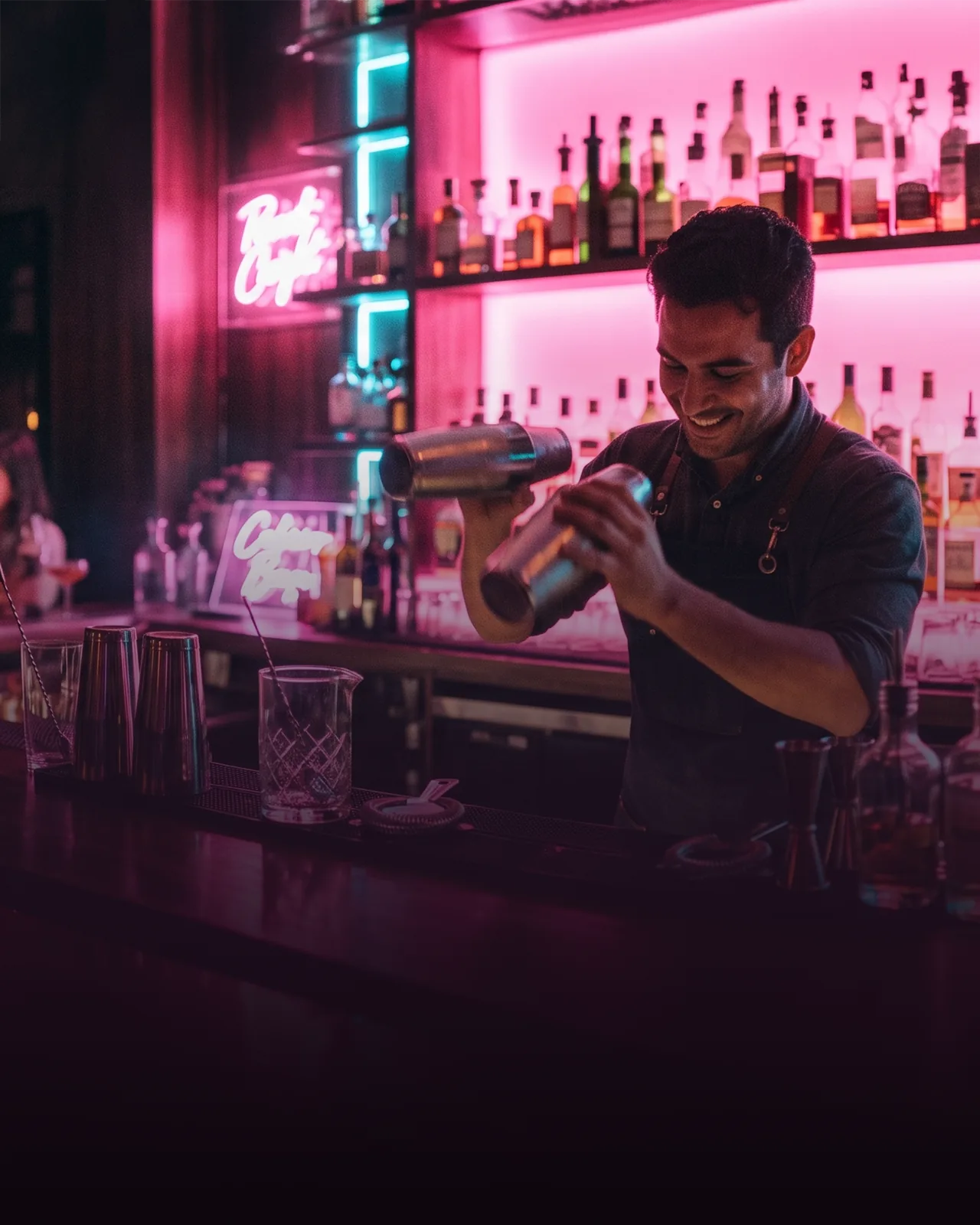


Stock turn decides how to open a whiskey bar that makes money. Every bottle on the back bar is cash waiting to be poured, so size the shelf to what you can rotate, sell the slow end through flights, and let the glassware and lighting do the selling.
A 700 ml bottle poured in 25 ml measures gives you 28 drinks. If that bottle sells two of them a month, it stands on your shelf for well over a year before it pays back what you spent on it. Multiply that by two hundred bottles and you have the central problem of how to open a whiskey bar: the wall that makes the room beautiful is also the largest pile of idle money in the business.
None of that is an argument for a small shelf. Guests come to a whiskey bar for the range, and a thin back bar reads as a pub with ambitions. It is an argument for knowing, before the first order goes in, which bottles are there to sell and which are there to be looked at, and for giving the second group a way to earn.
The rest of the build follows from that. Glassware and ice are cheap next to the stock they serve, and each one either helps a bottle move or lets it sit.
How many bottles should a whiskey bar open with?
Fewer than the owner wants, and more than a regular bar carries. A first-year room that pours well and turns its stock usually opens somewhere between 80 and 150 bottles, then grows the shelf out of what the till shows people actually order.
The table below sets out three honest sizes. The bottle counts are rough; the point is how the rest of the operation changes as the shelf grows.
| Shelf | Suits | Wall space (roughly) | How the slow bottles sell | Stock counting | Who can sell it |
|---|---|---|---|---|---|
| ~80 bottles | Neighborhood whiskey bar, cocktail room with a serious spirits list | One wall section of 2–3 m, four or five shelves | A standing flight or two, bartender picks | Weekly, one person, under an hour | Any trained bartender after a few tasting sessions |
| ~250 bottles | Destination bar, the reason people cross town | A full back wall, lit shelf by shelf | Rotating themed flights, a printed list by region or style | Weekly weigh count, monthly full audit | At least one person per shift who can guide a choice |
| 500+ bottles | Collector bar, hotel flagship, tasting room | Floor-to-ceiling runs with a ladder or rail, plus locked storage | Flights, half pours, bottle-keep for regulars, private tastings | Rolling counts by section; the list is a database | A dedicated spirits lead, not a rota |
Two things jump between the rows. One is labor. A 500-bottle shelf needs somebody whose job is the shelf, because nobody else can keep the list current, spot the bottles that have stopped moving and talk a nervous guest into something they will enjoy. The other is counting. At eighty bottles an owner can eyeball the shelf; at five hundred, over-pouring hides in the noise unless the count is routine.
Start at the smallest size that still delivers the concept. Adding forty bottles in month six, once you know what sells, costs nothing extra. Buying forty that never move costs you the shelf space and the cash.
The arithmetic of a single bottle
Every pricing and stocking decision in a whiskey bar reduces to pours per bottle and how fast they go. Get used to thinking in those two numbers before you think in brands.
Pour size is partly law and partly custom. In the UK, whisky sold by the glass has to be served in 25 ml or 35 ml measures (or multiples of them), and the venue picks one and displays it. American bars tend to pour 1.5 to 2 ounces, and in Japan a "single" is commonly around 30 ml. On a 700 ml bottle that means roughly 28 pours at 25 ml, 20 at 35 ml, and 14 or so at a US-style double.
Speed is the part owners underestimate. A house pour that sells ten a night empties in three days. A rare cask bottle that sells two a week sits for three or four months, and an open bottle that far down its neck is slowly losing its top notes to the air in the bottle. Spirits do not spoil like wine, but a bottle below a third full for half a year tastes flatter than the one you opened.
That gives you a working rule for the whole shelf. Any bottle that has not sold a pour in ninety days either goes into a flight, gets recommended by name on the next three shifts, or is not reordered. The rule matters more than the exact number of days. What matters is that somebody looks.
Flights sell the slow end of the shelf
A flight is three or four small pours, usually 15 to 25 ml each, served side by side with a short note on what links them. For the guest it is a tasting. For the bar it is the best tool there is for moving bottles that would never sell as a full measure.
The trick is to build flights around the stock, not the other way round. Put one reliable seller next to two bottles that need moving, give the set a theme the guest can repeat to a friend ("three Islay distilleries", "one distillery at 12 years and again at 18"), and price it so it feels like a discovery rather than a clearance. When a bottle in a flight runs out, swap in the next slow mover.
Flights need their own glassware. Small tasting glasses keep a 20 ml pour from looking lost, and a matched set on a board or mat is the thing guests photograph. A 100 ml crystal glass is about the right size.
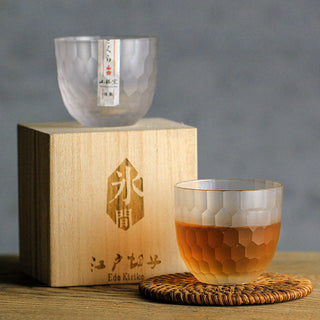
Add a water jug or dropper at each setting. A few drops open up a cask-strength pour, and handing guests the dropper teaches them something without a lecture. Half pours work on the same principle for guests who want one serious dram without committing to a full measure of an expensive bottle.
Building the back bar as a display
The back bar has two jobs that pull against each other. Working bottles need to be within arm's reach of the pour position; the range needs to be visible from every seat. Most whiskey bars solve it by splitting the wall into tiers.
House pours and the twenty or so bottles that sell every night live low, on the speed rail and the first shelf, where the bartender can grab them without turning. Above them sits the range, label out, grouped the same way the printed list is grouped so a guest can point at a region. Rare and collector bottles go highest or behind glass, where they can be seen but need a moment and a step to reach, which slows casual handling.
Shelving for this is usually made to measure, because every back wall is a different width. A wall-mounted rack in standard widths from 60 to 300 cm and 295 cm high gives you a frame to build the tiers on, and its 20 cm depth holds a row of bottles without them hiding each other.

Shelf depth is worth thinking about before it is built. Deep shelves hold more bottles and hide half of them; the one at the back becomes the bottle nobody knows you have. Shallow shelves with a single row keep every label readable and make counting faster. The back bar units and bottle shelving collection has more configurations.
Light is what turns the wall from storage into a menu. Aim small spotlights at the shelves rather than washing the whole wall, keep the color warm, and choose fittings with high color rendering so amber reads as amber rather than brown. LED also matters for the stock itself. Old halogen lamps put heat onto the top shelf, and neither heat nor direct sunlight does a spirit or its label any favors.
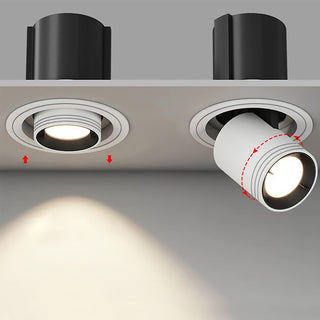
A 30 W fitting with a 24° beam and a color rendering index of 90 lights a shelf section without spilling glare into guests' eyes. For linear strips and track systems, see commercial lighting.
What glasses does a whiskey bar need?
Three shapes cover almost everything. A heavy tumbler takes neat pours and whisky on ice, a tulip-shaped nosing glass does the tastings, and a tall highball glass handles long drinks. The tumbler carries most of the volume and breaks most often, so that is where you buy in depth, and a common starting point is two to three per seat.
Weight and clarity signal quality before the guest tastes anything. Crystal cut or sculpted tumblers are the look most whiskey rooms want, and buying one range across several designs lets you set different moods at the bar and at tables without mixing suppliers.
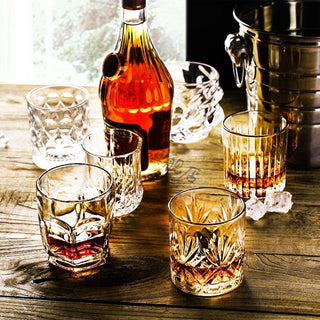
Our guide to choosing whiskey glasses covers which shapes change the drink and which only change the photograph, and crystal glassware for bars explains lead-free crystal and how it handles a commercial glasswasher. The full whiskey glasses range sits in one collection.
Decanters are optional and useful. A house blend, a barrel-aged cocktail batch or a signature bottle poured from cut crystal looks deliberate, and a decanter on the bar top is a conversation starter that costs very little.
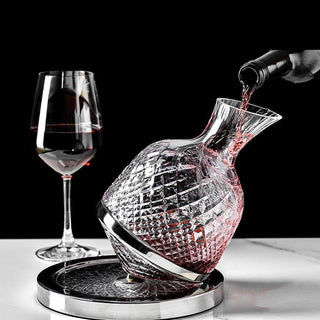
More shapes and sizes are in decanters. Keep decanted spirits turning over quickly, though. A decanter is not airtight, so it suits things that sell within weeks.
Ice for a room that mostly drinks neat
A whiskey bar uses less ice than a cocktail bar, but it is fussier about the ice it does use. Neat pours need none; a dram on the rocks wants one large, slow-melting piece; and a highball menu, which Japanese-style bars have made popular, eats ice fast.
That last point decides the machine. A room that serves whisky neat and on a single rock can live with a compact undercounter unit. Add a highball list, and you are filling tall glasses to the top with cube ice all night, which can double what you need. Size the machine to the busiest highball night, not the average Tuesday.
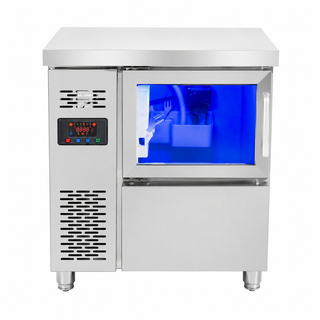
This undercounter model makes up to 68 kg a day into a 15 kg bin, enough for most whiskey rooms with a modest highball list. Our guide to choosing a commercial ice machine walks through the sizing, and the ice makers collection runs up to large modular units.
For the single rock, a press turns a block into a clear 60 mm sphere in front of the guest. It needs a block bigger than the sphere, so freeze large blocks in trays or buy clear block ice rather than expecting cube ice to work.
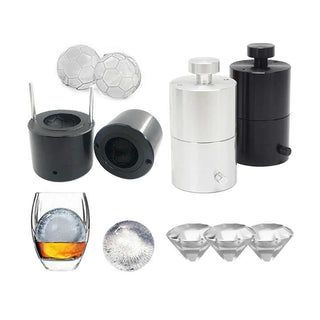
A sphere has less surface for its volume than a handful of cubes, so it chills without watering the drink down in the first ten minutes. The press sits in the bar tools collection alongside the rest of the station kit.
Keeping crystal clear after a thousand washes
Film and water spots show on a crystal tumbler under a spotlight far more than on a pint glass under office lighting. Hand washing is slow and still leaves streaks, and a dirty-looking glass undoes a lot of expensive shelving.
An undercounter glasswasher handles the volume. A front-loading unit running 30 baskets an hour with an 85°C rinse clears a busy night's glassware without a trip to the kitchen.
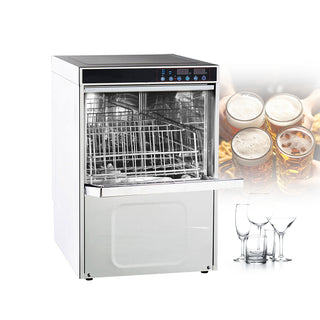
The finishing step is drying. Glasses left to air-dry pick up marks from the water itself, especially in hard-water areas. A countertop dryer and polisher takes a washed glass to a spotless finish in seconds, which saves a bartender from polishing with a cloth for the last half hour of every shift.
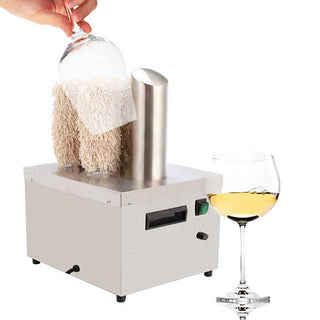
Both sit in glasswashers and polishers. If you are on hard water, fit a softener before the machine; it protects the crystal and the washer's heating element.
Counting the stock you have already paid for
Unrecorded pours are the quiet way a whiskey bar loses money. A generous free-pour here, a staff taste there and a bottle that breaks without a note add up to a real share of the shelf over a year, and nobody sees it happen.
The fix is dull and it works. Set up the till so every whisky is its own button with its measure attached, flights included as set items, and half pours as their own line. Then compare what the till says was sold against what left the bottles. Weighing open bottles on a scale once a week is the fastest way to do that: an open 700 ml bottle's weight tells you how many pours are left to within a measure or two.
A modern POS system with inventory built in does most of the matching for you. The POS systems collection includes touchscreen terminals with built-in receipt printers and handhelds for table service in a room where guests stay seated.
For regulars, consider a bottle-keep program, common in Japanese whisky bars. A guest buys a whole bottle, it is tagged with their name and kept on a shelf of its own, and they drink from it over several visits. It moves a full bottle in one sale, and it gives the guest a reason to come back.
Which licenses cover a bar that sells spirits by the measure?
A whiskey bar needs a full spirits license in every market, not a beer-and-wine permit, alongside food-business registration and fire approval. The alcohol license takes longest almost everywhere, so apply for it before you commit to the fit-out.
United Kingdom
You need a Premises Licence from the local council and a Personal Licence for the Designated Premises Supervisor who is responsible for alcohol sales. The Personal Licence requires the accredited APLH qualification and a basic DBS check. Register as a food business with the council at least 28 days before opening, expect a Food Hygiene Rating inspection, and complete a fire risk assessment. Playing recorded music needs TheMusicLicence from PPL PRS.
Ireland
Ireland is the hardest of the four. A Publican's Licence is issued by Revenue, but only after a District or Circuit Court grants a Court Certificate confirming the premises are suitable and the applicant is fit and proper. The system is transfer-based, so a new Publican's Licence usually means extinguishing an existing one, and most applicants work through a solicitor. Food-business registration and fire safety apply as well.
United States
Licensing runs through your state's Alcohol Beverage Control board, often with county or city sign-off. A full liquor license is usually the slowest step of the whole project and, in quota states, may have to be bought from an existing holder. Add federal TTB registration, a business license, a health department permit with ServSafe or food-handler certification, and a certificate of occupancy. Playing music needs licenses from ASCAP and BMI, and usually SESAC as well.
Japan
Serving by the glass runs under a Restaurant Business Permit from the local health center rather than a separate liquor license, and you must appoint a certified Food Sanitation Manager. If you serve alcohol after midnight as your main business, which describes most whiskey bars, you file a Late-Night Alcohol Service Notification with the police at least ten days before trading late. A fire inspection applies.
Treat this as an overview rather than legal advice, and confirm the current requirements with your local licensing authority before you sign a lease.
Instinct against the numbers
Most of what goes wrong in a new whiskey bar starts as a reasonable instinct about the shelf.
| The instinct | Why it backfires | What works |
|---|---|---|
| Open with every bottle you love | Half of them sell a pour a month and tie up cash for a year | Open at 80–150 and grow the shelf from sales data |
| Keep rare bottles for special occasions | They never get opened, or get opened and forgotten | Put them in a flight or a named tasting evening |
| Stack bottles two or three deep to fit more | The back row disappears from the list and from the count | One row, label out, even if the shelf is longer |
| Let experienced bartenders free-pour | Every generous pour comes off a bottle you paid for | Measures on every spirit and a weekly weigh count |
| Treat ice as an afterthought for a neat-pour bar | A highball menu arrives and the machine runs dry | Size ice to the busiest highball night |
| Save money on glassware | Thin tumblers break, and cheap ones undercut the shelf | Buy the core tumbler in depth, two to three per seat |
For the wider build, from draft lines to the kitchen, our guide to opening a bar covers the rest of the venue zone by zone.
Planning the back bar before the bottles? Send us the wall dimensions, the size of shelf you have in mind and whether highballs are on the list, and we will put together shelving and lighting for the wall, plus the glass and ice to go with it.


