

Anyone planning how to open a burger restaurant should fix the patty first. Its grind and thickness decide whether you smash it on a griddle or char it on a grill, and that choice sizes the fryer and the extraction behind it.
Take one patty. It weighs something between a thin 60-gram smash portion and a thick 180-gram puck. It is ground from chuck, brisket, short rib or a mix, and it carries somewhere around a fifth of its weight in fat. Every one of those numbers has a consequence in the kitchen, and most first-time owners decide them last, after the lease and the fit-out are already fixed.
The easier order is the reverse. Working out how to open a burger restaurant goes better when the patty is specified before the room, because the patty picks the cooking surface, the cooking surface decides the extraction, and the extraction is one of the hardest things to change in a leased building. Fries and shakes then follow from the menu the patty anchors.
Start with the patty, then let it pick the kitchen
Three decisions define the patty: what beef goes in, how coarse the grind is, and how thick it is cooked. Together they decide almost everything on the hot line.
Fat content comes first. A blend around 80 percent lean to 20 percent fat is the common starting point, because fat carries flavor and keeps a patty moist on a hot surface. Leaner blends dry out quickly on a grill, while fattier ones shrink more and throw off more grease, which lands in the drip tray on a griddle or flares on a charbroiler.
Thickness follows the cooking method. A smashed patty is pressed thin onto hot steel and cooks in a couple of minutes, so it needs a flat surface and a lot of heat. A thick patty cooks more slowly, holds a pink center if the rules allow it, and suits either a grill or a clamshell that heats both faces at once.
Once those three are written down, the rest of this guide mostly follows from them. A smash concept needs a large, very hot griddle and plenty of extraction for the smoke from a crust being made on steel. A char-grilled concept needs a grill, a hood sized for flare-ups, and a cook who can manage doneness by feel. Both need a fryer sized for the fries that go with almost every order.
Should you grind your own beef?
Grind in house if the blend is your selling point and you can hold the cold chain; buy formed patties if the concept is about speed and the burger is a fairly standard product. Both work, and the choice decides how much of the kitchen is given to prep.
Grinding your own lets you choose the cuts, set the fat ratio, change the coarseness and use trim from other dishes. It also lets you say on the menu exactly what is in the burger, which is part of the sell for many independent places. The cost is prep time and cold space, plus a handling routine nobody skips. Meat has to stay cold from delivery to the grinder, the grinder parts have to be chilled and cleaned properly, and ground beef has to be used quickly.
A floor-standing grinder rated at 500 kg per hour with a 2,500 W motor is more than a single restaurant grinds in a day, which is the point. It gets through a morning's batch in minutes, so the meat spends less time warming on the bench.
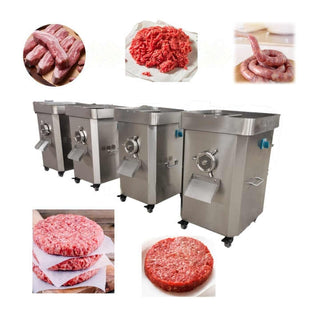
The meat grinders range includes smaller units for restaurants grinding a few kilos at a time. Whatever the size, keep a separate cold area for raw mince, away from buns and toppings, with its own boards and tools. Ground beef carries more risk than whole cuts, because grinding spreads surface bacteria through the meat, and inspectors look at how it is stored and handled.
Formed patties bought from a supplier remove the grinder and much of that handling. The trade-off is less control over the blend and a product that other restaurants may be buying too.
Smash on a griddle or char on a grill?
A smash burger needs a flat-top griddle, and a flame-grilled burger needs a charbroiler. They produce different burgers, so the choice belongs to the concept, and some kitchens run both when the menu has room.
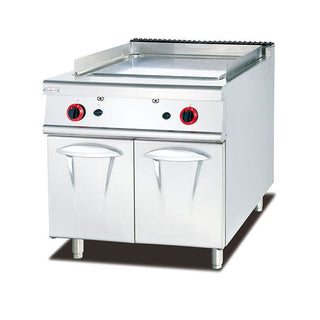
The griddle builds a crust through direct contact with hot steel, and the smash technique pushes as much of the patty as possible into that contact. It rewards a wide surface with even heat and fast recovery after cold meat goes down. A gas griddle with a smooth plate, 9.6 kW of heat and a cabinet underneath is the classic smash-line workhorse, and its 900 mm width holds a row of patties with room for buns alongside.
A clamshell griddle adds a heated top plate that closes over the food and cooks both sides at once. That suits thicker patties and cuts cook time, but it does not smash. On this electric model the lower plate measures 545 × 450 mm and the upper plate 225 × 410 mm, so the lid covers part of the surface; it runs at 12 kW on a 380 V supply, which needs to be confirmed with the electrician before ordering.

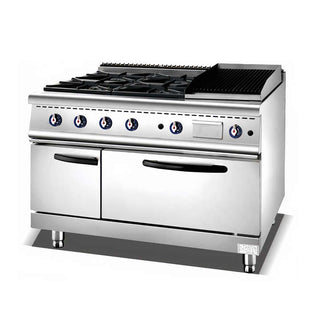
The charbroiler builds flavor a different way. Fat drips onto lava rock or radiants and burns back up as smoke, which gives the grilled taste and the marks. It is harder to cook on consistently, and it creates more smoke and flare-up than a griddle, which affects the hood. This range combines a lava rock grill with four burners and an oven, running on LPG or natural gas, which suits a menu that also grills chicken or vegetables.
Our guide on how to choose a commercial grill compares grill types in more detail. The gas ranges and griddles and grills and charbroilers ranges cover both routes.
How much fryer does a burger restaurant need?
Enough that fries are never the reason a burger waits. In most burger restaurants the fryer runs almost as often as the griddle, and it is the station that falls behind first when a rush builds.
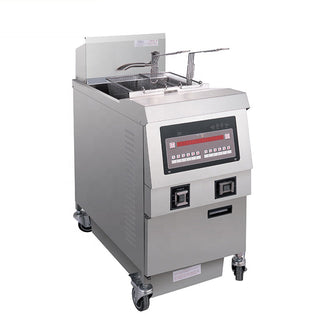
Plan fryer capacity per griddle rather than per restaurant. If most burgers leave with fries and some tables add onion rings or chicken, one fryer per griddle is rarely enough; two tanks, or a double unit, let you keep fries in one and everything else in the other. That separation matters beyond speed. Fries cooked in oil that just fried breaded chicken pick up its flavor, and allergen information gets harder to keep accurate when everything shares one tank.
This double fryer has two 25-liter tanks and comes in gas or electric versions, so it can match whatever supply the line already runs on.
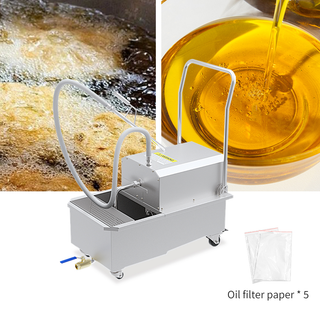
Oil quality is the other half of fryer capacity. Oil breaks down with every basket, and tired oil makes darker, greasier fries long before it looks bad in the tank. Daily filtering extends its life and keeps the product consistent. A filtration cart with a 36–48 liter oil load and a pump rated at 12–32 liters a minute can filter a tank in the time it takes to clean the line at close.
If fried chicken sandwiches are a real part of the menu, a pressure fryer cooks bone-in and thick pieces faster and keeps them juicier, but it is a separate station with its own power needs. The full deep fryers range covers open fryers and filtration.
How counter, table and delivery service change the kitchen
The same patty can be sold three ways, and each one moves the pressure to a different part of the kitchen. The table shows what changes.
| Part of the kitchen | Counter service | Table service | Delivery-led |
|---|---|---|---|
| Patty and cooking method | Smash on a griddle suits short waits | Thicker patty on a grill or clamshell; doneness to order where allowed | Smash or thin patties that hold texture in a box; thick patties steam and sag |
| Fryer | Double fryer per griddle at peak | Double fryer; more sides and starters | Largest share of the load, since nearly every order includes fries |
| Buns | Toasted to order, conveyor toaster in busy sites | Toasted on the griddle or a toaster; better buns justify it | Well toasted to resist steam in transit |
| Shakes | Spindle mixer at the counter | Spindle mixer and soft serve for desserts | Often dropped or limited, as they melt and spill in transit |
| Front of house | Order counter, pickup point, self-serve drinks | Dining room, plates, a small bar | Packing station, bag sealing, courier waiting area |
| Dish area | Mostly trays and prep tools | Full plate and glass washing | Minimal; packaging instead |
Delivery-led burger kitchens change the most. Fries lose their crispness in a closed box, and a thick patty keeps cooking and steaming on the way. Many delivery-first brands move to thinner patties and more heavily toasted buns for that reason. Our guide on how to open a ghost kitchen covers the delivery-only model, including the packing station.
The bun is half the bite
A bun toasted on its cut face holds sauce without going soggy and adds a second layer of crust. That makes toasting a fixed step for every burger, and in a busy restaurant it needs its own equipment rather than a corner of the griddle.
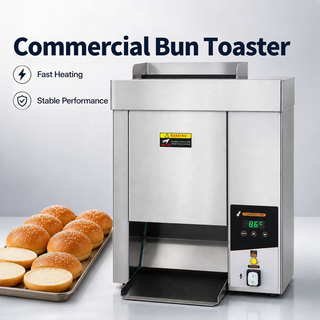
A conveyor toaster takes that job off the griddle. This one is rated at up to 1,400 pieces an hour, adjusts from 50 to 230 °C, and fits buns from 12.2 to 22.6 mm thick, so it handles both a soft potato roll and a thicker brioche.
Smaller restaurants often toast on the griddle instead, which works as long as there is room on the plate. Once buns start competing with patties for space, the toaster pays for itself in griddle area. The conveyor toasters range includes vertical models for tighter lines.
Where do shakes fit on a burger menu?
Shakes are the highest-margin item on most burger menus and the one guests remember, so they belong on the menu from day one if the format is dine-in. The equipment is small, but it needs a place close to the counter.
A spindle mixer is the classic shake machine. It blends ice cream and milk in the cup without the ice-crushing power of a bar blender, which keeps the texture thick. This stainless model comes with one or two spindles and draws only 180 W.

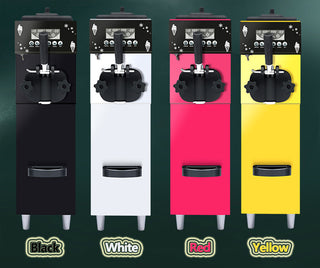
The base is the other decision. Scooped hard ice cream makes a denser shake; soft serve is faster and also covers cones and sundaes. A countertop single-flavor soft serve machine with a 4.5-liter capacity and a 900 W draw fits a restaurant where desserts are a sideline rather than a business of their own.
Our guide on how to choose a soft serve machine covers the step up to multi-flavor units. The drink mixers and milkshake machines and ice cream machines ranges cover both. For fountain drinks, a post-mix system costs less per glass than bottles once volume is steady.
The cold rail and the hood above the line
Behind the griddle sit the parts an inspector looks at first: cold storage around the line, extraction above it, and the washing that deals with the grease.
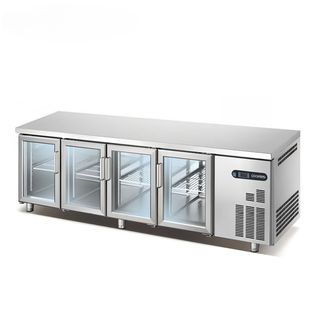
The cold rail keeps toppings and portioned patties within reach of the cook. A refrigerated worktop with storage below puts lettuce, tomato, pickles and sauces at the height where burgers are built, and the day's patties in the drawers or cabinets under it. This four-door unit is 2,250 mm long, which covers a full assembly station.
Bulk stock lives in upright refrigeration away from the line, like this industrial refrigerator offered in sizes from 100 to 1,000 liters. The prep and work tables range covers other worktop layouts.
Extraction is where burger kitchens spend more than they plan. Griddles and fryers throw grease into the air, charbroilers even more, and the hood has to capture it and carry it away safely. A wall-mounted stainless hood with filters, rated at a minimum of 21 m³ per minute, is one option for a compact line; larger or char-grill lines need more.
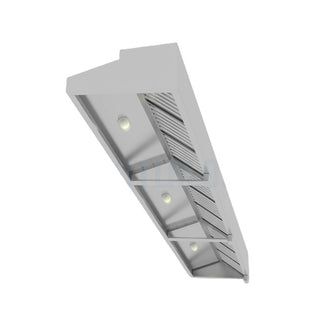
Size the hood to the cooking equipment beneath it, not to the room. Our guide on how to size a kitchen exhaust hood works through the calculation, and the exhaust hoods and extraction range covers wall and island canopies.
For washing, a hood-type dishwasher clears trays and greasy prep tools quickly enough that the line is never short of tools. The hood and conveyor dishwashers range covers the sizes that fit a burger kitchen.
What licenses does a burger restaurant need?
A burger restaurant needs food business registration, a health or hygiene inspection and premises approvals in every market; an alcohol license comes in only if you serve beer or cocktails. Ground beef draws specific attention, especially if the menu offers burgers cooked less than well done.
| Market | Registration and premises | Food-safety people | Ground beef | Alcohol (if served) |
|---|---|---|---|---|
| United States | Business license and EIN; health department permit; certificate of occupancy | Food-handler or ServSafe certification | Health departments set cooking rules for ground beef; undercooked burgers need a consumer advisory on the menu | State ABC liquor license, often with county sign-off; beer-and-wine is usually simpler than full liquor; federal TTB registration |
| United Kingdom | Register with the council at least 28 days before opening; Food Hygiene Rating inspection; fire risk assessment | Checked through the council's hygiene inspection | Burgers served less than thoroughly cooked need validated controls agreed with the local authority | Premises Licence plus a Personal Licence for the Designated Premises Supervisor |
| Australia | Council premises approval and food business notification; fire safety statement | A nominated Food Safety Supervisor in some states | Handled under state food-safety rules; confirm with the council | On-premises liquor license from the state regulator; RSA card for every server of alcohol |
| Germany | Gewerbeanmeldung (business registration); premises suitability and noise protection | EU hygiene rules and a HACCP plan | Covered by EU hygiene rules; confirm local handling requirements | Gaststättenerlaubnis, tied to the person and the premises, with a Führungszeugnis and IHK Gaststättenunterrichtung |
This is an overview, not legal advice. Confirm current requirements with the local authority before signing a lease, and settle your cook-temperature policy early, because it shapes both the menu and the paperwork.
Where burger openings lose money in the first year
The most expensive problem usually starts with extraction. Owners fit a hood for the room they leased, then add a charbroiler or a second fryer when the menu grows, and discover the canopy cannot handle it. Replacing a hood after opening means closing the kitchen, so the hood should be sized for the busiest line you can imagine running, not the one you open with.
A close second is a fryer sized as an afterthought. The griddle gets the attention in planning because it cooks the burger, while the fryer handles something on nearly every ticket. When it falls behind, burgers sit waiting for fries and arrive lukewarm, and guests blame the burger.
Then there is the patty that changes every week. Grinding in house only pays off if the blend is consistent, and that needs a written spec for cuts, fat ratio and grind size, followed by every cook who runs the grinder. Without it, the signature burger tastes different on Tuesday and Saturday, and regulars notice before the owner does.
Menus also grow in the wrong direction. Each new burger adds toppings and prep, and the cold rail fills with ingredients that sell twice a day. A short list built on one excellent patty, with two or three variations, keeps prep manageable and stock fresh. The places that stay open tend to add a special for a month rather than a permanent item.
Finally, delivery can be bolted on without adjusting the product. A burger designed to be eaten within a minute of leaving the griddle does not survive twenty minutes in a bag. If delivery is going to be a real share of sales, test the burger in a box before launch and change the patty thickness, the toasting or the packaging until it arrives in good shape.
For the wider restaurant build, from the dining room to the dish area, our guide on how to open a restaurant covers the rest of the fit-out.
Got a patty spec and a floor plan? Tell us the cooking method, the fryer load you expect and how you plan to sell, whether counter, table or delivery, and we will put together a hot line and a hood that fit it.


