


In short: crystal glassware buys three things — clarity, a thinner rim and the sound — and charges for them in breakage and hand-washing. It earns its place on the pours where the ceremony is part of what the guest is paying for, and nowhere else. Below is where that line falls, and eight glasses that sit on the right side of it.
Almost every article about crystal is about shapes, which is the wrong axis. Shape decides what a glass does to a drink — we covered that for whiskey, for champagne and across the cocktail range.
Crystal is a material question sitting on top of that. The same coupe exists in soda-lime glass and in lead-free crystal, and the choice between them is about what the pour is worth and how the glass is going to be washed.
What crystal actually is now
Traditional crystal used lead oxide to raise the refractive index and soften the glass for cutting. Modern commercial crystal is almost entirely lead-free, using barium, zinc or titanium instead — driven by regulation on food-contact materials and by the fact that nobody wants lead in a glass that holds spirit for an hour.
Lead-free crystal keeps most of what mattered: high clarity, more brilliance than soda-lime glass, and enough strength in the melt to be pulled much thinner. What it gives up is a little of the weight and the ring of the old material, which purists will tell you about and guests will not notice.
The practical translation for a bar: crystal is stronger per millimetre and therefore made thinner, which makes the finished glass more fragile in a busy service and better in the hand.
The three things you are buying
Clarity. Crystal is more transparent and refracts more light, so a clear spirit looks brighter and a cut pattern actually sparkles rather than looking like moulded texture. On a lit back bar this is visible from across the room.
A thinner rim. This is the one that changes the drink. A thin rim delivers liquid to the tongue with nothing in the way; a thick rolled rim puts a lip of glass between the guest and the spirit. It is the single biggest sensory difference between a good glass and an ordinary one.
The sound. A high, sustained note when two glasses meet. This is pure theatre, and theatre is a legitimate thing to buy in a room where people are paying for an occasion.
And the three things it costs
Breakage. Thinner walls break more. A crystal coupe in a busy cocktail service has a materially shorter life than a soda-lime one, and the replacement cost is higher — so the real number is not the unit price, it is price divided by expected shifts.
Washing. Fine crystal is a hand-wash item. Machine washing crystal is possible in a glasswasher with a gentle cycle and correct chemistry, but hot alkaline detergent over hundreds of cycles will etch it into permanent cloudiness — which is the most common way an expensive glassware investment quietly turns into a shelf of dull glasses nobody can explain.
Staff attention. Crystal wants polishing, careful stacking and a bartender who does not put it in a rack with pint glasses. That is training and it is not free.
Where crystal earns its place
The rule that survives contact with a real bar: crystal belongs where the glass is part of the price.
That means the top-shelf neat pour, the fine dining wine service, the members' room, the hotel suite, the signature cocktail that costs three times the house one. In all of those the guest is buying an occasion, the volume is low, and the glass is handled carefully because everything else in that service is too.
It does not mean the high-volume well, the terrace, the beer garden, the function room or anywhere glasses are collected on a tray. Those want a good soda-lime glass with a decent rim, bought in quantity and replaced without ceremony.
Most bars need both, and the mistake is not buying crystal — it is buying one grade of glass for the whole room.
Eight that sit on the right side of the line
1. The ultra-thin whiskey glass, for the pour that justifies it
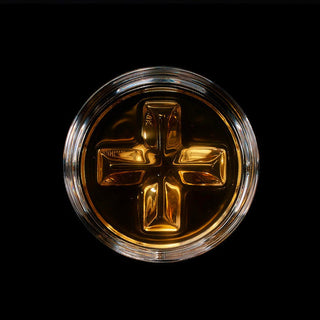
The clearest expression of the argument: an ultra-thin lead-free crystal tumbler is the closest a bar gets to serving whiskey with nothing between the guest and the liquid. Fired at high temperature for clarity, thin enough that you notice at the first sip — and a glass you wash by hand, deliberately, one at a time.
2. The hand-blown coupe, for sparkling and classics
A coupe is a shape that lives or dies on its rim, which makes it the shape where crystal changes most. Hand-blown lead-free crystal gives the thin edge and the clarity that a moulded coupe cannot, and it suits a champagne cocktail or a classic served up.

3. The tulip, where aroma is the point
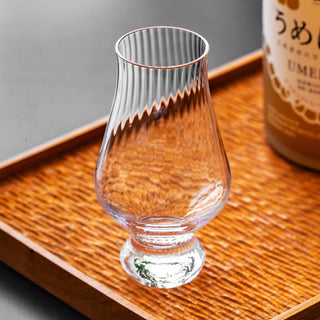
An inward rim concentrates aroma above the liquid, which is why tasting glasses are shaped this way. In crystal it also stays light in the hand, which matters for a glass that gets held and swirled rather than set down.
4. A design-led collection, for a bar with a visual identity
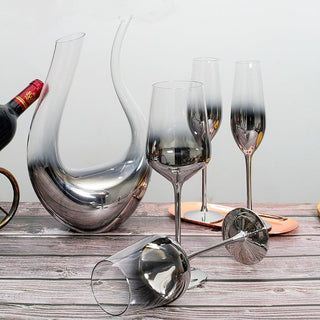
Where the back bar is part of the room's design, a clear-crystal collection covering wine, champagne and a decanter keeps one visual language across the service instead of assembling it from three suppliers.
5. The sculpted whisky glass, as the signature serve
A glass with a sculpted base is a talking point before it is a vessel, and that is a reasonable thing to buy on purpose for one serve on the list. Used across the whole menu it stops being special; used for the flagship pour it does real work.
6. The cut collection, for a bar that wants range without a mixed shelf
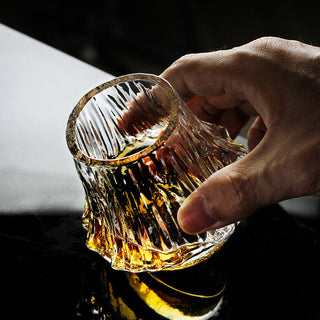
Where the whiskey list is long and the room is the kind where people order by mood, a single collection of many cut designs in one size gives visual variety with one glass volume behind the bar — which is far easier to stock than twenty different glasses.
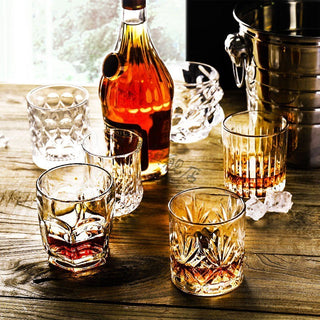
7. The decanter, for the table that has committed
A decanter does almost nothing for a spirit and a great deal for a room: it is the vessel that makes a bottle service or a table pour look like an occasion. Buy one that seals properly, because the ones that do not turn an expensive spirit flat over a fortnight.
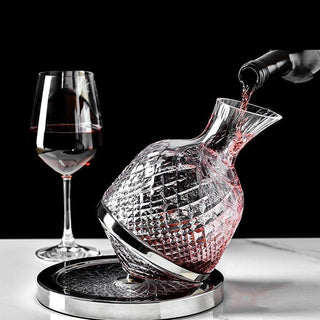
8. The statement set, for private rooms and gifting
A matched glasses-and-decanter set has two jobs a single glass does not: it dresses a private dining room or a suite, and it is a sellable object in venues with a retail shelf. That second use is worth remembering — hotels and members' clubs sell more glassware than they expect to.

How to buy it so it survives
Four rules that decide whether crystal is an investment or a slow write-off.
Buy fewer, better, for a defined use. Two dozen crystal glasses for the top-shelf list beats two hundred spread across the room, where they will be used for everything and broken accordingly.
Decide the washing route before the purchase. Hand-wash means someone's job, on every shift where those glasses are used. If that is not realistic, buy machine-safe glassware and accept a slightly thicker rim.
Rinse before the pour and polish after the wash. Detergent film is what makes a glass look cloudy and a head collapse; polishing is what makes an expensive glass look expensive.
Count breakage as a line, not an accident. Assume replacement, order in a size that lets you replace a few rather than a whole set, and check that the range you chose will still be available in a year.
Choosing glassware for two different halves of one room? Tell us what the top-shelf list looks like and how the glasses get washed, and we will split the order between crystal and everyday properly.


