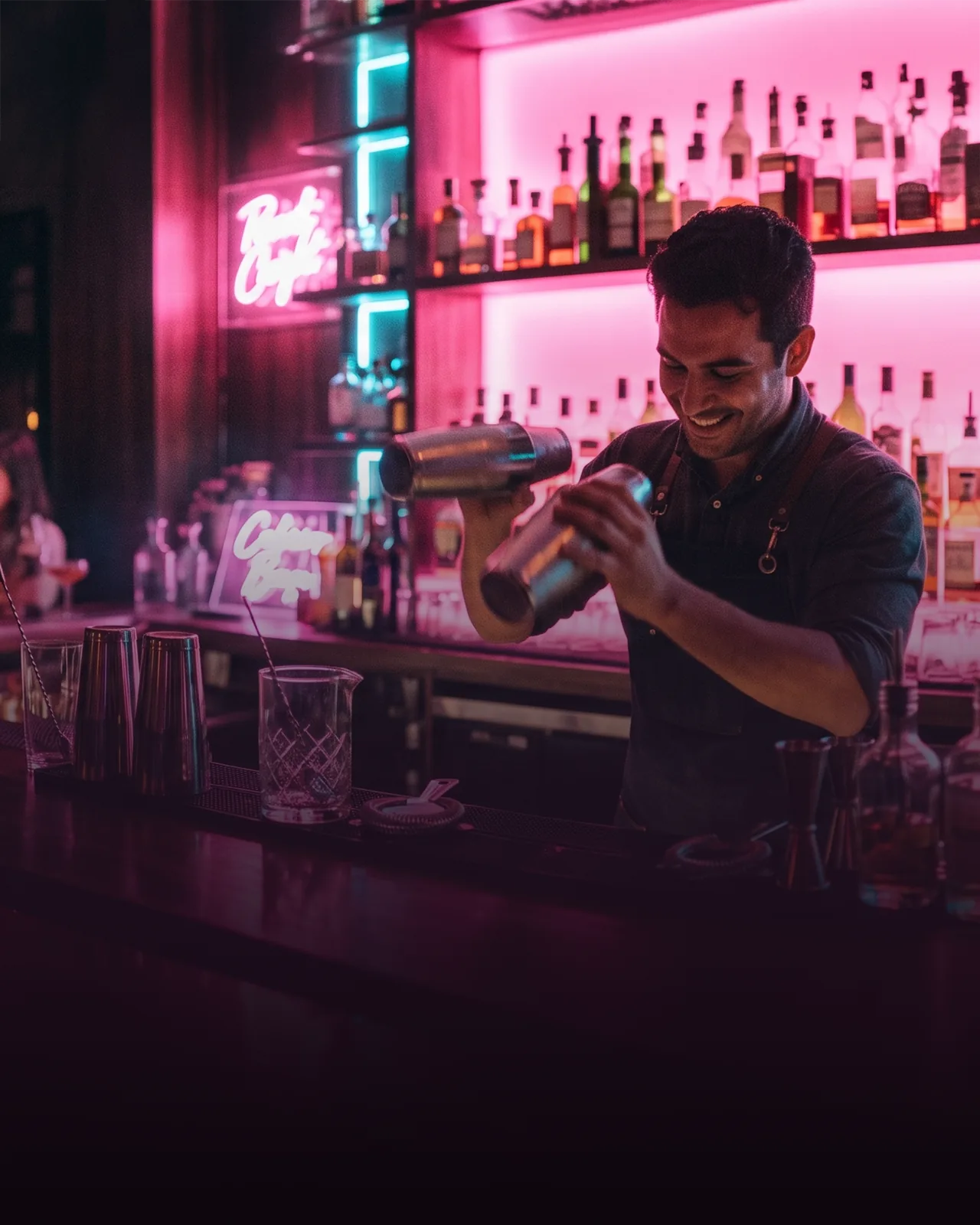


In short: six shapes of cocktail glasses carry almost all service, and everything beyond them is a signature piece bought for a specific drink. Breakage, not purchase price, is what glassware actually costs a bar over a year.
Count the glass types behind a busy bar and you will usually find eleven. Watch a service and you will see four of them used. The other seven were bought for drinks that came off the menu two years ago, and they are still taking up the shelf that the fourth rocks glass should be on.
Glassware is the one bar purchase that gets made emotionally. It is also the one with a running cost most operators never calculate — which is a shame, because that number is the one that should be driving the decision.
The six shapes that carry service
Every classic cocktail lands in one of these. Buy them in real quantity and the rest of the shelf becomes optional.
| Shape | Typical size | Drinks | Why the shape |
|---|---|---|---|
| Coupe | 150–200 ml | Anything served up: daiquiri, sour, martini alternative | Wide bowl releases aroma; no stem contact warms the drink |
| Rocks / old fashioned | 250–350 ml | Spirit-forward, over ice, built in the glass | Wide base takes a large cube; heavy bottom for stirring |
| Highball / collins | 300–400 ml | Long drinks, gin and tonic, mixers | Tall column keeps carbonation below the surface |
| Martini | 150–250 ml | Martini, manhattan, anything stirred and up | The cone shows the drink; the stem keeps hands off it |
| Stemmed goblet | 350–500 ml | Spritz, gin serves, wine-based cocktails | Volume for ice and garnish without diluting the look |
| Shot | 40–60 ml | Shots, layered serves, tasting pours | Small enough to be drunk in one; thick enough to survive the bar |
Two of those do most of the work in most bars: the rocks glass and the highball. If the budget is tight, buy those two deep and the rest shallow.
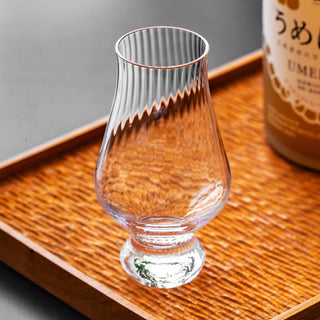
A tulip in crystal covers the coupe and martini territory in one shape, which is the practical answer for a bar that does not want two stemmed lines on the shelf. It also survives a service better than a wide, thin coupe does.
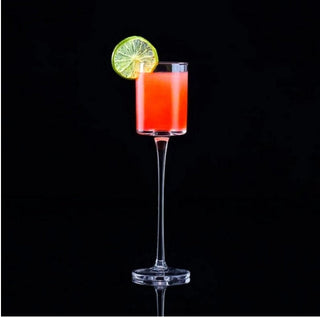
Lead-free crystal at a small capacity is the classic cocktail glass for a serious list — enough clarity to make a clear drink look expensive, small enough that the second one is a decision rather than a chore.
The signature glass earns its shelf space
Now the other half, and it is the half that gets photographed.
A signature glass sells a specific drink. Guests order the shark glass because it is a shark glass, and the drink inside it is almost secondary — which sounds cynical until you look at what happens to that drink's sales when it moves into a plain tumbler.
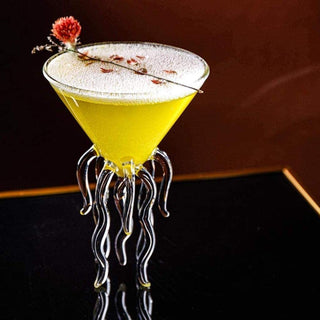
Sculptural borosilicate is the current center of this category: shapes moulded into the base of the glass so the drink appears to sit around them. They are dishwasher-hostile and they photograph extremely well, which is a trade worth making for two or three drinks on a menu rather than for the whole list.
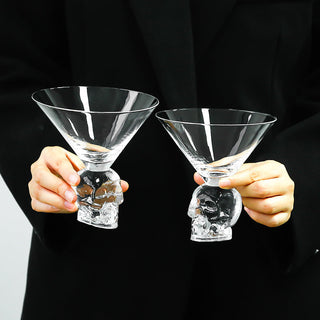
Skulls, pumpkins and horns do the same job in a different register, and they carry seasonal programming — a Halloween menu with the right glassware sells itself in a way a Halloween menu in ordinary glasses does not.
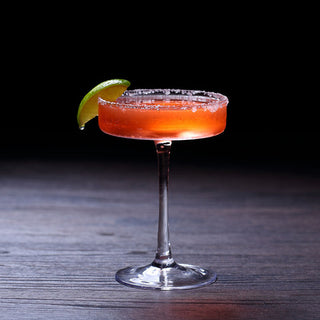
Then there is the quieter version of the same idea: an ordinary drink in a glass with an unusual cut or profile. It costs the same as a plain tumbler, needs no explanation, and still looks deliberate.
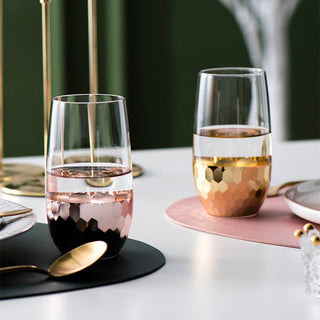
Metallic and gilded finishes signal price point before the drink is tasted, which is exactly what a hotel bar or a private room wants. The trade-off is real: these are hand-wash, and one machine cycle dulls the finish permanently.
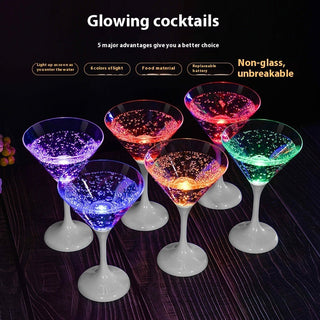
Illuminated glassware belongs to a specific kind of venue — clubs, event bars, poolside service — where the room is dark and a lit drink crossing the floor is advertising. In a quiet cocktail bar it reads as the wrong decade.
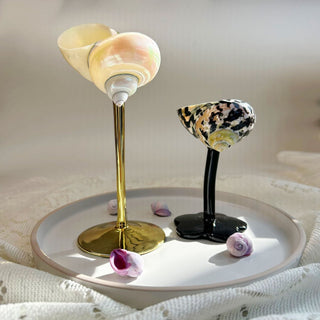
And at the top of the category, hand-blown and handmade pieces stop being glassware and become part of the concept. Beach bars, tiki programs and tasting menus use these as the reason a drink costs what it costs.
The full cocktail and novelty glasses range runs from service tumblers through to one-off shapes.
Breakage is what glassware actually costs
Here is the calculation almost nobody does. A busy bar loses somewhere between a fifth and a half of its glassware every year — more in a high-volume room, more again with stemmed lines. Over three years, most bars have paid for their glassware two or three times.
Which means the purchase price is close to irrelevant next to how the glass survives a shift. Four things drive the number, and only one of them is the glass itself.
The rack. Glasses that touch each other in a glasswasher break. Open-format racks with individual cells cost more once and save continuously, and this is the single highest-return change a bar can make.
Thermal shock. A chilled glass into a hot cycle, or a hot glass into ice, cracks at the weakest point — usually where the bowl meets the stem. Let glasses reach room temperature before either.
Stems. Most stemware dies during polishing, twisted in a cloth. Supporting the bowl instead of the stem is a five-minute training point that pays for itself in a month.
Rim thickness. A thin rim drinks better and chips first. This is a genuine trade rather than a quality ladder — thin rims belong on the drinks where the guest is paying attention, thick rims on the ones being carried across a busy floor.
The practical response is to run two tiers deliberately: a service tier bought to be replaced, and a signature tier washed by hand and counted.
Crystal, borosilicate or stainless?
Three materials, three different failure modes.
Lead-free crystal gives the clarity and the ring that says quality. It is what a serious cocktail list should be served in, and it is the least forgiving in a busy glasswasher.
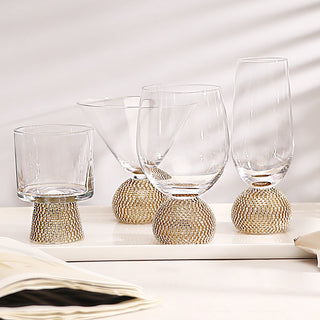
Borosilicate handles thermal shock far better than ordinary soda-lime glass, which is why hand-blown novelty pieces and double-walled glasses use it. It survives the swing from hot wash to iced drink that cracks cheaper glass.
Stainless steel does not break at all, which makes it the right answer for pool bars, terraces, festivals and any floor made of stone. It gives up transparency, so it belongs where the risk is high rather than where the drink is the show.
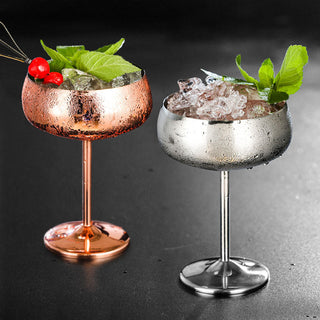
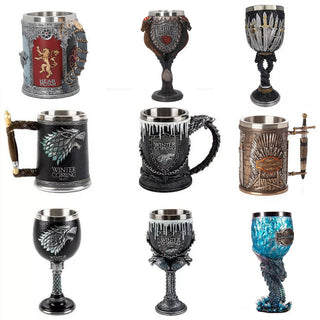
Metal also carries a theme better than glass does — themed bars, medieval and fantasy concepts, and anywhere a drink is meant to feel like an object rather than a serve.
How many cocktail glasses does a bar need?
Work from peak, not from covers. The number you need on the shelf is roughly two to three times the maximum number of that drink in circulation at once — in guests' hands, on tables, dirty, and in the wash.
Three is the safe multiplier for anything that goes through a machine during service; two is enough for a signature glass used for one drink on the list. Below two, a busy Saturday means running out and serving in the wrong glass, which undoes the reason the glass was bought.
Then add a replacement buffer. Ordering more of a discontinued shape is the recurring frustration of this category — limited runs look wonderful until the third one breaks and the shelf no longer matches. If a glass is central to a signature drink, buy the spares at the same time as the originals.
Where bars over-buy cocktail glasses
- One glass per cocktail. A menu of fourteen drinks does not need fourteen glasses. Group by shape and buy the shapes deep.
- Buying the signature tier first. The photogenic glasses are the reward for having enough of the boring ones.
- Ignoring the rack. Cheaper glasses in a bad rack cost more per year than good glasses in a good one.
- Machine-washing decorated glass. Gilded, painted and hand-cut finishes are hand-wash, permanently.
- Limited runs with no spares. Order the replacements with the originals or accept a mismatched shelf.
- Glass on a wet stone floor. Terraces and pool bars want steel, and the argument ends the first time somebody clears broken glass out of a pool.
If you are stocking a bar from nothing, buy rocks and highball glasses at three times peak, add one stemmed line, and spend what is left on two signature glasses for the drinks you want photographed.
Working out how deep to buy each shape? Tell us your drinks list and your busiest hour, and we will split the order into a service tier and a signature tier so the two are not competing for the same budget.


