


In short: shape and rim thickness are the only parts of whiskey glasses that reach the drink. Everything else is presentation — worth paying for, but for a different reason. A decanter does nothing for the spirit inside it, so buy one for the room, and make sure it seals.
A guest orders the most expensive dram on the back bar. It arrives in a thick, straight-sided tumbler that came free with a keg order. Nothing is wrong with the pour, the measure or the ice. The drink still tastes like less than it cost.
That gap is what whiskey glasses are actually for. Two of their properties change what reaches the guest, and the rest change what the guest sees. Both matter in a bar, but they are separate purchases and conflating them is how venues end up with a shelf of heavy crystal that nobody wants to drink from.
What does the shape of a whiskey glass actually do?
It decides where the aroma goes. Whiskey gives off volatile aromatics constantly, and the width of the rim relative to the bowl decides whether they gather above the liquid or drift off it.
A tulip — wide bowl, waist, narrowed rim — funnels those aromatics into a column right where the nose sits. That is why every distillery tasting room uses one, and why a cask-strength single malt in a tulip smells like a different liquid than the same pour in a tumbler.
A straight-sided rocks glass does the opposite on purpose. The aroma disperses, the ethanol sting goes with it, and what is left is a wide, cold surface that suits a spirit served over ice or built into an Old Fashioned. It flatters a highball and it hides a single malt, in exactly that order.
| Glass | What it does to the drink | Serve it for |
|---|---|---|
| Tulip / nosing glass | Concentrates aroma at the rim | Tastings, flights, cask strength, premium neat pours |
| Rocks tumbler, straight | Disperses aroma, wide surface for ice | Old Fashioned, whiskey on the rocks, blends |
| Rocks tumbler, heavy base | Same, plus stability and weight in the hand | Lounge and hotel service, slow drinking |
| Highball | Tall column, keeps carbonation below the rim | Whisky highball, mixed long drinks |
| Cigar glass with rest | Holds the cigar clear of the bar top | Cigar lounges, terraces, members' rooms |
Most bars need two of these, not five. A rocks glass carries the volume, and a nosing glass exists for the pours where the price justifies the ceremony.
Rim, weight and why glasses break where they do
A thin rim delivers the liquid to the tongue with nothing in the way, which is the second thing a glass does to a drink. A thick rolled rim puts a lip of glass between the spirit and the palate — more durable, less precise. This is a genuine trade-off, not a quality ladder: the thin rim is better to drink from and it is the first part to chip.
An ultra-thin lead-free crystal glass is the extreme of that argument. It is the closest a bar gets to serving whiskey with nothing between the guest and the liquid, and it is a glass you wash by hand, deliberately, one at a time.
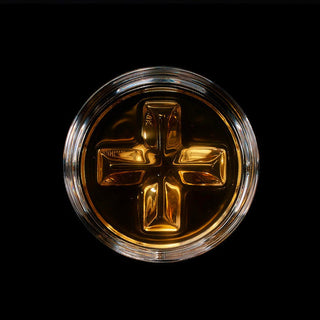
At the other end, borosilicate handles thermal shock far better than ordinary soda-lime glass — the swing from hot wash water to an ice-filled pour is what cracks cheap tumblers, and borosilicate simply does not care.
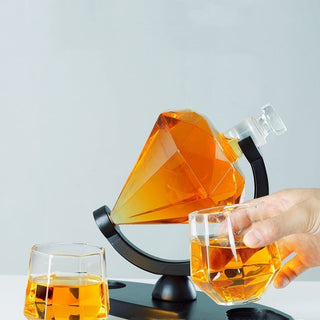
Weight is the third variable and it is misread constantly. A heavy base makes a glass stable on a wobbly table and satisfying to hold, but heavy glasses do more damage to each other in a rack than light ones do. If your breakage happens in the glasswasher rather than on the floor, the base weight is the reason.
Which whiskey glasses should a bar buy in volume?
The working answer: one plain rocks glass in real numbers, one distinctive glass for the pours you want photographed. Service glassware and signature glassware are different budgets doing different jobs.
For the volume line, what matters is that every glass on the shelf matches. Buying a range of designs at a single price point per glass lets a venue run one look across the bar and still replace breakages piece by piece rather than by the case.
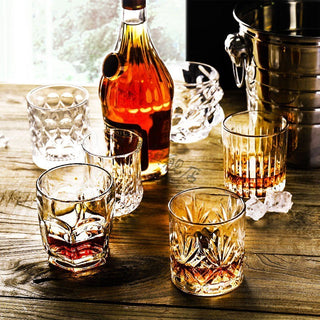
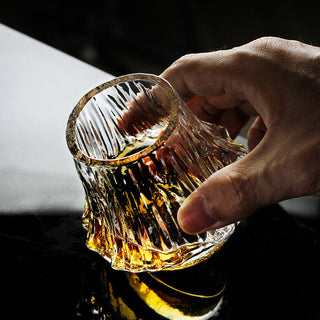
The signature glass is where a bar spends deliberately. Japanese-style crystal — the Mount Fuji profile with the peak moulded into the base, the honeycomb cut, the wood-texture finish — reads as intent from across a room, and photographs well enough that guests do the marketing.
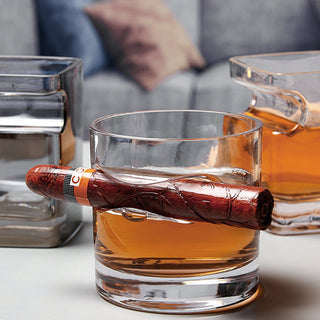
A cigar lounge has a specific problem no ordinary tumbler solves: the cigar has nowhere to go. A moulded rest on the rim keeps it out of an ashtray and off the bar, and it makes the pairing look intentional rather than improvised.
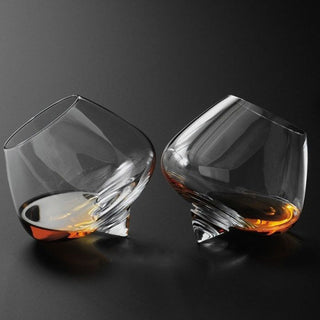
Novelty shapes earn their place at the table rather than the bar. A spinning base keeps the glass moving without spilling, which is the kind of detail a guest shows the person next to them — and the reason it belongs on a lounge table, not in a service rack.
The full whiskey glasses range sits alongside the wider glassware catalog if you are matching a set across the bar.
Does whiskey actually need a decanter?
No — and this is the single most useful thing to know before buying one. A decanter does nothing chemically for a spirit. Wine decanting works because air softens tannins and lifts aromatics in a young red. Whiskey has already spent years in oak, sits at 40% ABV or above, and has nothing left to open up.
What a decanter does is visual and operational. It puts the spirit at eye level, it makes a back bar or a private room look considered, and it lets a venue serve from something better looking than a supermarket bottle. Those are real reasons. They are just not flavor reasons.
Two things then decide whether the decanter is any good.
The stopper has to seal. A loose stopper lets alcohol evaporate over weeks, and a spirit that has lost some of its alcohol tastes flat and slightly sweet. Ground-glass stoppers seal properly; decorative ones that only sit in the neck do not.
Lead-free is not marketing. Traditional lead crystal contains lead oxide, and spirits stored in it for long periods can pick up lead from the glass. For a decanter that gets filled and emptied within a week, this is academic. For one that holds the same whiskey on a shelf for months, buy lead-free.
| Decanter type | What it is for | Fits |
|---|---|---|
| Cut-crystal, gift boxed | Display and gifting; classic back bar | Hotel bars, corporate gifts, VIP service |
| Sculptural / figurative | Conversation piece, focal point | Private rooms, member's clubs, home bars |
| Small format, ~500 ml | Table service of a single spirit | Tableside pours, tastings, small counters |
| Decanter with matching glasses | Complete serve for a room | Suites, private dining, gifting |
| Wine decanter | Aeration — a genuinely different job | Restaurants, wine bars |
The classic answer is a cut-crystal decanter with a proper stopper and a box, which covers both back-bar display and the gift that a hotel sends to a suite.
Small-format decanters are the underrated ones in a venue. Half a liter is one bottle decanted for the evening, which is the right amount to leave on a table without losing control of stock.
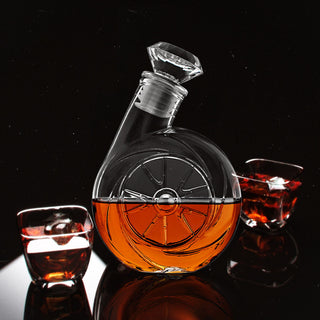
Sculptural pieces are bought for the room rather than the shelf — a dragon or a shark-and-glasses set is a focal point, and it works precisely because it is not subtle.
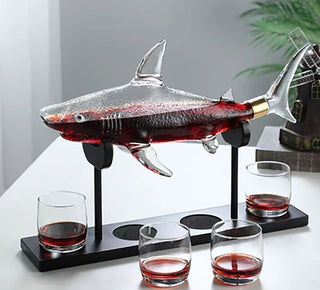
Where the decanter is going to a guest rather than staying behind the bar, a matched set with glasses solves the whole present in one box.
Wine decanters do a different job
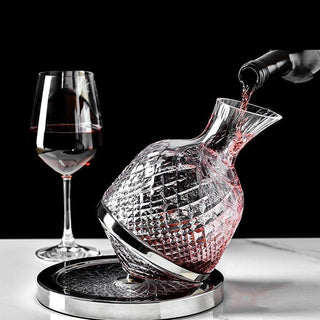
Worth separating clearly, because the two get bought interchangeably and only one of them changes what is in the glass. A wine decanter is an aeration tool: wide base, large surface area, and in the case of waterfall designs a cascade that exposes the wine to air as it pours.
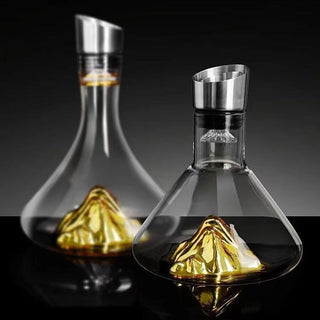
For a restaurant running young reds by the bottle, that is a service upgrade guests can taste. For whiskey, the same vessel is furniture. Both are worth owning — the decanters range covers both — as long as you buy each one for what it actually does.
Common mistakes when buying whiskey glasses
- Buying one glass for everything. A rocks tumbler cannot do a tasting flight and a nosing glass is wrong for an Old Fashioned. Two lines, not one compromise.
- Putting decorated glass through the machine. Gold foil, hand-painted and hand-cut finishes are hand-wash. One cycle is enough to dull them permanently.
- Assuming a decanter improves the whiskey. It improves the room. Buy it for that and you will not be disappointed.
- Ignoring the stopper. A decanter that does not seal is a slow leak of the most expensive ingredient in the bottle.
- Ordering a set you cannot replace. Limited runs look good until the third one breaks and the shelf no longer matches.
- Confusing heavy with durable. Weight helps on the table and hurts in the rack.
If the bar is starting from nothing, buy the plain rocks line first and in quantity, add six nosing glasses for the premium pours, and treat the decanter as a decision about the room rather than the whiskey.
Matching glassware across a whole bar? Tell us how many covers you run and what sits on the top shelf, and we will put a service line and a signature line together that survive your glasswasher.


