


In short: champagne glasses are a trade-off between bubbles and aroma. A narrow flute holds the mousse and hides the wine; a tulip keeps most of the bubbles and lets the wine smell like something. For venue service, breakage at the stem decides the real cost.
Pour the same bottle into three glasses and time them. In a coupe the mousse is gone inside two minutes. In a flute it is still climbing after ten. In a tulip it lasts nearly as long as the flute, and the wine actually smells of something.
That is the whole decision, and most venues make it by looking at photographs instead. Which is fair enough — champagne glasses are bought to be seen as much as used. It just helps to know what each shape costs you.
Why shape decides how long the bubbles last
Carbon dioxide escapes at the surface. A tall narrow bowl gives the wine a small surface area relative to its volume, so the gas leaves slowly and the bead keeps rising. A wide shallow bowl does the opposite: more surface, faster loss, flat wine.
The same geometry works against aroma. A narrow chimney traps the aromatics below the rim where the nose cannot reach them, which is why a serious grower champagne in a standard flute smells of almost nothing. The tulip exists because it solves both: a bowl wide enough to release aroma, a rim narrowed enough to gather it and slow the gas.
| Glass | Bubble retention | Aroma | Use it for |
|---|---|---|---|
| Flute | Highest | Muted | Prosecco, house fizz, receptions, anything served fast |
| Tulip | High | Good | Vintage and grower champagne, by-the-glass programs |
| Coupe | Lowest | Open but fleeting | Cocktails, styling, toasts that get drunk immediately |
| White-wine glass | Moderate | Best | Older vintages, tastings, fine-dining pairings |
| Stemless | High, but warms fast | Moderate | Terraces, events, high-breakage rooms |
Most venues need two of these. A flute or tulip carries service; a coupe exists for the drinks list and the photographs.
What is a nucleation point and does it matter?
Bubbles do not form in the liquid — they form on imperfections in the glass. A brand-new, perfectly polished flute produces a disappointing, erratic bead because there is nothing for the gas to cling to. Many quality flutes carry a deliberate laser-etched ring at the base of the bowl for exactly this reason: a fixed nucleation site that gives a steady column of bubbles from the bottom of the glass to the surface.
In practice, a glass that has been through a commercial washer a few hundred times develops its own microscopic texture and behaves the same way. Which is worth knowing before paying a premium for the feature in a venue that runs a glasswasher every night.
The stem is not decoration
Sparkling wine is served at around 8 to 10 °C, and it stops being pleasant somewhere past 14. A hand wrapped around a bowl puts 36 °C against the wine, so the stem exists to keep it away — the reason stemware survives in an industry that otherwise optimizes everything for durability.
Stemless glasses reverse that bargain. They warm the wine faster and they cannot break at the stem, which is where nearly all stemware dies. On a pool terrace or at a standing event, that trade is worth making.
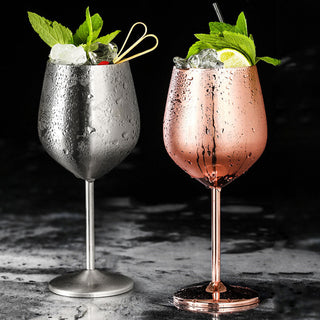
Stainless steel takes the argument further: unbreakable, insulating, and immune to the concrete floor that eats glassware at outdoor events. It gives up clarity in exchange, so it belongs poolside rather than in a dining room.
Which champagne glasses suit a bar, and which suit a table?
Service glassware and display glassware are two purchases. The service line needs to survive a rack; the display line needs to make somebody reach for a phone.
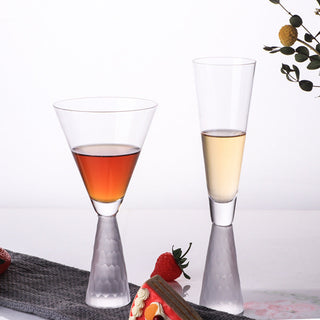
For a venue running sparkling by the glass, a slim luxury bowl covers both wine and champagne service without keeping two lines on the shelf — useful when back-bar space is the constraint rather than budget.
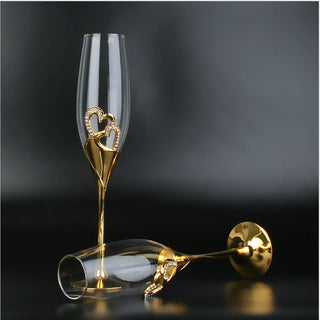
Where the champagne is the occasion rather than the drink — anniversaries, suites, private dining — a paired set does work no single glass can. A gold-finished pair reads as a gift before anyone has poured anything.
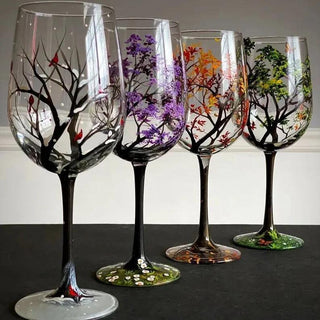
Hand-finished glassware sits in the same category. An airbrushed bowl at 575 ml is a wine glass by capacity and a display piece by intent, which is exactly right for tasting flights and the top of a wine list.
And where a room wants one coherent look, a matched wine, champagne and decanter set stops the table from reading as three separate purchases.
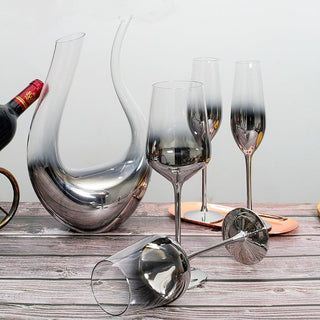
The full wine and champagne glasses range sits next to the cocktail and novelty glasses if you are matching a coupe into a drinks list rather than a wine one.
Serving temperature and the two-stage pour
Two service habits do more for a glass of champagne than any upgrade in glassware.
The first is temperature: 8 to 10 °C for non-vintage, a little warmer for vintage, and never straight from a freezer — over-chilled sparkling wine is mute and stays mute as it warms in the glass.
The second is the pour. Fill a third, let the mousse settle, then top up to roughly two-thirds. A single fast pour into a dry glass throws foam over the rim and wastes both the wine and the bubbles that were meant to last the drink. Tilting the glass on the first stage helps for the same reason it helps with beer.
Never fill to the rim. The empty space above the wine is where the aromatics collect, and it is the only reason to have chosen a tulip in the first place.
Breakage is the number that actually matters
Over a year, a busy venue spends more replacing champagne glasses than it spent buying them. Three things drive that number, and none of them are the price of the glass.
Rack fit. Stemware breaks in the washer far more often than on the floor, and it breaks because the rack lets glasses touch. Open-format stemware racks that hold each glass in its own cell pay for themselves in a season.
Thermal shock. A chilled glass going into a hot wash cycle, or a hot glass out of the washer meeting an ice bucket, cracks at the point where the bowl meets the stem. Let glasses come back to room temperature before either.
Polishing. Most stems snap while being twisted dry in a cloth. Support the bowl, not the stem, and train it once rather than repeating it every season.
Where venues get champagne glasses wrong
- Buying coupes for service. They look wonderful and they are flat before the guest has finished the first sip. Keep them for cocktails.
- One glass for everything. A flute flatters cheap prosecco and mutes good champagne; the two need different bowls.
- Over-chilling. Below about 6 °C the wine gives up its aroma entirely, and no glass will get it back.
- Filling to the rim. It looks generous and destroys the reason the glass has a shape.
- Machine-washing decorated glass. Gold rims and hand-painted bowls are hand-wash, and one cycle is permanent.
- Ignoring the rack. The cheapest way to cut glassware spend is a better rack, not a cheaper glass.
If you are equipping from scratch, buy the tulip line in service quantity, add a dozen coupes for the cocktail list, and put stemless or steel on the terrace where the floor is unforgiving.
Working out how many glasses a service actually needs? Tell us your covers, your by-the-glass list and where the glasswasher sits, and we will size the order so you are not reordering in month two.


