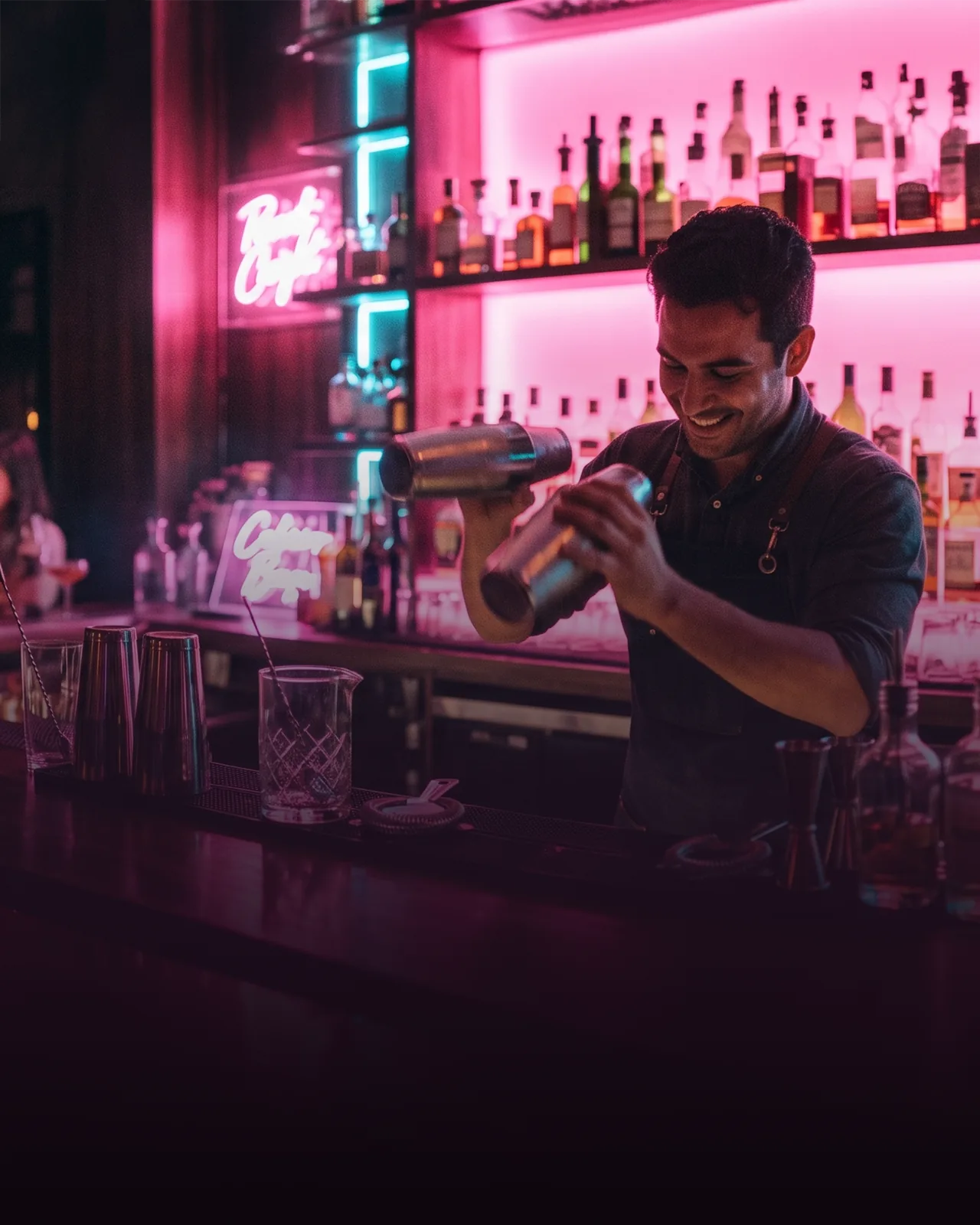


Working out how to open a bar comes down to four decisions: your concept, the equipment each zone needs, what it costs, and the licences that let you trade. This guide walks the whole build — from the back bar to the glasswasher — with the full equipment checklist and a market-by-market look at permits.
Most people planning a bar start with the fun part — the drinks list, the fit-out, the name over the door. The part that quietly decides whether service holds up on a busy Friday is the equipment behind the bar: how fast you can pour, how cold the glass is, whether you run out of ice at 9pm. Bar equipment is also one of the few launch costs you control precisely — rent and licences vary wildly, but a back-bar fit-out is a known number. Depending on your concept, the equipment ranges from a modest kit for a small cocktail-led spot to a substantial fit-out once you add draft beer, an ice machine, warewashing, and cold storage. This guide covers how to open a bar end to end: it breaks the whole build into zones, tells you what each one needs from our own catalog, and covers the licences you need to open the doors.
How does your bar concept decide the equipment?
Your concept sets your equipment list before you buy a single thing — so settle it first. A cocktail bar lives or dies on ice, glassware, and speed of build, so its money goes into an ice machine, blenders, and a well-stocked back bar. A pub or beer-led bar puts its budget into draft: a multi-tap kegerator, cold storage, and glass chilling. A high-volume sports bar needs throughput everywhere — more taps, a bigger ice machine, a fast glasswasher. A wine bar needs almost none of the above, but good stemware and proper chilling.
Write your service down as a sequence — a guest orders, and you trace every drink from keg or bottle to a clean, cold glass in their hand. Every step in that chain is a piece of equipment. Do this before you shop, because it stops you buying a four-figure machine you will use twice a week while skimping on the ice maker you lean on every single shift. If you want to see the full range for each zone as you plan, our bar equipment collection is organized the same way — by station.
Concept also sets two things beyond the kit: your licence and your footprint. A wet-led bar that mostly sells alcohol is often licensed differently from one that serves substantial food, and in some markets the food-led route is quicker and cheaper to approve. The format also decides how much back-bar and cellar space you need before you sign a lease — a multi-tap draft bar needs a cool, plumbed cellar or under-bar space that a cocktail bar can do without. Settle the concept before you commit to a site, because the wrong room forces expensive compromises on both.
What equipment do you need to open a bar?
A working bar breaks into six zones: draft beer, cocktails and mixing, ice and chilling, mixers and soft drinks, glassware, and the support kit (warewashing and cold storage). You will not need every zone — that depends on your concept — but this is the full checklist to build from.
Draft beer
If you pour draft, the kegerator is the heart of the bar. It stores kegs at serving temperature and feeds your taps, and the number of taps is a real decision: too few and you bottleneck at peak, too many and you tie up cash in beer that goes flat. A four-tap unit suits a small bar; six to eight taps fit a pub or a beer-forward venue. Our commercial draft kegerator comes in 4, 6, and 8-tap builds, in stainless or black — the product card shows the live price for each configuration.
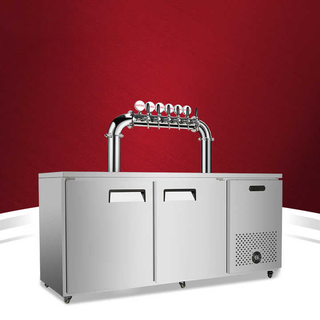
Everything else in the draft line — CO2, chillers, tap towers, glass rinsers — hangs off that base. Browse the full beer dispensing collection to spec the line to your tap count.
Cocktails and mixing
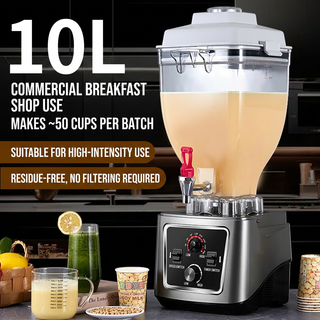
Cocktail service needs a blender and a shaker at minimum, and a lot more speed if drinks are your headline. A heavy-duty commercial bar blender handles frozen drinks, purées, and crushed ice; ours comes in jug sizes from 4 to 15 liters, so you size it to your volume.
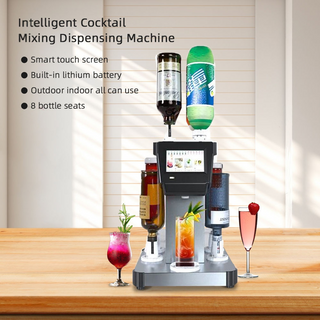
High-volume or short-staffed bars increasingly add an automatic cocktail machine, which pours consistent, pre-programmed builds and takes the guesswork out of a new bartender's shift. Our fully automatic cocktail machine comes as an 8-bottle or a 13-bottle unit. It is not for every bar, but for a busy venue it pays back in speed and consistency. See the full range in cocktail automation.
Ice and chilling
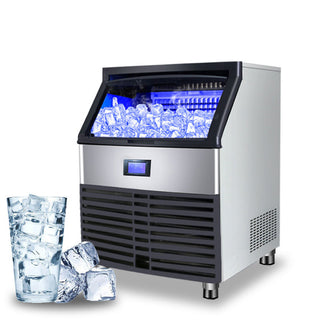
Ice is the single most underestimated piece of a new bar. A bar goes through far more than owners expect, and running out mid-service is a hard stop — you cannot build a drink without it. Size the machine to your busiest night with headroom, not your average. Our automatic cube ice maker produces 80 to 120 kg a day depending on the model; a high-volume bar steps up to a larger daily-output machine.
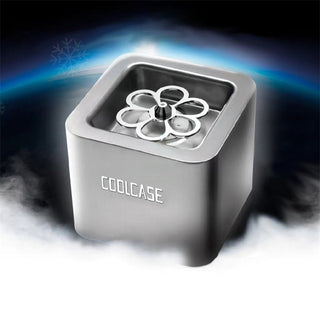
The detail that separates a good bar from an average one is the cold glass. A frosted glass keeps a cocktail or a beer colder for longer and reads as care the moment it hits the table. A glass froster chills glassware on demand at the bar — a small spend that guests notice more than almost anything else on this list.
Mixers and soft drinks
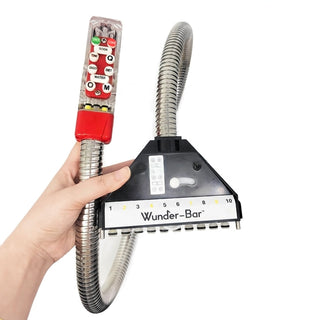
Every bar sells more soft drinks and mixers than it plans for, and buying them by the bottle bleeds margin. A post-mix soda gun dispenses colas, tonics, and sodas from a single tap by mixing syrup with carbonated water on the fly — cheaper per glass and faster to pour. Our 10-button post-mix soda gun with under-counter chiller is a full system, and it pays back fastest in high-volume rooms.
Glassware
Glassware is where a bar shows its concept, and it is a running cost as much as a launch one — glasses break. Buy in depth on your core shapes so you are never short mid-service, and keep a signature piece or two for your hero drinks. Our cocktail glasses run from simple house shapes to statement pieces, with whiskey glasses and decanters for a spirits-led back bar. Stock deeper than you think you need — a Friday night eats glassware.
Support: warewashing, cold storage, and point of sale
Three pieces of back-of-bar kit make everything else work. An undercounter glasswasher turns dirty glasses around in a couple of minutes so you are not chasing clean stock at peak — our commercial glasswashers start with compact front-loading models. A back-bar bottle fridge keeps mixers, white wine, and bottled beer at hand and cold; a three-door bar refrigerator is the standard choice. And you need a point-of-sale system — a till and card terminal that opens tabs, splits bills, and tracks stock — sized to how many transactions cross the bar at peak. Skip any of the three and your service stalls exactly when it should not.
How do you lay out a bar for speed?
Layout decides service speed more than any single machine. The best-equipped bar in the world will still bottleneck if the bartender takes three steps for every drink. The principle is simple: everything used on the most common builds should be within one arm's reach of the pour position, so a bartender can make a drink without moving their feet.
Build the well first — the central workstation. A speed rail holds your house pour spirits and mixers at the fingertips; the ice bin sits beside it; the garnish tray, jigger, and tools sit on the rail. Glassware lives directly above or below the well so reaching for a glass is a single motion. A well-organized set of bar tools, speed rails, and pour spouts is cheap relative to the rest of the build, but it is the difference between eight drinks a minute and four.
Then plan the stations. A small bar runs one well; a busy bar needs two or more identical wells so two bartenders never cross paths, each with its own POS terminal and ice. Keep the dirty-glass path short — a bus tub and the glasswasher near the end of the bar, not across the room — so clearing does not block pouring. Draft taps go where the queue forms; the ice machine and back-bar fridge sit underneath or immediately behind. Map this on paper before you fix a single fitting, because moving plumbing and drainage after the fit-out is the most expensive change you can make.
What lighting and sound does a bar need?
Atmosphere is equipment too, and it is what turns a room full of kit into a bar people want to stay in. Three systems carry it: lighting, sound, and — for the right concept — effects. Get them zoned and controllable, because the same room needs to read differently at 6pm and at midnight.
Lighting should be dimmable and zoned: warm, bright-enough light over the bar so bartenders can work and guests can read a menu, softer pools over seating, and accent light on the back bar to make the bottles the hero. Put it on dimmers or scenes so one control shifts the room from early-evening dining to late-night energy. A sound system sized to the room — enough speakers for even coverage, not one loud corner — sets the pace of the night; a sports bar layers in screens and video walls for match days.
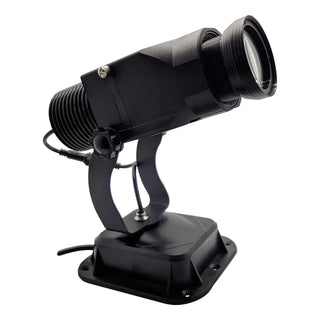
For late-night, club, and event-led bars, effects earn their place: haze to make beams visible, moving heads or wash lighting for a dance floor, and branded projection to put your logo on a wall or floor. A gobo projector throws your logo or a promo in sharp light for the price of a decoration that guests photograph and share. Browse lighting and effects to match the kit to how late and how loud your concept runs.
How much does bar equipment cost?
Budget your bar equipment by zone, not as one lump sum — it is the only way to see where your concept should spend and where it can skip. The table below maps the core kit in each zone to where your money should go. A cocktail bar might skip draft entirely; a wine bar skips most of the list. Build your number from the zones you actually run.
| Zone | Core equipment | Spend priority |
|---|---|---|
| Draft beer | Kegerator (4–8 tap) | Big-ticket (if you pour draft) |
| Cocktails | Bar blender; automatic cocktail machine | Blender low; automation big-ticket & optional |
| Ice & chilling | Cube ice maker; glass froster | Ice maker essential; froster low, high-impact |
| Mixers | Post-mix soda gun system | Mid; pays back in high volume |
| Warewashing | Undercounter glasswasher | Mid; do not skip |
| Cold storage | Three-door back-bar fridge | Mid; essential |
| Glassware | Cocktail / whiskey glasses | Low each, but recurring |
Read the table in tiers. A starter bar — cocktail-led, no draft — opens on the essentials: an ice maker, a blender, a glasswasher, a bottle fridge, and glassware. A mid-tier bar adds the bigger-ticket items: draft beer, a glass froster, a soda gun. A full-throughput venue layers on multiple taps, a larger ice machine, automation, and a faster glasswasher. Equipment is only one line of the budget — rent, fit-out, licences, and opening stock sit on top and vary far more by location. For current pricing, each product card carries its live price.
What licenses and permits do you need to open a bar?
Every bar needs the same four categories of approval, whatever the country: a registered business, a food-safety or hygiene sign-off, an alcohol license, and premises approvals covering fire and safety. The alcohol license is the one that gates your opening date, so start it first — it is almost always the longest lead time. The specifics vary by market:
United Kingdom. You need a Premises Licence from the local council plus a Personal Licence for the Designated Premises Supervisor who oversees alcohol sales. The Personal Licence requires an accredited APLH (Award for Personal Licence Holders) qualification and a basic DBS check. Register as a food business with the council, expect a Food Hygiene Rating inspection, and complete a fire risk assessment.
Australia. You apply to your state or territory liquor regulator for an on-premises liquor licence — in NSW a dedicated Small Bar licence covers venues up to 120 patrons. Every staff member who sells or serves alcohol must hold a valid RSA (Responsible Service of Alcohol) competency card, and council premises approvals and food-business notification apply.
Germany. Serving alcohol requires a Gaststättenerlaubnis (Schankerlaubnis) under the Gaststättengesetz, tied to both the person and the premises. You provide a Führungszeugnis (certificate of good conduct) and complete an IHK hospitality briefing (Gaststättenunterrichtung), and the premises must meet suitability and noise-protection rules.
United States. Licensing is state and often county-level through your state's Alcohol Beverage Control (ABC) board. The liquor license is the slowest step — it can take months and is sometimes quota-capped. Add federal TTB registration, a health department permit with food-handler or ServSafe certification, and a certificate of occupancy for the premises.
Treat this as an overview, not legal advice — confirm the current requirements with your local licensing authority, because the exact documents, fees, and timelines differ by council, state, and region. The common thread everywhere: apply for the alcohol licence first, because it decides when you can actually open.
Common mistakes when opening a bar
- Under-sizing the ice machine. The most common launch mistake. A bar runs through ice faster than any owner expects; size to your busiest night with headroom, or you will hit a wall mid-service.
- Buying taps you cannot fill. An eight-tap kegerator looks impressive, but every tap is beer you have to sell before it goes flat. Match tap count to real volume, not ambition.
- Skipping the glasswasher. Hand-washing glasses at peak is a false economy — service slows exactly when it should speed up. An undercounter glasswasher pays for itself in labour within months.
- Under-buying glassware. Glasses break, and running short mid-shift stalls the bar. Stock deeper than feels comfortable on your core shapes.
- Starting the licence too late. The alcohol licence is usually the longest lead time in the whole build. Apply before the fit-out, not after.
- Designing the bar before the workflow. A beautiful back bar that makes the bartender walk for every drink loses money every busy night. Lay out the well and stations for speed first, looks second.
- Forgetting the cellar and gas. Draft beer needs a cool, ventilated space for kegs and CO2, planned before the fit-out. Retrofitting it afterward is costly and sometimes impossible.
The formats this guide branches into
Everything above applies to any bar. What changes between formats is which zone carries the weight. A speakeasy spends on the cocktail station and nothing on frontage; a cocktail bar and a tiki bar live on ice and garnish; a whiskey bar or gin bar puts its money into back-bar depth and glassware.
Where the drink is chilled rather than mixed, the build gets simpler: a wine bar and a champagne bar need controlled storage and stemware more than they need a speed rail. And the room itself is the variable for a rooftop bar, a beach bar, a lounge bar or a dive bar — weather, seating and durability decide those, not the back bar.
Not sure what your concept actually needs? Tell us the kind of bar you are opening — cocktail, pub, wine, sports — and your expected volume, and we will put together an equipment list and a budget matched to your format and your busiest night.


