

In short: how to open a ghost kitchen is a question about the twenty minutes after the food leaves. Nothing is tasted at your pass — it is tasted in a stairwell, in a car, at a kitchen table. Every equipment decision either survives that trip or quietly loses you the reorder.
A restaurant gets a hundred small signals for free. A guest's face when the plate lands. A half-eaten dish coming back. The noise level at nine, which tells you whether the room is working. Take away the dining room and every one of those signals disappears, replaced by a star rating that arrives two days later and explains nothing.
What replaces them is discipline about one number: the time between the food leaving your bench and someone opening the lid. It is rarely under fifteen minutes and often thirty. A delivery kitchen that designs around that number is a good business with unusually low rent. One that cooks restaurant food and puts it in a box is a restaurant with all of the costs and none of the room.
This guide follows that logic through the fit-out. It sits under the wider guide on how to open a restaurant and covers the delivery-only case specifically.
The twenty-minute problem, and what it disqualifies
Some food travels and some does not, and the split does not follow price or difficulty. Braises, curries, stews, roasted meat, most noodles and anything saucy arrive better than they left. Fried food arrives softer. Anything that depends on the contrast between hot and cold — a crisp skin on a soft interior, a warm dish with a cold garnish — arrives as one temperature and one texture.
Write your menu against that before you spec a single machine. The test is simple: cook the dish, box it, leave it twenty-five minutes, then eat it at a table without pretending. Most first menus lose two or three dishes to that test, and it is much cheaper to lose them there than in reviews.
What survives the test is the thing you buy equipment for. That is the whole planning order, and it is the same order the sister guide to this one uses for a bar: the menu is the equipment list, not the other way round.
What the missing dining room actually removes
The obvious saving is rent and front-of-house wages, and it is real — a delivery kitchen can sit in a light-industrial unit at a fraction of a high-street rent, because nobody has to want to walk past it.
The less obvious part is what the saving buys back. Commission on the aggregator platforms runs high enough to eat most of the rent difference on its own, so the model only works if you either drive enough direct orders to matter or run more than one brand out of the same line. Both are strategies, not accidents, and both need deciding before the lease.
The third thing the dining room took with it is forgiveness. A restaurant recovers a bad plate by sending a waiter over. You recover it by refunding an order you already paid commission on, and by hoping the review does not stick.
The cooking line, chosen for reheat tolerance
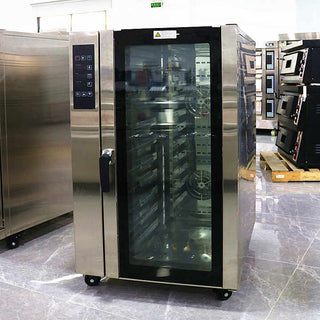
A combi oven earns its place here more than anywhere else in hospitality. It cooks, it holds, and — the part that matters for delivery — it regenerates a pre-cooked dish back to service temperature without drying it out, because it can put moisture back in. A kitchen that batch-cooks at ten and regenerates to order at seven is running the single most reliable delivery model there is.
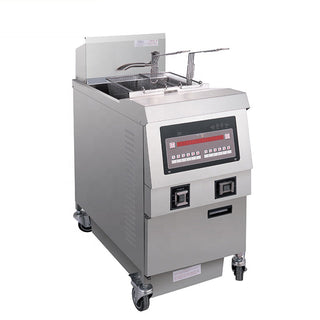
If your surviving menu is fried, buy fryer capacity rather than fryer features. Delivery orders arrive in clusters — a platform push, a lunch peak — and a single tank means the second order in a cluster waits while oil temperature recovers. Two tanks let you run different products without cross-flavouring, which also matters when one line serves several brands.
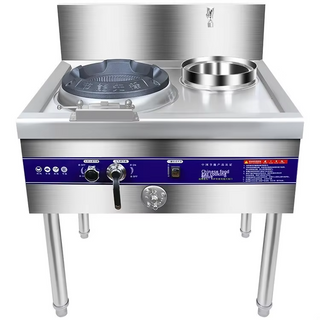
For wok-led menus, the burner is the whole argument: a high-pressure wok range gets the heat that makes the food taste of the wok rather than of the pan, and that flavour is one of the few that genuinely survives a courier bag.
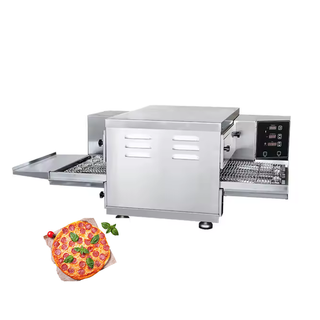
Pizza is the format delivery was invented for, and a conveyor oven is the honest answer at volume: consistent bake, no operator skill in the loop, and a throughput number you can actually staff against.
Multi-brand is a layout decision before it is a marketing one
Running three brands off one kitchen is the standard way the economics close, and it fails in a predictable place: the line was designed for one menu and now serves three, so every order pulls a chef across it.
Design by station rather than by brand. If a fryer station can produce the fried items of all three menus without moving, the brands cost you almost nothing. If brand two needs the wok that brand one is using at the same peak, you have bought a bottleneck and dressed it as a portfolio.
The same rule decides how many brands you can add later, which is worth knowing on day one: the number is set by how much your busiest station can absorb, not by how many logos you can register.
Cooking twice, on purpose
Batch-cook and regenerate is the model, and what makes it safe rather than risky is what happens between the two cooks. Food has to get through the danger band quickly, and a blast chiller or freezer is the equipment that does it — not the walk-in, which was designed to hold cold rather than to remove heat.
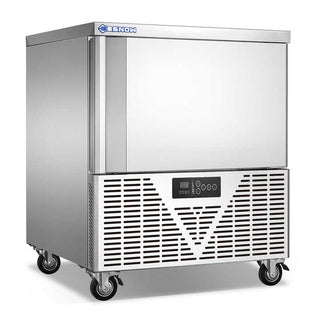
This is also where a delivery kitchen's records live. The temperature log for chilling and reheating is the first thing an inspector asks about in a kitchen with no dining room, precisely because there is no visible service to judge instead.
Storage follows the same doubling. A kitchen that preps ahead holds more cold stock than a restaurant of the same turnover, and it holds it in a room where nobody is going to notice a door left ajar.
Holding is where most delivery kitchens lose the order
There is always a gap between food ready and courier arrived, and it is never zero. What happens in that gap decides your reviews more than the cooking does.
Holding on the pass under a heat lamp dries food out. Holding in a wet bain marie keeps it at temperature and keeps moisture in it, which is exactly right for the braises and curries that survive delivery in the first place.
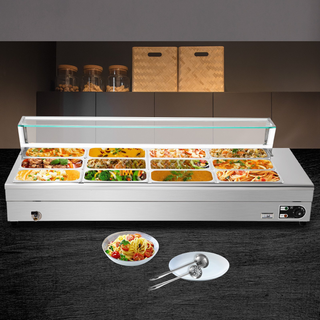
The operational half of this is the courier clock. Every platform gives you an estimated pickup time, and the discipline is to start the last step against that estimate rather than against the order time. A kitchen that plates when the order lands and a kitchen that plates when the rider is two minutes out are serving noticeably different food.
Packing is a station, not an afterthought
Give packing its own bench, its own storage for boxes and its own space to work. The reason is throughput: a person assembling an order on the same surface someone else is plating on will slow both of them down at exactly the moment the platform is timing you.
Two things belong on that bench and are usually missing. Vented containers for anything fried, because a sealed box steams its own contents into softness. And a check step — one person confirming the bag against the ticket before it is sealed — because a missing side is a refund, a commission you still pay and a one-star review, all from an item that cost you very little.
Wash-up in a kitchen with nobody watching
A delivery kitchen generates less crockery and more pans, containers and gastronorms than a restaurant, and it does it in bursts around the batch cook rather than steadily across a service.
That changes the machine you want: a hood-type dishwasher that swallows a gastronorm beats a small under-counter with a faster cycle, and a three-compartment sink does more work here than in a comparable restaurant. We went through the sizing in a separate piece on choosing a commercial dishwasher, and the one figure worth carrying over is that you should plan on about seventy per cent of a machine's rated output.
How to open a ghost kitchen: where the money goes
The spend shape is unusual and it is the reason people try the model. Fit-out is a fraction of a restaurant's, because there is no dining room to design, no bar, no toilets for guests and no frontage. What you do not save on is the kitchen itself: the extraction, the gas or three-phase supply, the drainage and the cooking line cost what they cost.
The costs that surprise people are the recurring ones. Platform commission is the largest line in the business after food and labour. Packaging is a per-order cost that behaves like a food cost. And photography is not optional — in a delivery kitchen the picture is the entire shopfront, and a menu shot badly will underperform a worse kitchen shot well.
The break-even question is orders per hour per station, and it is answerable before you sign anything.
No dining room does not mean fewer rules
The regulatory position is the part people most often get wrong, usually by assuming that invisibility is a category.
United Kingdom. The same food-business registration with the local council at least 28 days before opening, and the same health inspection and Food Hygiene Rating as any restaurant — the rating is displayed on the delivery platforms, which makes it more commercially visible here than on a high street. The Food Safety Act 1990 and the Food Hygiene Regulations 2006 apply unchanged, and the sector now has a 2026 industry definition that closes the "is it a kitchen or a warehouse" argument. Planning use class is the item to check before signing: an industrial unit is not automatically permitted for food production.
United States. A health department permit and food-handler certification per the state, plus a certificate of occupancy for the unit. If you cook in a shared or rented facility, the commissary agreement is the document everything else hangs off. Zoning is the trap — a delivery kitchen generates courier traffic that residential-adjacent zoning frequently does not allow.
United Arab Emirates. A trade licence with the right F&B activity and eligible zoning, Dubai Municipality inspections covering ventilation and food handling, Civil Defence clearance, and health cards for every food handler. Cloud-kitchen operation is well established here and the licensing route is correspondingly specific — confirm the activity code matches delivery-only production before signing a lease.
In all three, one rule holds: no dining room means no on-premises alcohol, and any alcohol in the offer becomes a separate and much slower conversation.
Month two, when three brands share one hob
Month one is carried by novelty and by the platform's habit of promoting new listings. Month two is the real number, and it usually fails in one of three ways.
The menu turns out to be too long — every extra dish is prep, stock and one more thing to get wrong at peak, and a delivery menu carries that weight without the upside of a guest browsing. The second brand cannibalises the first instead of adding to it, because both sell the same food to the same postcode. And the packaging cost, measured properly for the first time, turns out to be a percentage nobody modelled.
All three are cheaper to fix in month two than to prevent by over-planning in month zero. The one thing that is not cheap to fix later is the cooking line, which is why it is worth spending the extra week on the twenty-five-minute test before anything is ordered.
Know the menu but not the line? Send us the dishes that survived the box test and the number of orders you expect at peak, and we will spec the stations around them.


