

In short: test and filter the water before anything else. Our answer to how to open a tea house runs from there: one temperature for each family of leaf, then counter, table or ceremony service, with teaware and permits following that choice.
Pour the same oolong twice, once with filtered water at 90 °C and once from a hard-water tap at a rolling boil, and most guests will pick the first cup without being told why. Run that test before signing a lease for a tea house, because it shows where the product really comes from. The leaf is bought in. The water is prepared on site every day, and it is the half of the cup that the owner controls.
Coffee shops can get away with treating water as a utility. An espresso machine pushes it through at one temperature, and milk covers a multitude of sins. A tea house serves a drink that is roughly 99% water, across a menu where the right temperature can differ by 30 degrees from one pot to the next. Everything else in the room, from the counter to the licenses, follows from how well that water is handled.
Why the water supply decides the tea before the leaf does
Tea tastes of the water it is brewed in, and tap water varies enormously between cities and even between streets. Hard water, rich in calcium and magnesium, dulls the color of black tea and leaves a film on the cup. Heavily chlorinated water carries its smell straight into a delicate green. Water stripped of nearly all its minerals makes tea that tastes flat and hollow.
So the first job is to find out what comes out of the tap at your site. Ask the local water utility for a hardness report, or buy a simple test kit and check it yourself. Then brew your three or four main teas with the tap water, with bottled water of known mineral content, and with a filtered sample. The difference usually settles the budget argument on the spot.
Most tea rooms end up with a filter cartridge on the line that feeds the boiler, which reduces scale and chlorine without stripping the water bare. Sites with very hard water, or ones that want treated water for the ice machine and the kitchen too, fit a larger system on the main supply. A wall-mounted or countertop purifier with instant heating is a middle path for a small room: it filters and sterilizes with UVC light, then dispenses hot or cold water from one unit.
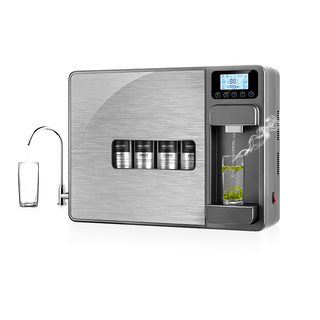
Whichever route you take, treat the water system as part of the fit-out rather than something added after opening. Filter housings need space under the counter, and the plumber needs to know where they go before the cabinetry is built. The full range is in water purification.
Counter, table service or ceremony: which tea house are you opening?
There are three broad ways a tea house serves its guests, and the choice changes the water setup and the size of the teaware order far more than it changes the room. Most owners should pick one as the core and borrow from the others at the edges.
| Counter service | Table service | Ceremony | |
|---|---|---|---|
| How tea reaches the guest | Brewed behind the counter, handed over in a cup or takeaway | Pot and cup brought to the table, refills on request | Brewed at the table by staff or the guest, many short infusions |
| Pace | Fast; peaks around commuter and lunch hours | Guests stay 45–90 minutes | Sessions booked by the hour or longer |
| Water setup | Boiler with two or more temperature taps, high hourly output | Boiler plus hot water pots or kettles sent to the table | A kettle or warmer at every table, filtered water delivered in jugs |
| Teaware per guest | One cup, often disposable for takeaway | Pot, cup, strainer, saucer or tray | Full set: gaiwan or small pot, pitcher, cups, tray, tools |
| Staff skill | Consistency and speed; recipes on cards | Menu knowledge and timing | Deep leaf knowledge; each server leads a session |
| Food | Grab-and-go pastries and sandwiches | Plated cakes, scones, light lunch | Small sweets matched to the tea |
| Where the money goes | Boiler, cold drinks line, packaging | Teaware stock, seating, pastry display | Room, teaware, leaf inventory |
Counter service is the closest to a coffee shop and scales the furthest. It lives on hourly output, and its menu usually leans harder on milk tea and iced tea than a purist would like, because those are the drinks that sell in volume.
Table service is the classic tearoom. Here the water problem moves from the counter to the journey, since a pot that leaves the counter at 95 °C arrives at the table cooler, and refills of hot water have to be quick enough that the second infusion is not an afterthought.
Ceremony is the smallest and most specialized format. Revenue per seat is high, but covers per day are low, and the room can only grow as fast as you can train people who really know the leaf. Plan water here per table, because every session needs its own heat source.
How many water temperatures does a tea house need?
At least two, and usually three. One near boiling for black tea, pu-erh and herbal infusions; one in the mid-80s for oolong; and one lower for green and white tea. A menu with only black tea and herbals can run on a single tap, but almost no tea house keeps a menu that short for long.
Behind the counter, the practical answer is a boiler that dispenses at more than one setpoint, so staff press a button rather than guessing with a thermometer. The countertop unit below adds cold water in stages to hold its temperature steady during a long pour and is rated at 30 to 50 liters an hour, which covers a mid-sized room.

Our buying guide to water boilers for tea service works through temperature by leaf, liters per hour at peak and how to keep limescale out, so this guide will not repeat the sizing. The range itself is in tea brewers and water boilers.
At the table, the answer depends on the format. Table service can send hot water in an insulated pot with each order. Ceremony needs a kettle or warmer within reach of the person brewing, and it is worth checking the electrical plan early: several tables each drawing a kilowatt or two will need more sockets and circuits than a café layout usually allows.
Write the temperature for every tea on the menu into the recipe cards and the till buttons. When the sencha costs several times what the breakfast blend does, a new member of staff pouring boiling water onto it is a direct loss, and a printed number prevents it better than any amount of training.
The teaware a guest actually holds
Teaware is where most of the guest's attention goes, so it deserves more of the budget than its unit cost suggests. It also breaks and disappears at a rate that surprises new owners, and a tea house that runs short on cups at 3 p.m. on a Saturday has nothing to sell.
Glass shows the tea. A clear, heat-resistant cup lets the guest see the color of an oolong or the leaves of a blooming tea, and it works for iced drinks too, which keeps the number of different items on the shelf down.

Porcelain and stoneware carry most table service. Plan cups and pots per seat, saucers too, and then add a generous buffer for breakage, larger still for ceremony, where each session uses several small cups per person. Keep one style per item where you can, because mixed patterns make replacements hard to match.
Trays organize the table and catch drips. For ceremony and table service alike, a wooden tray gives each setting a defined space and makes clearing faster.

Compressed teas need their own tools. Pu-erh and other aged teas often arrive pressed into cakes or bricks, and a tea knife or pick lifts leaves from the cake without crushing them into dust, which matters when the leaf is among the most expensive stock on the shelf.

More pieces are in tea knives and plates and bowls. Tannin stains also build up inside cups and pots over weeks, and they need a periodic soak with a suitable cleaner on top of the daily wash. Plan the sink space and the time for it.
What food should a tea house serve?
Food that suits the tea and does not need a full kitchen. Cakes and scones, sandwiches and small sweets carry most tea house menus, and almost all of them can be prepared off site or in a compact prep area with no extraction hood. That keeps the build simpler and the permit path shorter than for a restaurant.
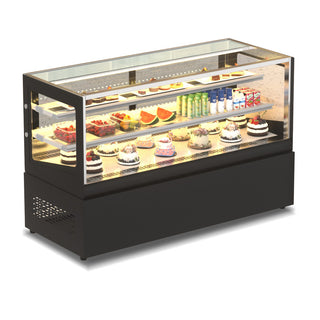
A chilled display keeps cream cakes and fruit tarts safe while it sells them to people standing at the counter who came in only for tea. Put it where the queue forms.
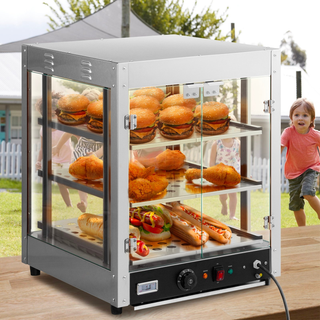
Warm items, such as filled pastries or savory buns in the afternoon, go in a heated glass display at the counter. The model below holds 30 to 85 °C across three tiers and takes up little counter space.
If sandwiches are made to order, a refrigerated prep counter keeps fillings at 2 to 8 °C where the person assembling them can reach them. The unit below comes in lengths from 1.2 to 2 meters, so it fits a narrow back counter.

Our guide to opening a patisserie goes much deeper on cake display and pastry work if baking is going to be more than a side line, and choosing hot holding equipment covers warm displays in detail.
Why iced tea, milk tea and coffee fill the till
Many tea houses earn more from iced and milk teas than from hot pots, especially in summer and with younger guests. Purists may not love it, but a counter that sells a cold tea to everyone walking past on a hot afternoon pays for the quiet ceremony room behind it.
Milk tea is a separate line. It needs a strong brewed tea base made in batches, a way to shake or blend it with milk and ice quickly, and an ice supply that does not run out mid-afternoon. The stainless shaker below whips milk tea and milkshakes one or two cups at a time.

If tapioca pearls are on the menu, the counter turns into a bubble tea bar, with its own cooking and sealing equipment; the bubble tea machines range covers it. For ice, read our guide to choosing a commercial ice machine and size it for your hottest weekend rather than an average day.
Coffee is the other question. A tea house that refuses to serve it will turn away the one person in every group who does not drink tea, so most offer at least an espresso. A dual-boiler machine that pulls espresso and pressure-brews tea shots side by side lets one counter serve both without a second station.

If coffee becomes half the business, our hub guide on how to open a coffee shop that survives the morning rush covers the coffee station and counter flow in full.
What does it cost to open a tea house?
Less in equipment than a restaurant or a coffee shop of the same size, and more in stock and fit-out than most first budgets allow. The machinery bill stays small because a tea house has no range or hood, and often no espresso machine at all. The money goes elsewhere.
Rent and fit-out take the largest share almost everywhere. Leaf inventory comes next, and it is easy to underestimate, because a serious menu holds dozens of teas, some of them expensive, and each one has to be bought in quantities the supplier will ship. Teaware follows, as a steady, recurring spend rather than a one-off, because breakage never stops.
Within equipment, spend on the water first, meaning the boiler with more than one temperature, and the filter or treatment system. Then the displays that sell food, then the cold drinks line if you run one. Economize on decoration before you economize on any of these. Current prices sit on each product card, and the coffee bar collection groups most of the counter equipment in one place.
Permits for a tea house that never pours alcohol
A tea house with no alcohol avoids the longest and hardest license most hospitality businesses face, which is one of the real advantages of the format. It still needs to register as a food business, pass hygiene inspections and meet fire rules, and the details vary by country.
In the United Kingdom, register as a food business with the local council at least 28 days before opening, and expect an inspection by an environmental health officer that leads to a Food Hygiene Rating. The premises need a fire risk assessment. Late-opening tea rooms should note that selling hot drinks between 11 p.m. and 5 a.m. counts as late-night refreshment, which requires a Premises Licence from the council even with no alcohol on the menu. If you play recorded music, you also need TheMusicLicence from PPL PRS.
Japan is the country most associated with tea service, and the route there runs through the local health center. You need a Restaurant Business Permit (飲食店営業許可), granted after an inspection of the premises, and a certified Food Sanitation Manager attached to the business. A fire inspection applies as well. Because a tea house pours no alcohol, the late-night notification that applies to bars does not come into play.
In Australia, you need council approval for the premises and a food business notification or registration, plus a fire safety statement. Some states require a nominated Food Safety Supervisor holding an accredited certificate. Recorded music needs a OneMusic Australia licence, and no liquor license is involved for a dry tea house.
In the United States, the rules are set by state, county and city, but the core is consistent: a business license and an EIN, a health department permit with food handler or ServSafe certification for staff, and a certificate of occupancy with fire code sign-off for the premises. Playing music in the room means licenses from ASCAP, BMI and SESAC.
Treat this as an overview rather than legal advice, and check the current requirements with your local council, health center or health department before you commit to dates. Adding alcohol later, even a tea-infused cocktail list, brings in a separate license and a much longer timeline.
Five ways a tea house undercuts its own leaf
- Buying the leaf before testing the water. An expensive oolong brewed in hard, chlorinated water tastes like a cheap one. Test the supply, taste it against filtered water, and budget for treatment first.
- One boiler at one temperature. Staff end up pouring boiling water on green tea or cooling it in jugs during a rush. Plan at least two temperatures behind the counter from the start.
- Too little teaware. Cups and pots break and go missing. Order deeper than feels necessary and keep spares of every item in the same style.
- A menu longer than the staff can brew. Sixty teas look impressive on the board, but each needs its own temperature and steep time. Start with a focused list and add teas as the team learns them.
- No plan for the hot afternoon. A room designed only for hot pots loses the iced tea and milk tea trade that carries many tea houses through summer. Leave space and power for a cold line even if you start without one.
Planning the counter for a new tea house? Tell us whether you serve at the counter, at the table or in a ceremony room, how many seats you have and what your water is like, and we will put together the boiler, water treatment and displays to match.


