


An industrial sous vide machine cooks vacuum-sealed food in a precise low-temperature water bath, so a kitchen can batch proteins ahead and finish them to order in a minute. Here is how a sous vide machine works, how it speeds up service, and whether it pays off.
The slowest moment in a busy kitchen is cooking a protein from raw while a table waits — every steak, breast, and fillet timed by hand at the exact moment it is ordered. An industrial sous vide machine breaks that bottleneck by splitting the work in two: cook a whole batch to perfect doneness ahead of service, unattended, then finish each portion to order in a minute when the ticket lands. This guide covers what sous vide is, how a sous vide machine speeds up service, whether it pays off at commercial scale, and what to check before buying.
What is sous vide, and how does a sous vide machine work?
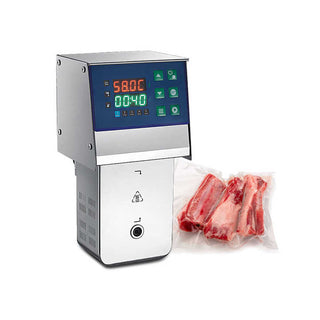
Sous vide — "under vacuum" in French — is cooking food sealed in an airtight bag in a water bath held at a precise, low temperature. A sous vide machine circulates and holds that bath at an exact temperature, so the food cooks evenly edge to edge and can never overshoot: set it to medium-rare and every piece in the bath comes out medium-rare, no hot or dry edges.
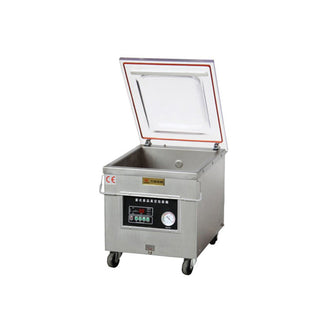
The industrial part is power and capacity. Our commercial unit runs 2000W, which brings a large bath up to temperature fast and holds it steady through long, high-volume cooks — the conditions a busy kitchen needs to cook whole trays of protein at once. The stainless body wipes down fast and it is CE certified for commercial use. One requirement to plan for: sous vide needs the food vacuum-sealed first, so a commercial vacuum sealer is the companion piece that bags and seals the portions before they go in the bath.
How does sous vide speed up service?
Sous vide speeds up service by moving the cooking off the line and into prep. Instead of cooking each dish from raw when it is ordered, you batch-cook proteins and vegetables to exact doneness ahead of service, chill them, and then finish a portion to order — a quick sear or reheat — in about a minute when the ticket comes in. The long, precise cook happens once, unattended, for a whole batch.
That changes the math of a rush. The station is no longer timing a full cook per ticket; it is finishing food that is already cooked, so the same line pushes more covers in the same window. It also frees staff during service, since the bath holds a batch at a safe temperature without watching, and it lets a less experienced cook plate a restaurant-grade protein because the doneness was locked in during prep, not improvised at the pass.
Sous vide machine vs cooking to order
The honest comparison is against à la minute cooking — firing each dish from raw when it is ordered. Each suits a different kind of kitchen:
| Cooking to order | Sous vide (batch ahead + finish) | |
|---|---|---|
| Consistency | Varies with the cook and timing | Edge-to-edge, the same every time |
| Cook time at service | Full cook per dish, from raw | Pre-cooked; finished in about a minute |
| Labor at the pass | Active cooking every ticket | Batch cooked unattended; finish only |
| Waste | Loss from over- or under-cooking | Precise; pasteurized for longer shelf life |
| Skill needed | A trained cook per dish | Batch set once; new hires finish reliably |
| Best for | Low volume or bespoke plating | High-volume, repeated proteins prepped ahead |
À la minute still wins for a bespoke, cooked-on-the-spot plate. Sous vide wins where the same proteins come through in volume and the rush is where the kitchen falls behind — because the cooking already happened, before the doors opened.
Does an industrial sous vide machine pay off?
At $1,725 an industrial sous vide machine pays back mainly through throughput and waste, and the throughput is the big one. Because proteins are cooked ahead and only finished to order, service cook time per dish collapses from minutes to about a minute, so the same line serves more covers in a rush without adding staff. For a high-turnover restaurant, catering line, or ghost kitchen, that extra capacity at peak is the return.
The waste side compounds it. Precise temperature control means far fewer proteins lost to overcooking, and sous vide food is pasteurized in the bag, which extends its shelf life for batch prep and portion control — real savings in catering and delivery. Add the consistency across shifts and the lower reliance on a highly skilled line, and the machine earns fastest exactly where volume and repetition are highest. A low-volume, bespoke kitchen may not need it; a batch-prep operation recovers it quickly.
What to look for when buying one
A few things decide which sous vide setup fits your kitchen:
- Power and capacity. A 2000W commercial unit like ours heats a large bath fast and holds it through long, high-volume cooks. For a smaller kitchen, a self-contained benchtop unit — such as our 13L, 800W model at $575 — is enough for lighter batches.
- Temperature precision and range. The whole point is exact, stable low-temperature control, so the bath holds doneness for hours without drifting.
- Bath size for your batches. Match the volume you cook at once to the bath, so you are not running multiple small cooks when one big batch would do.
- A vacuum sealer. Sous vide needs the food sealed first, so budget for a commercial vacuum sealer alongside the machine.
Tell us your batch sizes and the proteins you cook most, and we can confirm whether the industrial unit or a benchtop model suits your line.
Not sure which size fits your kitchen? Send us your batch sizes and menu, and we will confirm whether the 2000W industrial machine or a benchtop unit — plus the vacuum sealer to go with it — matches your prep and service.


