Food Trucks

A kitchen that can change its address. We build food trucks, trailers, carts and container units at the factory and fit them out around your menu, so you sell where the customers already are — and move the whole kitchen when they move.

Customers queueing at the serving window of a white food truck on a sunny afternoon

What a food truck is

A food truck is a mobile catering unit that carries everything a kitchen needs. The cooking line, cold storage, clean and waste water, extraction and a power supply of its own all travel with the unit, so nothing depends on the building it parks beside. The same goes for the paperwork — the sinks, the hot water and the equipment certificates an inspector asks to see are part of the build.

What that changes is the cost of opening. Money goes into the kitchen instead of into someone else's walls. There is no deposit to put down, no rented shell to strip out, and no six months of construction before the first sale. Guess the location wrong and you lose a weekend of takings rather than a five-year lease.

How a food truck works

Four steps from the order to the first service.

  1. Pick the format

    A mobile food trailer, a cart, an electric trike or a container. What differs is how it moves — a trailer needs a tow car and a driving license that covers the weight, a cart you push by hand, a container is craned onto the ground and stays there for the season.

  2. We fit it out

    Send us the menu. The layout follows it: what sits on the hot line, how much cold storage you need, how big the water tanks have to be, which side the hatch opens. The unit leaves the factory finished rather than as an empty shell.

  3. Register and get the permit

    You register the business and one person takes the food hygiene training. The local authority issues the trading permit and the right to stand where you want to stand. Rules differ by country and often by city, so check yours before you order.

  4. You trade

    The hatch opens and card payments settle straight to your account. A spot that turns out to be quiet is a decision you can reverse next week, which is the part a leased dining room never gives you.

7–15

weeks to first service

Three to six weeks to build, then the crossing by rail or sea, then the road delivery. Rail lands at the short end of that range and sea at the long one. A leased restaurant takes six to twelve months.

Our production and shipping lead times

$1.43 → 2.22 bn

Europe, 2026 → 2034

The European food truck market keeps growing while high-street rent goes up with it.

marketdataforecast, Europe food trucks market, 2026

0 m²

of rented floor

You pay for a place on the days you trade. A street cart stands on 1–2 m² of ground and a 5 m trailer on about 10.

Ground footprint of the units in our catalog

What you can open in a food truck

Almost any menu that is handed over a counter rather than served at a table: coffee, pizza, burgers and BBQ, tacos, wok, churros, ice cream, crepes, bubble tea, cocktails, beer, breakfast. What changes between them is the cooking line, the power draw and how much water the license asks for, and that is what we build the unit around. The twelve we are asked for most often:

Coffee and bakery

Coffee and bakery

The cheapest way in and the fastest queue. An espresso machine, a grinder and a milk fridge fit on a trike, and a small coffee trailer adds room for a display case. What needs planning is water and amps, because a two-group machine and a fridge together draw more than a household socket.

Wood-fired pizza

Wood-fired pizza

A pizza trailer sells one thing quickly. The oven is also the heaviest item you will ever tow, so the axle rating and the floor are specified around it before anything else is decided.

Burgers and BBQ

Burgers and BBQ

Griddle, charbroiler and fryer under one hood, with cold storage within arm's reach. Margin per plate is high and the ingredients are available in any city you take it to.

Tacos and street food

Tacos and street food

Most of the work happens before you open — marinades, salsas, everything prepped into trays. Service then needs only a plancha and cold holding, which is why this menu fits the smallest trailers.

Asian and wok

Asian and wok

One gas wok burner covers the whole menu and burns hotter than anything else in the unit. Extraction and the gas certification take the planning; the recipes do not.

Churros and desserts

Churros and desserts

Cheap to make and it sells late, after the food stalls have packed up. The equipment is a fryer and a warmer; what earns the money is the exterior, which is why this trailer is built to be looked at.

Ice cream and gelato

Ice cream and gelato

A seasonal ice cream cart can pay for itself over one summer. Everything rests on cold that never breaks, so the freezer and the power budget come first.

Crepes and waffles

Crepes and waffles

Two plates, a fridge and a display case. Low water, low power, no argument about extraction — this is the format that gets a permit in the most places.

Bubble tea and juice

Bubble tea and juice

No hot line at all. A fridge, a sealer, a blender and clean water is the whole build, which is why operators who already run one unit usually add this as their second.

Cocktail bar

Cocktail bar

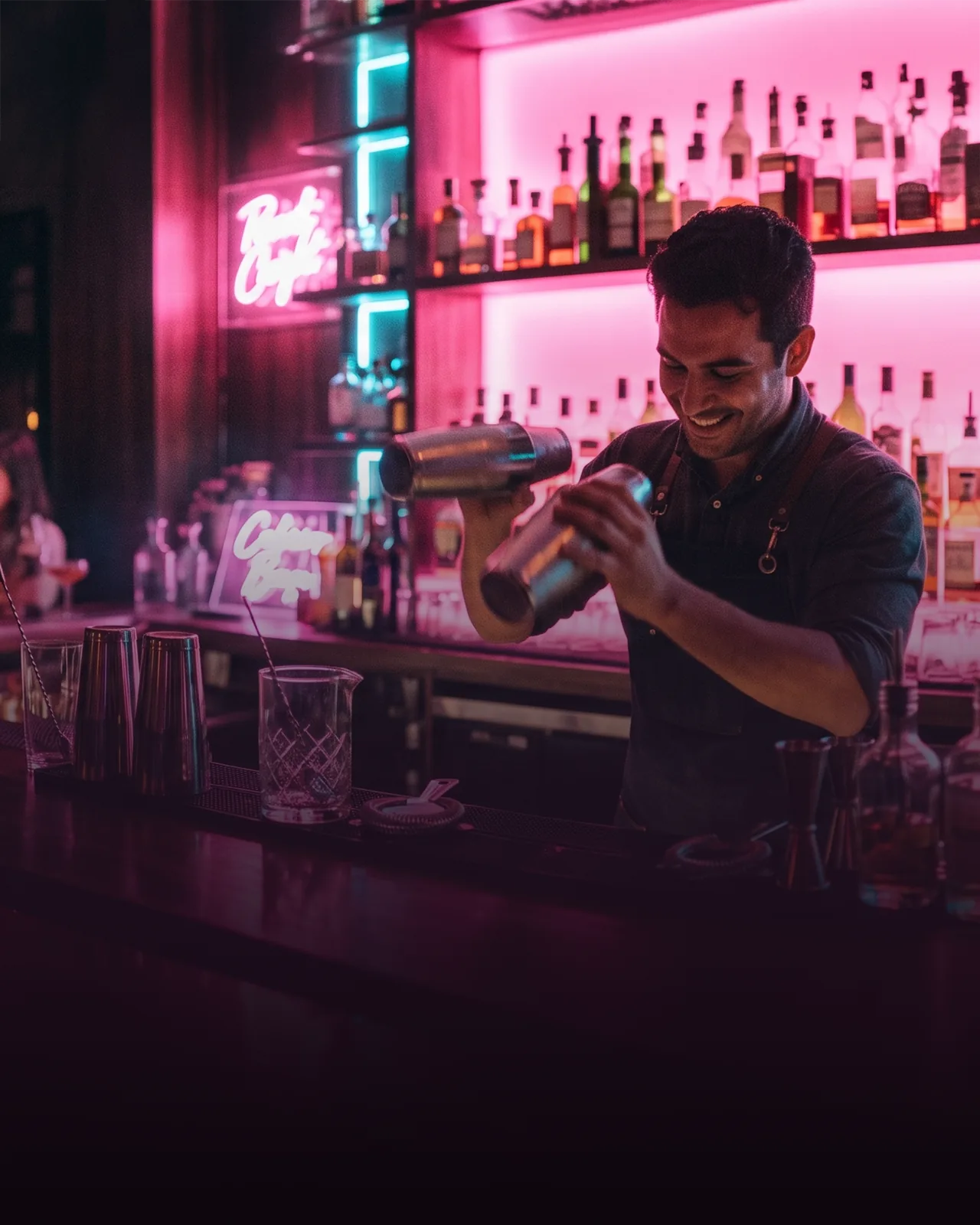
A bar trailer works about twelve good evenings a month rather than every day. Booked as a catering trailer for weddings, corporate parties and festivals, it earns more per hour than a street spot, and the alcohol license usually belongs to the event rather than to you.

Beer and wine bar

Beer and wine bar

Keg cooling and a clean line are the whole job. Park a beer trailer beside a food unit and one site permit covers both, while the same queue feeds two tills.

Breakfast and bagels

Breakfast and bagels

Trades from six to eleven and leaves the site free by lunch. It suits an owner who wants the afternoon back, or a second unit sharing storage with the first.

The trucks, trailers and carts we build

Ten units in the catalog, from a folding street food cart to a five-meter concession kitchen. One unit is a full order, the prices are factory prices, and each one is fitted out before it ships.

Vintage churro trailer

Vintage churro trailer

Wooden body, full kitchen inside, water system and a rolling shutter.

from 267,298.00 ฿ →
Airstream-style food trailer

Airstream-style food trailer

Turnkey mobile kitchen for tacos, pizza, coffee, BBQ or ice cream.

from 257,018.00 ฿ →
Fully equipped concession trailer

Fully equipped concession trailer

Turnkey stainless kitchen, ready to roll into a festival or a night market.

from 214,181.00 ฿ →
BBQ and bar trailer

BBQ and bar trailer

Galvanized frame, full kitchen, built for BBQ, fast food and bar service.

from 113,088.00 ฿ →
Enclosed concession trailer

Enclosed concession trailer

Towable and fully enclosed, with a stainless workbench and sink set.

from 101,951.00 ฿ →
Folding vending cart

Folding vending cart

Hand-pulled, with an extendable tabletop and an umbrella canopy.

from 5,038.00 ฿ →

What fits inside a food truck

A full commercial kitchen fits: a cooking line of two or three pieces, an undercounter fridge and freezer, water tanks with a hand sink, an extraction hood, the power to run it, the service window, a till and a lit menu board. Space is what limits the list, not budget — every item has to earn the room it takes, and all of it is specified before the build starts rather than squeezed in afterwards.

Cooking line

Cooking line

Griddle, charbroiler, fryer, wok burner or a pizza oven — whichever two or three the menu actually needs. Gas or electric depends on what your site can supply.

Cold chain

Cold chain

An undercounter fridge, a freezer and cold holding at the pass, sized to the menu and to how long you trade between restocks. The power is calculated around them, so the freezer holds temperature while the fryer is running.

Water and hand sink

Water and hand sink

A clean tank, a waste tank, a wash-up sink and a separate hand sink with hot water. In most municipalities the hand sink is what decides whether the permit is granted.

Extraction and fire

Extraction and fire

A hood with grease filters over the hot line, plus the extinguisher and the fire blanket an inspection asks for. Sized to the burners underneath it.

Power

Power

A site hook-up where one exists, otherwise a generator or a battery-and-solar kit. We size it from your equipment list so the fryer and the fridge can run at the same time.

Service window and counter

Service window and counter

The hatch, the fold-down shelf, the awning above it and the light over the counter. This is the side of the unit your customers actually see.

POS and payments

POS and payments

A touchscreen or handheld till, card and phone payments, a printer for the kitchen. Cash is optional in most European markets now; a card reader is not.

Signage and light

Signage and light

A lit menu board and exterior lighting. After dark an unlit unit loses its queue to whichever stall next to it is lit.

A food truck against a restaurant with a lease

The same menu, the same city, two ways to sell it. Ranges rather than single numbers, because the point is the order of magnitude; the sources are under the table.

Food truckRestaurant with a lease
The unit itself$2 975–7 800 for a fitted trailer, with shipping quoted on top$25 000–100 000+ for the kitchen fit-out alone
Total to open≈ $15 000–45 000 with equipment, permits and first stockFrom $175 000 in most European cities
What the site costs a month$400–900 in market and street-trading fees, on trading days only$2 000–6 000 rent, plus a deposit of about three months
Time from order to first service7–15 weeks, depending on the freight mode6–12 months
People on a shift1–26–12 across kitchen and floor
If the location does not workYou trade somewhere else next weekYou stay until the lease ends or you buy your way out
PaperworkA trading permit in every city you work in, renewed on their scheduleOne set of licenses for one address
What a truck does not haveA roof over the queue, a stockroom and seats. Rain can close a trading day, stock has to live somewhere else, and nobody sits down to order a second roundAll three — and you pay rent for them on the days you do not trade as well

Mid-size European city, USD, VAT excluded. Truck prices are ours; the start-up and restaurant ranges come from Toast, Sage UK and startup-cost.com for a food truck, from CKitchen and CloudKitchens for a fit-out, and from Statista for street-retail rent.

What a food truck returns

Five concepts. Every figure below is computed from raw inputs — the price to the guest, the cost of one portion, the card fee, the monthly running cost — so nothing here is a number we typed in because it looked good. There are two payback columns, because a food truck needs a person in it: one where you work the counter yourself, one where you pay an operator to. Each card is priced on a unit from the catalog — a build made to your own menu moves the price, and with it the payback, but not the way the sum works.

Coffee and bakery — electric coffee trike

from 3,850 ฿

What the guest pays per cup
$ 3.50
Ingredients and packaging
−$ 0.60
Card fee (2%)
−$ 0.07
Margin per cup
$ 2.83
Site fee, fuel, insurance and service
−630 ฿ a month
One hired operator
−2,400 ฿ a month
Trading days a month
24

A coffee unit lives on one hour of the day. People buy on the way to work, the queue builds between eight and nine, and by ten it is over — what you could not serve in that window does not come back at lunchtime. A second group head on the machine therefore changes the month more than trading two hours longer does, and forty regulars who pass every morning are worth more than a busy street on a Saturday.

Machine, grinder, milk fridge and tank size are all decided with you before the trike is built, so the kit matches the menu you plan to serve. The one limit nobody can design away is the load: a trike carries a shift, not a week, so the morning runs on what you brought and the rest of the stock waits wherever you keep it. The monthly figure covers a small stand, overnight charging, insurance, servicing, water and waste.

The $3 850 is our catalog price for the trike. The portion cost is 18 g of beans at wholesale, about $0.28, plus $0.22 of milk and $0.10 for the cup and lid. Twenty-four trading days assume five days a week with a Saturday, and the site fee is what a small stand costs in a mid-size European city rather than on a prime square.

You behind the counter With a hired operator
Volume Sales a day Revenue a month Profit a month Truck paid back inProfit a month Truck paid back in
Quiet 50 4,200 ฿ 2,766 ฿ 2 months 366 ฿ 11 months
Typical 90 7,560 ฿ 5,482.80 ฿ 1 month 3,082.80 ฿ 2 months
Busy 160 13,440 ฿ 10,237.20 ฿ 1 month 7,837.20 ฿ 1 month

Wood-fired pizza — 5 m concession trailer

from 7,800 ฿

What the guest pays per pizza
$ 11.00
Ingredients and packaging
−$ 2.90
Card fee (2%)
−$ 0.22
Margin per pizza
$ 7.88
Site fee, fuel, insurance and service
−1,010 ฿ a month
One hired operator
−2,400 ฿ a month
Trading days a month
24

A wood-fired oven takes about forty minutes to come up to temperature and then holds it, so the working day starts well before the queue does. Once hot it will turn out sixty to ninety pizzas an hour, which means the ceiling is hands at the pass rather than the fire. Evenings and weekend events are where the trailer earns, because that is where a queue holds for two hours; a weekday lunch spot rarely fills it.

The trailer is built around the oven and around what the menu needs beside it — dough fridge, prep bench, cold for the toppings, extraction over the fire. What no build can decide for you is how much dough to prove the day before, and a sold-out evening is almost always a prep problem rather than an oven one. Cheese is the input to watch, close to half the portion cost, so a 20% rise takes roughly $0.30 off every margin above. Gas and wood, the site, insurance, running the tow vehicle, servicing and waste make up the monthly figure.

We price the 5 m trailer, oven built in, at $7 800. The portion is dough, sauce, cheese and toppings at wholesale plus the box. The sales-a-day column is not a forecast. Those three volumes are there to read the economics at, and which one you reach depends on the site rather than on the oven.
You behind the counter With a hired operator
Volume Sales a day Revenue a month Profit a month Truck paid back inProfit a month Truck paid back in
Quiet 25 6,600 ฿ 3,718 ฿ 3 months 1,318 ฿ 6 months
Typical 45 11,880 ฿ 7,500.40 ฿ 2 months 5,100.40 ฿ 2 months
Busy 80 21,120 ฿ 14,119.60 ฿ 1 month 11,719.60 ฿ 1 month

Burgers and BBQ — mobile kitchen trailer

from 3,300 ฿

What the guest pays per plate
$ 9.50
Ingredients and packaging
−$ 3.20
Card fee (2%)
−$ 0.19
Margin per plate
$ 6.11
Site fee, fuel, insurance and service
−1,010 ฿ a month
One hired operator
−2,400 ฿ a month
Trading days a month
24

This is the cheapest unit on the page to buy and the least forgiving to run. Everything cooks to order on the griddle, so service speed comes down to the layout and the person working it rather than to the equipment, and a queue of fifteen at a festival moves only as fast as the slowest station in the trailer.

Griddle, charbroiler, fryer, the cold under the counter and the hood over all of it are specified from the menu you send us, so the trailer arrives ready for an inspection rather than needing work first. Portioning is the part that stays yours. Ten grams over on every patty costs about $0.08 a plate, roughly $115 a month at the typical column, and it is the quietest way to lose a margin. Site, gas, insurance, towing, servicing and waste sit behind the monthly figure.

The BBQ and bar trailer is $3 300 in the catalog. The plate is a patty, bun, cheese, sauce, a portion of fries and the packaging at European wholesale. Beef moves with the season and can swing the portion by $0.30, which the margin line absorbs before the payback column shifts much.

You behind the counter With a hired operator
Volume Sales a day Revenue a month Profit a month Truck paid back inProfit a month Truck paid back in
Quiet 30 6,840 ฿ 3,389.20 ฿ 1 month 989.20 ฿ 4 months
Typical 60 13,680 ฿ 7,788.40 ฿ 1 month 5,388.40 ฿ 1 month
Busy 110 25,080 ฿ 15,120.40 ฿ 1 month 12,720.40 ฿ 1 month

Churros and desserts — vintage wooden trailer

from 7,800 ฿

What the guest pays per portion
$ 5.00
Ingredients and packaging
−$ 1.00
Card fee (2%)
−$ 0.10
Margin per portion
$ 3.90
Site fee, fuel, insurance and service
−1,010 ฿ a month
One hired operator
−2,400 ฿ a month
Trading days a month
24

Dessert sells after dinner rather than instead of it, so this trailer earns in the hours when the savoury stalls are shutting down. That makes it easy to place beside other traders instead of competing with them, and it is why operators run it on festival evenings and market weekends rather than at a weekday lunch spot.

The build question here is capacity rather than kit — how many portions an hour the evening has to take, which sets the fryer and the warmer that go in. Frying oil is the cost people underestimate. It is changed every few days, it sits inside the per-portion figure, and it swings in price further than flour or sugar ever will. Season does the rest. A wet autumn month can halve the Quiet column, so the summer circuit has to carry the winter. Running costs match any towed trailer of this size.

The wooden churro trailer sells at $7 800. The portion is flour, oil, sugar, a chocolate dip and the cone at wholesale. Twenty-four trading days describe a working month; if you plan to trade only weekends and festivals, read the bar card below instead, which is modelled on twelve.

You behind the counter With a hired operator
Volume Sales a day Revenue a month Profit a month Truck paid back inProfit a month Truck paid back in
Quiet 45 5,400 ฿ 3,202 ฿ 3 months 802 ฿ 10 months
Typical 80 9,600 ฿ 6,478 ฿ 2 months 4,078 ฿ 2 months
Busy 140 16,800 ฿ 12,094 ฿ 1 month 9,694 ฿ 1 month

Cocktail bar — refrigerated mobile bar station

from 2,290 ฿

What the guest pays per drink
$ 8.00
Ingredients and packaging
−$ 2.10
Card fee (2%)
−$ 0.16
Margin per drink
$ 5.74
Site fee, fuel, insurance and service
−750 ฿ a month
One hired operator
−2,400 ฿ a month
Trading days a month
12

An event bar is a different business from a food unit. It works twelve evenings a month instead of twenty-four days, takes as much in one night as a food trailer takes in three, and is booked weeks in advance rather than turning up somewhere and opening the hatch.

The station is refrigerated as built, so what gets decided beforehand is how many covers an evening has to take and whether ice travels with you or is delivered on the day. Wages are the number that bites. Spread $2 400 across twelve trading days and a hired operator costs $200 a day before anything is poured, which is why that column goes red at the Quiet volume and why most owners work this unit themselves. Alcohol licensing usually belongs to the venue or the event rather than to you, and it is worth confirming per booking. The monthly figure is the event fee, power, insurance, servicing, ice and cleaning.

Our refrigerated bar station is $2 290. The drink is spirit, mixer, garnish, ice and the glass at wholesale. Events often pay on a different basis — a fixed fee for the evening, or a tab the host settles at the end — so read the per-drink figures as the street and festival case rather than a wedding contract.

You behind the counter With a hired operator
Volume Sales a day Revenue a month Profit a month Truck paid back inProfit a month Truck paid back in
Quiet 55 5,280 ฿ 3,038.40 ฿ 1 month 638.40 ฿ 4 months
Typical 110 10,560 ฿ 6,826.80 ฿ 1 month 4,426.80 ฿ 1 month
Busy 200 19,200 ฿ 13,026 ฿ 1 month 10,626 ฿ 1 month

Custom food truck: what we change for you

Everything you can see and most of what you cannot: the body and its color, the layout inside, the format itself, the window, the power, and the country the unit is wired and plumbed for. Every unit is built to order, so these are choices you make at the quote stage.

Exterior and branding

Exterior and branding

Body color, a full wrap, your logo and the menu artwork, cladding from stainless to timber. Send the brand files with the order and the unit arrives finished instead of going to a local wrapper first.

Interior around your menu

Interior around your menu

Where the hot line, the cold and the wash-up sit, how wide the pass is, which side the hatch opens. We draw it from your menu and confirm the fit before anything is cut.

Format: trailer, cart, trike or container

Format: trailer, cart, trike or container

Towed, pushed, ridden or craned into place. The same kitchen goes into any of the four, so the format follows how you plan to move between sites and how long you stay at each one.

Window and awning

Window and awning

Hatch size and position, a fold-down bar shelf, an awning, exterior lighting, and a small terrace kit where the site allows one.

Off-grid power and water

Off-grid power and water

Generator, battery bank, solar, or all three together. Tank sizes follow the license rules in your country and how long you trade between refills.

Built for your market

Built for your market

Sockets and voltage, gas fittings and the regulator, stainless grades, and the paperwork that travels with the unit. Name the country at the quote stage and it ships correct.

Buying direct from the factory

Minimum orderOne unit
Production time3–6 weeks for most builds, longer for a full custom body
ShippingQuoted door to door for your address. Sea and road is the cheapest way to move a unit this size, rail and road costs more and arrives sooner
Fit-outCooking line, cold chain, sinks, extraction and power installed before it ships
Power and gasBuilt for your market's supply and fittings, stated per unit
BrandingPainted, wrapped and printed at the factory from your files
DocumentsTechnical file, equipment certificates and the invoice your registration needs
SparesOrdered from the same factory that built the unit, and small enough to come by air when a part is holding up service
All units10 units in the catalog

We are a sourcing agent, not a reseller with a warehouse. The units come from the factories that build them, which is what makes a one-unit order possible at a factory price. The trading permit is yours to get; we supply the unit and its papers.

Food truck questions

How much does a food truck cost?

A folding street cart starts at $147 and a fitted five-meter concession trailer runs to $7 800, both at factory prices with one unit as a full order. Opening costs more than the unit itself — budget roughly $15 000–45 000 all in for the extra equipment, the permits, the first stock and, with a trailer, something to tow it with.

How long does it take to build and ship?

Production runs first and freight after it, so the two add up rather than overlap. Building the unit takes three to six weeks, longer for a full custom body. Transit then depends on the route — about 30 to 40 days by rail, 45 to 60 by sea. Seven to fifteen weeks from the order to the first service is the honest window for a European address, and which end of it you land on is mostly the freight decision.

Do I need a license to run a food truck?

Yes, and it is issued locally rather than by us. In Germany a mobile trader normally needs a Reisegewerbekarte plus food hygiene training through the Gesundheitsamt or the IHK. In France it is the carte de commerçant ambulant and approved hygiene training, with a separate permit to serve alcohol. In Spain street trading is tightly controlled, and most operators work authorized markets and events rather than open street spots.

Whatever the country, the pattern repeats. You register the business, one person takes food hygiene training, and the municipality grants the right to occupy the space. We supply the unit, its technical file and the equipment certificates that go with your application.

What do you need from me to quote a build?

The menu, the country it will work in, the format you have in mind and roughly when you want to open. From that we come back with the units that fit, what goes inside, the price and the lead time. If you already know the equipment you want, send the list and we check it against the footprint before quoting.

What power does it need, and can it run off-grid?

It depends on the line. A coffee trike runs off a battery for a full shift, while a trailer with a fryer, a griddle and a freezer wants a site hook-up or a generator. We size the power from your equipment list before quoting, and we fit solar with battery storage where there is no supply to plug into.

Can I have it in my own branding?

Body color, a full wrap, your logo and the menu artwork are applied at the factory. Send vector files and the color references at the quote stage, and the unit starts trading the week it lands instead of going to a wrapper first.

Does it come with the kitchen equipment, or empty?

Fitted, unless you ask for a shell. The catalog units ship with their cooking line, cold chain, sinks and extraction installed. If you already own the equipment, we build the unit around what you have.

Where do you ship, and what does it cost?

Anywhere we can reach, with continental Europe as the usual destination. A unit always finishes its journey on a truck; what changes is how it crosses the distance before that. Sea and road is the cheapest and the slowest, around 45 to 60 days in transit. Rail and road sits in the middle, roughly 30 to 40 days, and it is the one to ask about when you are opening to a season. Air is not an option for something the size of a trailer, but it is how a spare part reaches you in a week if one is ever holding up service.

Shipping is quoted door to door for your address rather than estimated, because the price depends on the route, the size of the unit and the road leg at the end. Tell us when you need to open and we work backwards from that to the mode.

Tell us what you want to open

Say what the menu is, which format you have in mind and what the unit has to come with. We come back with the units that fit, the fit-out, the price and the lead time. If something on your list will not fit the footprint, we say so before you pay for it.

A manager answers within one business day.

What should it come with?

Book a consultation

Tell us what you're outfitting and we'll come back with the right kit, pricing and lead times.

WhatsApp number