
Guests book a bed and breakfast for the room and review it for the breakfast. How to open a bed and breakfast well turns on one early choice: whether a home kitchen can cook for your room count, or whether the breakfast needs a commercial one.
It is 8:50 on a Saturday in May. Five tables sat down within a quarter of an hour. Two want poached eggs, one wants scrambled with no toast, one is a full cooked breakfast without mushrooms and one is a vegan guest who mentioned it in the booking and is hoping you remembered. The kitchen has a four-burner home cooktop, a two-slot toaster and a dishwasher that takes two hours per cycle.
Whether those plates arrive hot and together decides more reviews than the thread count upstairs. So the practical question behind how to open a bed and breakfast is less about furnishing bedrooms and more about the kitchen: how many plates it can put out in a short window, and what the regulator will expect of it once strangers are paying to eat from it.
Is a domestic kitchen enough for a bed and breakfast?
For a small B&B with a short cooked menu, often yes. In most markets a home kitchen can be registered as a food business if it meets hygiene rules, and the limit you hit first is usually speed at 8:50, not a rule that says the oven must be commercial.
It helps to think of three kitchen types rather than two.
A domestic kitchen is what the house came with. It works for two or three rooms when the menu is short, the cooked plate is cooked to order and there is time between tables. Its weak points are surface area, dishwasher cycle time and a fridge shared with the household.
A domestic-plus kitchen keeps the room and the plumbing but swaps the pieces that fail under daily service. A griddle plate replaces two of the cooktop burners, a conveyor or commercial toaster replaces the pop-up, a fast commercial dishwasher replaces the domestic one, and a separate fridge holds only guest food. This is where most successful B&Bs of four to eight rooms end up.
A commercial kitchen is a separate room built for food production, with washable surfaces, its own hand-wash basin and mechanical extraction, fitted with equipment chosen for output. It becomes necessary when breakfast grows into a buffet for ten or more rooms, when you start serving evening meals, or when a local authority decides that your scale needs it.
Which one you need is partly a local question. Ask the environmental health or health department officer before you design the kitchen, not after. Many will talk through a plan before you build, and it is far cheaper to hear their view on a drawing than on a finished room.
Twelve plates in fifteen minutes
A B&B breakfast doesn't arrive evenly. Even with a two-hour window, most guests come down in a cluster of twenty to thirty minutes, and on weekends that cluster moves later and gets tighter.
Start with the arithmetic. Six rooms with two guests each is twelve breakfasts, and if eight of those arrive between 8:30 and 9:00, the kitchen needs to put out a cooked plate every few minutes while also making coffee and toast. The rooms you sell set the covers, and the covers set the equipment.
Experienced hosts split the plate into what can be held and what must be cooked to order.
- Held. Sausages, bacon, grilled tomatoes, mushrooms and beans can be cooked in batches from 8:00 and kept hot for the next hour without much loss of quality.
- Cooked to order. Eggs, above all. Whether fried or poached, they lose their texture within minutes, and they are what guests notice.
- Finished to order. Toast, which is fast if the toaster can keep up and a line if it can't.
A kitchen built around that split only has to cook the eggs live, which is why a B&B can serve a full cooked breakfast with one person at the stove. Holding food hot comes with rules. In the UK, hot food held for service must stay at or above 63 °C, and US food codes set their own minimum. Our guide to hot holding equipment covers the options for a buffet or a pass.
What does a cooked breakfast need from the stove?
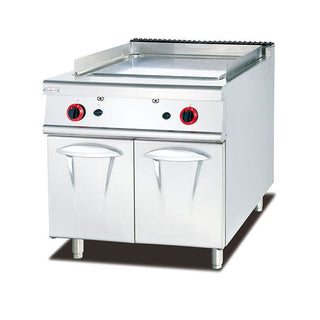
Flat, hot surface area, more than extra burners. A full breakfast on a four-burner cooktop means four pans for one plate, and a second order arriving means juggling pans. A griddle plate lets bacon, eggs, tomatoes and mushrooms cook side by side at different spots on the same surface, and a cook can see every order at once.
For a kitchen serving eight or more rooms, a freestanding gas griddle with a cabinet underneath is the piece that changes the morning. The one below has a smooth steel plate on 9.6 kW of gas, which recovers heat quickly when a batch of cold bacon goes on. It needs a gas supply and extraction above it, so it belongs in a kitchen that is being fitted out properly.
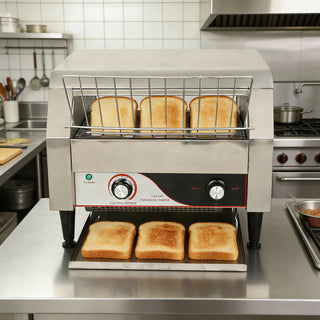
Toast is the other bottleneck, and the one owners forget. A domestic toaster makes two or four slices every couple of minutes; a conveyor toaster feeds bread through continuously, so a guest can take toast from the end without waiting. The model below is rated at 450 slices an hour and handles bagels and croissants as well as sliced bread.
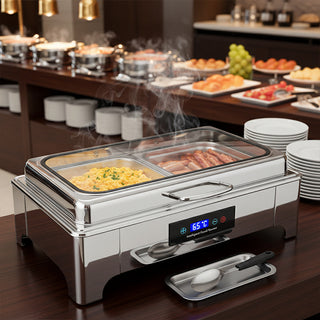
Held items dry out in a low oven. An electric chafing dish keeps them hot and moist on the pass or a buffet counter, with no fuel-gel flame. The set below comes in 6 or 9 liter sizes and several finishes, so it can sit on a breakfast-room sideboard without looking like a canteen.
The hotel kitchen collection gathers the rest of the cooking range, with toasters in conveyor toasters and holding equipment in chafing dishes and bain maries.
Coffee by the jug, espresso by request
At a B&B, coffee runs on two tracks. Most guests want a pot on the table as soon as they sit down, and a smaller group wants a latte or a flat white. Serving both from one espresso machine means the eggs overcook while the host steams milk.
Filter coffee handles the first track. A twin-jug filter coffee brewer fills a 1.8-liter jug in about five minutes and brews a second jug alongside it, which covers a full breakfast room with one refill.
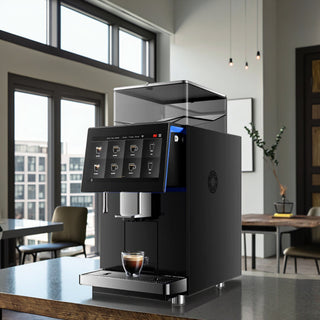
For the second track, hand the machine to the guests. A self-service bean-to-cup machine runs from a touchscreen, so a guest who wants a cappuccino can make one while you stay at the stove. The machine below has two bean hoppers, which lets you offer decaf without a separate grinder, and is rated for up to 250 cups a day.
Tea deserves the same care, served in pots rather than as a bag in a cup. Our comparison of commercial coffee machines explains when bean-to-cup beats a manual espresso machine, and the bean-to-cup machines collection has the self-service models side by side.
What does an inspector look for in a B&B kitchen?
Separation and temperature control come first, then hand washing. An environmental health officer or health inspector wants to see that guest food is stored apart from household food, kept at the right temperature, and handled by someone who can wash their hands without using the sink where the vegetables are rinsed.
In practice, most B&B kitchens need four things they didn't have as a family home.
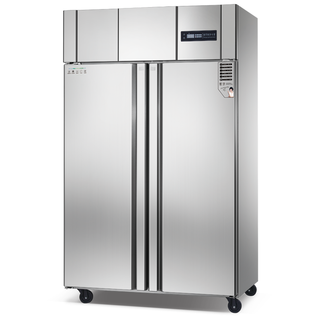
A dedicated fridge for guest food, with a thermometer and a daily temperature record. A double-door stainless fridge takes a week of breakfast stock in one place and holds it at a steady temperature, even when the door is opened every few minutes during service. The model below is available from 100 to 1,000 liters.
A hand-wash basin used only for hands and stocked with soap and paper towels. Inspectors look for it early in a visit, and fitting a small wall-mounted basin is one of the cheapest changes you can make. Our commercial sinks include wall-mount hand sinks as well as the larger bowls for washing equipment.
Surfaces that can be cleaned properly, which usually means sealed worktops and no bare wood where raw food is prepared.
Written records complete the list. That means a simple food safety plan, cleaning schedules and allergen information for everything on the menu. In the UK, food businesses have to be able to tell guests which of the 14 major allergens are in each dish, and a vegan or gluten-free guest will ask.
The dishes that decide the next table
A B&B runs out of plates before it runs out of food. With twelve covers and a domestic dishwasher on a two-hour cycle, the first sitting's crockery is still in the machine when the last table sits down.
There are two ways around it. You can own enough tableware for every cover plus a margin, and wash everything once after service. Or you can install a commercial machine with a short cycle, so crockery comes back within minutes. Most B&Bs past five or six rooms end up doing both.
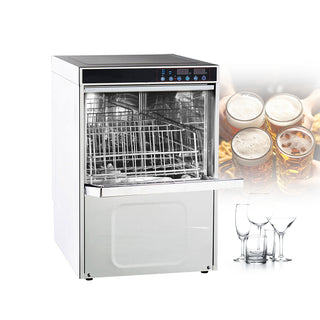
A front-loading commercial glass and dish washer sits under a counter like a domestic one but runs short, hot cycles. The catalog model below is rated at 30 baskets an hour with an 85 °C sanitizing rinse and 3 liters of water per cycle, and it takes ceramic plates and cutlery as well as glasses.
For the table itself, buy tableware in the depth of your busiest morning plus breakage, and keep to one range so a broken piece can be replaced from the same line. A mirror-polished cutlery set of 24 pieces covers six place settings and comes in several finishes.

The hotel dining collection groups plates and serving pieces, and undercounter dishwashers cover the washing side.
How to open a bed and breakfast at three, six or ten rooms
Room count sets the number of breakfasts, and the number of breakfasts sets the kitchen. The table uses two guests per room and a typical weekend morning.
| 3 rooms | 6 rooms | 10 rooms | |
|---|---|---|---|
| Breakfasts per morning | Up to 6 | Up to 12 | Up to 20 |
| Busiest half hour | Three or four plates | Around eight plates | Twelve or more plates |
| Kitchen type | Domestic, registered as a food business | Domestic-plus, with a separate guest fridge and a hand basin | Commercial kitchen, or domestic-plus with extraction and a buffet |
| Cooking | Cooktop and oven, eggs to order | Griddle plate or large pan surface; held items in warmers | Gas or electric griddle, holding for a buffet |
| Toast | Four-slot toaster | Commercial or conveyor toaster | Conveyor toaster the guests can use |
| Coffee | French press or filter machine | Filter jugs plus a bean-to-cup machine | Filter jugs plus self-service espresso |
| Dishwashing | Domestic machine, once after service | Commercial undercounter machine | Commercial machine, plus tableware for a full turn |
| People at breakfast | One host cooks and serves | A cook and someone in the dining room | A cook, a server and someone clearing |
| Breakfast style | Plated, cooked to order | Plated cooked dish plus a cold table | Buffet with eggs cooked to order |
The six-room column is the one to study. It is the point where a domestic kitchen starts to hold the business back, and also the point where a handful of commercial pieces, not a full refit, is enough to catch up. The griddle and the toaster do most of that work, with the dishwasher close behind.
At ten rooms, the budget follows the kitchen. Extraction, a gas supply and the building work around them usually cost more than the equipment itself, and the property purchase or conversion dwarfs both. Current prices for each item are on the product pages above.
Keep breakfast downstairs
A B&B kitchen is usually one floor below a guest bedroom, and it starts work at 7:00. That creates two problems no hotel has.
The first is smell. Bacon and fried eggs are pleasant at 8:30 and unwelcome at 6:45 in a bedroom above the kitchen. A proper extraction hood, ducted outside rather than recirculating, is the fix, and in a conversion it needs planning early because the duct has to go somewhere. Our guide on how to size a kitchen exhaust hood covers the calculation.
The second is noise. A commercial dishwasher, a coffee grinder and a clattering pan rack all start before most guests are awake. Put the noisiest machines against an outside wall, and avoid choosing the room above the kitchen as the one you sell to light sleepers.
The bedrooms themselves still matter, and a bed that sleeps badly will cost a review however good the eggs are. The in-room kit, from safes to minibars, is listed item by item in hotel supplies beyond the bed, and the guest rooms collection and mattresses and toppers carry the pieces themselves.
What licenses does a bed and breakfast need?
Two sets of rules apply at once. The house is licensed as accommodation, which covers planning consent and fire safety for guests who sleep in a building they don't know. The kitchen is regulated as a food business from the first breakfast you sell. Alcohol is a third regime that most B&Bs never enter, because it only applies if you sell drinks.
United Kingdom. Once letting rooms is more than incidental to living in the house, the council will expect a planning application for change of use, and any conversion needs building regulations approval. Under the Regulatory Reform (Fire Safety) Order 2005 the owner is the "responsible person", with a duty to assess fire risk, keep escape routes usable, provide alarms and brief anyone who works there. The kitchen has to be registered with the council as a food business at least 28 days before opening, and its Food Hygiene Rating will be public. Televisions in rooms and lounges need a TV licence, and music in shared areas a PPL PRS license.
United States. Most residential zones treat lodging as a conditional use, so expect to apply for a conditional-use permit, possibly with a public hearing, as well as a local business license. The fire marshal inspects against the NFPA 101 Life Safety Code, looking for smoke detectors, extinguishers and exit signage. Because breakfast is food service, the county health department issues a permit, and the person cooking needs food-handler certification under the FDA Food Code. A few states license lodging on top of all this, so check with both the state and the county.
Australia. The council confirms whether the zoning permits short-term accommodation; after that come a development approval for the change of use and, once the work is done, an occupancy certificate. Breakfast needs food business registration. Fire safety follows AS 3745 for evacuation planning and AS 2293 for emergency lighting and exit signs, with extinguishers tested every six months. A liquor license from the state or territory is needed only if you sell alcohol.
Ireland. Converting a house to guest accommodation generally needs planning permission for the change of use and compliance with building regulations, including fire safety for guest bedrooms. Register the kitchen as a food business with the HSE's Environmental Health Service. Many B&Bs choose to register with Fáilte Ireland, the national tourism body, and a national short-term letting register is being introduced; ask Fáilte Ireland what applies to your type of property.
None of this is legal advice, and details differ by council and county. Before taking the first booking, speak to the planning office, the fire authority and the food regulator. Of the three, fire usually takes longest, since upgrading an old house for paying guests can mean interlinked alarms and new fire doors.
What first-season owners change
Owners who come back to us after their first season tend to change the same few things, and almost none of them are in the bedrooms.
The first is the toaster. It sounds trivial, yet it comes up again and again. A line of guests waits for a two-slot machine while their eggs go cold. A commercial or conveyor toaster is one of the cheapest upgrades in the kitchen and one of the most visible.
The second is the menu. New hosts often print a long cooked-breakfast card with five egg styles and several specials, then find that every extra choice adds minutes in the rush. Most trim it within weeks to a short card that the kitchen can deliver hot, and move the variety to the cold table, where it costs nothing at 8:50.
The third is the dishwasher. A domestic machine that seemed fine in March becomes the reason breakfast runs late in August, and the switch to a commercial undercounter model is usually made mid-season, at the worst possible moment to install anything.
The last is the fridge. Keeping guest food on two shelves of the family fridge works until the first inspection or the first time a guest's oat milk disappears into a child's cereal. A separate fridge with a thermometer ends both problems.
Once a B&B grows toward staff, a restaurant and twenty or more keys, it is a small hotel, and the planning changes with it; the next step is in how to open a hotel.
Deciding between a home kitchen and a commercial one? Tell us how many rooms you will let, what you plan to cook and the size of the kitchen, and we will put together the breakfast equipment that fits your house and your busiest morning.


