
Plant kitchens do most of their work before the first order. How to open a vegan restaurant is a question about the prep room: cutting and blending capacity, in-house legumes and ferments, extra cold storage and strict allergen control.
Watch a busy vegan kitchen at 7 p.m. and the hot line looks light. Two cooks, a combi oven, a couple of burners. Come back at 10 a.m. and there are four people at the benches, a bowl cutter running, a crate of cauliflower waiting its turn, and chickpeas that went into water the night before. Plans for how to open a vegan restaurant should center on that second picture, because it is where the labor, the floor space and most of the equipment spend actually go.
Meat kitchens buy protein that arrives portioned or nearly so. A plant kitchen buys raw material and turns it into components: purées, creams, patties, doughs, pickles, cultured cheeses, dressings. Every one of those is a prep task with its own machine, its own container and its own place in the fridge. The cooking at the end is often the shortest step.
Why the prep room outweighs the line
Count hours rather than dishes. A roasted squash plate with a whipped tahini base, pickled shallots and a spoon of herb oil might take ninety seconds to plate and finish, and well over an hour of combined prep across five components made in batches. Multiply that across a menu of twelve dishes and the balance of the kitchen becomes obvious: most of the payroll works before service, and most of the equipment serves that work.
That shifts the budget in a specific direction. Money a steakhouse would put into a charbroiler, a large extraction canopy and a dry-aging cabinet moves into prep machines and refrigeration. The hood rarely disappears, since a plant menu still fries and roasts, but it can often be smaller. The prep benches, on the other hand, usually need to be longer than an architect used to restaurant plans will draw them.
It also changes how you staff. A vegan kitchen with good machines can run prep with two people where hand work would need four, and that saving recurs every week, which is why the machines below earn their place faster than most line equipment does.
What does a vegan restaurant prep room need?
Three machines carry most of the load. They are a continuous vegetable cutter for volume slicing and dicing, a bowl cutter for pastes and mixes, and a high-power blender for anything that has to end up smooth. Everything else in the prep room supports those three.
A vegetable cutter for the volume work
A plant menu can go through several crates of vegetables a day, and knife work at that volume is slow and uneven. A continuous-feed cutter slices and dices through interchangeable discs, so a cook feeds the hopper while the machine does the cutting. The one below is offered in two motor sizes, rated by the maker at 300 kg an hour up to 800 kg an hour, which covers a single site at the low end and a central kitchen at the top.
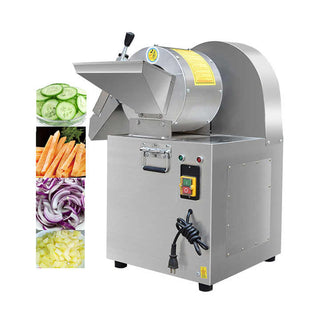
Buy the disc set with the menu in front of you. A 3 mm shred for slaws, a fine slice for pickles and a dice for stews and fillings will cover most plant menus; exotic cuts that appear on one dish can stay with a knife.
A bowl cutter for hummus and patty mixes
Pastes and mixes are the backbone of a vegan menu, and they are where a small food processor gives up first. Hummus by the tub, falafel mix, seitan dough and cashew cheese bases all need a heavy blade turning in a large bowl. This 32-liter unit runs its blade at 1,400 rpm on an 1,800 W motor, which is batch capacity rather than à-la-minute capacity.

Smaller tabletop processors in the food processors collection still earn a place next to it for sauces and herb pastes made in quantities too small for a 32-liter bowl.
A blender that can take soaked cashews all day
Cashew cream, nut milks and puréed soups all run through a blender, often for minutes at a time. Domestic machines overheat on that duty cycle. A commercial unit with a 2.2 kW motor handles thick loads without stalling, and a sound cover matters more than people expect in an open kitchen where the blender runs every twenty minutes through the afternoon.
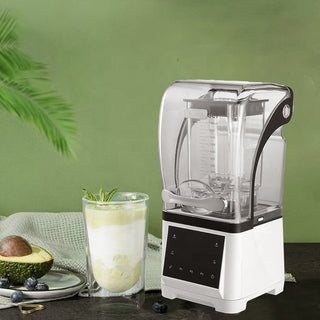
Plan on at least two jars, and preferably more, so that nut-based and nut-free recipes never share one. That single habit does more for allergen control than any sign on the menu, and the rest of the commercial blenders use the same logic.
Legumes and grains in batches, not by the can
Cooking dried beans and chickpeas in-house costs far less per portion than buying them canned, and the texture is better. The catch is time. Dried chickpeas need soaking overnight and then a long simmer, which on an open burner ties up a range and a cook's attention for much of a morning.
A commercial pressure cooker compresses that simmer into a fraction of the time and runs without supervision once the program is set. This 33-liter electric model runs on 3,500 W with preset programs and automatic shut-off, so a single batch can cover the chickpeas for a day of hummus and falafel. Keep the cooking liquid from chickpeas, too, since aquafaba whips like egg white and replaces it in mousses and meringues.

Grains follow the same pattern. Rice and whole grains such as farro cook well in a steam cabinet or a combi oven in perforated pans, which frees the burners and gives consistent results at volume. The boiling kettles and steamers collections cover larger batch equipment if you feed more than one site.
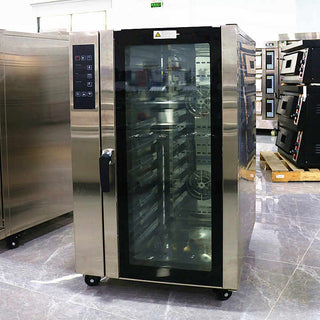
For the line itself, a combi oven is the most useful single purchase in a plant kitchen. It roasts vegetables at high heat, steams greens without boiling out their color, bakes trays of tofu, and holds finished components at temperature through service. The eight-tray unit below is gas-fired with a built-in steam function.
Can a vegan kitchen make its own ferments?
Yes, and many of the best ones do, because fermentation supplies the depth that meat and dairy would otherwise bring. Kimchi, sauerkraut, miso-style pastes, cultured cashew cheese, tempeh and kombucha all appear on plant menus, and making them in-house turns cheap vegetables and legumes into signature components.
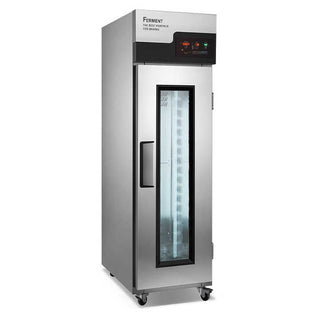
They do need controlled conditions. Lacto-ferments want a stable, cool room temperature and then refrigeration once they reach the right sourness. Tempeh and cultured nut cheeses want warmth and humidity held steady for a day or two. A proofing cabinet built for bread dough offers exactly that control, which is why some plant kitchens repurpose one as an incubator. This 18-tray cabinet holds humidity between 60 and 95 percent and can chill as well as warm, so the same box can slow a ferment down as well as start one. Tempeh wants steady warmth of roughly 30 to 32 °C, and the product card does not list the cabinet's temperature range, so confirm that with the supplier before you plan around it.
Dried components raise a similar question. Crackers, kale chips and dried mushrooms for stocks come out of a dehydrator, a machine many raw-food menus rely on. A combi or convection oven at its lowest setting with the fan running can do small batches, but it occupies an oven for hours. If dehydrating is central to the menu, specify a dedicated cabinet from the start rather than borrowing oven time.
Keep ferments physically apart from everything else. Their smell migrates, live cultures should not share shelves with ready-to-eat items, and each jar needs a label with the start date. A short fermentation log is also something an inspector may ask to see, and it protects you if a batch goes wrong.
How much cold storage does a produce-led kitchen need?
More than a meat kitchen of the same size, usually by a clear margin. Fresh produce is bulky and short-lived, and a plant menu adds a large volume of prepared components that sit in containers between prep and service. Plan cold storage in three layers.
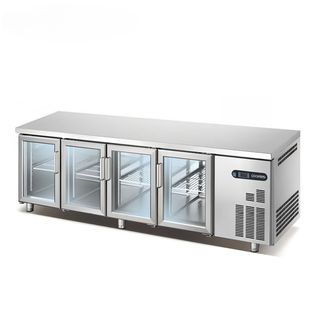
The first layer sits at the bench. Refrigerated prep tables keep cut vegetables and sauces cold while cooks work, so nothing spends an afternoon at room temperature. A four-door worktop unit gives a 2,250 mm run of stainless bench with refrigerated storage underneath, enough for a prep station and a cold line together.
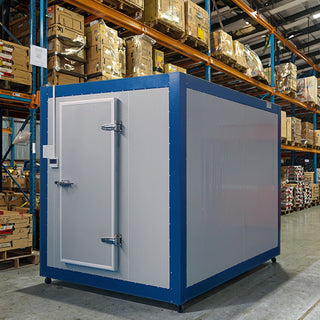
The second layer is bulk storage for deliveries and batches. Above roughly eighty covers, a walk-in usually makes more sense than a row of reach-ins, because produce crates, tubs of cooked legumes and ferment jars stack far better on shelving you can walk between. A modular room is assembled from insulated panels to the size of the space, and this one is specified for anything from +15 °C down to −25 °C, so part of it can run as a produce room slightly above normal fridge temperature.
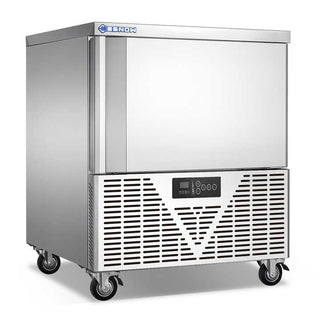
The third layer is fast cooling. Big batches of beans and soups have to drop through the danger zone quickly, and a stockpot left on a bench does not. A blast chiller does that job, and the one below is rated by the maker to bring a load from +75 °C to +3 °C in about 90 minutes.
Once cooled, vacuum-packing extends the life of blanched vegetables and portioned sauces and keeps smells contained. Our guide to vacuum packaging for kitchens covers which sealer suits which job, and commercial refrigeration explained compares reach-ins with walk-ins in more depth. For sealers themselves, see the vacuum sealers collection.
Nuts and gluten need their own workflow
A vegan menu removes milk, eggs, fish and crustaceans from the kitchen, and it concentrates the remaining major allergens instead. Tree nuts, peanuts, soy, sesame and wheat gluten all tend to appear across a large share of dishes, often as the main ingredient rather than a trace. Under UK and EU rules, celery, mustard and lupin join the list. Guests with allergies often choose vegan restaurants on the assumption that the food is safer for them, which makes a mistake more likely to reach someone who is vulnerable.
Control starts with the physical setup. Give nut work its own board color, its own blender jars and its own labeled containers, and schedule it after nut-free prep on the same bench rather than alongside it. Store nut pastes and flours on the lowest shelves so nothing spills downward. Keep seitan and wheat-based doughs away from gluten-free batches, including flour dust from the mixer.
Then document it. Every recipe needs an allergen sheet that front-of-house staff can read in seconds, updated whenever a supplier or a recipe changes. A matrix pinned at the pass and a copy in the point-of-sale system both help. Sanitation equipment in the sanitation collection keeps surfaces and knives clean, but it is worth remembering that sterilizing kills microbes and does not remove allergen proteins. Washing and physical separation do that.
How to open a vegan restaurant for counter, casual or tasting-menu service
Service format decides how the prep workload is spread across the day and which machines are critical. The table compares the three most common formats.
| Service format | Prep pattern | Machines that matter most | Cold storage | Where the equipment budget goes |
|---|---|---|---|---|
| Counter / bowl bar (lunch-led, 150+ bowls a day) | One large morning batch, top-ups at 2 p.m. | Vegetable cutter, bowl cutter, pressure cooker, steam cabinet | Refrigerated prep rail at the counter, reach-ins or a small walk-in | Batch equipment and the serving counter |
| Casual à la carte (60–100 covers) | Components through the day, finishing to order | Combi oven, blender pair, bowl cutter, blast chiller | Prep tables on the line, walk-in above about 80 covers | Combi oven and refrigeration |
| Tasting menu (30–40 covers) | Many small, precise components; long ferments and dried elements | Proofer as incubator, dehydrator, sous vide, high-speed blender | Several small units at controlled temperatures | Precision equipment and labor |
Counter formats live or die on the speed of batch production, so the cutter and the pressure cooker justify themselves first. Casual restaurants lean on the combi oven and on cold storage that can hold dozens of components ready to plate. Tasting menus spend less on volume and more on control, which is where sous vide baths and the proofing cabinets described above come in.
Tableware matters in every format, since a plant plate sells on color and arrangement. Buy core shapes in depth, and check order quantities in the plates and bowls collection against your cover count before you commit to a statement piece that ships only in large lots.
Allergen labels, menus and the word "vegan"
A vegan restaurant registers and is inspected like any other food business: a food-business registration or health permit, a hygiene inspection, fire safety for the premises, and an alcohol license only if you serve drinks. What sets the format apart is labeling. Allergen information and the "vegan" claim itself carry more weight here than in most restaurants, and the rules differ by market.
United Kingdom
Register with the local council at least 28 days before opening and expect a Food Hygiene Rating inspection. Allergen information for the 14 regulated allergens must be available for every dish; for food served loose it can be given verbally, as long as written information is available and signposted. Food prepacked for direct sale, such as grab-and-go salads packed on site, needs a full ingredients label with allergens emphasized under Natasha's Law. There is no legal definition of "vegan" in UK food law, so the claim rests on general rules against misleading consumers, and a trace of dairy in a "vegan" dish is treated as a food-safety and labeling failure.
United States
You need a business license, an EIN, a health department permit and food-handler or ServSafe certification. The 2022 FDA Food Code asks food establishments to tell customers in writing when any of the nine major allergens (milk, egg, fish, crustacean shellfish, tree nuts, wheat, peanuts, soybeans, sesame) is an ingredient in unpackaged food. The Food Code only binds where a state or county adopts it, so check which edition your health department enforces. "Vegan" has no federal definition, which makes an internal written standard for what you call vegan worth having.
Australia
Notify the local council as a food business, and in most states appoint a Food Safety Supervisor. Under the Food Standards Code, allergen information for food that is not packaged must be displayed with the food or provided on request, and packaged items you sell must follow the plain-English allergen labeling rules. As in the UK and US, there is no statutory definition of "vegan", so staff answers need to match what is actually in the kitchen.
Germany and the EU
Register the business with a Gewerbeanmeldung and follow EU and German food-hygiene rules, including HACCP-based controls and staff hygiene training. The EU allergen regulation covers loose food as well as packaged, and Germany also expects the information to be available to guests, and a written allergen list or menu footnotes is the safest way to provide it. German food-law guidelines describe what "vegan" and "vegetarian" mean on food, and in March 2026 EU negotiators provisionally agreed to reserve a list of meat terms such as "steak" and "bacon" for animal products while leaving "burger" and "sausage" usable. That agreement still needs formal adoption, and it is aimed at product labeling, so check how it would apply to a menu. A Gaststättenerlaubnis is needed only if you serve alcohol.
This is an overview rather than legal advice. Confirm the current requirements with your local authority, since enforcement differs from one council or state to the next, and allergen rules in particular have changed several times in recent years.
Where plant-based openings lose money in the first year
The pattern we see most often is a kitchen specified like a conventional restaurant with the meat taken out. It has a large range and a charbroiler that sit half idle, and a single domestic-grade food processor that burns out in the second month. Prep falls behind, the team starts buying in hummus and canned beans, and the food cost rises at the same time as the menu loses what made it distinctive.
Cold storage is the second place owners come up short. A plant menu fills fridges with containers of components, and when space runs out, produce gets stored in the wrong place or at the wrong temperature, shelf life shortens and waste climbs. Planning the walk-in or the extra prep table before opening is cheaper than finding room for one later.
Allergen handling causes the most serious problems. A shared blender jar or a pesto made with nuts on the same board as a nut-free dressing can put a guest in hospital, and a vegan restaurant attracts precisely the guests for whom that risk is highest. Separate equipment, a written matrix and staff who check before they answer are part of the fit-out, not an afterthought.
The last one is quieter. Menus built entirely from in-house ferments and dried components are impressive and slow to scale. Launch with the components the team can produce reliably every day, then add fermentation once the base is steady, and let the equipment list grow with that plan.
If you are still deciding on the wider restaurant build, our guide to opening a restaurant covers the full kitchen and dining room, and the restaurant equipment catalog is organized by zone. For cooling cooked batches, our comparison of a blast freezer and a commercial freezer explains when a blast unit pays back. If a juice counter is part of the plan, our guide to opening a juice bar covers that side.
Planning a menu that is heavy on prep? Send us the dish list and your expected covers, and we will size the prep machines and cold storage around the work your kitchen does before service.


