


In short: hotel supplies divide into what the guest touches and what the operation runs on. The first is bought per key and multiplies; the second is bought once per property and has to be sized for the worst week of the year, not the average one.
Twenty rooms, one bed each, three sheet sets per bed. That is sixty sets before a single guest arrives, and it is the arithmetic that catches out everyone opening their first property.
Nothing in a hotel is bought once. Every decision about a room is a decision multiplied by the key count, and every decision about the building is a decision you make once and live with for a decade. Sorting purchases into those two piles is the fastest way to make a supplies budget behave.
What do hotel supplies actually cover?
Five categories, and they behave completely differently on a balance sheet.
| Category | Bought | Replaced | Guest notices |
|---|---|---|---|
| Bedding and linen | Per key, in multiples | Sheets 1–2 years, mattresses 7–10 | Immediately, every night |
| In-room equipment | Per key | 5–8 years | Only when it is missing |
| Laundry | Per property | 10+ years | Never, unless it fails |
| Water and air treatment | Per property, sometimes per key | Consumables quarterly | In the taste of the coffee |
| Cleaning equipment | Per property | 5–10 years | Only the result |
The middle three are where the money is invisible and the failures are expensive. The first is where the reviews come from.
Bedding: why every bed needs three sets
One set on the bed, one in the wash, one on the shelf. That is the standard par level, and dropping to two is the single most common cost-saving that fails in the first month — because the day the laundry is late, the room cannot be sold.
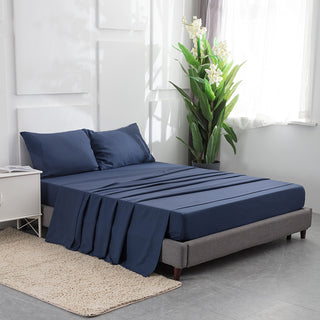
Microfiber and poly-cotton blends dominate commercial linen for one reason: they survive industrial washing at temperature and come out needing less pressing. Pure cotton feels better and costs more per year, which is a legitimate trade for a property selling on the quality of the room.
Mattresses run on a different clock — seven to ten years before the reviews start mentioning them. The purchase detail that matters in a small property is delivery: a roll-packed mattress goes up a narrow staircase, and a conventional one frequently does not.
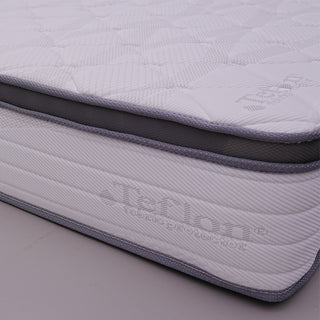
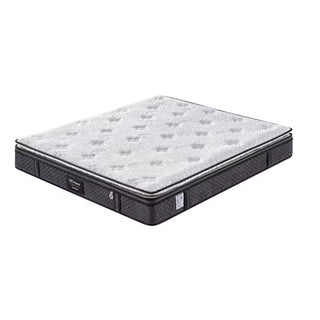
Pocket springs matter more in hotels than at home because hotel beds are shared by strangers who did not choose each other. Independent springs mean one guest turning over does not move the other, which is a complaint category that quietly disappears with the right mattress.
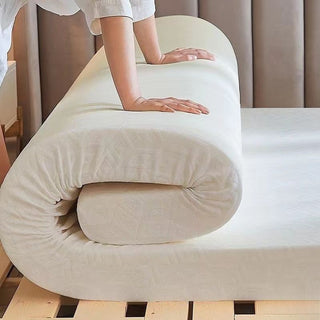
Toppers are the cheapest upgrade in a hotel bedroom, and the most tactical. They extend the life of an ageing mattress by a year or two, and they let a property offer a firmness choice without holding two mattress inventories.
The full bedding range covers sheets, mattresses and toppers together if you are pricing a whole floor at once.
Laundry: in-house or outsourced?
The decision turns on three numbers, and room count is only one of them.
First, volume. A hotel generates roughly three to six kilograms of linen per occupied room per night depending on service level — towels, sheets, and whatever the restaurant adds. Multiply by keys and occupancy and you have your daily load.
Second, the local price of outsourced laundry, which varies enormously by market and is the number most likely to make the decision for you.
Third, whether you have the space, drainage and power. In-house laundry needs a room with serious services, and retrofitting one into a converted building is where the business case usually dies.
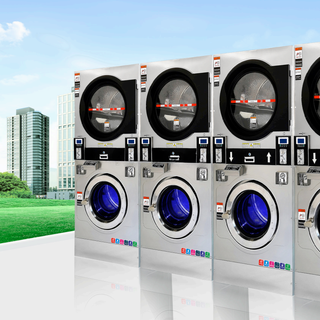
Where the volume justifies it, a washer-extractor is the machine to look at rather than a large domestic washer. The extract speed is the point: the more water spun out mechanically, the less has to be driven off with heat, and drying is where the energy bill actually sits.
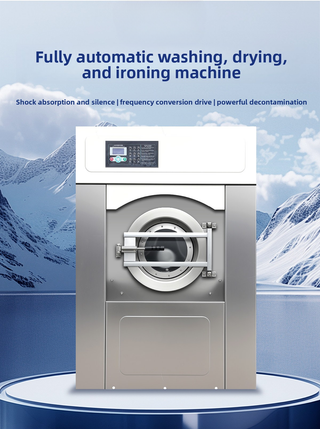
An integrated line — wash and dry sized to each other — stops the bottleneck that appears when a fast washer feeds a slow dryer and the housekeeping team waits at eleven in the morning.
At larger scale, or where a property also handles linen for others, the step up is a different class of machine again.
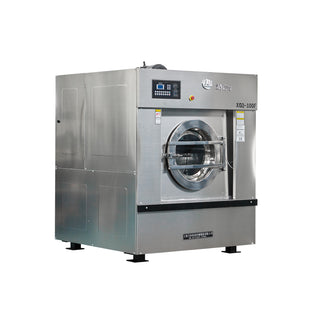
The honest summary: below roughly fifty keys, outsourcing usually wins unless local laundry pricing is unusually bad. Above a hundred, in-house usually wins if the building can physically take it. In between, it is a spreadsheet rather than a rule. The laundry range covers combo units through to industrial extractors.
The in-room kit guests only notice when it is missing
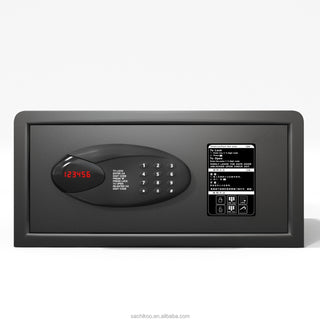
A safe is the clearest example. Nobody chooses a hotel for its safe, and a broken or missing one generates a complaint and sometimes a liability argument.
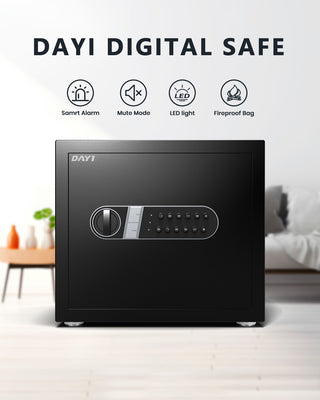
Two features matter operationally rather than to the guest: a management override for the inevitable forgotten code, and fixing to the structure — a safe that can be carried out of the room is decoration. Where the property stores documents or handles cash, a fire-rated wall unit belongs in the office rather than the bedroom.
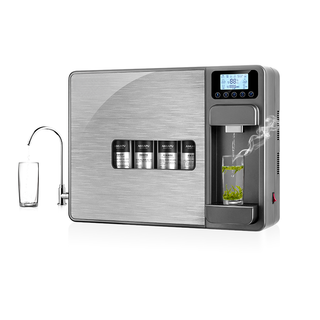
Drinking water is the amenity that has changed fastest. Plastic bottles in every room have become a negative in a lot of markets, and an in-room or corridor purifier removes both the cost and the criticism.
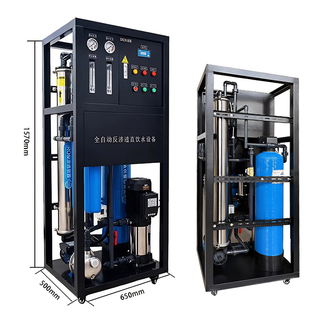
At property scale, water treatment is not an amenity at all — it is protection for everything else. Hard water destroys coffee machines, dishwashers, kettles and boilers, and a reverse osmosis system upstream is cheaper than replacing what sits downstream.
Cleaning and air at property scale
Corridors, lobbies and car parks are the surfaces that make a property look maintained, and they are too large to clean the way a bedroom is cleaned.
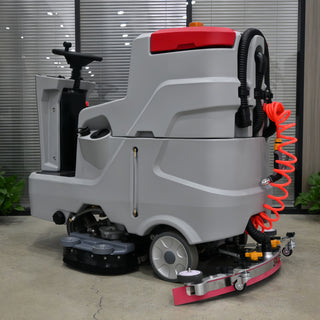
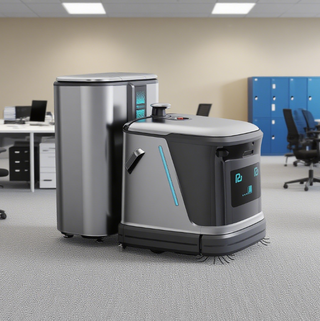
A ride-on scrubber pays back in labor hours on any floor plate measured in thousands of square meters. Below that, an autonomous scrubber is increasingly the better answer, because it runs overnight when the space is empty and nobody is standing behind it.
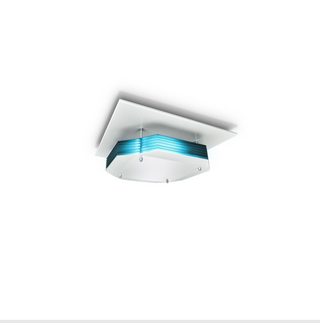
Air treatment has a distinction worth understanding before buying. Conventional UV-C at 254 nm disinfects effectively but requires an empty room, which makes it a turnover tool. Upper-air systems shield the lamp and treat the air above head height, so they can run in occupied spaces.
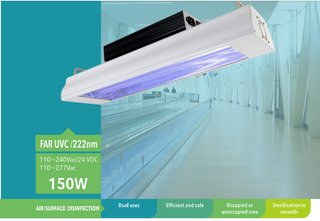
Far-UVC at 222 nm is the newer approach, designed to be used around people. It is worth checking current guidance for your market and your intended use rather than assuming any UV product is interchangeable with any other.
Which hotel supplies multiply badly
- Two linen sets per bed instead of three. Saves once, costs a sellable room every time the laundry runs late.
- Buying a mattress that will not go up the stairs. Measure the turn on the staircase before ordering, not after.
- Sizing laundry for average occupancy. The machine has to survive your busiest week, and that is when it will fail if it cannot.
- Skipping water treatment. One system upstream protects every appliance downstream, and in hard-water areas it pays back within a couple of years.
- Unfixed safes. A portable safe is a box that thieves take with them.
- Treating all UV as equivalent. Wavelength and installation type decide whether it can run around people at all.
If you are fitting out a property from scratch, buy the per-key items in the multiples the operation genuinely needs, then spend what is left on the per-property systems that protect them.
Fitting out a property key by key? Tell us the room count, your occupancy pattern and whether the building can take a laundry, and we will price the per-key and per-property lists separately so the arithmetic is visible.


