

In short: how to start a catering business is a question about the gap between your kitchen and somebody else's room. The cooking is the easy half. The discipline is producing days ahead, holding safely, moving it without breaking the cold chain, and never needing something you left behind.
A restaurant that runs out of an ingredient sends someone to the shop. A caterer eighty kilometres away with two hundred guests seated does not have that option. Everything about the format follows from that one asymmetry: you get one chance, in a building you do not control, with whatever is on the van.
Which makes catering unusual to equip. Half the kit is production — and it looks like any commercial kitchen. The other half exists purely to survive transport and to hold food safely for hours in a room with no gas, sometimes no water and often one overloaded socket.
Decide which catering business you are actually starting
Four formats hide under the word, and they need different kitchens.
Drop-off delivers food and leaves. No service staff, no on-site equipment, everything designed to be eaten at ambient or reheated by the client. It is the cheapest to start and the lowest margin.
Buffet delivers, sets up, holds and serves from a line. This is where hot-holding equipment becomes the core of the business.
Plated service puts a hot plate in front of a seated guest at a specific minute. It needs the most equipment, the most staff and a genuine on-site kitchen or a very good regeneration plan.
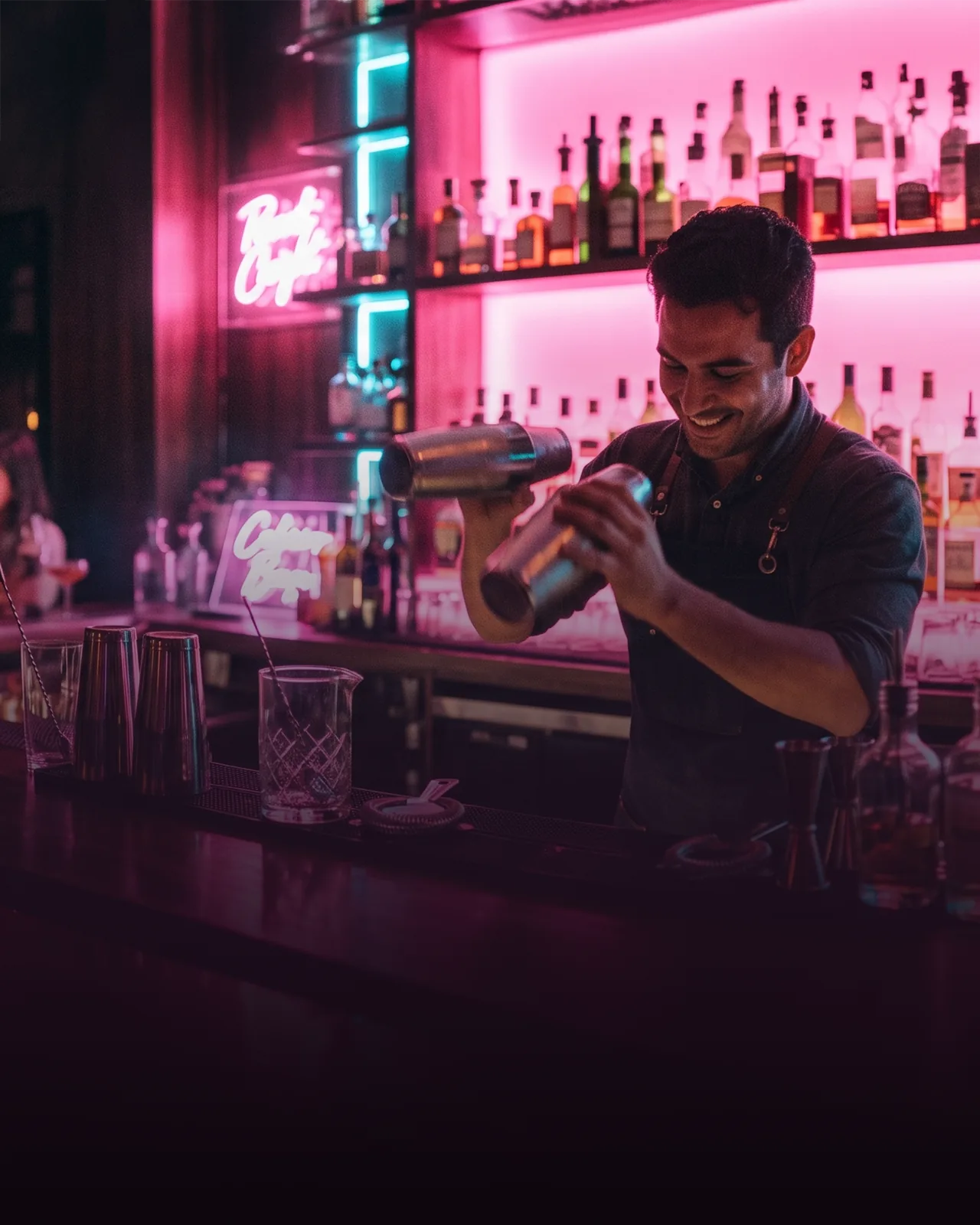
Bar and drinks is a separate business that happens to travel in the same van, and it is discussed near the end because people consistently underestimate it.
Pick one to start. Every one of them can be added later; trying to quote for all four in the first year is how a caterer ends up owning equipment for jobs they do not win.
You cannot cook it all on the day
An event for a hundred and fifty is not a restaurant service for a hundred and fifty spread over four hours. It is one moment, and no kitchen has the burner capacity to cook everything into that moment.
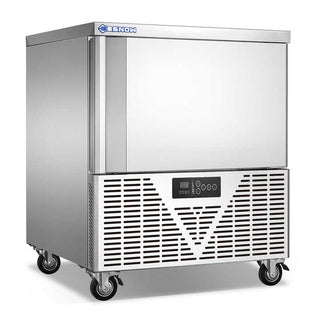
So the model is cook-chill: produce over the preceding days, bring everything down through the danger band fast, hold cold, and regenerate on site or on arrival. That is not a shortcut — it is the standard way large-scale food service works, and it is safer than cooking on the day in a strange kitchen.
What makes it work legally as well as practically is the chilling step. Food has to move out of the danger band within a defined time, and a walk-in cannot do it — it was designed to hold cold, not remove heat.
Vacuum packing is the other half of the same model. Portioned, sealed and dated, components hold far longer, travel without spilling, and stack in a way that open trays never will.
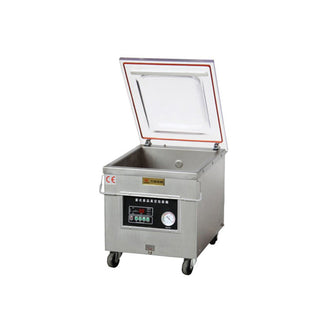
The bonus is stock control: a sealed, dated bag is a label an event manager can read at six in the morning in somebody else's car park.
Hot holding is where a buffet is won or lost
Food that is held badly is worse than food that is reheated badly, because it degrades slowly and nobody notices until service. Held too hot it dries and darkens; held too cool it enters the danger band and you have a food-safety incident rather than a quality one.
Wet heat is the answer for almost everything a caterer holds. A bain marie surrounds the pan with hot water, so the food holds at temperature without a dry hot surface cooking it further.
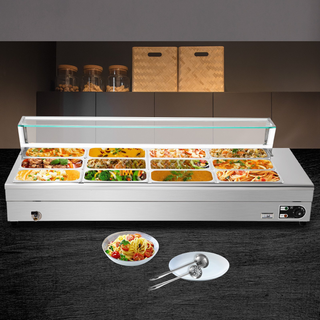
On site, the chafing dish does the same job with less power and no plumbing, which is why it remains the format of every buffet in the world. Electric versions hold more accurately than fuel gel and are worth it wherever there is a socket; gel is the fallback when there is not, and you should always carry it.
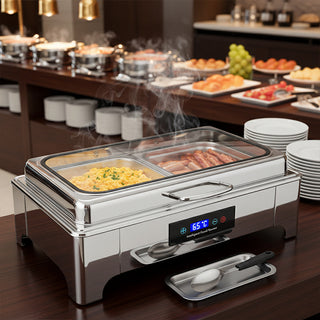
Whichever you use, temperature is a number you record rather than assume. A probe thermometer and a sheet is the cheapest piece of equipment in this article and the one an inspector will ask about first.
Cold in transit is the link nobody audits
Every caterer has a chilling plan and a holding plan. Far fewer have a transit plan, and transit is where the cold chain actually breaks — a van in July, loaded at seven, unloaded at eleven, with the doors open at both ends.
Three things fix most of it. Insulated boxes with cold packs, pre-chilled rather than cooled on the way. Loading last-out-first-in, so the cold goes on last and comes off first. And a temperature check written down at load and at arrival, which is both the discipline and the evidence.
For anything larger than a car boot, refrigerated transport stops being optional. It is also the point at which the business becomes properly scalable, so it usually arrives with the second van rather than the first.
The pack-out list is the actual product
The single highest-return habit in catering has nothing to do with equipment: a written, per-event pack-out list, checked twice, by two people.
Everything that goes wrong on site traces back to something that did not leave the building — the serving spoons, the extension leads, the gel fuel, the spare gastronorm, the roll of cling film, the first-aid kit. None of it is expensive and all of it is unavailable at eight in the evening in a field.
Build the list per event type rather than per event, then adjust. Over a year it becomes the most valuable document the business owns, and it is the thing that lets you hire staff who have never worked with you.
Serving equipment scales differently from kitchen equipment
Kitchen equipment is bought once and used at every event. Serving equipment — plates, glassware, cutlery, linen, tables, chairs — scales with headcount, and a hundred-cover job needs five times the crockery of a twenty-cover one.
Hire it, at least at first. Hire companies absorb breakage, storage and the mismatch between your biggest and smallest jobs, and the cost is a line you pass on to the client. Buying makes sense only for the size of event you run every single week — and for the few items where quality is part of your brand and hire stock is unreliable.
Storage is the hidden cost of owning. Equipment for a two-hundred-cover event occupies real space fifty-one weeks of the year.
Bar service is a separate business bolted on
Drinks are the most profitable part of most events and the part most often quoted badly. They also carry their own equipment, their own licence and their own failure modes.
A mobile bar station gives you a working bar with refrigeration in a room that has none, which is the difference between serving drinks and handing out warm bottles.
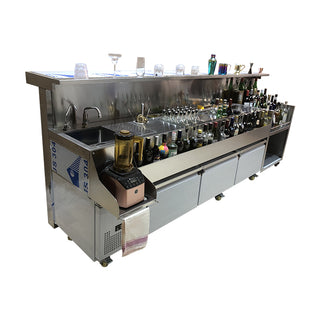
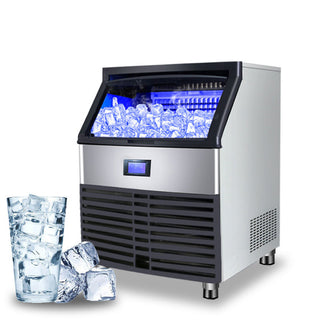
Ice is the item that ruins events. A hundred guests through a summer afternoon will go through far more than anyone estimates, venues rarely have any, and bought bags melt in transit. Producing your own — and transporting it in insulated boxes — is the difference between running out at eight and not.
The licensing side is covered below, and it is the part that catches new caterers: the licence usually attaches to the place the event happens, not to you.
How to start a catering business: where the money goes
The largest early decision is where you cook. A registered production kitchen is the biggest fixed cost in the business, and there are three routes: build your own, rent a shared commercial kitchen by the hour, or work out of an existing venue's kitchen in exchange for a fee. Renting is how most viable catering businesses start, because it turns the largest fixed cost into a variable one while you find out what you actually sell.
Transport is the second. A reliable van with a proper load plan does more for the business than an extra piece of kitchen equipment, and refrigerated transport is the upgrade that unlocks larger jobs.
The cash-flow shape is the thing to plan for. Catering carries costs weeks before payment, and staffing is booked before deposits clear. Deposits are not a formality in this business — they are what keeps it solvent.
Licences: the food follows you, the alcohol follows the venue
United Kingdom. Register the food business with your home council at least 28 days before trading, and expect an inspection and a Food Hygiene Rating on your production kitchen. For alcohol at an event, a Temporary Event Notice covers up to 499 people, served on the council and police at least ten working days ahead — and crucially it applies to the location of the event, so a caterer working ten venues needs a TEN for each. You are limited to five a year unless you hold a Personal Licence, which raises it substantially, and that alone is the reason working caterers get one.
United States. A health department permit and food-handler certification, plus — in most states — a commissary agreement: proof that you produce in an approved commercial kitchen rather than at home. Home-kitchen catering is broadly not permitted beyond narrow cottage-food exceptions that exclude most catered menus. Alcohol is a state or local one-day special-event permit, and the venue's own licence usually does not extend to you.
Australia. Council food-business notification and premises approval for the production kitchen, plus a Food Safety Supervisor in most states. Mobile and temporary food-handling requirements apply at each event location, and some councils require separate notification for events in their area. Alcohol at events runs on a limited or temporary licence from the state regulator, with RSA competency for anyone serving.
Across all three, the pattern is the same: the food registration follows your kitchen, and the alcohol permission follows the event. Plan the second one per booking rather than once.
What goes wrong on the second event
The first event is over-prepared, because it is terrifying. The second is where the habits show.
Something is missing from the van, because the pack-out list was in someone's head. The holding temperature was assumed rather than measured, and the food was fine but there is no record that it was. And the job was priced on food cost plus a margin, without the four hours of loading, driving, setting up and packing down that the food cost knows nothing about.
All three are process rather than equipment, which is the honest summary of this format: catering is a logistics business that happens to cook.
Working out what has to travel and what has to hold? Tell us the format you are quoting for and the largest headcount you want to take, and we will spec the production and the on-site kit separately.


