

In short: how to open a craft beer bar is a fight between two things you want at the same time. Guests come for choice; draft beer rewards speed. Every extra tap divides your turnover, and beer that sits in a line long enough stops being the thing the brewery sold you.
The instinct when planning a taproom is to count taps. Twenty sounds like a destination, eight sounds like a pub. It is the wrong number to start from, and getting it wrong is the most common reason a craft bar's beer is worse in month six than it was in week one.
The number that actually governs the format is turnover per tap: how fast a keg moves once it is connected. Everything else — cellar size, cleaning rota, glassware, the can fridge — follows from it.
This guide sits under the wider how to open a bar and covers the beer-led taproom specifically.
Variety is the product and the problem
A keg that is open for two days is a different product from one open for two weeks. Draft beer degrades from the moment the coupler goes on: oxygen creeps in, hop character fades first, and by the second week a hazy pale ale tastes like a competent lager.
Craft drinkers notice this faster than anyone, which is the cruel part — the audience most attracted by twenty rotating taps is also the audience most able to tell when tap fourteen has been on since a fortnight ago.
So the design question is not how many taps you can fit. It is how many you can empty.
Turnover per tap is the number that governs everything
Take your realistic weekly draft volume and divide it by tap count. A 30-litre keg is roughly sixty pints; a 50-litre keg is about a hundred. If a tap does not clear a keg in around a week, that line is holding beer past its best for most of its life.
Run the arithmetic honestly and it usually produces an uncomfortable answer. A bar selling four hundred pints of draft a week supports maybe six or eight taps at real freshness. The same bar with twenty taps is selling twenty pints per tap per week, which means every keg sits open for two to three weeks.
There are two honest ways out of that, and both are used by good taprooms. Open fewer taps and rotate them aggressively, so the list changes weekly without the beer ageing. Or run smaller kegs on the slow lines — 20 and 30-litre formats on the specialities, larger only on the two or three that actually sell.
What does not work is running twenty large kegs and hoping. That is the version guests describe as "the beer is fine, I don't know, it was better last time".
How many taps a room can keep fresh
For most independent taprooms the answer lands between eight and sixteen, weighted by how much of the volume the top three lines carry. Almost every craft bar discovers that two or three taps do half the volume — usually a lager, a pale ale and whatever local thing the neighbourhood adopted.
Design around that shape rather than against it. The high-volume lines want the largest kegs, the shortest runs and the most reliable cooling. The rotating lines want small kegs and a menu that treats them as a changing list rather than a fixture.
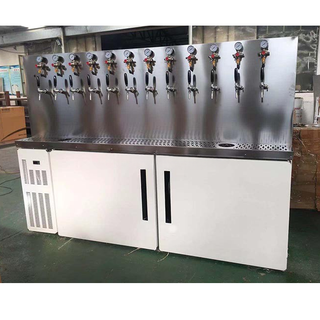
Whatever the count, the cooling has to reach the faucet on every line — an uncooled tower gives you foam on the first pour of every session, which on a twenty-tap wall is a bucket of beer before you have served anybody. We went through why in what a bartender loses to a cheap kegerator.
The cellar decides the tap wall, not the other way round
Every tap needs a keg connected and, in practice, a spare behind it. Sixteen taps is thirty-two keg positions if you want to change without stopping service, and that is a room, not a cupboard.
A multi-line cooler-dispenser handles the cooling and the distribution for a group of lines and is the usual backbone of a taproom cellar.
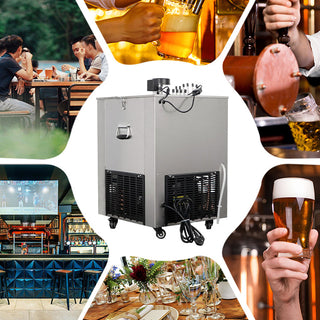
Three constraints decide the space before the equipment does. Kegs arrive on pallets and have to get in — a delivery route with a step and no trolley access will define your maximum keg size permanently. Cellar temperature has to hold in summer. And gas has to be stored and changed safely, which in most jurisdictions means a ventilated space and a risk assessment rather than a cylinder wedged behind a door.
Line cleaning at sixteen taps is a job, not a task
Beer lines need cleaning every one to two weeks. On four taps that is an hour on a Monday. On sixteen it is a scheduled shift, with the beer in the lines discarded each time and the taps out of service while it happens.
Two things follow. Budget the beer loss — cleaning a long run costs you the beer sitting in it, every time, and at sixteen lines that is a real weekly number. And build the rota so that cleaning is somebody's named responsibility, because it is the maintenance that produces no visible consequence when skipped, right up until the beer tastes sour and nobody can say when it started.
This is also where an oversized tap wall punishes you twice: more lines to clean, and slower turnover meaning the beer in them was already tired.
Glassware: styles matter, frosting does not
Craft beer is served in more shapes than lager is, and the shapes do real work — a tulip holds a head and concentrates aroma, a stemmed glass keeps a hand off the bowl, a straight pint is for the beers that do not need help.
Three shapes is plenty for most lists, and a well-chosen glass sells the beer before it is tasted.
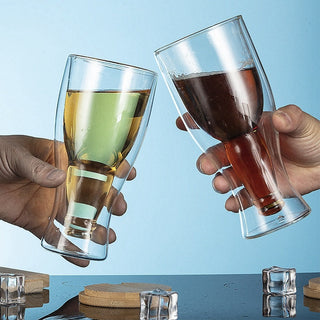
What craft beer does not want is a frosted glass. Freezing a glass kills aroma, which is most of what distinguishes a good IPA from a mediocre one, and ice crystals knock the head down. Frosters belong on the cocktail side of the bar; a beer glass wants to be clean, cool and rinsed.
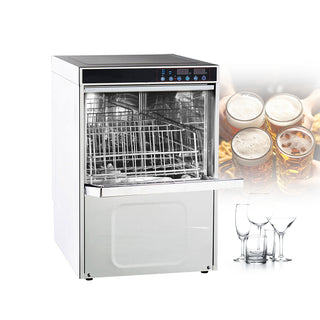
A rinse before the pour matters more than it sounds: it removes detergent film, which is the most common cause of a head collapsing in thirty seconds, and it wets the glass so the beer climbs rather than clings. That is what the rinsers on a good tap wall are for.
Behind them, a glasswasher sized to peak rather than average, because a taproom on a Friday goes through glassware faster than its kitchen goes through anything.
Flights and cans: the two tools that fix the turnover problem
A tasting flight — three or four small pours — looks like a merchandising idea and is actually stock control. It moves the slow taps, it lets a guest try the thing they would not have committed a pint to, and it converts curiosity into sales on exactly the lines that were ageing.
Cans and bottles do the other half. A craft bar with a fridge wall can carry sixty beers that never age in a line, alongside twelve taps that turn over properly. That is the format most surviving taprooms converge on, and it is not a compromise — it is how you offer real breadth without punishing the draft.
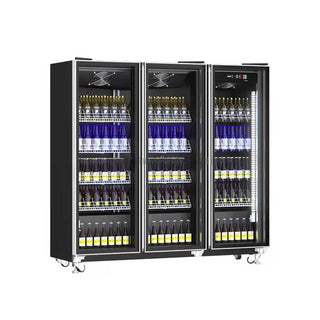
Packaged beer also carries the takeaway trade, which is the revenue line that does not depend on somebody sitting in your room for two hours.
Self-pour: what it solves, and what it costs
Self-pour walls — where guests tap their own beer against a card and pay by the millilitre — solve a real problem in a taproom: the bar queue at peak, and the reluctance to commit to a full pint of something unfamiliar.
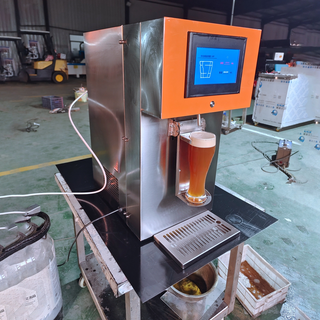
What they cost is the conversation. In a bar whose product is knowing which beer to recommend, removing the bartender removes the thing people came for. Most successful installations use it as a wall alongside a staffed bar rather than instead of one.
They also carry a licensing consideration, because responsible-service obligations do not disappear when a machine pours: expect to need staff monitoring, card-based limits and an age check at issue rather than at the tap.
How to open a craft beer bar: where the money goes
The spend is concentrated in cooling and cellar — the dispense system, the cellar cooling, the runs — and in glassware, which a taproom breaks at a rate that surprises first-time operators.
What you save is a kitchen. Most taprooms run snacks, a food partner or a rotating truck rather than a line, which removes extraction, gas and a chef from the fit-out and from the wage bill. That is the format's structural advantage and it is worth protecting.
Stock is the working-capital item. A twelve-tap bar with a sixty-line fridge is holding a lot of beer, and unlike spirits it has a clock on it.
Licences: four markets, four different shapes
Germany. A Gaststättenerlaubnis under the Gaststättengesetz, attached to both the person and the premises, with a certificate of good conduct and the IHK hospitality briefing behind it. Noise is the live constraint for a taproom with a terrace: TA Lärm night limits are strict in residential areas and closing hours are set at state level. If you brew on site as well as serving, beer duty is administered by customs and is a separate registration.
United Kingdom. A Premises Licence plus a Personal Licence for the Designated Premises Supervisor. Two items matter for this format specifically: off-sales must be authorised in the operating schedule if you want to sell cans and growlers to take away, and if you produce beer on site you need to register with HMRC for beer duty. Register the food business with the council even if you only serve snacks.
Australia. An on-premises liquor licence from the state or territory regulator, with RSA competency for everyone who serves — and packaged takeaway sales are frequently a separate licence condition rather than an assumed right. Recorded music is covered by OneMusic Australia.
United States. A state and often county liquor licence through the ABC board, sometimes quota-capped and almost always the slowest step. Taproom rules vary sharply by state — some allow on-site sales only with production, others treat a beer-only bar as a distinct and cheaper class than a full liquor licence, which is worth checking before you decide whether to carry spirits at all.
Month two, when the lines show how often you clean them
The tap count. It felt right on the plan and the slow lines are now three weeks old, and the guests who care are the ones noticing.
The cleaning rota, which started fortnightly at sixteen lines and became "when we get a chance" as soon as the first busy month arrived.
And the glass count, because a taproom breaks stemware faster than anyone predicts and the third shape on the list turns out to have been optimism. Carry roughly three times the number of any glass you can seat, and replace on a schedule rather than in a panic.
Working out how many taps your volume can actually keep fresh? Tell us your expected weekly draft volume and the cellar space you have, and we will size the dispense and the cellar around it.


