

In short: how to open a frozen yogurt shop is unusual because you do not portion the product — the customer does, and then you weigh it. Cup size, topping bar design and where the scale sits are the only levers you have on margin, and all three are decided at fit-out.
Almost every food business controls the portion. A chef plates it, a bartender measures it, a counter assistant fills the cup. Self-serve frozen yogurt hands that decision to a stranger and charges by weight afterwards.
That inverts a lot of received wisdom. Your food cost per transaction is not a recipe, it is a behaviour. And the equipment you buy is not mostly about production — it is about presenting a wall of choice that people fill a cup from, and doing it in a way that keeps the resulting cup profitable.
One honest note before the equipment. The pure self-serve froyo boom is behind us; the shops that lasted are the ones that treated frozen yogurt as one line in a dessert business rather than as the whole concept. That shapes several decisions below.
The customer sets the portion, and the cup is your only real control
Price per 100 grams is the headline number, and the number that actually determines your average transaction is cup size. A large cup is filled more generously than a small one by roughly the ratio of their volumes — people fill a container, not a target weight.
Offering one cup size is the cleanest version of the model and the easiest to price. Offering three invites the customer to self-select into the cheapest one, which lowers your average sale without lowering your fixed costs. If you offer more than one, the sizes need to be far enough apart that they serve genuinely different occasions rather than acting as a discount menu.
The other control is the topping bar, and it works in the opposite direction — which is the next section, and the reason froyo shops have the layouts they do.
The wall of machines is merchandising before it is capacity
A froyo shop's machine count is not driven by throughput. Even a busy site rarely exhausts the output of two machines. It is driven by choice: the format's whole appeal is standing in front of a row of levers.
That said, choice has a daily price. Every flavour is another cylinder, and every cylinder is another full strip and sanitise at the end of the night. A shop with eight flavours has committed to eight of those, every day, forever — and the machines that get retired early are almost always retired because the cleaning stopped happening rather than because they broke.
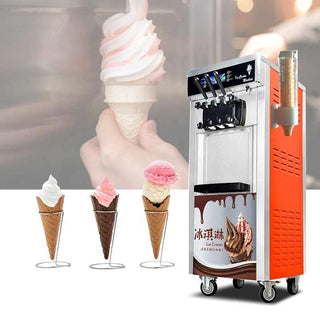
Twin-flavour machines with a twist tap are the efficient way to buy breadth: two machines give four flavours plus two twists, which reads as six options on the wall. We went through gravity versus pump, overrun and the cleaning burden in soft serve or frozen yogurt: the machine behind the swirl — and the short version for this format is that machine count should be decided by how many cylinders your closing shift can realistically strip.
The topping bar is where the margin is made and lost
Toppings are sold by the same weight as the yogurt underneath them, and they do not all cost the same per gram. That single fact is the economics of the format.
Light, cheap, high-volume toppings — cereal, marshmallow, popcorn, wafer — add visible bulk for very little weight and almost no cost. Heavy expensive ones — fresh fruit, nuts, chocolate pieces, sauces — add weight fast and cost real money per gram. A bar arranged so the cheap dry goods come first and the expensive wet ones come last will produce a meaningfully different margin from one arranged the other way round, at identical prices.
Dry toppings live in a gravity dispenser or open bins on a self-service stand, which keeps them visible and refillable without staff.
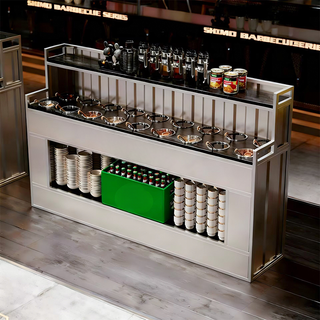
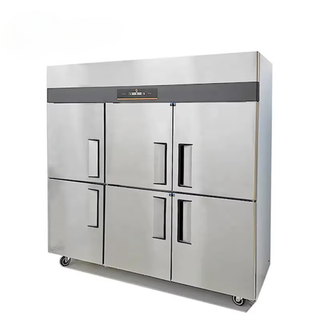
Wet and perishable toppings — fruit, sauces, dairy — need to be held cold and are the part of the bar that carries real food-safety weight. A refrigerated counter with the wells at working height does that and gives you the storage underneath for refills.
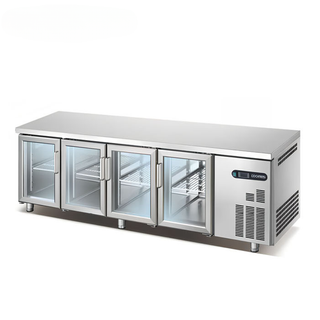
Behind both, back-of-house freezing for mix and frozen inclusions is unglamorous and non-negotiable, and it is what lets you buy at sensible quantities rather than taking deliveries three times a week.
The scale is the till, and it is a legal instrument
In a shop that sells by weight, the scale is not a peripheral. It is the point of sale, and in every market covered below it is regulated: it must be an approved type for trade use, verified, and marked so a customer can read the weight and the price being charged.
Two practical consequences. Buy trade-approved from the start — a kitchen scale is fine for a recipe and unusable for selling, and discovering this at inspection is an expensive week. And place it where the customer sees the number: the transparency is what makes weight-based pricing feel fair rather than arbitrary, and it also stops the argument before it starts.
Tare discipline matters too. The cup weight has to come off every transaction, which means one cup type per price band and a till that knows what it weighs.
Self-serve is the format's real regulatory exposure
Everything in a froyo shop is touched by the public: taps, spoons, topping bins, cup stacks. That is the trade-off the format makes, and inspectors know it.
The expectations are consistent. Dispensing spoons and scoops sit in the product with handles out and are changed on a written schedule, not when they look dirty. Sneeze protection over the topping bar is a physical requirement rather than a preference. Bins are refilled by swapping in a clean container rather than topping up over the old product. And the whole bar is broken down, washed and sanitised on a schedule you can show somebody.
Allergens are the awkward part of a self-serve topping bar, because nuts and cereals sit in open bins next to everything else and customers cross-contaminate them with shared scoops within minutes of opening. You cannot prevent that; what you can do is signpost it clearly, keep the highest-risk allergens physically separated at one end, and have accurate written allergen information available for every line.
Yogurt makes a claim, and claims have rules
Selling something as frozen yogurt rather than as ice cream implies a cultured product, and any health framing you put around that — live cultures, probiotic, low fat — moves you into regulated claim territory.
The practical position: nutrition and health claims are only permitted where they are authorised and where the product genuinely meets the conditions, and a live-culture claim has to survive the freezing and the shelf life you are selling under. In most cases the supplier's specification is what supports the claim, which means the claim on your wall must match the mix in your hopper — including after you have switched supplier because the first one was cheaper.
The safe route for a small operator is to describe the product accurately and let the toppings do the marketing.
Seasonality, and the hybrid that fixes it
Frozen dessert demand collapses in winter in most climates, and rent does not. This is the single biggest reason froyo sites close, and it is entirely predictable at planning stage.
The shops that survive add a second line that uses the same counter, the same staff and the same fridge: smoothies and shakes from the same fruit and dairy stock, hot drinks for the cold months, or a bakery item that pairs with both.
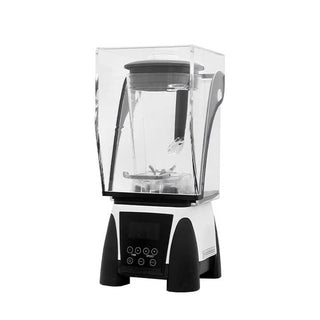
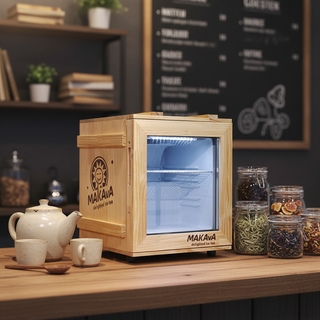
Drinks are the easiest attach in the format — a cold cabinet at the till adds a high-margin item to a transaction that is already happening, and it costs almost nothing to operate.
Model the winter months explicitly before signing a lease. A site that works in July and empties in January is a seasonal business with a twelve-month rent, and that arithmetic decides more froyo outcomes than any equipment choice on this page.
How to open a frozen yogurt shop: where the money goes
The spend is machines, refrigeration and fit-out, with almost nothing on cooking — no extraction, no gas, which makes it one of the cheaper food fit-outs per square metre and one of the more demanding electrically.
Labour is the format's genuine advantage: customers serve themselves, so a small site runs on one person for most of the day, with a second at peak to keep the bar filled and the queue at the scale moving.
The number to watch is average transaction value against cup size rather than food cost percentage. Because the customer portions, your cost percentage moves with their behaviour, and the way to influence it is layout and cup rather than recipe.
Permits: food only, plus the scale and the self-serve bar
United States. Health department permit and food-handler certification per state, plus a certificate of occupancy. Self-service is explicitly addressed in most state food codes — sneeze guards, utensil handling and a written cleaning schedule for the bar. Retail scales are certified by the state weights and measures office before use.
United Kingdom. Register the food business with the council at least 28 days before opening, then the hygiene inspection and Food Hygiene Rating. Allergen information must be available for the unpackaged toppings, and scales used for selling by weight must be of an approved type and verified under weights and measures rules.
Australia. Council premises approval and food-business notification, a Food Safety Supervisor in most states, and trade-measurement rules covering the scales. Self-service display requirements sit in the food standards code and are checked at inspection.
In all three, the item most often missed is not the machine — it is a written cleaning schedule for the self-serve bar and the utensils, which is the document that proves the rest of it happens.
What breaks in month two
The topping bar creeps expensive. Nobody decides to move the fresh fruit to the front; it happens because it looks good there, and the margin follows it.
The cleaning rota shortens. Eight cylinders stripped nightly becomes six, then four, and the machines that miss out are the ones that fail first.
And the winter is discovered rather than planned. A shop that opens in spring has two good quarters to build a second line before it needs one — and the ones that use that time are the ones still open the following summer.
Planning the wall and the bar? Tell us how many flavours you want in front of the customer and what your closing shift looks like, and we will size the machines and the topping counter to match.


