


In short: a shaved ice machine for dessert is chosen by texture first. Snow ice machines and block shavers make the soft ribbons bingsu needs, cube shavers make syrup-soaked shave ice, and crushers belong at the bar.
Put a spoon into a good bingsu and it goes in like fresh snow, with no crunch and no pool of water at the bottom of the bowl. Put the same spoon into a bowl made on the wrong shaved ice machine and it hits gravel: hard grains that shed their syrup and melt into a sweet puddle before the second person at the table has started eating.
Both bowls can come out of a machine sold as an "ice shaver", and that is why this purchase goes wrong so often. The difference sits in what goes into the machine and in how finely it cuts. Output per hour matters next, and it is usually misread from the spec sheet.
Snow from a frozen block or shavings from plain ice?
Korean-style snow ice starts as a frozen block or a liquid base, while classic shaved ice starts as ordinary cubes. That single difference decides the texture of the bowl and how much syrup it needs.
Bingsu shops typically freeze a sweetened milk base, so the ice itself tastes of something and the thin ribbons fold like fabric. Cube-based shave ice is plain water, which means the flavor has to arrive with the syrup, and it does, because the finer the shave, the more syrup it holds. Crushed ice is a third product again, made of angular pieces for cocktails and seafood displays, never soft enough to eat with a spoon.
| Machine type | What goes in | Texture | Rated output (catalog examples) | Best for |
|---|---|---|---|---|
| Snowflake (snow ice) machine | Liquid base, frozen inside the machine | Dense, fine flake, spoonable | 90 kg/day | Bingsu made to order, one or two flavors |
| Block snow shaver | Pre-frozen blocks, loaded into barrels | Thin ribbons, very soft | About 5 kg/min | Several flavors, pre-made milk blocks |
| Cube ice shaver | Ordinary ice cubes | Fine shave, absorbs syrup | 6 kg/min | Shave ice with syrups, sundaes, slushy bases |
| Ice crusher | Ordinary ice cubes | Coarse, angular pieces | 480 kg/h | Cocktails, seafood beds, drink stations |
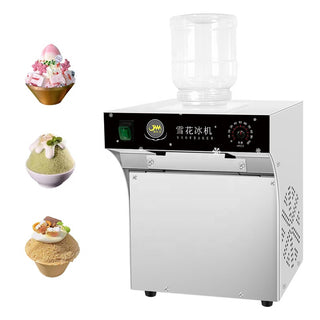
The snowflake machine skips the freezer step entirely. The maker describes it as turning the base into dense flake in a roughly three-second cycle, air-cooled, on a counter footprint of 375 × 320 × 400 mm, and its pitch against a basic ice planer is exactly the texture argument above: fine flake that takes up fruit jam and syrup evenly rather than coarse grains.
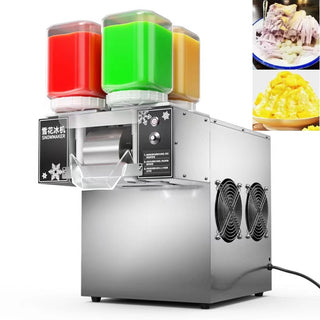
A block shaver works the other way round. You freeze the blocks ahead in a separate freezer, load them into the barrels, and an 1100 W motor cuts them into flake-shaped strips. The four-barrel model below can hold four different blocks at once, so milk, matcha, mango and chocolate can all be on the menu without a changeover.
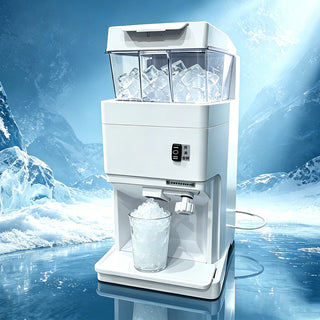
For syrup-led shave ice, sundaes and slushy bases, a cube shaver is simpler to run because it uses ice you already make. The 430 W unit below has a 6 L hopper and shaves up to 6 kg a minute, and a lid lock stops the blade when the top is open, which matters on a counter where staff reach in quickly.
How much can a shaved ice machine serve in an hour?
Much less than the headline number suggests, because the bottleneck is rarely the blade. A machine rated in kilograms per minute can shave faster than any person can plate, and a machine rated per day produces slowly but continuously.
Start with portion weight. Weigh the ice in your own sharing bowl before you buy anything; for a working example, assume 350 g per bowl. On that assumption, a 90 kg/day snowflake machine produces about 3.75 kg an hour of continuous output, which is roughly ten bowls an hour. That is plenty for a café that sells bingsu as one dessert among several, and it is short for a shop where bingsu is the headline and the evening queue is fifteen people deep.
Block shavers flip the constraint. At around 5 kg a minute the machine could fill a bowl in a few seconds, so the real limit becomes how many frozen blocks you have ready. Blocks usually freeze for hours, so your freezer space decides the day's capacity. Count the blocks your freezer holds, multiply by the bowls each block yields, and that is your ceiling for the night.
Cube shavers depend on the ice machine behind them. Six kilograms a minute is meaningless if the ice maker upstream produces 80 kg a day and the bar is using most of it. Plan the ice machine for both jobs together; our guide to choosing a commercial ice machine covers how to size daily output against the busiest day of the week, and the ice makers range has countertop and undercounter models to match.
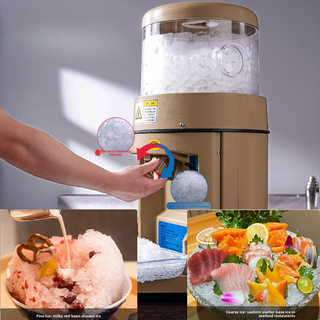
Crushers sit in a different class. The fully automatic model below is rated at 480 kg an hour on 440 W, with timed and portion modes. That is bar and buffet volume, and it is the right machine for cocktail stations and oyster or sushi displays. It is the wrong one for a dessert that is eaten with a spoon.
How do you serve bingsu before it melts?
Snow ice starts melting the moment it lands, so the speed of the assembly counter matters as much as the machine. The standard bingsu build is a chilled bowl, a first layer of snow, a sauce or condensed milk, a second mound of snow, then toppings arranged on top. It works when every topping is portioned and within reach before service starts.
Keep the bowls cold. A metal or thick ceramic bowl straight from the freezer buys a few minutes before the base turns to slush, and those minutes are the photograph and the first spoonful. Put the toppings in a refrigerated rail or labeled containers in an undercounter fridge beside the machine: cut fruit, sweet red bean, mochi pieces, cereal crumble, cheesecake cubes. Anything that has to be fetched from the back while the snow waits costs you texture.
Syrup behaves differently on each type. Milk snow already carries sweetness, so it takes a drizzle of condensed milk or fruit sauce rather than a soaking. Plain shave ice from cubes needs the syrup to carry all of the flavor, and the finer the shave, the more syrup it absorbs before it pools. Squeeze bottles with a fixed nozzle keep portions and cost per bowl steady from one shift to the next.
Cleaning is part of serving too. Any machine that touches a milk base should be stripped and sanitized at the end of each day like any other dairy equipment, and the shaving area needs a wipe between flavor changes so matcha does not show up in the mango bowl.
Where does shaved ice actually sell?
Shaved ice sells best where people already come for something sweet and cold, and where they sit down to share it. A bingsu bowl is a table dessert for two to four people, which makes it a strong evening item for dessert cafés and a weak one for a walk-up kiosk with no seats.
It fits naturally into places that already run a cold menu. Bubble tea shops use the same milk bases and toppings. Korean and other East Asian restaurants add it as the dessert course, often with little new prep beyond the machine. Hotels and resorts in hot climates put it on pool and terrace menus, and event caterers use a snow ice machine as a live station where the making is part of the show.
Weather decides the curve. In a warm climate it is a year-round item, while in northern Europe demand peaks in summer and falls away by October, so it helps to have a frozen menu that still sells in winter. If you are weighing shaved ice against other frozen desserts, our guides to soft serve machines and slush machines compare their footprint and output. Many dessert venues run one of those alongside a snow ice machine rather than instead of it.
A snow ice machine also fits a dessert bar's late hours well, since the dessert is made to order and nothing sits in a display case going soft.
Shaved ice machine mistakes that show up in the bowl
- Buying a crusher for dessert. Crushed ice is excellent in a drink and unpleasant under a spoon. If the menu says bingsu, the machine has to make flake or ribbons.
- Planning from the per-minute rating. Blade speed is almost never the bottleneck. Frozen-block stock, upstream ice supply and plating speed set the real number of bowls per hour.
- Forgetting the freezer. A block shaver needs dedicated freezer space for the blocks, and the blocks need hours to freeze. Budget that space before the machine arrives.
- Serving in room-temperature bowls. A warm bowl melts the bottom layer in the first minute, and the dessert that reaches the table is half the height of the one that left the counter.
- Launching too many flavors. Two bases done well sell more than six that each move slowly and occupy freezer space.
The full ice crushers and shavers collection includes each machine type covered here.
Adding bingsu or shave ice to your menu? Tell us the bowls you expect on a busy evening, your counter space and whether you plan a milk base or syrups, and we will match the machine and the ice supply behind it.


