

In short: how to open a cocktail bar is mostly one question asked twelve times — what does this drink need in order to leave the bar in ninety seconds? Write the list first. The ice programme, the cold storage, the juice and the station all fall out of it, and so does the size of room you can afford to fill.
Most people spec a cocktail bar the wrong way round. They lease a room, buy the kit that a cocktail bar is supposed to have, and then write a menu that fits inside it. It works, in the sense that the doors open. What it produces is a list assembled from what the bar can already do, which is exactly the list every other bar in the street can also do.
The other order costs nothing and changes everything. Write twelve drinks you would be proud to have in the window. Then read them like an equipment brief, because that is what they are: a clarified milk punch is a filtration and a fridge, a frozen daiquiri is a blender and a freezer, an Old Fashioned served over a sphere is a specific kind of ice you have to make on purpose. The fit-out stops being a shopping list and becomes a consequence.
This guide walks that order. It sits under the wider guide on how to open a bar and stays on the cocktail-led format, where the drink is built to order and the clock is always running.
Write the drinks list before you sign anything
Twelve drinks is the useful number. Fewer and you cannot cover the flavour map a guest expects; many more and you are holding perishable stock for orders that come once a week. Write them, then mark each one with what it needs that a bottle and a jigger cannot supply.
You will usually find the list splits into three groups. Some drinks need nothing but spirit, ice and a stir. Some need prep that happens hours before service — an infusion, a batch, a clarification. A few need a machine at the moment of service, because they are frozen, carbonated or built on ice you cannot buy in a bag.
The first group is free. The second group buys you speed at peak but costs you cold storage and a prep shift. The third group is where the money goes, and it is worth spending only if those drinks are the reason people come. A menu with nine of the first group and three of the third is a viable bar in a small room. A menu with nine of the third is a fit-out most first-time operators cannot afford and a service most first-time teams cannot hold.
What one drink costs you in seconds
Capacity in a cocktail bar is not seats. It is builds per hour, and a build has a duration you can measure with a phone. Time your twelve drinks honestly, at the pace a bartender works on the fourth hour of a shift rather than the first.
Ninety seconds is a comfortable stirred or shaken build. Two and a half minutes is a drink with a made-to-order element — a fresh juice, a smoke, an egg white shaken twice. Under sixty seconds means the drink is either batched or poured from a machine. Multiply by your peak hour and the answer tells you how many bartenders you need, which is the largest number in your operating budget and the one people guess at.
This is also the honest test of whether a drink belongs on the list. A beautiful three-minute build on a menu that sells forty covers an hour is not a signature — it is a queue.
Ice is four ingredients, not one
Ice is the ingredient in most of your drinks by volume, and it is the one most new bars under-buy. It does three separate jobs — it chills, it dilutes, and in a served drink it is part of the look — and no single format does all three well.
Cube ice is the workhorse: it chills fast, dilutes predictably, and shakes without shattering into slush. Size the machine to your peak day rather than your average, and remember that stated output assumes a cool room and cool water; a bar in summer with the machine tucked next to a fridge compressor produces meaningfully less.
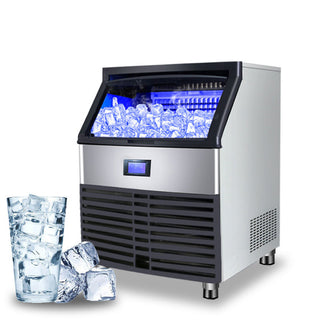
Crushed ice is a different machine or a different technique, and it exists for juleps, swizzles and anything tall you want to frost from the outside. Nugget ice is softer again, chews well, and has quietly become a reason people choose one bar over another for long drinks.
Then there is the large clear format — the sphere or the single big cube — which is not about temperature at all. It melts slowly, so a spirit-forward drink holds its shape while someone talks over it for twenty minutes. A press shapes one in seconds from a block, which is the difference between a garnish you can serve at volume and one you can serve when you have time.
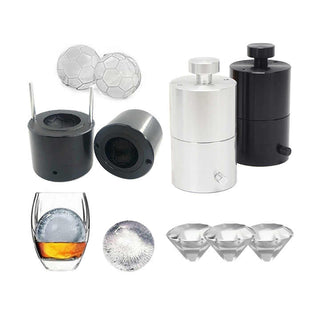
Decide the ice programme with the menu open. Three formats is normal for a cocktail-led bar. Four is a lot of machine for a small room, and one is a menu that has quietly given up two thirds of its texture.
Which drinks can be batched, and the cold that lets you
Batching is the single biggest lever on service speed, and it is free in equipment terms until it isn't. Any drink whose ingredients are all shelf-stable and pre-diluted can be built in a bottle hours ahead and poured in fifteen seconds. That turns a two-minute Negroni into a pour, and it turns a Friday from survivable into profitable.
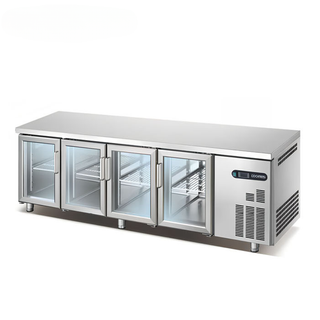
What batching actually needs is cold, and enough of it in the right place. A batched drink lives at service temperature under the bar, not in a kitchen fridge across the room — a bartender who has to walk loses more than batching gained. A refrigerated prep counter gives you chilled working space and storage in one footprint, which in a small bar is usually the only way to have both.
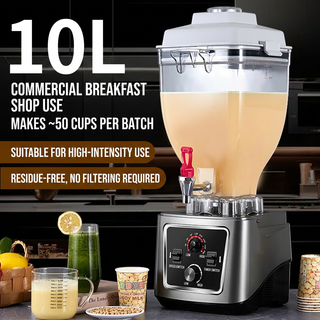
Frozen drinks are the other half of this. A frozen daiquiri or a slushed margarita is a fast serve and a high margin, but it needs a blender that will take ice at volume without cooking its own motor. If the room is small and the blender lives on the back bar, the noise matters more than the spec sheet suggests — a sound enclosure is not a luxury in a forty-seat room.
Citrus and juice: the prep nobody budgets for
Fresh citrus is the line that separates a cocktail bar from a bar that serves cocktails, and it is also the labour cost that surprises people. A busy night can go through several kilos of lemons and limes, and juice oxidises — what you squeeze at four in the afternoon is a different ingredient by midnight.
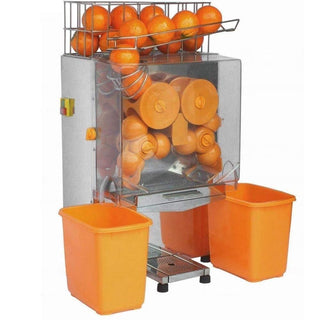
Squeezing to order is a lovely idea that dies at the second ticket. Squeezing in service batches, two or three times a night, is how bars that care about it actually run. A countertop citrus press does that in minutes rather than the half-hour a hand press takes, and it puts the juice where you need it: recent.
If the list leans on non-citrus juices — cucumber, ginger, celery, apple — that is a different machine again, and a real decision. It also opens a daytime revenue line if you are in a location with any footfall before six, which is worth knowing before you sign a lease on a room that is dead until eight.
Smoke, bubbles and the drink that photographs
Every cocktail list benefits from one or two drinks that make a table look up. This is not decoration for its own sake — a served drink that draws attention sells the next one across the room, which is the only marketing that works while you are open.
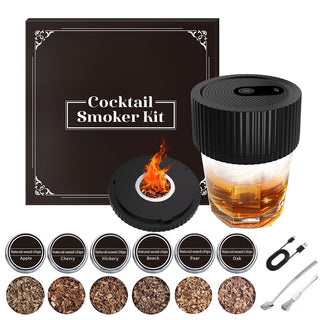
A smoke infusion is the most reliable version, because it changes the aroma as well as the theatre. A cordless smoker does it at the table without a hose trailing back to the bar, and it does not tie up a station during a rush.
Keep the count low. Two theatrical drinks on a twelve-drink list read as confidence. Six read as a bar that is not sure the drinks are enough on their own, and every one of them adds seconds to a build you already timed.
The station the list implies
Now the layout can be drawn, because you know what has to be within reach. The rule is simple and rarely followed: every ingredient in your five best-selling drinks must be reachable without a step. Bottles at the well, batches cold underneath, ice within a turn, garnish in the same sweep as the glass.
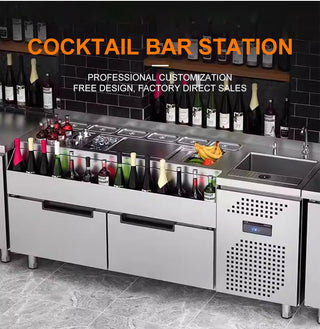
A made-to-order refrigerated underbar station is worth the lead time here, because a cocktail bar's well is unusually specific — it carries chilled batches, several ice formats and a set of tools that a beer-led bar simply does not have. Off-the-shelf underbar tends to assume the beer-led version.
Glassware follows the same logic: each shape you add is a shelf, a wash cycle and a breakage rate. Most cocktail bars can carry four shapes comfortably and are tempted into eight. We covered the trade in a separate piece on the cocktail glasses a bar actually needs, and the short version is that the list should choose them, not the other way round.
Where a machine belongs on a cocktail menu
Automation is the part of this that people argue about, usually without separating two different things. Nobody is proposing a machine for the drink your bar is known for. The question is what happens to the eleventh Aperol Spritz of the evening, ordered by a table that would be perfectly happy with a competent one delivered quickly.
That is where a dosing machine earns its place: a second service point, a function room, a rooftop that runs on two staff. It pours a measured drink in about ten seconds, identically, from whoever is standing there. It does not replace the bartender at the main well — it takes the volume that was preventing them from making the drinks people came for.
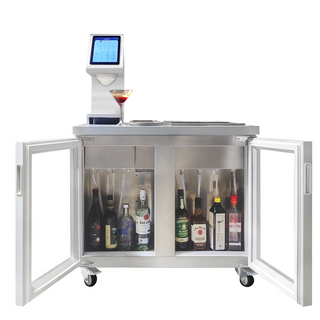
The failure mode is putting it front and centre and letting it define the bar. Guests read that instantly, and the room becomes a different, cheaper business than the one you wrote the menu for.
How to open a cocktail bar at a size the list can carry
Costs vary too much by city to give a number that means anything, but the shape of the spend is consistent, and the order matters more than the total.
The fit-out and licensing come first and cannot be staged — the bar structure, the extraction if you serve any food, the plumbing to the ice machine and the glasswasher. Equipment comes second and can be staged, which is the lever most people forget: a batching fridge and a good ice machine on day one, the theatrical kit in month three when you know which drinks actually sell. Stock is third, and a cocktail bar's opening stock is larger than a wine bar's because a twelve-drink list can easily need forty bottles behind it.
The number that decides whether it works is spend per head against builds per hour. A small room with a short list, high spend and fast builds beats a large room with a long list and a queue, and it beats it on a smaller fit-out. That is the whole economic argument for the format, and it is why the menu-first order is not a stylistic preference.
Licensing decides your hours, and your hours decide the list
Alcohol licensing is the longest lead time in the project and the one that most often moves an opening date. It also shapes the menu: a venue licensed to midnight sells a different list from one licensed to three, because the late list is shorter, faster and more spirit-forward.
United Kingdom. A Premises Licence from the local council, plus a Personal Licence for the Designated Premises Supervisor, which needs the accredited APLH qualification and a basic DBS check. The operating schedule — your hours, your activities — is the heart of the application and is publicly advertised, so late hours attract objections you should plan for rather than discover. Register as a food business at least 28 days before opening even if you only serve olives, and if you play music, that is TheMusicLicence from PPL PRS.
Germany. Serving alcohol requires a Gaststättenerlaubnis under the Gaststättengesetz, and it attaches to both the person and the premises — you need a certificate of good conduct and the IHK hospitality briefing alongside the business registration. The constraint that catches cocktail bars is noise: TA Lärm night limits are strict in residential areas, insulation is frequently a condition of approval, and closing hours are set at state level and vary widely.
Singapore. An SFA Food Shop Licence plus a Liquor Licence from the Police Licensing and Regulatory Department, where the class you hold is defined by your trading hours. A late class is a different application, so decide the hours before you file rather than after.
Australia. An on-premises liquor licence from the state or territory regulator; in New South Wales the dedicated Small Bar licence covers venues up to 120 patrons and was written for exactly this format. Every person who serves needs a current RSA card — from 2026 NSW renews these every two years — and recorded music is covered by OneMusic Australia.
Two things are true in all four markets: the alcohol licence is the critical path, and the fire and occupancy approvals decide how many people you may legally have in the room, which is the input to every revenue number you have written down.
What breaks on the second Saturday
The first Saturday is carried by adrenaline and by friends who forgive a slow drink. The second one is the real opening, and it usually breaks in one of three places.
Ice runs out around eleven, because the machine was sized to a normal day. Glassware runs out slightly earlier, because nobody counted how many coupes are sitting on tables rather than shelves — carry roughly three times the number of any glass you can seat, not one. And the batches run dry, because the prep list was written for a Tuesday.
All three are the same mistake in different clothing: sizing to the average night rather than to the night that pays for the week. The equipment answer is to buy the ice machine and the cold storage a step above what your average suggests. The cheaper answer, and the better one, is to keep the list short enough that a rush is a matter of pouring faster rather than making more things.
Have the drinks list but not the fit-out? Send us the menu and the size of the room, and we will tell you what it actually needs behind the bar — and what it does not.


