

In short: forty covers can need a dozen chefs, which makes how to open a fine dining restaurant mostly a labor question. The equipment is there so each chef does more work in the afternoon and repeats every plate exactly at night.
Forty guests, ten courses each. That is four hundred plates in about four hours, most of them built from six or more components, and every one checked at the pass before it leaves. A casual restaurant of the same size might run with three or four cooks on a busy night. A fine dining kitchen at forty covers often needs ten to fourteen.
That ratio explains most of what follows. The usual starting points for how to open a fine dining restaurant are the room, the chef's reputation and the wine list. The business, though, is decided by the kitchen's labor math. It turns on how many hands it takes to produce the menu, and on how much of their work can move out of service into the quiet hours when it costs less to get wrong.
Precision equipment is what moves it. A water bath, a combi oven and a blast chiller let a brigade cook in the afternoon and finish at night, so the plate at 22:30 matches the plate at 19:00 without twelve people improvising under pressure.
Why does a forty-cover room need a dozen chefs?
Because the number of plates, not the number of guests, sets the size of the brigade. A tasting menu multiplies every cover by the course count, and each course is assembled by hand from parts that were prepared separately.
The classic brigade splits that work by station. A chef de cuisine runs the kitchen and a sous chef runs the pass or the prep. Below them, chefs de partie each own a section, typically sauce and meat, fish, the cold larder and pastry. Commis cooks support each section, and a kitchen porter keeps plates and pans moving. Remove one person and a station slows down, and in a tasting menu every table waits for the slowest station.
The table below shows how the kitchen grows with the room. The headcounts are rough service-night figures for a tasting-menu format and move a lot with menu length and ambition.
| Seats | Plates per night (10 courses) | Kitchen on service | Stations that split out | Precision kit scale |
|---|---|---|---|---|
| About 24 covers | ~240 | 6–8 cooks | Hot and cold, with pastry often shared | One water bath, one combi, a small blast chiller |
| About 40 covers | ~400 | 10–14 cooks | Meat, fish, cold larder and pastry each on their own | Two or three baths, a full-size combi, a dedicated blast chiller, a vacuum packer at prep |
| About 70 covers | ~700 | 16–20 cooks | Sections doubled, plus a separate prep brigade in the day | A bath per protein station, two ovens, blast chilling sized to a full prep shift |
Forty is a common size for a reason. It is big enough to cover a brigade's wages on a good week and small enough that one head chef can see every plate. Past about sixty covers the pass starts to need a second person checking, and the room behaves more like a large restaurant with a fine dining menu than like a single kitchen.
The day happens in two shifts, and prep is the one that decides service
A fine dining kitchen spends more hours on mise en place than on service. Deliveries arrive in the morning, prep runs through the afternoon, the brigade eats and briefs, and service is a four- or five-hour window of finishing things that were largely made earlier.
That split is where the equipment earns its place. Proteins are portioned and sealed in the afternoon, already seasoned. Some are cooked in a water bath to their exact core temperature, chilled fast and held. Sauces and garnishes are made in batches and cooled the same way. At night the line reheats and sears, then glazes and plates. Each step done at 15:00 is one fewer thing to get right with a ticket on the rail.
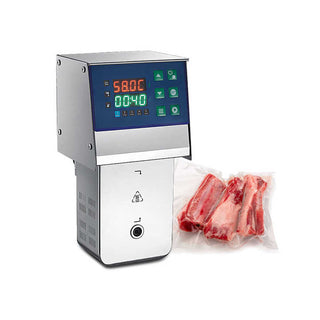
Sous vide is the base of this method. Sealed food in a water bath held at a set temperature cannot overcook, so a piece of fish or a loin of lamb comes out the same every time and needs only a minute of finishing on the line. For a single station, a 13-liter commercial sous vide bath with 800 W heating and a 40 to 95°C range covers a dozen portions at a time.

Larger kitchens run more than one bath, or a heavier immersion circulator in a bigger tank. The 2000 W industrial sous vide machine is the step up, and our guide to industrial sous vide goes into how baths are sized to volume. The rest of the range is in the sous vide collection.
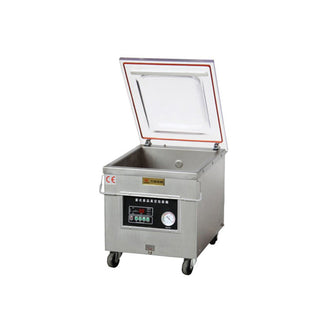
Everything that goes into a bath goes through a vacuum sealer first, which makes the sealer one of the busiest machines in the building. It also compresses fruit, marinates proteins under vacuum and extends the life of expensive prepped components. A table-top commercial vacuum sealer with a 350 mm seal bar handles portion bags for a forty-cover kitchen. Our article on vacuum packaging for kitchens covers bag types and what shelf life to expect.
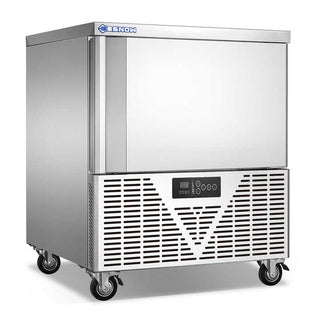
Then the step that makes cook-in-advance safe. Food cooked in the afternoon has to come down through the temperature danger zone quickly before it is held, and a normal fridge cannot do that with a hot tray. A blast chiller rated to take food from +75°C to +3°C in 90 minutes turns a batch of sauce or braised meat into safe stock the line can use all night. Pastry uses the same machine to set creams and chill doughs between folds.
If you are weighing a blast chiller against more freezer space, our comparison of a blast freezer or commercial freezer explains why they do different jobs. More models are in blast chillers.
What each station on the line works with
On service, the line is a set of small kitchens standing side by side. Each chef de partie needs heat, cold storage and a plating surface within a step or two, because a fine dining plate is finished in seconds and waits for nobody.
Meat and fish
These sections carry most of the heat. The combi oven is the machine they share, since it roasts and steams on one footprint and holds a set temperature and humidity that a conventional oven cannot. A lamb rack out of the water bath gets a precise final roast in it. Twenty portions of chilled garnish come back to temperature in it together, and a fish course can steam gently in it while the next tray roasts.
Our gas combi oven takes eight trays with a range up to 350°C, a size that suits a forty-cover line. For the difference between a combi and a plain fan oven, read combi oven vs convection oven. Other ovens are in the ovens collection.
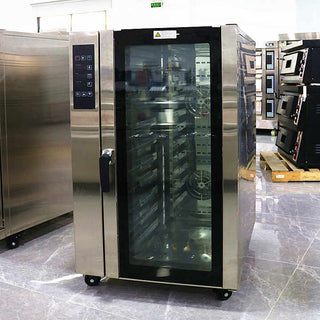
Beef on a fine dining menu is often aged, and some kitchens now age it themselves in a glass-fronted cabinet that doubles as a display in the room. It's a specialized piece of kit with its own rules on climate control and weight loss, and it pays when beef is a regular feature of the menu rather than one course among ten.

Cold larder
The garde manger section builds the cold courses and cured fish, along with the raw elements of warm dishes. It lives on refrigerated drawers and a clean bench, and it uses the vacuum sealer and the slicer as much as any knife. Keep this section away from the combi's heat and near the reach-ins, because cold courses fail fastest when the station is warm.
Pastry
Pastry often has the most precise work in the building and the least space. It needs a cool bench, scales that read to the gram, its own small oven if the budget allows, and access to the blast chiller at set times. Because it plates the last courses of the night, it also sets how late the kitchen finishes, and a pastry section that runs slow keeps the whole room waiting for dessert.
How does the pass keep forty covers in step?
By pacing the tables, not the cooks. The head chef or sous chef at the pass calls each course for each table, checks every plate against the reference, and sends it only when the whole table's plates are ready at once.
That makes the pass the center of the kitchen layout. It needs to sit where every station can reach it in a step or two, with warm plates at hand and enough counter length to set out a full table's course side by side. For a table of six that is six plates in a row, with space for a cook to wipe rims and add a final garnish.
Plates are the stock that runs out first. Ten courses for forty guests means hundreds of plates in use over a night, most of them different shapes. A kitchen porter on a fast machine can turn plates around during service, but only if the kitchen owns enough of each shape to cover the gap between one table's course and the next. Count plates per course by the number of tables likely to eat it in the same half hour, then add a margin for breakage.
Staff flow matters as much as the kit. Servers collect from the pass and never walk through the line. Dirty plates return by a different route to the dish area. With a dozen cooks and six servers in a small space, a layout that crosses those two paths costs seconds on every course and a dropped plate every few nights.
The tableware guests touch, from charger plates to crystal
In fine dining the tableware is part of the dish. Chefs pick a plate for each course, often from different makers and materials, and the room is judged partly on the weight of the cutlery and the thinness of the glass.
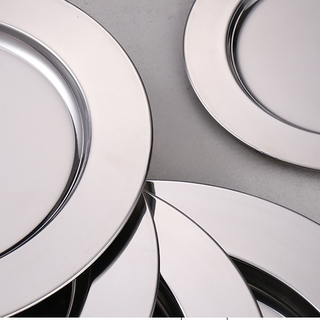
A charger plate sits under the course plates, sets the table before guests arrive and marks the place through the first courses. A stainless steel charger plate comes in diameters from 24 to 35 cm and in gold, silver, rose gold and copper finishes, with engraving available for a logo. Our guide to choosing charger plates covers sizes against plate diameter and when to clear them.
Course plates are where kitchens go most individual. A set of crackle-glaze Japanese slant plates in porcelain gives a cold course or a small savory bite a surface that does part of the presentation. The specialty plates and plates and bowls collections hold the rest, and many kitchens settle on a few house shapes and add one or two statement pieces per menu.

Glassware carries the wine pairing, which in many rooms earns as much margin as the food. Crystal is thinner and clearer than standard glass, and guests notice it at the rim. A hand-blown crystal coupe of 240 ml serves champagne at the start of the meal, and the Liquimetal crystal range covers wine glasses and a decanter in one design.

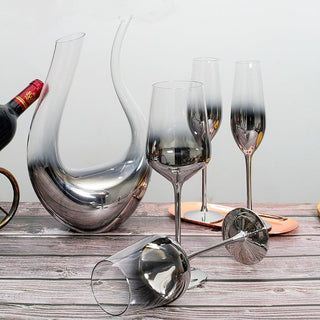
Crystal has a cost that isn't on the invoice. Much of it is washed by hand or on a gentle glasswasher program, and it breaks more often than bar glass, so budget for replacement from the first month. Our guide to crystal glassware covers washing and breakage, and the wine and champagne glasses and cutlery sets collections cover the rest of the table.
What does it cost to open a fine dining restaurant?
Payroll is the largest line, and it stays that way every month. With a dozen cooks, a sommelier and a floor team for forty covers, labor weighs far more against revenue than it does in a casual restaurant, and every equipment decision should be read against it.
That changes how to judge the kit. A combi oven, a blast chiller and a couple of water baths are big purchases, but each one moves hours of work from service into prep, where fewer people can do more. A machine that saves one cook's shift on a busy night pays back in a way a larger griddle never would.
Beyond the kitchen, spend concentrates in three places. The fit-out of a small room built to a high finish costs more per square meter than a casual dining room. Tableware and glassware are cheap per piece but bought in depth and replaced constantly. The wine list is stock that sits on a shelf for months. Refrigeration and extraction are the items not to economize on, because a warm reach-in or a smoky line damages both the product and the brigade's evening.
Where to save is smaller than it looks. Prep tables and shelving can be standard commercial kit, and so can most of the dish area. A second oven can wait until the menu proves it needs one. The restaurant equipment and kitchen collections cover the standard pieces around the precision ones.
Licenses to open a fine dining restaurant in France, the UK, the US and the UAE
The four categories are the same everywhere. You need a registered business, food-safety approval, an alcohol license and premises approval for fire and occupancy. Fine dining nearly always serves wine, so the alcohol license usually has the longest lead time and should be started first.
France
Anyone running the business needs a Permis d'exploitation, which follows a mandatory training course of about three days. For alcohol, a Licence III covers fermented drinks such as wine and beer, while a Licence IV covers all spirits, is scarce and is usually transferred from an existing holder. A restaurant that serves alcohol only with meals can instead hold a restaurant-specific license. You also declare the food business and run a HACCP plan.
United Kingdom
You need a Premises Licence from the local council and a Personal Licence holder named as the Designated Premises Supervisor, qualified through the accredited APLH award with a basic DBS check. Register with the council as a food business at least 28 days before opening and expect a Food Hygiene Rating inspection. Complete a fire risk assessment, and if the room plays background music, get TheMusicLicence from PPL PRS.
United States
Alcohol runs through the state ABC board, often with county sign-off, and it is the slowest step. It can take months, some states cap the number of licenses, and a full liquor license is a different category from beer and wine. Add federal TTB registration, a business license and EIN, a health-department permit with ServSafe certification for food handlers, and a certificate of occupancy.
United Arab Emirates
Fine dining in Dubai and Abu Dhabi sits mostly inside hotels and licensed venues, because alcohol service is tightly controlled. You need a trade license with F&B activity in an eligible zone. In Dubai, alcohol service goes through Dubai Police GHQ and the Department of Economy and Tourism, with minimum-distance rules from mosques and schools, and in Abu Dhabi through the Department of Culture and Tourism. Dubai Municipality and Civil Defence inspect the premises, and every food handler needs a health card.
This is an overview, not legal advice, and fees and timelines change from one council, state or emirate to the next. Confirm with the local authority before signing a lease.
Fine dining mistakes, and what works instead
| Mistake | What it costs | What works |
|---|---|---|
| Sizing the brigade by seats | Service slows at the station with the most components, and every table waits for it | Size it by plates per night and by the slowest course |
| Doing all the cooking at service | More cooks on the line, and more variation between the first plate and the last | Cook in the afternoon, chill fast, finish at night |
| Skipping the blast chiller | Cook-in-advance becomes unsafe, so the whole prep method falls back onto service | Buy it with the combi, not a year later |
| A pass that is too short | A full table's course cannot be set out, so plates leave at different times | Lay out the pass before the dining room |
| Too few plates of each shape | The dish area becomes the bottleneck on busy nights | Count plates per course by tables served in the same half hour, plus breakage |
| Starting the alcohol license late | The room is finished and cannot open | File it before the fit-out begins |
Planning a broader restaurant with a larger room or a shorter menu? Our guide on how to open a restaurant covers the full build zone by zone.
Planning a fine dining kitchen? Tell us your covers, the number of courses and how your brigade splits into stations, and we'll put together a precision equipment list sized to your prep day and your service.


