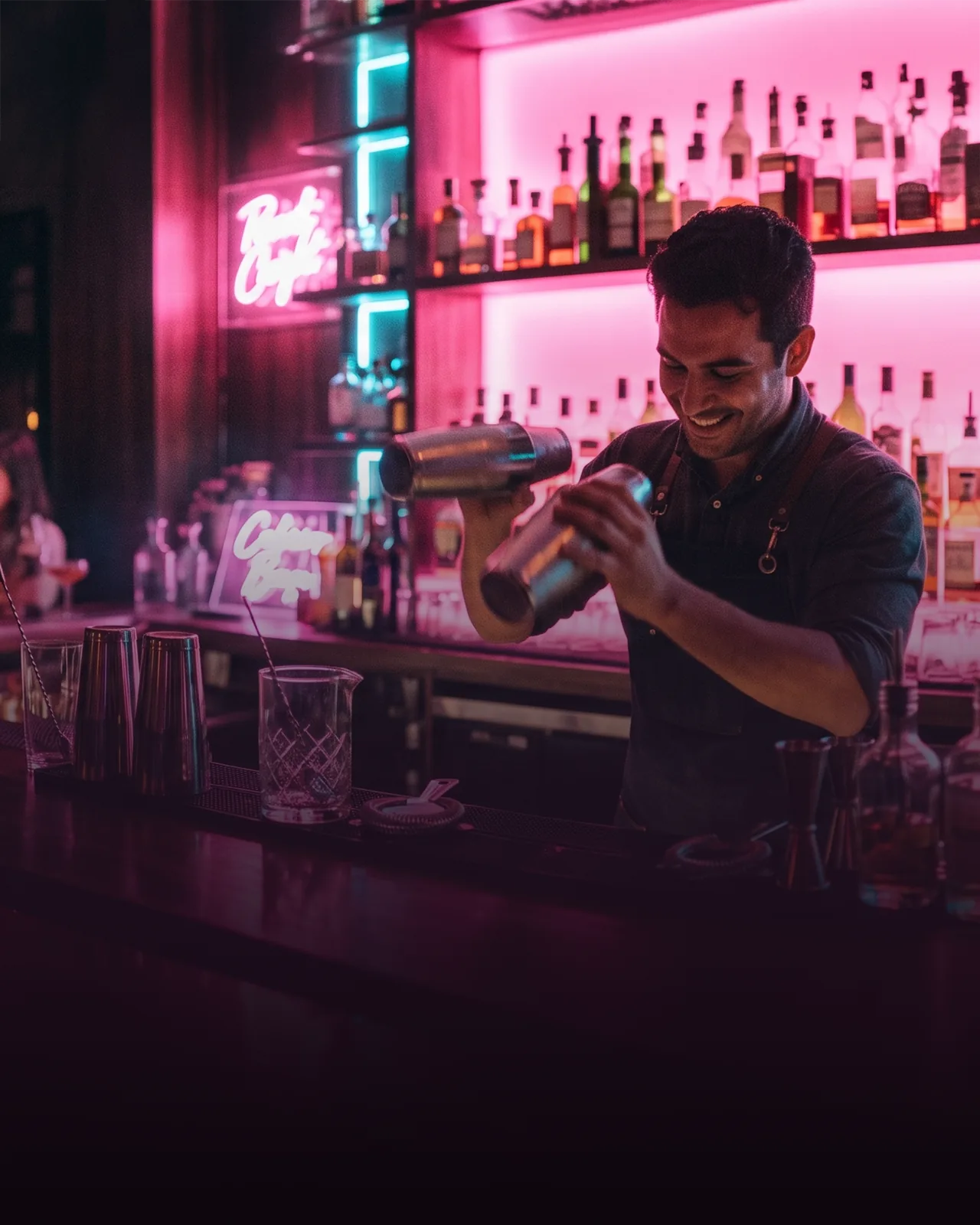


In short: how to open an espresso bar comes down to a tape measure. Four meters of counter, five working zones, and a decision about seats that changes the licensing, the staffing and the rent all at once.
The unit is eighteen square meters. Take off the doorway, the customer side and the space a person needs to stand in, and what is left to work on is a strip roughly four meters long and seventy centimeters deep.
Everything an espresso bar does happens on that strip. This is the format's whole advantage — low rent, one member of staff, no kitchen — and the reason it goes wrong: people specify equipment for the coffee they want to make, then discover it does not fit the counter they signed for.
So this guide starts at the counter and works outwards. What has to be within reach, what can live behind, what has to leave the building, and what changes the moment you put a chair in the room.
The four meters that do all the work
A barista working properly does not walk. Grind, lock, extract, steam, hand over — every motion happens within a pivot, and the counter exists to make that pivot possible. Break the sequence with a fridge in the wrong place and you add three seconds to every drink, which across 120 drinks in a morning rush is six minutes of queue.
| Zone | Runs about | What lives there | What ruins it |
|---|---|---|---|
| Grind | 400–500 mm | Grinder, knock box, tamp station | Placing the grinder outside the barista's pivot |
| Group | 700–1000 mm | Espresso machine, cup rail | Buying group heads the counter cannot hold |
| Milk | 500–700 mm | Undercounter fridge, jug rail, wand reach | A fridge behind the barista instead of below the wand |
| Hand-off | 600–800 mm | Lids, sleeves, sugar, the finished drink | Sharing it with the till, so the queue meets itself |
| Till | 400–600 mm | POS, card terminal | Putting it at the end the queue arrives from |
That is a little over three meters of working length before anything goes wrong. The extra meter absorbs a water filter and a second grinder for decaf — plus the bin, which has to live somewhere and never appears on a plan.
The hand-off zone is the one people forget. Ordering and collecting at the same point is what turns a fast counter into a scrum: the person waiting for a flat white is standing where the next customer needs to reach the till. Separating them by a meter costs nothing on a drawing and cannot be fixed once the counter is built.
What fits behind a four-meter counter
Start with the machine, because it sets the length everything else fits around.
A one-group machine is right for a genuine kiosk — a hatch, a window, a lobby corner — where peak means twenty or thirty drinks an hour. Most espresso bars with a real morning queue want two groups, so the barista can extract while steaming for the order before. Three groups belong to sites measuring output in hundreds, and they usually need three-phase power and more counter than an eighteen-meter unit has.
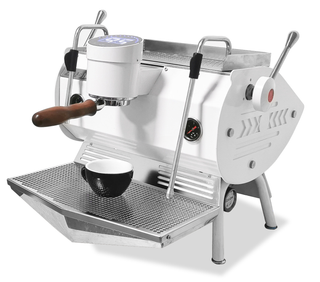
The dual-boiler layout is what makes two groups hold up under pressure. Brew water and steam come from separate boilers, so extraction temperature stays put while the wand is working — on a single-boiler machine the sixth cappuccino of a rush comes out cooler than the first. Our guide to commercial coffee machines goes deeper into group counts, boilers and the bean-to-cup alternative.
Next to it, the grinder does more for the cup than a machine upgrade would. Espresso punishes an inconsistent grind, and conical burrs hold their particle distribution better than flat blades as they warm through a shift.
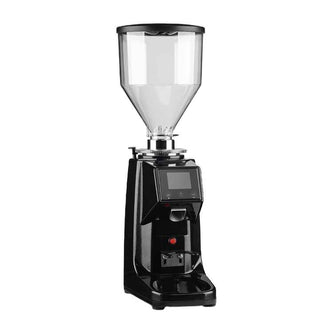
Buy the second grinder before the second machine. Decaf ground on the same burr set means purging on every switch, which wastes coffee and time in the ten minutes you have neither.
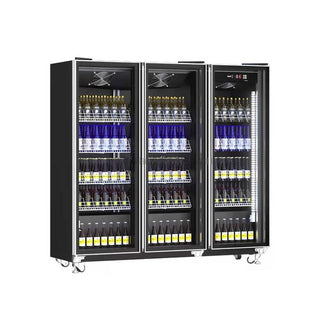
Milk belongs below the steam wand, not behind the barista. A glass-door back-bar fridge doubles as the cold-drinks display, which in a room this size is the difference between selling bottled drinks and not selling them.
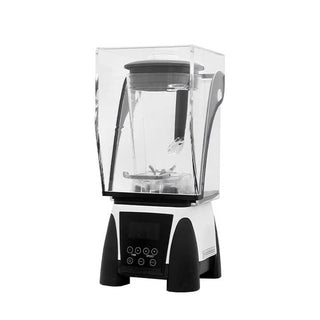
If the menu runs to iced drinks and frappés — and in most markets it now does — a blender is the last thing that fits on the strip. It is also the loudest thing on the counter, which argues for putting it at the far end from the hand-off.
The full café and coffee-bar range is organized the same way, station by station, and the espresso machines range covers one-group through three.
What has to live somewhere other than the counter
Four things need a home away from the working strip, and a lease with nowhere to put them is a worse deal than it looks.
Water treatment. Limescale kills commercial machines faster than use does, and in a hard-water area a softener or filter is not optional. It is plumbed in, and it needs floor space with access for cartridge changes.
Warewashing. Even a takeaway-led bar washes jugs, portafilters and the cups of anyone drinking in. A small undercounter machine is the usual answer; a sink alone stops keeping up the moment you serve in ceramic.
Stock. Beans, cups, lids, syrups and milk arrive in cases. A week of stock for a busy espresso bar is more volume than most people picture, and stacked in the customer area it reads exactly as badly as it sounds.
Waste. Coffee grounds are heavy and wet and they come out of the machine all day. Somewhere to put them that is not the middle of the floor is a planning question, not a housekeeping one.
If the concept includes roasting on site, that is a fifth requirement and a much larger one — a roaster needs ventilation, clearance and a different conversation with the fire officer.
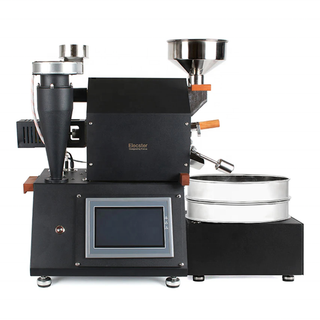
Roasting in the window is powerful marketing and a real differentiator on a competitive street. It is also the most common reason an espresso bar fit-out doubles in cost, so decide it before the lease rather than in year two.
Seats change everything
The moment chairs go in, an espresso bar stops being the cheap format it advertises itself as.
Takeaway-led means fewer staff, less cleaning, no table service and often a lighter planning classification. Add seating and you acquire customer toilets in most jurisdictions, accessibility requirements, a longer clean-down and a rent conversation based on a larger area. You also acquire dwell time, which is the point: seated customers buy pastry, second drinks and the afternoon trade a hatch never sees.
Neither answer is wrong. What is wrong is designing for one and licensing for the other — the counter layout for standing service is not the layout for table service, and the gap is not something a small bar absorbs later.
The middle path most operators land on is a standing shelf along one wall with three or four stools, and no table service at all. It gives the room a reason to linger without the full seated-venue overhead in most markets. Confirm it locally, though: the threshold that triggers toilet provision differs by jurisdiction and is usually counted in covers rather than in furniture.
How to open an espresso bar without a kitchen
Most espresso bars do not cook, and that is a feature rather than a limitation. No cooking means no extraction canopy, no grease interceptor, a simpler fire assessment and a far shorter route to opening.
It does not mean no food. Bought-in pastry, sandwiches made off site and packaged goods sit comfortably inside a food-business registration covering assembly and reheating rather than cooking. The line to watch is the first hot item: a panini press is usually fine, an open flame usually is not, and the point at which your local authority reclassifies the premises is worth asking about before buying the equipment rather than after.
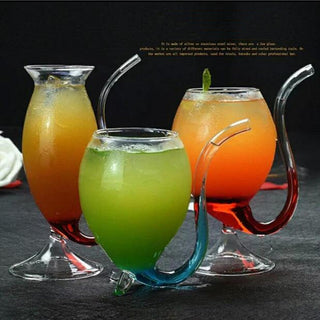
Presentation carries a coffee-led menu further than owners expect. Iced drinks sell visibly, and glassware that shows the layers does real work in a room with a window onto the street.
Where coffee is also the marketing, an edible ink printer puts a logo or a guest's photo on the crema. It is a novelty, and on a street with four other coffee bars it is a novelty that gets photographed.
Pavement seating is the exception worth chasing. Two tables outside carry none of the internal-area consequences in many jurisdictions, and they advertise the bar to everyone walking past better than any sign does. It usually needs a separate licence from the highway authority rather than the food authority, and those run on their own timetable — apply early, because the summer you want the tables for is decided in the spring.
How many people does an espresso bar need behind the counter?
One, until roughly a hundred drinks an hour. After that the counter needs two, and the second person is not a second barista — it is a till and hand-off operator, because the bottleneck at that volume is payment and packaging rather than extraction.
This is the number that decides whether the format works financially. A single-staff bar covers its labor cost at modest volume, which is why the model exists. Adding the second person raises the break-even sharply, so the honest question at the planning stage is whether the site can carry a peak that justifies them for two hours a day and not more.
Two habits buy a surprising amount of capacity before you get there. Pre-grinding into a hopper for the peak twenty minutes is heresy to some baristas and adds roughly a drink a minute. And a second, dedicated milk jug for the busiest drink means less rinsing, which is where more time disappears than anyone counts.
Training is the other half. An espresso bar can be run by one trained person or two untrained ones, and the trained person is cheaper. Budget the training weeks before opening rather than assuming they will happen during quiet afternoons that a new site does not have.
What does an espresso bar cost to fit out?
Less than any other hospitality format with a door, and the spread between a modest build and a serious one is narrower than owners expect — because almost all of the money sits in three items.
The machine and the grinder together are usually the largest line and the one worth over-buying slightly. They are also the two pieces that hold resale value if the concept changes, which is not true of the joinery.
The counter itself is second, and it is the item that surprises people. Bespoke joinery with the right services routed through it — power at the group, water and waste at the machine, refrigeration below the wand — costs more than the machine standing on it in plenty of builds.
Third is whatever the premises does not already have. A unit that was previously a café is a different project from a retail shop with a single socket and no drainage. The cheapest espresso bar to open is the one taking over from another espresso bar, and it is worth paying more rent for that than for a bigger empty room.
Everything else is small by comparison — the fridge, the blender, the till — and none of it is where a budget goes wrong. Owners who blow the budget almost always blow it on the counter or on services the unit did not have. Each product card carries its live price if you want to price a specific build.
What the paperwork actually asks
An espresso bar serving no alcohol needs three approvals rather than four, which is why the format opens faster than almost anything else in hospitality: a registered business, a food-safety sign-off, and premises approval covering fire and occupancy. The food-safety registration carries the lead time, so it goes first.
In Italy, the format's home market, trading starts with a SCIA filed through the local SUAP business desk, alongside a SAB qualification for food-and-drink service and an HACCP plan. Premises hygiene and fire requirements run through the same filing, which makes SUAP the single door to knock on.
In the United Kingdom, register as a food business with the local council at least 28 days before opening. Registration is free and cannot be refused, but an environmental health inspection follows and produces a published Food Hygiene Rating. A fire risk assessment is a legal requirement regardless of size, and a coffee-only bar needs no alcohol licence at all.
In Australia, notify the local council as a food business and obtain premises approval, with several states requiring a nominated Food Safety Supervisor. Councils apply state food-safety standards and expect a fire safety statement for the premises.
In the United States, requirements are set state by state and county by county: a business licence and federal EIN, a health department permit with food-handler or manager certification, and a certificate of occupancy confirming the space meets fire-code limits. Skipping the state liquor licence is exactly why this format launches quickly.
Treat all of that as an overview rather than legal advice, and confirm the current detail with your local authority — documents, fees and timelines differ by council, state and region. The thread everywhere is the same: food-safety registration gates your opening date, so file it before the fit-out rather than after.
What owners cut, and then buy anyway
Five things get trimmed from the opening budget with remarkable consistency, and four of them get bought within the first year at a worse price.
The water filter goes first. It is invisible, it is not exciting, and skipping it in a hard-water area buys a boiler service inside eighteen months that costs more than several years of cartridges.
The second grinder is next, usually justified by low decaf sales. It comes back the first time a queue watches a barista purge the burr set for a single decaf flat white.
Then the undercounter dishwasher, cut on the argument that a takeaway bar washes almost nothing — which holds right up until the first week of drink-in customers.
Fourth is the till placement, which is not a purchase at all but a decision, and the only one on this list that money cannot correct afterwards.
The fifth does not come back. Owners who licensed for takeaway and then discover their street wants to sit down cannot simply add tables, because toilet and accessibility requirements arrive with them. That is the decision worth spending real time on before signing anything.
If you are building the wider café rather than the tight one, our guide to opening a coffee shop covers the food offer, the seating and the kitchen an espresso bar deliberately leaves out.
Trying to work out what fits behind your counter? Send us the counter length and your peak hour, and we will lay the zones out against real equipment dimensions before you commit to a machine.


