

A restaurant is won or lost behind the pass, not in the dining room. This guide to how to open a restaurant builds the kitchen from the cook's side out — the stations that fire your menu, what the build costs, and the permits that decide when you can open.
Most guides on how to open a restaurant start with the concept board and the seating plan, and both earn their place. What quietly decides whether a Saturday night holds together is the half of the room the guest never sees: the line behind the pass. Can it fire a full book without falling behind? Does the walk-in hold temperature while the back door keeps swinging? Do clean plates come back fast enough to reset the pass between seatings? Get the kitchen right and the rest of the launch has room to breathe. Get it wrong and no amount of front-of-house polish will rescue service.
There is a practical reason to lead with the kitchen, too. Rent, the fit-out, and licences swing wildly with your postcode and your luck, but a kitchen you can cost almost to the pound once the menu is set. It is the one big launch number you actually control. So this guide walks the build the way a cook lives it — cold storage first, then the prep bench, then the fire, then the pass and the dish return — and closes on the money and the paperwork that turn a room full of steel into a trading restaurant.
Start with the menu, not the dining room
Your menu writes the equipment list before you spend a penny, so settle it first. A burger-and-steak room lives on a charbroiler and a fryer and barely fires an oven; a pizza place sinks its budget into a deck oven and a dough mixer and needs little else; a sushi counter hardly touches heat but leans hard on cold holding and precise plating. A broad full-service menu asks for a bit of everything, which is exactly why it is the most expensive kitchen to build. Decide what you are cooking and most of this list writes itself.
Write the menu out as processes rather than dishes. Every plate is a sequence — store, prep, cook, hold, plate, wash — and each step points at a machine. Doing that on paper stops you sinking money into a combi oven you fire twice a week while under-speccing the fryer that runs flat out every service. Your format sets the room you need, as well: a wok-forward kitchen wants serious extraction, a bakery-led menu wants proofing space and a big mixer, a grill house wants a canopy rated for open flame. Lock the concept before you sign a lease, because the wrong four walls force expensive compromises on everything downstream. As the cuisine-specific guides in this series go live, each one drills into the kit its format leans on hardest — this hub covers the full-cycle kitchen they all build from.
What does a restaurant kitchen actually need?
Strip a restaurant kitchen back and it is really a path a plate travels: out of cold storage, across the prep bench, onto the fire, over the pass, and back through the dish return. Build it in that order and nothing you buy sits idle. Our restaurant equipment collection is arranged the same way, so you can spec the path station by station.
Cold storage comes first
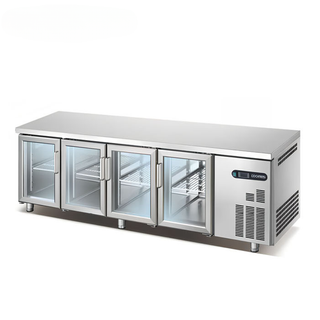
Refrigeration is the quiet backbone of the whole operation — it guards your food-safety record and your food cost at once. Most kitchens need cold in three forms: reach-ins on the line for service, bulk holding for stock, and a freeze for longer storage. The bulk workhorse is a large upright. A double-door industrial refrigerator holds prep and stock at a steady temperature, which is what stops you binning product on a slow week — size it to your busiest week, never your average day. The wider refrigeration range covers the reach-ins and undercounters for the line itself.
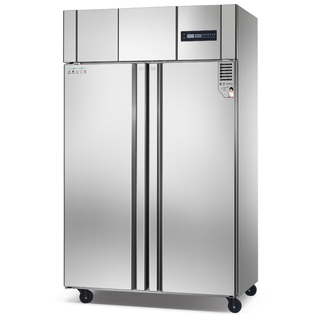
The upgrade that earns its keep fastest is a blast chiller. It drops just-cooked food through the danger zone in minutes, so you can cook in batches and chill down fast instead of cooking every plate from raw to order. A commercial blast freezer comes in three-, five-, and ten-tray builds, so a mid-size kitchen can start small and scale up. Pair it with a water bath from the sous vide range and even a small brigade can hold consistency across a long menu.
The prep bench
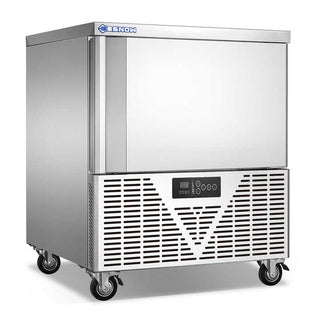
Prep is where most of the day's real work happens, long before the first order lands. At the heart of it is a refrigerated prep table that keeps mise en place cold and within reach, so nobody breaks the line to walk to the walk-in mid-service. A four-door refrigerated prep table pairs a chilled well with storage underneath, which keeps a busy section fast and tidy. Beyond that, buy to your menu rather than a generic list: a meat-forward kitchen wants a grinder from the meat grinder range for house mince, a bakery or pasta menu wants a planetary or dough mixer from the mixer range, and a veg-heavy prep wants a processor. This is the station where over-buying is easiest and least rewarded.
The cooking line
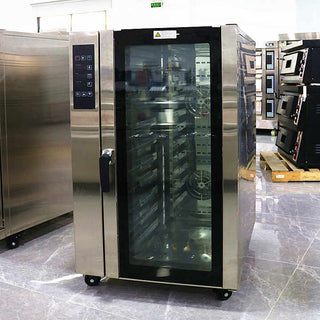
The line is the heart of the build and where most of the budget goes. Start with the one machine most menus lean on hardest: a combi oven, which roasts and steams in a single cabinet and does the work of several single-purpose units. A combi oven with steamer turns out proteins, vegetables, and bread from one footprint — which matters when floor space is the tightest thing you own. Size it by tray count against your covers, not by the biggest model on the page.
Next to the oven sits the range and grill — the open-flame section where à la carte orders get cooked to order. A gas top with a char section covers searing, finishing, and sautéing on one line. Our four-burner gas stove with lava-rock grill and base oven stacks three cooking methods into a single unit, which is how a small kitchen punches above its floor plan. Match burner count to your covers from the full range and stove collection.
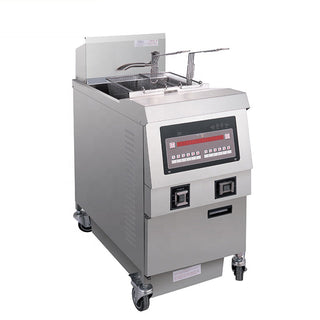
Almost every menu needs a fryer, and it is the one machine you should never under-size. Anything battered moves fast at peak, and a single small tank becomes the bottleneck the whole line waits on. A double fryer lets you run two oils — one for fish, one for everything else — so flavors never cross. Our commercial double deep fryer comes in gas or electric, and the fryer collection runs from single to double tanks by output.
The pass and the dish return
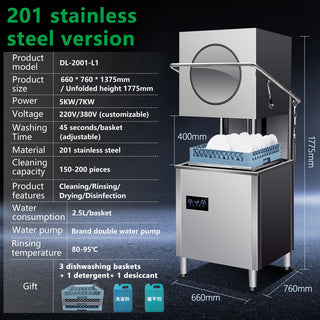
Warewashing is the station new owners plan last and regret first. A kitchen has to turn racks around fast enough to keep the pass in clean plates through a rush — hand-washing at a hundred covers is a false economy that burns labor and stalls the room exactly when it should be flying. A hood-type, pass-through machine clears a rack in a couple of minutes and suits most mid-size kitchens. Our commercial hood-type dishwasher takes the peak an undercounter box cannot, and the full warewashing collection runs from undercounter to conveyor.
The bar and the plate that reaches the guest
If you pour drinks, the bar is a second kitchen with its own kit — cold storage for bottled beer and white wine, ice, glassware, and, if you run draught, a beer line. Even a small service bar behind the pass earns a dedicated bottle fridge and its own ice so drinks orders stop raiding the kitchen's. Plan it against the bar service collection, and if draught is on the menu, the beer dispensing collection covers kegerators and taps. Keep the bar's power and plumbing on the drawings from day one — retrofitting a wet bar into a finished room is one of the costliest afterthoughts there is.
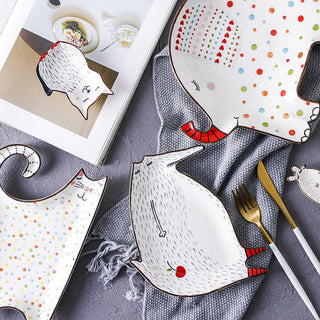
Front of house is where the concept finally meets the guest, and tableware carries more of that first impression than most owners expect. Plates and cutlery are a running cost as much as a launch one — they chip, they break, they walk out in coat pockets — so buy your core service pieces in depth and keep a statement plate or two for the dishes worth photographing. The dinnerware collection runs from clean house shapes to real character, with a full cutlery collection alongside.
One unglamorous line belongs here too: a point-of-sale system sized to how your room actually turns. Tills, a kitchen display, and card terminals that fire orders to the line and split checks cleanly will keep a busy floor moving, while a clumsy setup bottlenecks a full dining room as surely as a slow fryer. Spec it for your seat count before you open, not after the first chaotic Friday.
Layout decides service speed more than horsepower
A fully kitted kitchen still jams if a cook takes five steps between the fridge, the range, and the pass. The rule is the domestic work triangle scaled up and straightened out: storage, prep, and cooking should flow one way, so food travels from walk-in to plate without ever doubling back across the room.
Build the line as a straight run wherever the room allows. Cold storage and prep sit at one end, the cooking suite in the middle, and the pass at the service end, so a dish moves in one direction and never crosses the path of incoming stock. Keep a reach-in and a prep well beside each cook so mise en place stays within arm's reach and nobody leaves their section mid-service. Put the dish pit at the return end, near where dirty plates land, with a short walk back to the pass so clean stock resets fast.
Then design for your peak, never your average. A kitchen that copes at seventy covers can fall apart at a hundred and forty if the fryer or the dishwasher is a single point of failure. Map the whole flow on paper before you fix a single drain or gas line, because moving plumbing and extraction after the fit-out is the most expensive change you can make. Ventilation deserves that same early attention: an open flame or a wok range needs a canopy rated for it, and that is a build decision, not something you bolt on later.
How much does it cost to fit out a restaurant kitchen?
Budget the kit by station rather than as one lump sum, because that is the only way to see where your concept should spend and where it can hold back. The cooking line and refrigeration are almost always the big-ticket ends; prep, warewashing, and front of house scale with your menu and your covers. The table below maps the core of each station to where the money should land.
| Station | Core equipment | Where it sits in the budget |
|---|---|---|
| Cooking line | Combi oven; range & grill; fryer | Big-ticket — the core of the build |
| Cold storage | Upright fridge; blast chiller; reach-ins | Big-ticket; non-negotiable for food safety |
| Prep bench | Refrigerated prep table; mixer; grinder | Mid; scales with the menu |
| Warewashing | Hood-type dishwasher | Mid; never skip or undersize |
| Bar | Bottle fridge; ice; beer line | Mid; only if you serve drinks |
| Front of house | Dinnerware; cutlery; POS | Low each, but it recurs |
Read it in tiers. A starter kitchen — a tight menu on a short line — opens on the essentials: one oven, a range, a fryer, an upright fridge, a dishwasher, and service ware. A mid-tier restaurant adds depth with a combi oven, a blast chiller, a refrigerated prep table, and a proper service bar. A full-service venue layers on a longer line, walk-in refrigeration, more prep automation, and faster warewashing. Equipment is only one line of the launch budget, though — the fit-out, the rent, the licences, and your opening stock all sit on top and vary far more by location than the kit does. Each product card carries its own live price when you are ready to cost the real list.
What licences do you need to open a restaurant?
Wherever you open, four approvals recur: a registered business, a food-safety or hygiene sign-off, premises approvals covering fire and building use, and — if you serve alcohol — a separate drinks licence. Alcohol and premises approvals carry the longest lead times, so start those first. The detail shifts by market:
United Kingdom. Register as a food business with your local council at least 28 days before you trade — free, but legally required. Sell alcohol or serve hot food late and you also need a Premises Licence from the council, with at least one Personal Licence holder to authorize sales. Expect a Food Hygiene Rating inspection and a fire risk assessment, and carry employer's liability insurance once you hire.
Australia. Notify your local council as a food business before trading, and appoint a certified Food Safety Supervisor, which most hospitality venues need under Standard 3.2.2A. The premises will want development consent and building approval. To pour alcohol, apply for an on-premises liquor licence from your state regulator, and everyone who serves it must hold a current RSA (Responsible Service of Alcohol) card.
United States. Requirements stack at state, county, and city level. You will need a local business license, a food service license and health-department permit under a certified food manager (ServSafe is the common one), and a certificate of occupancy for the space. If you serve alcohol, a state liquor license through the Alcohol Beverage Control board is the slow step — months, sometimes quota-capped, so file it early.
United Arab Emirates (Dubai). You need a commercial trade licence from the Department of Economy and Tourism, plus a food establishment permit from Dubai Municipality's Food Safety Department, with an approved food safety supervisor and health cards for handlers. A Civil Defence fire-safety sign-off is required too. Note that a standalone mainland restaurant generally cannot hold an alcohol licence — service is tied to hotels and specific approved venues.
Treat all of this as a map, not legal advice — confirm the current list with your own licensing authority, because the exact documents, fees, and timelines differ by council, state, and emirate. The through-line everywhere is the same: food-safety registration and premises approvals gate your opening date, and any alcohol licence takes the longest, so lodge them before the fit-out is finished, not after.
Where first-time owners lose money
Most first-launch mistakes are variations on one theme — spending in the wrong order. These are the ones that show up again and again:
- Buying before the menu is final. The menu writes the equipment list. Settle it first, or you'll pay for a combi oven you rarely fire while starving the fryer that runs every service.
- Under-sizing the cold. Too little refrigeration forces daily deliveries and quietly inflates waste. Size the walk-in and reach-ins to your busiest week, not a quiet Tuesday.
- Skipping the blast chiller. Without fast chilling you cook everything to order and can't prep ahead safely. It is the piece that unlocks batch cooking and protects your hygiene record.
- Leaving warewashing till last. A slow dish pit stalls the pass at peak. Spec the machine for your covers and give it a short path back to service.
- Treating ventilation and drainage as details. Extraction, gas, and floor drains are build decisions; retrofitting them into a finished kitchen is the costliest change on this list.
- Starting the paperwork late. Alcohol licences and premises approvals move slowly. Lodge them before the fit-out, not after, or your opening date slips with them.
Which restaurant format are you actually opening?
The kitchen above is generic on purpose. Cuisine-led rooms load one station hard: a sushi bar is a cold chain with seats, a trattoria or ramen shop runs on boiling water, and a Korean BBQ, Thai, Indian, Mexican or Chinese kitchen each needs a specific piece of fire the others do not.
Service level moves the money instead. Fine dining and a steakhouse spend on the pass and the grill; a bistro, brasserie, tapas bar or seafood restaurant runs a shorter line with more turns.
And volume formats change the equipment list completely: a pizzeria is built around one oven, while a burger restaurant, diner, fast-casual, buffet, vegan, food truck or ghost kitchen trades range for throughput.
Not sure what your kitchen actually needs? Tell us the restaurant you're opening — the cuisine, the menu, and the covers you're planning for — and we'll build you an equipment list and a budget matched to your concept and your busiest service.


