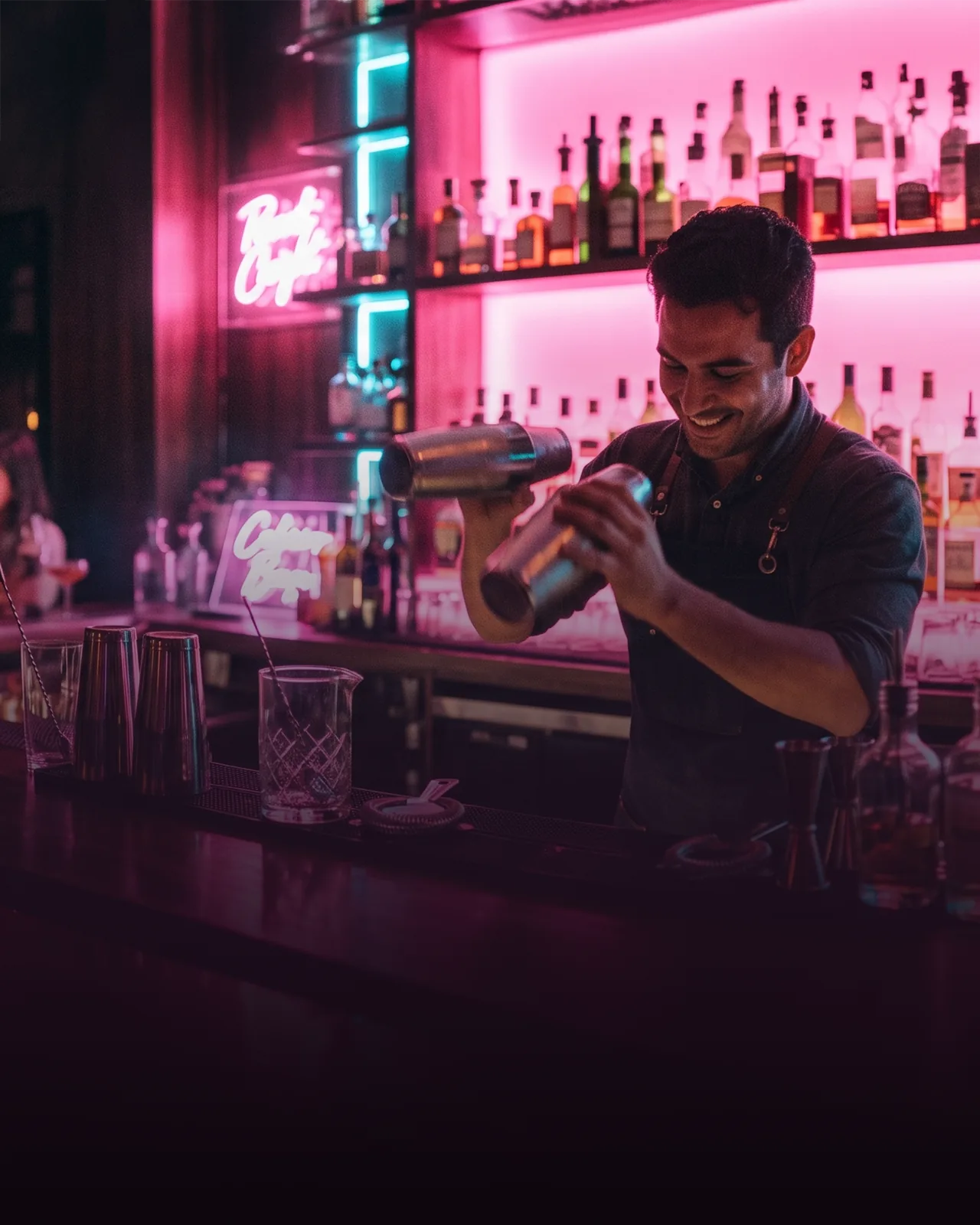


In short: how to open a speakeasy is a trade between mystery and capacity. Every step of concealment buys atmosphere and costs you walk-ins, and the venue has to be good enough that people who found it once come back deliberately.
A door with no sign. Forty seats behind it. On a Tuesday in February, eleven of them are occupied — and that number, not the cocktail list, is what decides whether the bar is still open next year.
Concealment is a marketing strategy that removes your cheapest source of customers. A normal bar takes people who were walking past; a speakeasy takes only people who already decided to come. That works brilliantly at the top of the market and fails quietly everywhere else, because it puts the entire burden of demand on reputation.
Which makes the first question of this format not "what equipment" but "how hidden can this bar afford to be".
The concealment ladder
Hidden is not binary. There are roughly five rungs, and each one changes both the atmosphere and the arithmetic.
| Rung | What it looks like | What it buys | What it costs |
|---|---|---|---|
| Discreet frontage | Small sign, dark window, no menu outside | Filters casual traffic without losing it | Almost nothing — the safe entry point |
| No signage | An address and nothing else | Genuine "you have to know" feeling | All walk-in trade; the map listing becomes critical |
| Hidden door | Behind a bookcase, a fridge, another business | The moment guests photograph and describe | Fit-out cost, plus a fire-exit conversation |
| Reservation only | No walk-ins, timed sittings | Predictable covers, no queue on the street | Empty seats stay empty; no upside on a good night |
| Password or unlisted | Instructions given privately | Maximum exclusivity | Growth capped at whoever already knows |
Most successful speakeasies live on rungs one to three and pretend to be on five. That is the honest version of the format: theatrical concealment with a functioning business behind it, rather than actual secrecy.
The one rung that changes the business model rather than the mood is reservation-only. It converts a bar into something closer to a restaurant — forecastable, staffable, and unable to benefit from a sudden busy night.
Small room, high spend per head
The arithmetic of a hidden bar only works one way: fewer people, each spending more, staying longer.
That has a specific implication for the build. A speakeasy is not a small version of a busy bar — it is a different machine. Volume equipment is the wrong purchase; precision equipment is the right one, because a twelve-dollar drink made in four minutes is the entire product.
It also means the room has to hold people for hours rather than turning them over. Seating that is comfortable at ninety minutes, lighting low enough to sit in without squinting at a menu, and sound levels where people can talk are not decoration — they are what makes the second and third round happen.
Capacity itself is worth thinking about carefully, because in several markets it is also a licensing category. Below a certain patron count, some jurisdictions offer a simpler, cheaper licence designed for exactly this kind of venue, which is a reason to design at forty seats rather than sixty.
The bar behind the door
Everything a speakeasy sells is made at the bar in front of the guest, so the station is the kitchen and the stage at the same time.
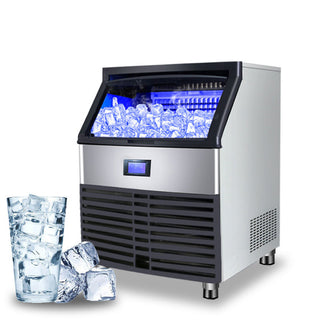
Ice is the first serious decision, and it is the one that separates a craft bar from a bar with a cocktail list. Cloudy, fast-melting ice dilutes a drink while the guest watches. Consistent, dense cube ice is the baseline, and it has to be there in the quantity a busy night needs.
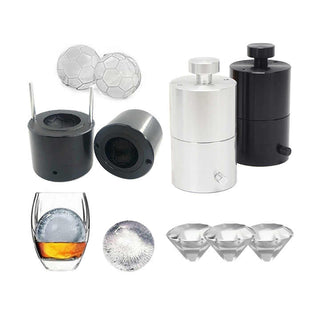
Then the format that gets photographed: a clear sphere or a large cube in a spirit glass, which melts slowly because it has less surface area for its volume. A press turns a block into that shape in seconds, and it is a small purchase with a visible return.
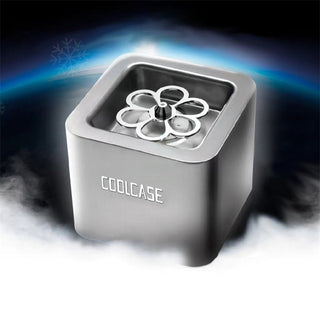
Glass temperature is the detail guests feel without identifying. A frozen glass keeps a stirred drink at temperature for the first ten minutes, which is exactly the window in which the drink is judged.
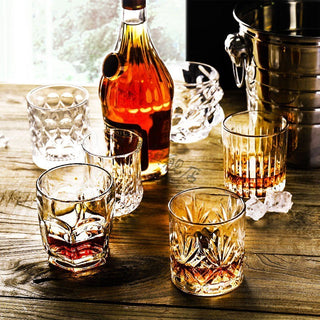
Glassware in this format is inventory and theater at once. Heavy crystal signals the price point before the drink is tasted, and our guide to whiskey glasses and decanters covers what shape actually changes the drink and what only changes the photograph.
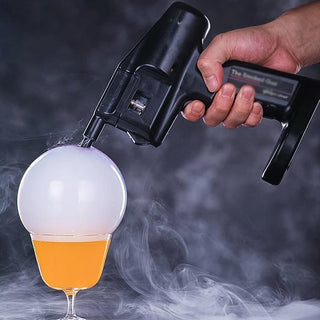
Then the tricks. A smoking gun, a bubble, a garnish that arrives under a cloche — these are the moments guests film, and a speakeasy is a venue where being filmed is the marketing budget.
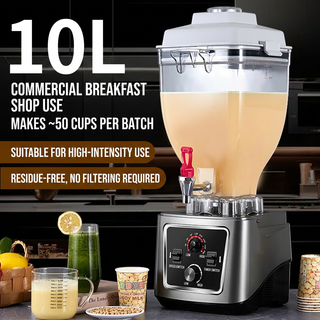
A blender is the piece most craft bars underuse and then need, because frozen and blended drinks sell in summer regardless of how serious the list is.
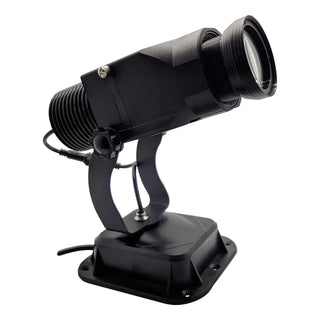
Light does the rest. A speakeasy is a dark room with deliberate pools of light, and a projector on one wall changes a plain surface into something with intent.
Our guide to stage lighting covers how light controls how full a room reads — which matters more here than anywhere, because a hidden bar is often genuinely half empty. The bar equipment and cocktail glasses ranges cover the rest of the station.
Should a speakeasy serve food?
Food is the lever most speakeasies pull too late. A bar with no food sells two drinks per guest; a bar with a short, good food menu sells three and holds the table an hour longer.
The version that works is small on purpose — snacks that can be made in a footprint the size of a domestic kitchen, with no extraction canopy and no chef. Cured meats, cheese, olives, something warm that comes out of a countertop appliance rather than a range.
The version that fails is a full kitchen bolted onto a forty-seat room, which brings extraction, gas, a grease interceptor and a chef into a business that does not have the covers to pay for any of them. If food genuinely becomes central, our guide to commercial kitchen equipment covers what a real kitchen requires — and reading it is usually enough to confirm that a speakeasy should not have one.
One caution worth checking locally: in several jurisdictions the licence category depends on whether food is served, and a venue that serves substantial food may fall under different — sometimes easier — rules than a pure drinks bar.
How to open a speakeasy people can actually find
The paradox at the center of the format: a bar nobody can find is a bar nobody visits, so concealment has to be theatrical rather than real.
The mechanism most venues settle on is a searchable presence with a vague location. The bar exists on maps and review sites — it has to, or it forfeits the one discovery channel that still works — but the listing does not solve the door. Finding the entrance remains the guest's small adventure, and the story they tell afterwards.
Word of mouth does the rest, and it is worth being deliberate about who starts it. A hidden bar that opens quietly to nobody stays quiet; one that opens to a hundred people who each bring two friends has a base. Industry nights, a soft opening for local bartenders, and a relationship with nearby restaurants who send guests after dinner are the three that work.
The other half is what happens after they arrive. A speakeasy has one chance to justify the effort of finding it — the drink has to be visibly better than the bar down the street, and the service has to notice people. In a forty-seat room this is achievable in a way it is not at two hundred covers, and it is the actual competitive advantage of the format.
What does a speakeasy cost to run?
The cost structure is unusual, and it is the reason the format is either very profitable or quietly fatal.
Rent is the advantage. A venue that does not need footfall does not need a high street, which means a speakeasy can take a basement, a back street or a first floor at a fraction of what a visible bar pays for the same square meters. Several of the best-known examples exist precisely because their location was worthless to anybody who needed a window.
Labor is the disadvantage. Craft drinks are made by hand, and a drink that takes four minutes has a fixed labor cost no volume discount touches. Two bartenders on a forty-seat room is a much higher staff-to-guest ratio than a high-volume bar runs, and it is not optional — one person behind the station caps the room at a rate that arrives well before the seats fill.
Stock is the third line, and it behaves differently here too. A serious back bar holds bottles that sell slowly, which is capital sitting on a shelf. That is a legitimate cost of the positioning, but it wants managing: a list built from forty spirits that all get used beats one built from two hundred that mostly gather dust.
Equipment sits below all three. The bar itself, the ice program and the glassware are real spends but modest against a year of rent and wages — which is the argument for buying them properly rather than economizing on the parts guests can actually see.
Signage, exits and the things a hidden door cannot hide from
A speakeasy is a licensed on-premises venue exactly like any other, and the concealment changes none of the obligations. It does, however, create three specific tensions worth resolving before the fit-out.
The first is fire exits. A hidden entrance is fine; a hidden exit is not. Escape routes must be identifiable and unobstructed, exit signage is a requirement regardless of atmosphere, and a bookcase door on an escape route is a conversation to have with the fire officer at design stage rather than at inspection. In practice most speakeasies solve this with a concealed entrance and an entirely conventional, clearly marked exit elsewhere.
The second is occupancy. The number of people permitted in the room is set by the exits and the fire strategy, and a small hidden room usually has a lower limit than the seating plan suggests. Design capacity from the exits backwards.
The third is licensing itself, and here the format is ordinary. In the United Kingdom you need a Premises Licence from the local council plus a Personal Licence holder as Designated Premises Supervisor, qualified through an accredited award, alongside food-business registration and a fire risk assessment. In the United States, licensing runs through the state ABC board with county or city sign-off, and it is the slowest step by a distance — in quota states a spirits licence may have to be bought from an existing holder rather than applied for. In Singapore, a bar pouring past 10pm applies to the Police Liquor Licensing Unit for a Class 1A licence, with late-night trading beyond midnight requiring specific approval and taking track record into account. In Australia, you apply to the state or territory regulator — in New South Wales the Small Bar licence covers venues up to 120 patrons without gaming machines, which fits this format precisely — and every person serving alcohol needs a current RSA competency card.
Treat that as an overview rather than legal advice, and confirm current requirements locally. The universal thread: apply for the alcohol licence first, because it decides when the door can open at all.
Programming a room that has no passing trade
A visible bar has a baseline: people who happened to be nearby. A hidden one has zero baseline, which means every quiet night has to be filled deliberately, and programming stops being a marketing extra and becomes the operating model.
The pattern that works is a calendar with a reason to come on the nights nobody would otherwise. A weekly guest bartender slot pulls that bartender's own following through the door. A monthly menu launch gives regulars a date. A tasting series — one distillery, six people, ninety minutes — sells a Tuesday at a price a Tuesday never otherwise reaches.
Private hire is the other lever, and it fits this format better than almost any other. A room of forty with a door nobody can see is exactly what a company wants for a small event, and one buyout can cover a week of ordinary trade. The only requirement is that the space can be closed without stranding regulars who turn up expecting to get in — which is a booking-policy question, not a design one.
Both of these need one thing the format often neglects: a way to reach people again. A bar built on mystery still needs a mailing list, and collecting it at the point where a guest is delighted — the end of a great night — is the version that works.
The atmosphere a bar cannot actually deliver
The mistakes in this format are rarely about equipment. They are about a gap between the idea and what a room with forty seats can sustain.
The most common is building the mystery and not the bar. A hidden door with an ordinary cocktail list is a novelty that gets visited once, and the second visit never happens because there was nothing behind the door worth returning for. Concealment raises expectations; the drink has to clear the raised bar rather than the normal one.
The second is designing for a full house that concealment prevents. A bar that only works at capacity, in a format built to limit capacity, is a business plan arguing with itself. Design the economics at half full and treat busy nights as upside.
The third is atmosphere that fights service. Lighting so low the bartender cannot see a jigger, music so loud that a quiet conversation is impossible, seating so deep that nobody orders a second round without being asked — each of these reads as style and behaves as lost revenue.
Fourth is staffing the theater without staffing the room. Craft cocktails take minutes to make, and a bar with one person on the station has a service ceiling that arrives much earlier than owners expect. Two behind the bar at forty seats is not luxury, it is the minimum for drinks that take four minutes each.
And the fifth: expecting the format to age well without changing. The novelty of finding the door has a shelf life with any given guest. What keeps them coming is the list changing, the bartender remembering, and the room still feeling like somewhere they chose — which is a programming job that never finishes.
Building the wider venue instead? Our guide to opening a bar covers the full bar build, zone by zone, without the hidden door.
Fitting out a small room that has to punch above its size? Tell us the seat count, the drinks list and how hidden you plan to be, and we will spec a bar built for spend per head rather than for volume.


