


In short: commercial kitchen equipment lists run to sixty items and most kitchens need about a dozen. Work station by station — delivery, storage, prep, cook, pass, wash — and let the menu decide the cooking line rather than the catalog.
Open any supplier's kitchen list and it runs to several pages. Then walk into a restaurant doing two hundred covers a night and count what is actually plugged in: a combi oven, a range, a fryer, a griddle, two fridges, a prep table, a dishwasher, three sinks.
The gap between those two lists is where opening budgets disappear. Almost every item beyond that dozen is a menu-specific decision — genuinely necessary if you cook that thing, dead metal in the corner if you do not.
What does a commercial kitchen actually need?
Six stations, each with a non-negotiable core and a long tail of things you can skip until the menu demands them.
| Station | Non-negotiable | Add when | Skip if |
|---|---|---|---|
| Delivery and storage | Reach-in cold, dry shelving, a freezer | Deliveries are weekly, or you buy in bulk | Nothing — every kitchen needs this |
| Prep | Prep table, boards, knives, a prep sink | Volume makes hand cutting the bottleneck | You buy pre-prepped and pay for it in food cost |
| Cook | One oven, one range, one flat surface | The menu adds a technique the line cannot do | Menu is cold, assembled or reheated only |
| Ventilation | Extraction hood, filters, fire suppression | Always, if there is heat or grease | Never — this is the one nobody may skip |
| Pass | Hot holding, heat lamps, plating space | Tickets outrun the plating surface | Counter service straight from the pan |
| Wash | Dishwasher, wash sinks, a separate hand sink | Covers exceed what the machine turns around | Nothing — hand sinks are usually a legal requirement |
Read the last column carefully. The only two rows with nothing in it are cold storage and warewashing, which is a useful hierarchy: those two get bought properly, and everything else is negotiable against the menu.
The cooking line the menu decides
The cooking line is where the equipment list becomes personal to your restaurant, and where the biggest single purchase usually sits.
A combi oven is the most flexible box a kitchen can own — dry heat, steam, and combinations of both, which means it roasts, bakes, steams, holds and regenerates in one footprint. In kitchens tight on space it replaces three separate pieces.
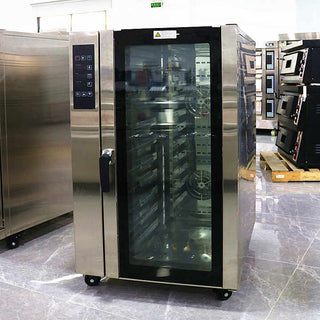
If the menu does not need steam, a convection oven costs less and does the dry-heat half well. Our comparison of combi versus convection covers where the extra spend pays back and where it does not.
The range is the other anchor. Burners, a work surface, and often an oven underneath — the piece that does whatever the specialist equipment does not.
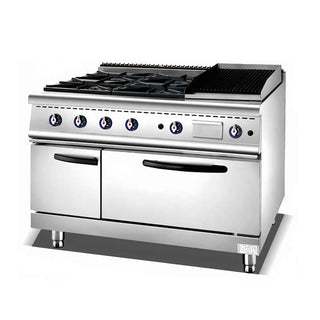
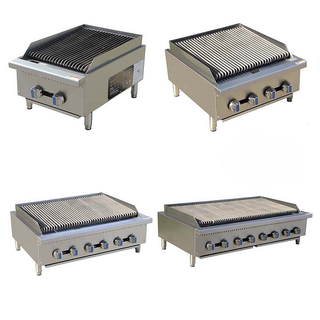
Then the menu-specific pieces. A charbroiler for anything sold with bar marks; the flavor comes from fat hitting hot surfaces, which is also why it drives the ventilation requirement harder than anything else on the line.
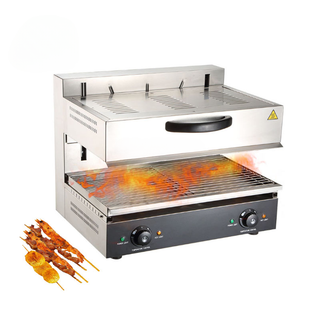
A salamander sits above the pass and does the last thirty seconds of a dish — melting, glazing, crisping a top. It is a small piece of equipment that removes a genuine bottleneck, because otherwise those thirty seconds occupy an oven.
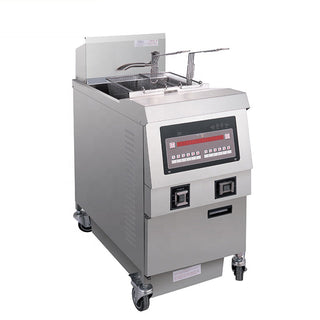
A fryer is a commitment rather than an appliance: oil, filtration, disposal and a fire risk that changes your suppression requirement. Worth it if fried food sells; expensive and greasy if it is on the menu out of habit.
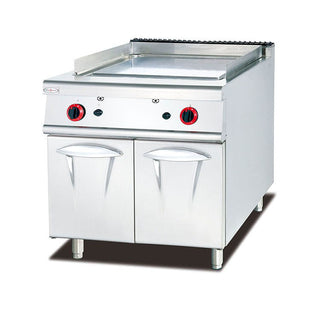
A griddle earns its place in any kitchen doing breakfast, burgers or volume service, because it cooks a lot of things at once on one controllable surface.
The ovens, grills and stoves ranges cover the line piece by piece if you are matching equipment to a written menu.
Ventilation: the item that decides the fit-out
Extraction is not an accessory to the cooking line — it is the constraint that shapes the whole kitchen, and the cost that most often derails a first budget.
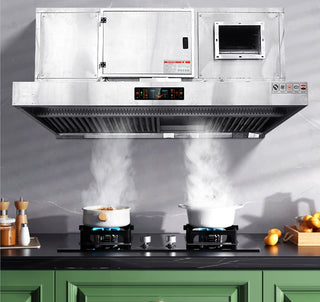
Three things drive the specification. What you cook, because charbroilers and fryers produce far more grease-laden vapor than a convection oven. The volume of air moved, which has to be matched by make-up air coming back in — a kitchen extracting hard with nowhere for replacement air becomes a wind tunnel at the door and starves gas burners. And fire suppression over the cooking surfaces, which is a code requirement almost everywhere there is a hood above open flame.
The practical warning: ducting has to reach outside, and in a converted building or an upper floor that route may not exist. Establish it before signing a lease, because "we'll run a duct" is a sentence that has ended more restaurant projects than any equipment quote.
Prep: the machines that replace a pair of hands
Prep equipment is bought when labor becomes the constraint, and the calculation is unusually simple — a machine that saves two hours a day pays for itself against wages faster than almost anything else in the kitchen.
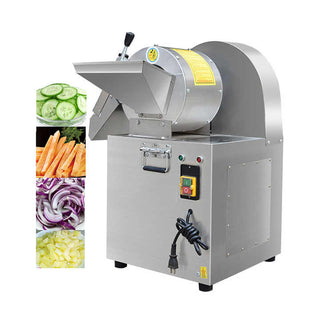
A vegetable cutter running at hundreds of kilograms an hour turns a morning of knife work into twenty minutes. It only makes sense above a volume threshold, and below it a good knife and a person is both cheaper and better.
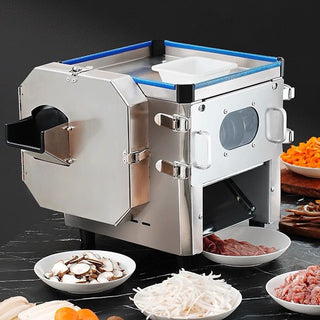
Smaller multi-function cutters suit kitchens where the prep list is varied rather than high-volume — a slicer, shredder and dicer in one body rather than three machines nobody has room for.
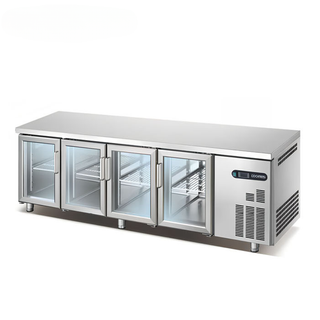
The refrigerated prep table is the piece that quietly organizes a kitchen: a chilled worktop with cold storage directly below, so mise stays at temperature and nobody walks to a fridge mid-service. Our guide to commercial refrigeration covers how much cold a kitchen needs and how to size it against delivery frequency. And the knives that do the rest of the prep are covered in knife types explained.
Warewashing and sinks, sized to covers
Warewashing is the station that fails silently: nothing breaks, service just gets slower until the pass runs out of plates.
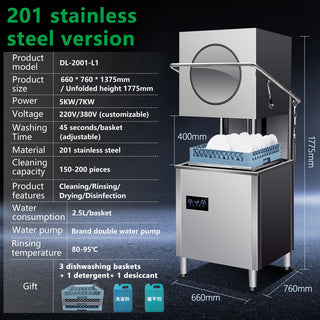
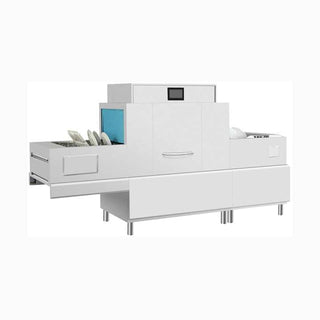
A hood-type machine is the standard for a restaurant with real covers — racks in, racks out, a cycle measured in a couple of minutes. Undercounter machines suit bars and small kitchens; tunnel machines belong to canteens, banqueting and anywhere plates arrive in waves of hundreds.
Sinks are less interesting and more regulated. Pot washing needs a multi-bowl sink with drainer space, and food preparation generally needs its own sink separate from the pot wash.
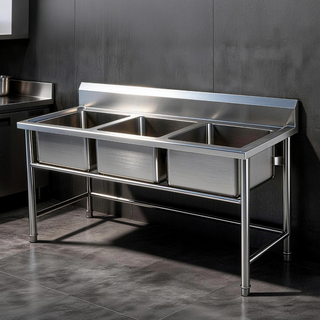
Then the one people forget on a plan and get flagged on at inspection: a dedicated hand-wash basin, reachable from the food areas, used for nothing else.
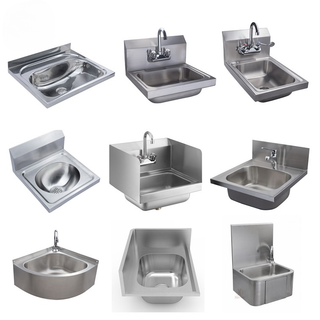
Exact requirements — how many sinks, how many compartments, where they must be — differ by jurisdiction, so confirm them with your local authority before the plumbing is fixed rather than after.
The order to buy commercial kitchen equipment in
Sequence matters more than the list, because early decisions constrain later ones.
First, anything that penetrates the building. Extraction, gas, drainage, three-phase power. These decide what can go where and cost the most to change.
Second, cold. Storage capacity gates how you buy food, which gates your food cost from day one.
Third, the cooking line the menu requires. Not the line you might want in year three — the current menu, cooked at the current peak.
Fourth, warewashing. Sized to covers, not to floor space.
Fifth, prep machines. These are the honest "later" purchases: buy them when a person's time proves the case, not on the assumption that it will.
The full commercial kitchen range is organized by station if you want to price a build in this order.
Where commercial kitchen equipment budgets go wrong
- Buying the menu you might have. Equipment for dishes not on the current menu occupies space and earns nothing.
- Treating extraction as a late line item. It is the first constraint, not the last purchase.
- No make-up air. A kitchen that extracts more than it can replace fights its own doors and starves its burners.
- Under-sizing warewashing. The failure is invisible until service slows, and then it is every service.
- Forgetting the hand sink. A small item that shows up as an inspection finding rather than an inconvenience.
- Prep machines before volume. Below a real threshold, a cook with a knife is faster and cheaper.
If you are specifying from a menu rather than a catalog, write the dishes down first, mark which piece of equipment each one needs, and buy only what appears more than once.
Specifying a kitchen from a menu? Send us the dish list and your expected covers at peak, and we will map it to a station-by-station equipment list with nothing in it you will not switch on.


