


In short: a commercial refrigerator is specified by the temperature band it has to hold and the room it has to hold it in. Chilled storage sits at 0–5 °C, frozen at −18 °C or below, and blast chilling is a separate process with a clock attached — not a colder setting.
The compressor runs, the display reads 3 °C, and the chef says the fridge is not cold. Both are right. The sensor sits next to the evaporator; the food sits by the door, where the temperature climbs every time someone opens it during service.
Almost every refrigeration complaint in a kitchen is a version of that gap — between what a unit is rated to do and the conditions it is actually asked to do it in. Which is why the useful way to choose cold is by the job and the environment, not by the number on the front.
What temperature does each type of cold actually hold?
Four bands cover everything in a commercial kitchen, and mixing them up is the source of most bad purchases.
| Equipment | Holds | The job | Typical format |
|---|---|---|---|
| Chilled storage | 0 to +5 °C | Daily stock, prepped mise, dairy, raw protein | Reach-in, undercounter, walk-in |
| Frozen storage | −18 °C or below | Long-term stock, bought-in frozen goods | Upright freezer, chest freezer |
| Blast chilling | +70 to +3 °C in about 90 minutes | Cooling cooked food safely, then storing it chilled | Blast chiller / freezer cabinet |
| Display cold | +2 to +8 °C | Selling to the customer's eye, not storing | Multideck, display cabinet, merchandiser |
| Wine | +5 to +18 °C, often dual zone | Serving temperature, not preservation | Wine cabinet, cellar |
Note the last two. Display cold and wine cold are service equipment that happen to be refrigerated. Using a multideck as storage overloads it, and storing prep in a wine cabinet is a food-safety finding waiting to happen.
Which commercial refrigerator: reach-in, undercounter or walk-in?
The rule of thumb that survives contact with a real kitchen: cold should be within one step of the person using it, and bulk cold should be nowhere near the line.
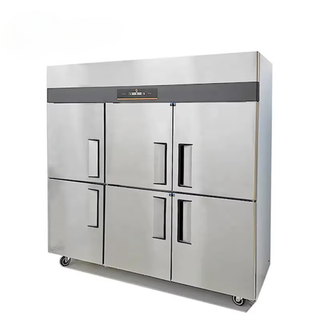
A reach-in is the workhorse — the double-door unit that holds a section's daily stock and gets opened two hundred times a service. It is the piece that most rewards buying a size up, because a full fridge with no airflow around the product runs warm regardless of its rating.
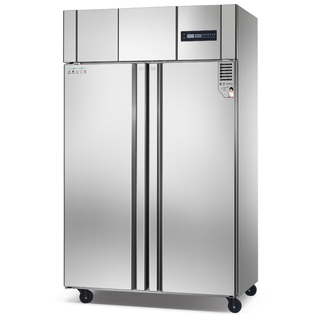
Where a kitchen needs both bands in one footprint, a dual-temperature cabinet splits chilled and frozen behind separate doors. Small kitchens buy these for space; larger ones buy them for the pastry section, which needs a little of each and not much of either.
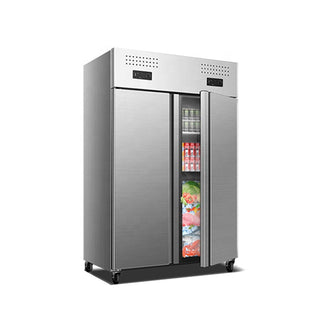
Frozen stock wants its own unit rather than a compartment. An upright reach-in freezer keeps the product organized and visible, which matters more than it sounds: chest freezers get archaeological within a month.
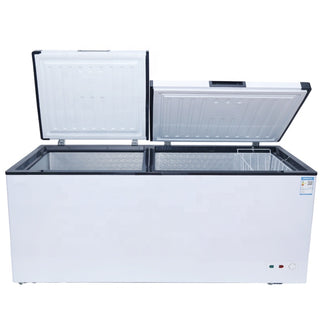
That said, a chest freezer is still the cheapest liter of frozen space you can buy, and for bulk backup stock in a store room it is the right answer rather than the lazy one.
Undercounter cold belongs to the workstation: below the wand at a coffee bar, below the pass at a plating station, below the counter behind a bar. It is the cold that stops people walking, and the walking is what slows service.
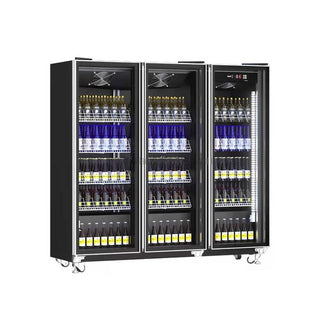
Walk-ins enter the conversation when deliveries stop fitting through the door of a reach-in. They are a construction decision as much as an equipment one — panel build, floor, drainage and a condenser that has to vent somewhere — and they are the one piece of cold that is genuinely hard to change afterwards. The full refrigeration range covers reach-in and undercounter builds.
Blast chilling is not fast freezing
This is the distinction that costs kitchens the most, because the two words sound like the same idea at different intensities. They are different processes with different purposes.
Blast chilling takes cooked food from around +70 °C down to +3 °C in roughly ninety minutes, driving it through the temperature band where bacteria multiply fastest. It is a food-safety control step, and in many jurisdictions cook-chill operations are expected to document it.
Blast freezing goes further, to −18 °C, and its purpose is texture as much as safety: fast freezing forms small ice crystals, slow freezing forms large ones that rupture cell walls and leave the product wet on the thaw.
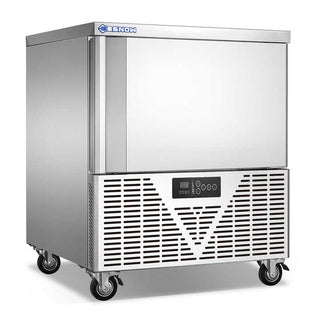
What neither of them is: extra storage. A blast cabinet is a process machine that sits empty most of the day, and sizing it by tray count against your largest single cook is the correct approach. Buying a bigger storage freezer instead of a blast chiller does not solve the same problem, however tempting the price comparison looks.
Why display cold costs more to run than storage cold
An open multideck has no doors. It holds temperature with an air curtain — a sheet of chilled air falling across the opening — and it is fighting the room every second it is switched on.
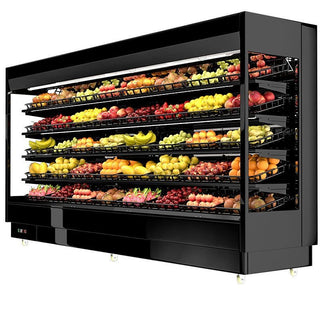
That is a real trade, not a design flaw. Open cases sell more because nothing stands between the customer and the product, and in convenience retail and grab-and-go the uplift is worth the energy. Two things make it affordable: night blinds pulled down when the shop closes, and keeping the case out of the path of doorways and air conditioning, both of which shred an air curtain.
Glass-door display holds temperature far better and shows the product almost as well, which is why beverage and dessert cabinets are usually doored.
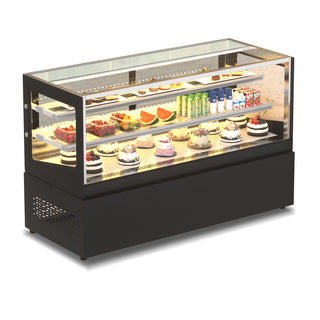
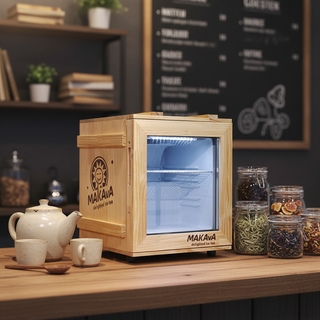
At the small end, a countertop merchandiser puts cold drinks at the till without a fit-out, and it earns its footprint on impulse purchase alone.
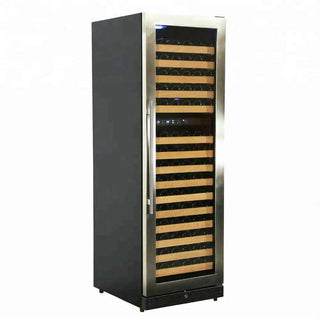
Wine is its own case again, because the goal is serving temperature rather than preservation. Dual-zone cabinets hold reds and whites at different temperatures in one unit, which is the only sane answer for a restaurant with a real list.
Three specs that decide whether cold survives your kitchen
Ambient rating. A cabinet is tested at a specified room temperature — commonly around 32 °C for commercial climate classes. A kitchen line beside a grill in July runs hotter than that, and a unit at its limit stops recovering between door openings. If the fridge is going on the line rather than in a store room, buy for the hotter class.
Condenser type and position. Air-cooled is standard and needs clearance plus a clean coil; a blocked condenser is the single most common cause of a fridge that "stopped working". Water-cooled units suit hot, poorly ventilated kitchens because they dump heat into water rather than into the room, at the cost of plumbing. Top-mounted condensers stay cleaner in a greasy kitchen; bottom-mounted ones are easier to service and pull in less warm air from a low ceiling.
Doors and gaskets. The cheapest part of a commercial refrigerator is the one that fails first. A perished gasket lets warm air in continuously, the compressor runs longer, and the energy bill climbs before anyone notices the food is at 7 °C. Check them monthly; replace them annually if the unit is on a busy line.
How much cold does a kitchen actually need?
Work from delivery frequency rather than from menu size. A kitchen taking daily deliveries needs a fraction of the cold that a weekly-delivery kitchen does, and this single variable moves the requirement more than covers do.
Then add the sections. Each production section that owns its own mise wants its own undercounter cold, because shared cold means shared walking. Bulk goes to the store room in the cheapest liters available — chest freezer, or walk-in if the volume justifies the build.
Leave headroom of roughly a quarter. A fridge packed to the walls cannot circulate air, and the product at the back of a full cabinet is warmer than the display claims. This is the most common reason a correctly specified unit appears to underperform.
Ice is a separate calculation with its own failure modes — our guide to choosing a commercial ice machine covers sizing, undercounter versus modular, and the ambient trap that catches most buyers.
Where kitchens buy the wrong commercial refrigerator
- Buying storage when the problem is process. A bigger freezer does not cool cooked food safely; a blast cabinet does.
- Ignoring the ambient class. A unit rated for a cool store room will not hold on a hot line, and the warranty conversation will say so.
- Filling to the walls. Airflow is part of the specification, not spare space.
- Putting an open multideck opposite a door. The air curtain collapses and the case runs continuously.
- Never cleaning the condenser. Ten minutes a month prevents most emergency call-outs.
- Using display cabinets as storage. They are sized to sell what is in them today, not to hold tomorrow's stock.
If you are specifying a kitchen from scratch, start with delivery frequency, put undercounter cold at every section that needs it, and decide the blast question by whether you cook ahead — because that answer changes the equipment list more than any other.
Not sure how much cold your kitchen needs? Tell us your delivery frequency, your sections and how hot the line runs in summer, and we will spec the cabinets against the room rather than the brochure.


