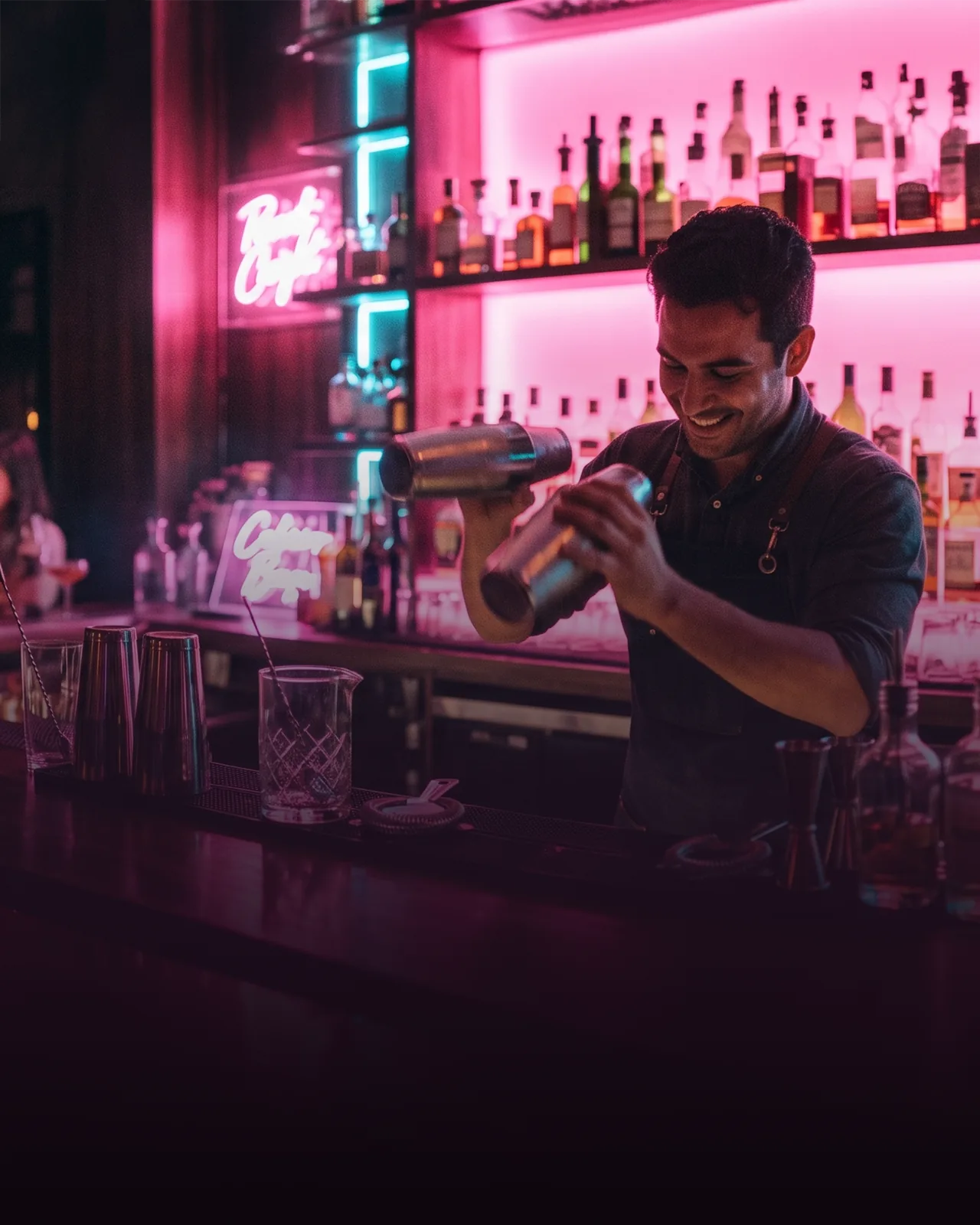


A nightclub is four different businesses in one night. This guide to how to open a nightclub walks it hour by hour — the door, the room at its peak, the bar that has to keep up, and the permits that decide how late you are allowed to trade.
At ten the room is nearly empty and has to look like it was always meant to be. At one it is packed, loud, and running on whatever you specced eight months earlier. At three it empties in fifteen minutes. By four somebody is mopping a floor covered in spilled drink and broken glass. Those are four different operations sharing one building, and almost every expensive mistake in nightlife comes from buying for only one of them.
So this guide is arranged by the clock rather than by department. It follows a single night from the queue outside to the clean-down after last call, and names what each hour actually demands from the room. The licences come last, which is exactly the opposite of the order you should file them in — that part gets its own warning.
What kind of nightclub are you building?
Three formats sit under the word "club," and they load the budget in different places. Decide first, because the rig you buy for one is close to useless in another.
A dance-led club puts the money in sound and light. The floor is the product, the bar exists to keep people on it, and the drinks list stays short by design. A lounge or table-service club inverts that: softer sound so people can talk, mood lighting, bottle service, and a bar that builds proper cocktails at a slower pace but a higher ticket. A live-music or events venue needs a bigger PA with real headroom, a stage, microphones, and a lighting rig you can re-program for a different act every week — plus the flexibility to hire the room out midweek, which is often where the margin actually lives.
Your format also sets your licence and your walls. A late, alcohol-led dance club faces more scrutiny on hours, noise, and crowd safety than a lounge closing at one, and the trading hours you ask for shape the whole application. Sound insulation is a building decision, not a purchase, and it is the single most common reason a promising site turns out to be unusable. Settle the concept before you sign the lease. Our bar equipment collection and stage and effects collection hold most of what follows.
The door, and the queue nobody plans for
The night starts outside, and the queue is the first thing a guest experiences and the first thing they photograph. It is also where money leaks: a slow door means people leave before they ever buy a drink, and an unmanaged one is the fastest route to a licensing complaint from the neighbors.
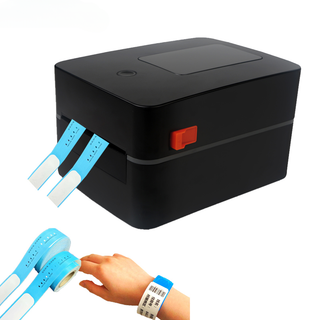
Wristbands do most of the work. They separate paid entry, guest list, over-age drinking, and table bookings at a glance, and re-entry stops being an argument at two in the morning. Printing them on site means you can spin up a promoter night or a themed event without a print order. Our thermal wristband and label printer runs 4x6 desktop stock at 203 dpi, which covers wristbands, cloakroom tags, and table labels from one machine.
For a paid-entry room, a self-service kiosk takes cash and card at the door without a second staffed till, and a queue-management screen tells people how long the wait actually is, which reliably shortens how long it feels. The ticketing and queue collection covers both, and a card-reading terminal from the POS range keeps the door tied to the same takings report as the bar.
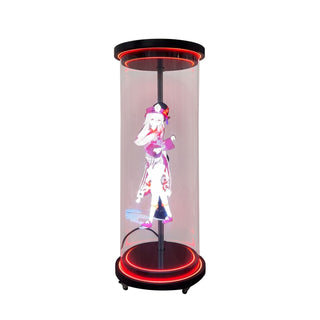
Then give the entrance one thing worth filming. A hologram fan sits above a doorway and floats your logo or a night's artwork in mid-air, which is the cheapest promotion you will ever run because guests post it for you. Our 3D hologram fan projector does exactly that job; larger volumetric and LED-fan options are in the holographic display collection, and a gobo projector throws a sharp logo onto a wall or the pavement for far less.
Midnight: what actually makes a room feel full
A club at peak is a sensory system, and the parts have to be bought as one. Sound sets the energy, light makes the sound visible, haze gives the light something to travel through, and the floor gives the crowd a place to commit to. Miss one and the others underperform.
Sound is the one system nobody forgives
A club PA is a matched chain, not a large stereo: speakers sized to the room, subwoofers for the low end you feel rather than hear, an amplifier with headroom to spare, and processing to tune it to four awkward walls. Buy it as a system. A line-array setup spreads even coverage across a floor instead of blasting the middle and starving the back — our professional line-array system with subwoofer is built for that job, and the sound collection carries the matching 2×1500 W power amplifier and a DSP processor to time-align and limit it.
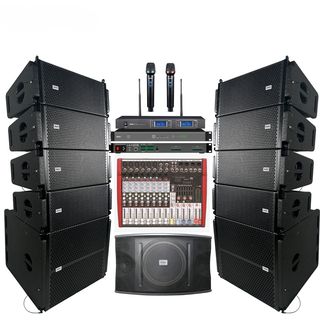
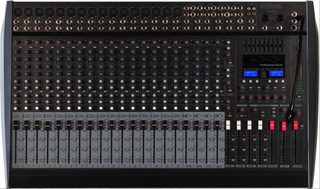
The mixing console is where the night is actually driven — DJ feeds, microphones, a live act on a Thursday. Our 16-channel mixing console carries Bluetooth and USB inputs plus 48 V phantom power, so a DJ set and a band share the same desk without a rewire. Whatever you buy, keep headroom: a system running flat out all night distorts, and distortion clears a floor faster than silence.
Light, haze, and the floor
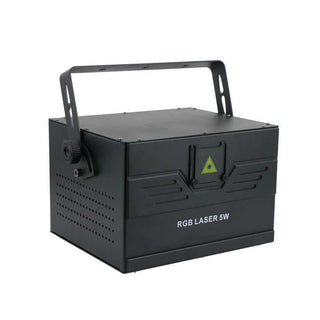
Lighting turns music into something the room can see. Build it in zones you can recall as scenes — a warm, low state for the early evening, a full state for peak — so one control changes the whole feel instead of a technician chasing faders. Lasers are the part guests remember: our 10 W RGB animation laser projector throws programmable patterns that read across a packed floor, with more in the laser collection.
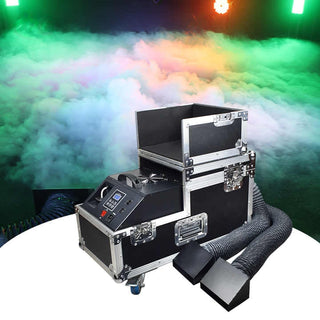
None of that works in clean air. Beams are invisible until something scatters them, so haze is not an effect — it is what makes the effects exist. A low-fog machine adds the other half: fog that stays at ankle height for a drop or an entrance instead of fogging out the whole room and hiding the lights you paid for. Our 3000 W low fog machine runs tubes to wherever the effect is needed; the fog machine range and wider effects collection cover the rest.
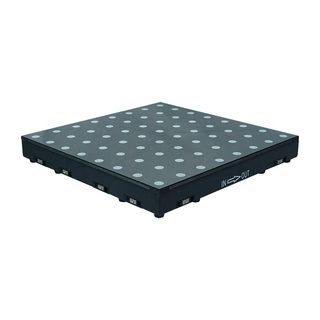
Then commit to the floor itself. An LED dance floor lights the crowd from below, which flatters everyone standing on it and makes an empty room look intentional at eleven rather than sad. Our RGB LED dance floor panels tile to your dimensions and run patterns in time with the set. Size the floor for peak, not average, and keep a clear route from the bar to it so ordering never means fighting through dancers.
Screens and surfaces finish the picture: an LED wall behind the booth for visuals and hire nights, an interactive bar counter that reacts to touch, and a scent diffuser on the HVAC so the room smells deliberate rather than of last night. None is essential alone; together they are what people describe to friends.
How fast does a nightclub bar have to be?
Fast enough that nobody standing three-deep decides the wait is not worth it. That is the whole brief. A club bar is a throughput machine, and it is designed by removing steps rather than adding skill: a short list of drinks that can be built in seconds, several identical stations so staff never cross paths, and everything a bartender touches within one turn.
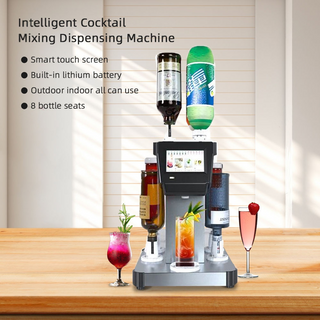
Automation is what makes that survivable at peak. An automatic cocktail machine pours a consistent, measured drink in seconds and lets a new hire keep pace with a veteran on the busiest hour of the week. Our fully automatic cocktail machine comes as an 8- or 13-bottle unit, and the cocktail automation collection adds a motorised shaker and even a robot bartender for a room that wants the machine itself to be part of the show.
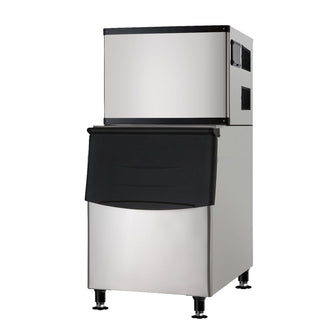
Ice is the failure nobody plans for. A full floor drinks through it at a rate that has no relationship to a quiet Tuesday, and when the ice runs out at one, most of your menu stops. Our commercial ice maker makes up to 450 kg a day with a 125 kg bin, which is the scale a busy club actually needs — anything smaller becomes a nightly emergency. Size it from the ice maker collection against your worst-case night.
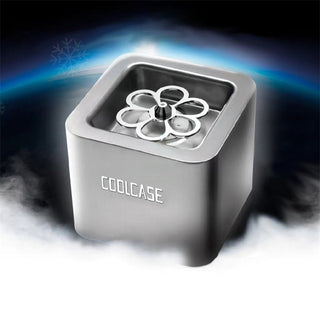
Cold glass is the cheap detail that makes a rushed drink feel considered. A froster chills glassware on demand at the station, so a spirit poured at half past one still lands cold. Our CO2 glass froster cube tucks into a tight counter; pair it with an undercounter glasswasher so clean stock never runs out, and buy glassware far deeper than feels reasonable, because a dance floor breaks it.
Closing time, and the morning after
The hours nobody budgets for are the ones after last call. A club floor at three in the morning is spilled drink, glass, and whatever the crowd dropped, spread across the largest hard surface in your building — and it has to be spotless before a licensing officer, a cleaner, or a daytime event walks in.
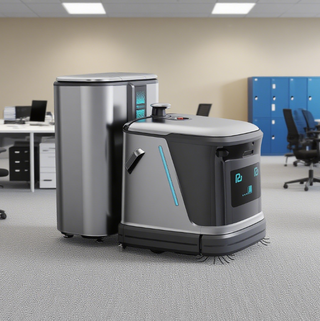
Most operators discover this as a staffing cost. A scrubbing robot turns it into an equipment one: it runs the open floor unattended while the team clears the bar, resets the room, and cashes up. Our autonomous floor-scrubbing robot maps the room with LiDAR and cleans it on a schedule, and the service robot collection and wider cleaning range cover the rest of the close-down.
Two more close-down realities belong in the plan. Waste volume in a club is enormous and mostly glass, so agree collection and storage before opening rather than discovering your bin store holds one night. And build a maintenance rhythm into the week: haze fluid and laser optics need cleaning, speaker drivers fail quietly and take the top end with them, and a light rig drifts out of program. The rig that sold the venue in month one is the rig nobody has serviced by month nine.
How much does it cost to open a nightclub?
Capacity drives everything. It sets how much sound you need, how many bar stations, how much ice, and how much of your budget disappears into things guests never see — insulation, ventilation, exits, and security. Cost the build from the number of people you intend to hold at peak.
| Capacity at peak | Sound and light | Bar | What scales invisibly |
|---|---|---|---|
| ~150 (small club, one room) | One PA system with subs; a compact light rig; haze | One station, short list, automation optional | Basic insulation; one ice machine; single cleaner |
| ~400 (mid-size dance club) | Line array with DSP; zoned lighting; lasers; LED floor | Two or three identical stations; cocktail automation | Serious insulation and ventilation; large ice; door team; wristbanding |
| 800+ (flagship venue) | Multi-zone PA; full lighting show; LED wall; effects | Multiple bars, table service, dedicated glass-wash | Fire and occupancy engineering; security staffing; waste handling; close-down crew or robots |
The pattern in that last column is the one to take seriously: past a few hundred people, the fastest-growing costs are the ones with no visible payoff. Sound insulation, extraction, exits, and security do not appear in a single guest photo, and they will consume more of your build than the laser package. Kit is one line among several — the fit-out, the licence process, opening stock, and staffing sit on top. Each product card carries its live price when you cost the real list.
Which licences does a nightclub need to trade past midnight?
Four things, everywhere: a registered business, an alcohol licence, permission for entertainment and late hours, and premises approvals for fire, capacity, and noise. For a club, the last two carry as much weight as the alcohol licence, because your hours and your bass are what the neighbors and the authorities react to. Start the applications before the fit-out — they, not the builders, set your opening date.
United Kingdom
One Premises Licence from the council covers alcohol, regulated entertainment, and late-night refreshment (hot food or drink between 11 pm and 5 am). A Personal Licence holder must act as Designated Premises Supervisor, which means an accredited APLH qualification and a basic DBS check obtained in advance. Your operating schedule — hours, capacity, door policy, noise controls — is the heart of the application, and it must be advertised publicly with the blue notice displayed at the premises. Recorded music also needs TheMusicLicence from PPL PRS.
Germany
Serving alcohol needs a Gaststättenerlaubnis under the Gaststättengesetz, tied to both the operator and the premises, alongside business registration and an IHK hospitality briefing. Closing hours (Sperrzeit) are set per state and vary widely. Noise is the decisive issue: TA Lärm nighttime limits run to roughly 35 dB(A) in residential areas, so insulation and a noise-protection plan usually become conditions of approval rather than optional extras. Clubs are now formally recognized as cultural venues at federal level, which helps an operating club defend itself against later residential development next door.
United Arab Emirates (Dubai)
Several authorities are involved at once. The venue needs a trade licence with F&B activity and eligible zoning; alcohol service is handled through Dubai Police GHQ together with the Department of Economy and Tourism, which also issues entertainment permits covering show type, hours, and sound levels. Dubai Municipality inspects food handling and ventilation, Civil Defence signs off fire safety, security staff need SIRA licences, and food handlers need health cards.
United States
Alcohol runs through the state (and often county) ABC board, takes months, and is sometimes quota-capped, so it is the first thing to file. Many cities then require a separate entertainment, cabaret, or dance-hall permit for amplified music and a dance floor. Add a health permit, a certificate of occupancy, fire-code occupancy limits that a fire marshal will enforce on a busy night, and music licensing through ASCAP, BMI, and SESAC.
Treat all of this as a map rather than legal advice: documents, fees, hours, and noise limits differ by council, state, and emirate, and they change. Confirm your list with the licensing authority before you commit to a date or a building, because a room you cannot soundproof to the local limit is a room you cannot open.
What owners buy, and what actually holds up
| The instinct | What holds up on a real night |
|---|---|
| Spend on the laser package first — it photographs well | Buy the PA first. Distorted sound empties a floor faster than a plain light rig ever will, and lasers need haze to read at all |
| Treat insulation as a cost to trim | Noise complaints end licences. Insulation is the one line that protects everything else you bought |
| One long, impressive bar | Several identical short stations. Length does not serve people; parallel stations do |
| An ice machine sized to an average night | Ice sized to the worst night, with a big bin. At one in the morning you cannot buy your way out |
| Plan the close-down later | Budget the clean-down with the build. It is a nightly cost and a licensing exposure, not an afterthought |
| File the licence once the room looks ready | File first. Alcohol plus entertainment and late hours have the longest lead time in the entire project |
Adjacent formats worth comparing
Same licensing world, different room. A karaoke bar splits the crowd into private rooms and turns noise into the central engineering problem; a hookah lounge sells dwell time and needs ventilation the dance floor never does.
Where the guest list replaces the queue, the build changes again: a private members club runs on membership revenue rather than door numbers, and an event venue sells the empty room itself, which makes flexible power, rigging and staging the whole product.
Not sure what your room actually needs? Tell us the club you are opening — dance-led, lounge and table service, or a live-music venue — your capacity at peak, and how late you intend to trade. We will come back with a rig and a bar spec matched to the room, and a budget that separates what earns from what merely looks good.
For the bar side of the build in more depth, our hub guide on how to open a bar covers dispense, cold storage, and glassware in full.


