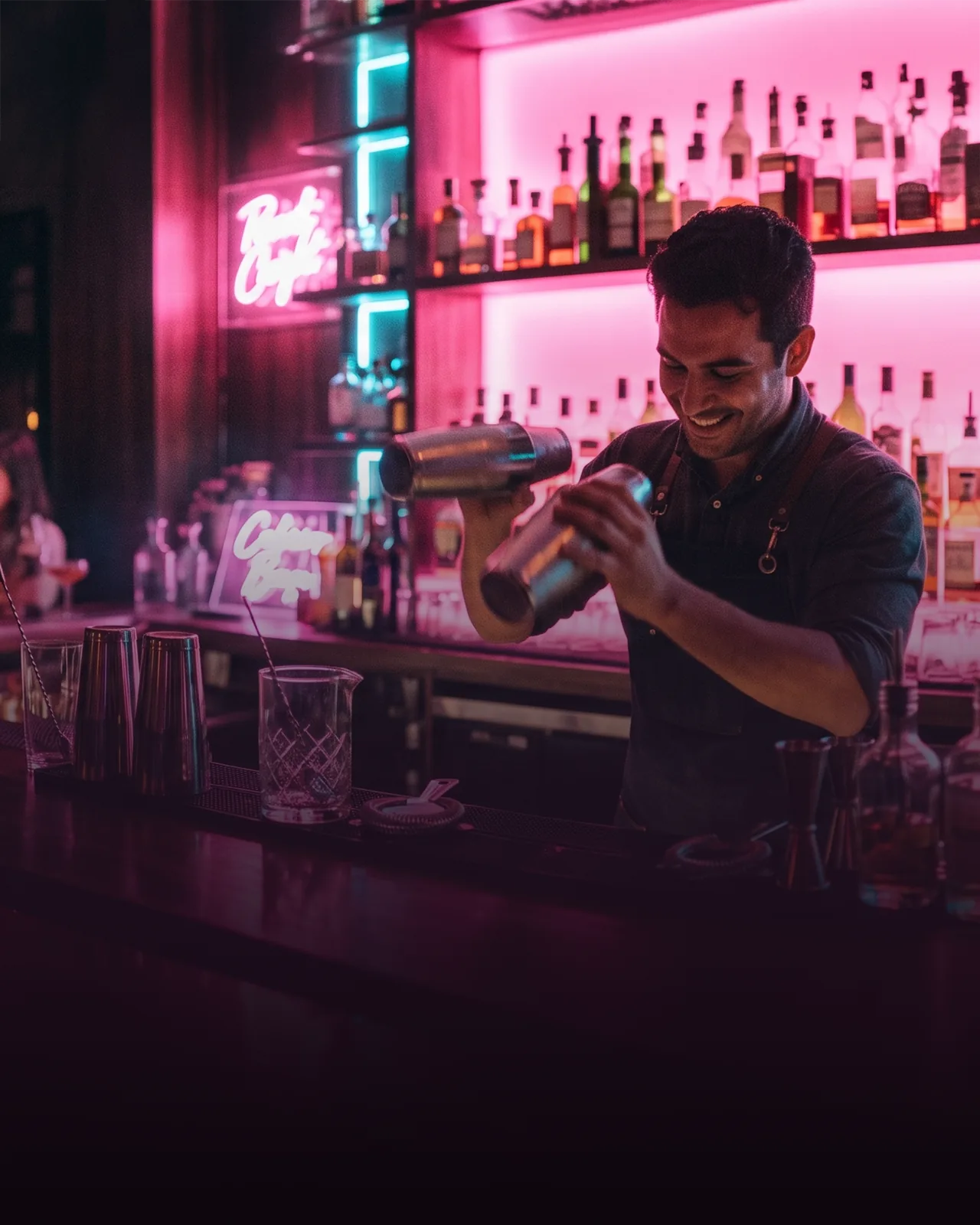


In short: how to open a sushi bar is a cold-chain question with seats attached. Fish spends its whole life between the van and the plate at a controlled temperature, and every piece of equipment you buy is there to keep one link of that chain intact.
A tuna loin lands at the back door at 7 a.m. By eight that evening a slice of it is on a plate in front of a guest. In between, it has been temperature-checked, frozen or chilled, portioned, vacuum-packed, moved to a counter case, and cut — and at no point should it have spent more than a few minutes out of the cold.
That twelve-hour journey is the business. Everything else — the seats, the sake list — is arranged around it. A sushi bar that gets the chain right can run with modest equipment. One that gets it wrong throws away the most expensive stock in the building, or worse, makes somebody ill and finds out publicly.
So this guide walks the chain rather than the shopping list: what happens at each link, what equipment holds it, and what the records have to show when someone asks.
What does a sushi bar need that a restaurant kitchen does not?
Three things, and they are the three that catch out operators moving across from another format.
The first is a freezing step that exists for legal reasons rather than storage reasons — covered below, and it is the one with paperwork attached. The second is refrigeration positioned under the chef's hands instead of behind the line, which changes the shape of the room rather than just its equipment list. The third is a product with a shelf life measured in days, sometimes hours, which means ordering discipline matters more than storage volume.
Everything else a sushi bar needs, a restaurant needs too. The knives are better and the plates are more deliberate, but a cooking line is a cooking line. It is the cold that is different, and it is worth being blunt about that before signing a lease: a beautiful room with an under-specified cold chain is a bar that cannot legally serve its own menu.
There is a fourth difference that shows up on the payroll rather than the equipment plan. A sushi counter is an open kitchen where the cook is also the host, and that limits how fast you can grow. You cannot add covers by adding a chef the way a closed kitchen can — the counter has to grow with them, and skilled counter chefs are the hardest line in the business to hire quickly.
Link one: the twenty minutes after the van arrives
Delivery is the only part of the chain you do not control, which makes it the part you check hardest. Fish arrives at a temperature you have to verify and record before it goes anywhere, because after that moment it is yours.
Fresh fish should land close to 0 °C, packed in ice or gel. Anything that arrives warm gets refused, and refusing a delivery is a decision the person on the back door needs the authority to make without calling anyone. The kitchens that lose money here are the ones where the check happens later, once the box is already in the walk-in and the driver has gone.
Supply discipline sits on the same link. A raw kitchen wants small, frequent deliveries rather than large weekly ones, which means the supplier relationship is part of the equipment decision: order twice a week and you need less cold storage but more reliability from the van. Most new bars discover this the wrong way round, buying a walk-in sized for a delivery pattern they end up abandoning within a month because the fish is better fresh.
The physical fix is a short route. Back door to cold storage should be a straight line of a few meters, not a trip through a kitchen. This is worth arranging on the drawing while walls are still lines, because moving refrigeration and drainage after fit-out is the most expensive change in the build.
Link two: freezing is a legal step, not a storage decision
Here is where a sushi kitchen stops resembling a restaurant. In most markets, fish intended to be eaten raw must be frozen to a defined temperature for a defined time to destroy parasites — and the freezing has to be documented. This is not a preservation choice. It is a control step with paperwork attached.
Domestic freezers cannot do it. They neither reach nor hold the temperatures the rules specify, and they have no way to prove they did. A blast freezer pulls product through the danger zone quickly, which protects texture as well as satisfying the rule — slow freezing forms large ice crystals that rupture cell walls, and the fish shows it when it thaws.
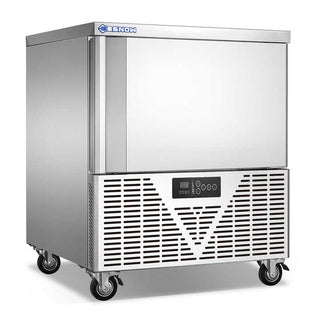
Size the freezing capacity to the volume you actually run raw, not to total fish purchases. A kitchen where half the menu is cooked needs far less blast capacity than an omakase counter of the same covers.
Some species are exempt in some jurisdictions — several tuna species and certain aquacultured fish among them — but exemptions are specific, and assuming one applies is a bad way to find out it does not.
Link three: the counter is the kitchen
In most restaurants the cold storage sits behind the cooking line. In a sushi bar it sits under the chef's hands, and that single piece of equipment defines the format.
A refrigerated prep counter holds the day's cut fish at service temperature within arm's reach, with backup stock in cold drawers directly below. Everything the chef does happens in the space between the case and the guest, which is why the counter length — not the kitchen size — determines how many chefs can work at once.
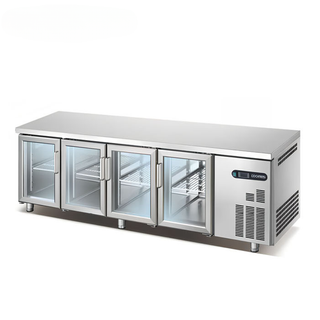
One counter and one chef is a coherent room at eight to twelve seats. Two chefs need enough counter that they never reach across each other, which in practice is close to double, not one and a half times. Get this wrong and the second chef slows the first one down instead of doubling output.
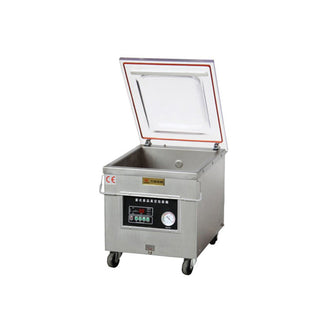
Behind the counter, whatever is not going out today gets portioned and sealed. Vacuum packing is not a luxury in a raw kitchen: it cuts freezer burn during the parasite-control freeze, it keeps portions traceable to a delivery date, and it stops a walk-in turning into a memory test.
Link four: rice runs on a clock the fish does not
Rice is half the dish and the only part of a sushi bar that is worse cold than warm. It also has a service window of a few hours rather than a few days, which makes it the one component that has to be planned around time rather than temperature.
The pattern that works is batches, not one big cook. A commercial rice cooker turns out consistent loads back to back without occupying a burner, and the station beside it needs room to cool and season each batch before it goes into a warmer at serving temperature.
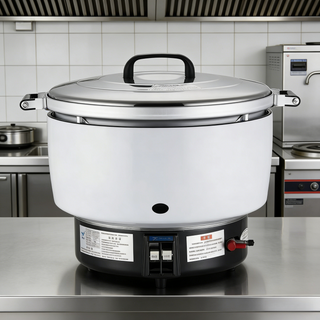
Rice is the most common hidden bottleneck on a busy Friday. Size the cooker for the peak hour rather than the daily average, because the failure mode is not running out — it is serving the batch that has been sitting too long.
Link five: the cut, and the two knives that make it
Two blades do most of the work in a sushi kitchen, and they do opposite things.
A yanagiba is long and single-bevel, built to take a slice in one drawing pull. Sawing tears the surface of raw fish and shows on the plate; a 28 cm blade exists so that the longest slice you serve still comes off in a single stroke.
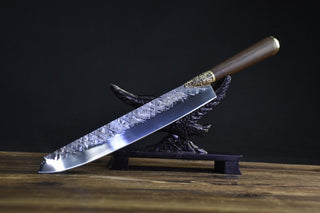
Breaking down a whole fish is the other job, and it wants flex rather than length. A fillet knife bends along the bone and leaves less flesh behind, which matters directly when fish is the largest line in your food cost.
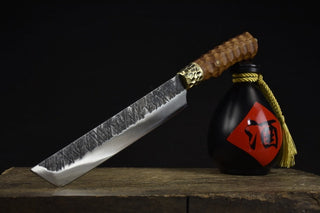
Single-bevel knives are ground for one hand — check who is using them before ordering. Our guide to knife types covers the rest of the roll and where each shape earns its place.
Link six: the plate, and the wash that follows
Presentation is the last link, and it is equipment as much as the freezer is. Sashimi and nigiri sit on flat or lightly angled surfaces that frame small food; the plate does visible work in a way it never does under a bowl of pasta.
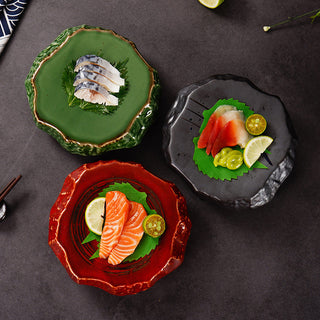
Then it comes back. Delicate ceramics chip in a rough machine and stall the pass if they are hand-washed at peak, so the dishwasher gets sized to covers rather than to floor space — see the commercial dishwashers range for undercounter through hood-type, and specialty plates for the sashimi and oyster shapes.
Where should the chain physically run?
Draw the route before you draw the room. Fish should travel back door to cold storage to freezer to counter in something close to a straight line, and it should never cross the path of anything cooked or anything dirty.
Three separations do most of the work. Raw fish stores below and away from everything else, because drip travels downwards and inspectors check the order of shelves as closely as the temperature of them. Raw and cooked get their own boards and storage, and ideally their own bench. And the warewashing return runs on a different path from the food going out, which is easy on a drawing and almost impossible to retrofit.
Then there is the counter itself, which is both kitchen and dining room. The chef needs the case, the board and the plating point within one motion, because every second a piece of fish spends in a hand is a second out of the cold. If a chef has to turn away from the guest to reach the fish, the layout is wrong regardless of how well the equipment is specified.
The last thing to place is the back line — breakdown, rice, vacuum packing, warewashing. None of it is visible, all of it is noisy, and it wants to be far enough from the counter that a guest paying for a quiet omakase does not hear a dishwasher door.
How to open a sushi bar at the right scale
Four formats, four different chains. Choosing between them before signing a lease is the decision that saves the most money, because each one loads a different link.
| Format | Heaviest link | What it can run light on | Typical counter |
|---|---|---|---|
| Omakase counter | Counter refrigeration and knife quality | Storage volume, warewashing | 8–12 seats, one chef |
| À la carte sushi bar | Counter length and cold storage | Blast capacity if menu is part-cooked | Two chefs, full line |
| Kaiten / conveyor | Throughput everywhere: rice, cold, wash | Per-piece presentation | Production line, not a counter |
| Izakaya hybrid | A full cooking line on top of the raw bar | Blast freezing, if raw is a small share | Short raw counter plus kitchen |
Read that as a budget instruction. The omakase room spends on quality and almost nothing on scale; the conveyor bar spends on scale and can be indifferent to the plate. The hybrid izakaya is the one that catches people out — it carries the cost of two kitchens, and owners regularly budget for one.
Where the money should never come out is the cold chain. Refrigeration and freezing carry both the product and the compliance, and they are the two lines that cannot be upgraded quietly later. The rest — plates, warewashing, the second knife — can start modest and grow. Our restaurant equipment range is organized by zone if you want to price a build station by station, and the refrigeration range covers reach-in and undercounter cold.
What your records have to prove
Every sushi bar needs the four approvals any restaurant needs — a registered business, food-safety sign-off, premises and fire approval, and an alcohol licence for sake or beer. The fifth is the one that is specific to raw fish, and it is the one inspectors go to first.
| Market | Who you register with | The raw-fish requirement | Watch out for |
|---|---|---|---|
| Japan | Local public health center — Restaurant Business Permit (飲食店営業許可), granted after inspection | Handled under the permit and the appointed Food Sanitation Supervisor (食品衛生責任者) | The supervisor course runs in Japanese; permits renew on a five-to-eight-year cycle by prefecture |
| United Kingdom | Local council, at least 28 days before opening; registration is free | UK and EU rules require freezing of fishery products intended to be eaten raw; HACCP-based controls documented | Your Food Hygiene Rating (0–5) is published — a raw kitchen gets close scrutiny |
| United States | County or state health department permit, plus a certified manager (e.g. ServSafe) | FDA Food Code: raw fish frozen at −20 °C (−4 °F) or below for seven days, with freezing records kept on site | Species exemptions exist but are narrow; the records, not the freezer, are what gets inspected |
| Australia | Notify the local council before trading; appoint a certified Food Safety Supervisor | Food-safety program must control the raw-fish hazard, including freezing where required | NSW FSS certificates run five years; recertification rules changed on 1 March 2026 |
The pattern across all four: the freezer is not the compliance. The written evidence that the freezer did what you say it did is the compliance. Build the log into the shift routine on day one, because retrofitting record-keeping onto a kitchen that has been running for six months is close to impossible.
Treat this as an overview rather than legal advice, and confirm the current detail with your local licensing authority — protocols and timelines differ by council, state and country.
What an inspector notices first
- No freezing log. The first question in a raw-fish kitchen, and the one that is hardest to answer after the fact.
- One board doing raw and cooked. Visible in three seconds and the fastest route to a downgrade.
- A counter case running warm. Usually because it is overfilled, which is a habit rather than a fault.
- Fish stored above anything else. Drip travels down; storage order is inspected, not just storage temperature.
- Undated vacuum packs. A sealed bag with no date proves nothing about when it was frozen.
- A domestic freezer in the back. Even as backup, it invites the question of what has been through it.
None of these are about equipment quality. They are about whether the chain is being run as a routine or improvised each shift — which is what the inspection is actually testing.
If you are building the hot side too, our guide to opening a restaurant covers the cooking line, warewashing and front-of-house kit that an izakaya adds on top of the raw counter.
Working out which format your room can actually hold? Tell us your seat count, how much of the menu is raw, and where the back door is, and we will spec the cold chain around it.


