


The liquor inside the shell is what a guest tastes first, so the right oyster plate keeps every shell level and cold from the pass to the table. Choose seafood serveware on that test first, and on dish-machine wear second.
A dozen oysters leaves the raw bar looking perfect. By table eight, two shells have tipped on a shallow plate and their brine has run into a puddle under the lemon. The guest gets a dry oyster and a wet tablecloth, and the kitchen gets the complaint. Nothing was wrong with the oysters. The plate was wrong for them.
Seafood serveware is judged by what it does to the food in the minute between the pass and the table. An oyster plate, a platter of crushed ice, a tiered tower and a sashimi plate all solve the same problem in different ways: keep raw shellfish and fish cold, stable and good to look at until someone eats it. The differences show up in how steady the shells sit, how long the bed stays cold, and what the dish machine does to the glaze.
What makes an oyster plate different from a dinner plate?
An oyster plate holds each half shell level so the liquor stays inside. A flat dinner plate cannot do that, because an oyster shell is curved and uneven and rocks on a hard surface. Oysters are served on the deeper cup half with the flat top shell removed, and every tilt loses some of the brine that carries the flavor.
There are two ways to keep shells level. The traditional oyster plate has shaped wells, usually six or twelve, molded into the ceramic so each shell sits in its own hollow. The more common restaurant approach is a shallow plate or platter filled with a bed that shells can be pressed into: crushed ice for raw oysters, coarse rock salt for baked or grilled ones.
| Piece | How it holds the food | Bed | Best for | Care notes |
|---|---|---|---|---|
| Well-type oyster plate | Shells sit in molded hollows | None needed | Quick service of 6 or 12 raw oysters; dining rooms without an ice station | Wells trap grit, so they need a proper wash cycle |
| Shallow porcelain oyster plate | Shells pressed into the bed | Crushed ice, rock salt or seaweed | Raw bars, tasting menus, portions of 2 to 6 shells | Irregular shapes stack poorly; allow shelf space |
| Shell-shaped or sculptural plate | A shaped rim frames a small serving | Optional | Single oyster courses, crudo, amuse-bouche | Check dishwasher rating on decorated glazes |
| Ice platter or seafood tower | Large tray or two to three tiers on a stand | Crushed ice, drained | Sharing orders of oysters, prawns, crab and clams | Tiers and stand washed separately; bulky to store |
| Sashimi or sushi plate | Flat or slightly raised surface, often irregular | None; sometimes a leaf or shiso | Sliced raw fish, nigiri, small cold courses | Porcelain resists soy and citrus staining |
Our catalog does not currently include well-type oyster plates. What it does carry is the shallow format, which is also the more flexible one, since the same plate works with ice for raw oysters and with salt for hot dishes. This porcelain oyster plate has an irregular Japanese-style outline with an overglaze color finish and comes in three sizes, from a two-shell tasting portion up to a full plate of six.
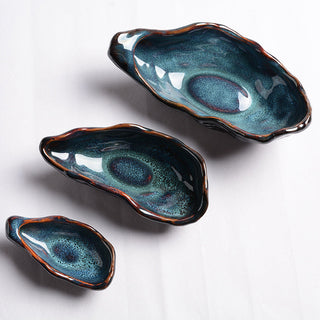
Overglaze decoration is fired on top of the main glaze, which leaves it more exposed to strong detergent than decoration under the glaze. It is worth confirming how a decorated plate handles your dish machine before you order it in quantity, and running a few through a week of service first.
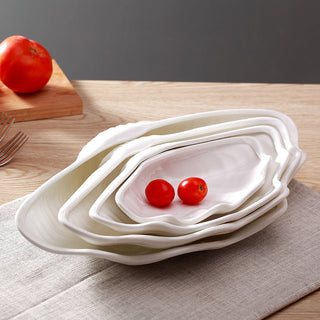
For a single oyster or a crudo course, a shell-shaped plate frames the portion without any bed at all. This one is a plain white ceramic clam shell in 8, 10, 12 and 14 inch sizes, and the maker rates it both dishwasher safe and refrigerator safe, so a stack can be chilled before service.
Crushed ice, rock salt or seaweed: which bed suits which dish?
Crushed ice suits raw oysters and clams, rock salt suits anything served hot, and seaweed is mostly decoration on top of one of the two. The bed has two jobs, holding shells level and holding temperature, and each material does them differently.
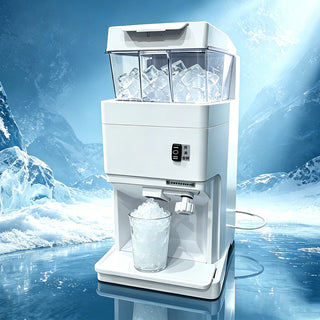
Crushed ice is the standard for a raw bar. Small pieces pack around each shell and keep it steady, while whole cubes leave gaps that let shells slide as the ice melts. Make the ice fine enough to press a shell into but not so fine that it turns to slush before the plate reaches the table. A dedicated crusher at the raw bar saves someone breaking bags of cubes with a mallet. The electric model below has a 6-liter hopper, a lid safety lock and an aluminum body, and the maker lists sashimi presentation among its uses alongside drinks.
Ice that has touched raw shellfish stays with the shellfish. Keep the raw bar's ice in its own bin with its own scoop, and never let it find its way into a drink. For sizing the machine that makes all of this ice, our guide on how to choose a commercial ice machine goes through output and bin size.
Rock salt is for oysters that come out of a salamander or oven: gratinated, Rockefeller-style, or grilled with butter. Ice would melt instantly under a hot shell, but coarse salt holds the shell steady, keeps it warm for longer and does not burn the guest's fingers the way a bare hot plate would. Use fresh salt for every plate that goes to a guest.
Seaweed looks good and does little on its own. Lay it over crushed ice for color, not in place of it.
Ice platters and seafood towers for sharing orders
A seafood tower is two or three trays of crushed ice stacked on a central stand, loaded with oysters, prawns, crab claws, clams and whelks for a table to share. In France the same idea is the plateau de fruits de mer. It is the highest-value order most raw bars sell, and the one guests photograph most, so the stand has to be steady and the ice has to last through a long lunch.
Look for trays with a drainage insert or a false bottom, so meltwater falls away from the seafood instead of pooling around it. Stands should be heavy at the base and made of stainless steel or plated metal that can go through a dish machine. Tiers that lift off separately are easier to load at the pass and to wash afterward.
We do not list seafood towers or ice platters in the catalog at the moment. They are usually made to a size that fits a restaurant's tables and trays, and we source them to order. Until a tower is on the pass, a large shallow platter with a thick layer of crushed ice does the same job at one level; the serveware collection has display pieces for buffet and counter work.
The counter behind the raw bar often does the selling before any tower leaves it. An open-top case such as the refrigerated seafood display with an ice deck holds shellfish at 0 to 4 °C in view of the room, which is covered in more detail in our guide to planning a seafood kitchen.
Which sushi plates and sashimi plates suit a raw bar?
Porcelain sushi plates in a size that frames the portion without crowding it suit most raw bars, because porcelain shrugs off soy and citrus and survives a dish machine. Wooden boards look traditional, but they need hand washing and oiling, and they are not in our catalog.
For single portions of sashimi, a 7-inch plate is a practical size. This porcelain sashimi plate has an irregular outline and comes in four colored glazes, from slate black to sapphire blue. Color is useful here. White fish and scallop read better on dark glaze, and tuna and salmon stand out on pale or blue.
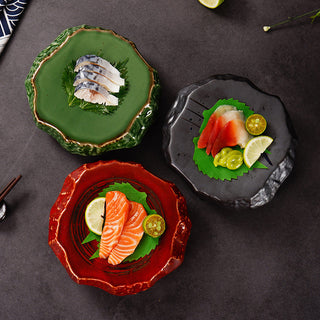
Omakase counters and tasting menus often mix plate styles across a meal, so each course arrives on something different. These handmade porcelain sushi plates come in four artisan styles, sold singly or as a matched set of four, and each piece varies slightly in shape.
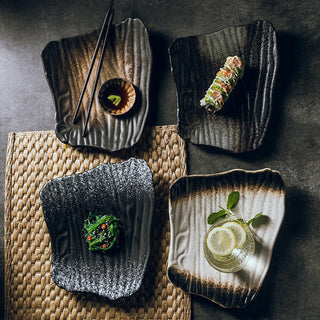
For banqueting or a larger room, the crackle-glaze slant plates are sold in sets of 20, and their raised, sloping rim gives height to nigiri or a small salad. The broader range of specialty plates and plates and bowls covers the rest of the table. If you are building a full Japanese counter, our guide to opening a sushi bar covers the fish, the rice and the knives.
How many oyster plates does a raw bar need?
Plan on enough oyster plates to cover every raw bar order in your busiest hour, plus the plates that will be in the dish machine or chilling at the same time. For most rooms that works out at roughly two to three times the number of tables that order oysters at once in the peak, not two to three per seat.
Work it out from sales rather than seats. If twelve tables order oysters in the busiest hour and a plate takes around forty minutes to come back from the table, through the wash and into the fridge to chill, you need the twelve on tables, about as many in the cycle, and a few spares. Irregular porcelain chips more often at the rim than round plates do, so keep a small reserve of each size rather than reordering one at a time.
Storage is the other constraint. Irregular and shell-shaped plates do not nest into neat stacks, and a tower takes up a shelf on its own. Measure the shelf before you order the tower.
One tool you will not find here is an oyster knife. Our catalog does not include shucking knives at the moment; the round-bladed seafood knife we list is built for filleting and portioning fish, not for opening shells. For a raw bar, buy short, stiff shucking knives separately, plus a cut-resistant glove for every person who opens oysters.
Plates and ice are the last step of the service; the table setting around them matters too, and our guide to choosing charger plates covers the layer under each cover.
Need a seafood tower that fits your tables, or oyster plates in a size we do not list? Send us your raw bar menu, tray sizes and how many sharing platters you sell on a busy night, and we will source serveware to match.


