


In short: a vacuum packaging machine is bought for shelf life and paid back in scheduling. It lets a kitchen do Tuesday's work on Monday, which is worth more than the extra days on a label — and it comes with one obligation, because removing oxygen changes which organisms you are worried about.
Every kitchen has the same structural problem: the work arrives in a four-hour burst and the labour is available all day. Prep-ahead is the standard answer, and what limits it is how long prepped food stays good.
Vacuum packing moves that limit. Portioned proteins, sauces, cut vegetables and cooked components hold several times longer sealed than covered in a tray, which turns a scramble into a schedule. That is the actual purchase — the shelf-life number on the chart is how it is sold, and the rota is where it shows up.
External or chamber: the difference is liquids
There are two mechanisms and they suit different kitchens.
An external machine grips the open end of a textured bag and sucks air out through it, then seals. The bag sits outside the machine, so bag size is almost unlimited, the unit is compact and cheap, and the consumable is embossed bag stock.
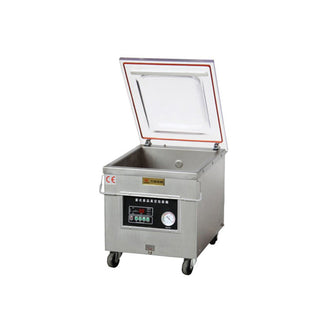
A chamber machine puts the whole bag inside a sealed box and evacuates the box, so pressure equalises inside and outside the bag. That matters for exactly one reason and it is a big one: liquids. In an external machine, dropping pressure makes soup, stock and marinade boil at room temperature and get pulled into the pump. In a chamber, nothing moves, because nothing is being sucked through the bag opening.
The practical rule: if you seal wet things — braises, sauces, stock, anything marinating in liquid — you want a chamber machine and it is worth waiting for. If you seal portioned proteins, cheese, dry prep and cut vegetables, an external machine does the job for a fraction of the money and takes far less bench space.
Most kitchens starting out are in the second category, and a tabletop unit is the right first machine.
Seal bar length decides what fits, and it is the spec people miss
Everything else on the datasheet is secondary to one dimension: how long the seal bar is. It sets the maximum width of bag you can close, and therefore what you can physically pack.
A 350 mm bar handles portioned steaks, fish fillets, cheese and standard prep. A whole rack of lamb, a large fish, a full gastronorm's worth of one item or a bulk ingredient bag needs 600 mm, and no amount of folding gets around it.
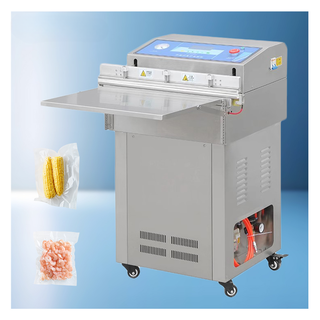
Two more numbers matter once the length is settled. Pump capacity decides cycle time, which is what makes the machine usable during prep rather than something people avoid. And a double seal — two parallel welds — is worth having on anything that will be frozen, because a single weld fails more often at low temperature than anyone expects.
Sous vide is the second reason to own one
Vacuum packing and precise water-bath cooking are the same purchase in most kitchens, because one enables the other: the bag holds the food in contact with the water, keeps it from taking on water, and keeps its juices where they belong.
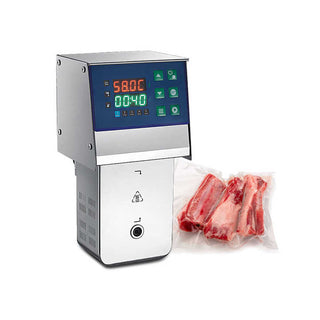
It changes what you demand of the sealer. A bag that will sit at 60 °C for six hours has a seal under sustained stress, so seal quality matters more than for cold storage, and the bag stock has to be rated for the temperature. It also means liquids come into it more often — marinades, butter, stock — which pushes the chamber-versus-external decision back onto the table.
The scheduling win is the same one as before, just larger: cook on Monday, chill, hold sealed, regenerate to order. That is the model most volume kitchens run on, and it depends entirely on the seal being reliable.
Marination goes from overnight to minutes
A vacuum tumbler is the specialist version of the same physics. Under vacuum, the muscle structure opens and the marinade is drawn in rather than sitting on the surface — so a job that takes twelve hours in a tray takes twenty minutes in a drum.
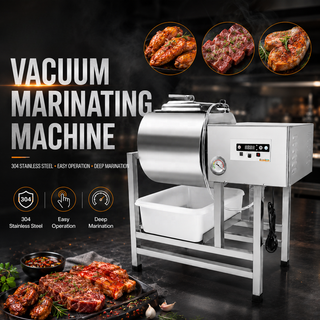
This is a butcher's, a barbecue kitchen's or a high-volume grill's machine rather than a general one. Where it earns its place is menus where marinated protein is most of the sale and the prep is currently done a day ahead by guesswork — it turns marination into a step you can do to order, and it improves yield because the liquid ends up inside the meat rather than in the tray.
When the pack is the shopfront
Vacuum bags are a back-of-house format. Anything a customer picks up wants to look like a product, and that is a tray rather than a bag.
A tray sealer welds film over a filled tray, and the version worth having flushes the pack with nitrogen first — modified atmosphere packaging, which displaces oxygen without collapsing the food. That is how a fresh salad, a sandwich or a portioned meal keeps its colour and its shape while still gaining days of shelf life.
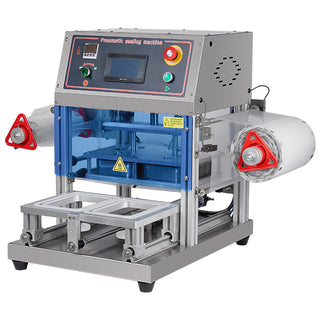
At small volume — a deli counter, a café doing a handful of takeaway pots, a ghost kitchen sealing sauce cups — a manual bench sealer does the same job without the nitrogen and without the floor space.
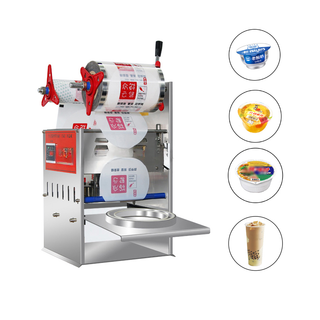
Which of the two you need is decided by whether the pack is travelling. Something eaten within a few hours needs a tidy lid; something sitting in a chiller for three days needs the atmosphere changed.
The safety part that belongs on the spec sheet
Removing oxygen does not make food safe. It changes which organisms can grow, and it removes the spoilage cues you rely on.
The organisms that matter in a sealed pack are the ones that prefer no oxygen, and unlike ordinary spoilage they do not announce themselves — a bag can be past it without smelling wrong or looking wrong. That is the whole risk profile of the technique in one sentence, and it is why vacuum packing is regulated more carefully than the equipment price suggests.
Three rules cover almost all of it in practice. Vacuum packing is not a substitute for refrigeration — sealed food goes in the fridge or the freezer, at the same temperatures as before. Chilled shelf life for vacuum-packed food is set by your own documented procedure rather than by a general chart, and in several jurisdictions extending beyond around ten days for chilled ready-to-eat product needs a validated process on file. And every pack carries a date, because you have just removed the ability to tell by looking.
Raw and ready-to-eat product also need separating properly at this step — same bench, same machine, different times and a clean-down between, because a sealed bag preserves whatever was on the food when it went in.
Labelling is part of the machine, not an afterthought
A pack with no date is a pack you will throw away, because nobody guesses on protein. Handwritten labels work at low volume and stop working the moment two people are prepping.
A coder prints the date, the batch and whatever else your procedure requires directly onto the pack, in a form that survives a chiller and a wet hand.
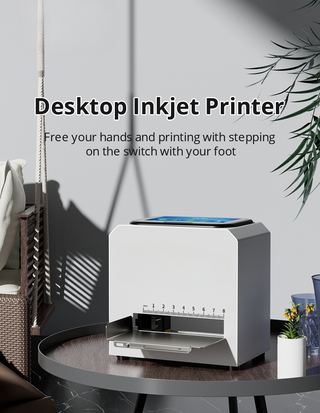
This is also the part an inspector looks at first, because it is the visible evidence that the documented procedure in the previous section actually happens.
Where kitchens buy the wrong vacuum packing machine
- Buying external and then sealing liquids. Stock and marinade boil under vacuum at room temperature and get pulled into the pump. It is the single most common way these machines die.
- Specifying on pump power instead of seal bar length. The bar sets what physically fits. A powerful machine with a 350 mm bar still cannot close a bag around a whole fish.
- Single-seal bags going into the freezer. A single weld fails at low temperature far more often than at chilled, and a failed seal in a freezer is invisible until service.
- Treating the shelf-life chart as the rule. Chilled shelf life for vacuum-packed product comes from your own documented procedure, and extended chilled life for ready-to-eat food needs that procedure validated.
- No date coding. Vacuum packing removes the smell-and-look test, so an undated pack is a pack with no information at all.
- Sealing raw and ready-to-eat on the same bench, back to back. The bag preserves whatever was on the food, including what came off the last job.
Not sure whether you need external, chamber or a tray sealer? Tell us what you would be packing and whether any of it is wet, and we will point you at the machine that fits the prep rather than the brochure.


