

The short version: a vending machine for hotels and hostels earns its space between midnight and seven, when the desk is shut. Stock water and forgotten toiletries first, take cards, and own it only if staff will restock it.
It is 1:40 in the morning and the last bus from the airport has just dropped four guests at your door. The check-in code works, the dorm is quiet, and nobody has eaten since the departure lounge. What they can buy in the next ten minutes, and whether their card works for it, is the whole case for a vending machine for hotels and hostels.
For a property of twenty to a hundred and fifty beds, a staffed night desk is often the first cost to go. The machine takes over the small part of that job, selling water, a toothbrush or a hot meal while nobody is on shift.
What does a guest need after reception closes?
Night demand is narrow and predictable. Guests want something to drink, something to eat, and the item they forgot to pack. A machine that covers those three categories well sells more than one with fifty snack varieties and no bottled water.
The profile differs between the two kinds of property. Hostel guests have a shared kitchen, so they buy instant noodles or bread to cook with, plus the cheapest possible snack. Guests at a small hotel with no restaurant after ten have nowhere to cook, and they pay for a ready meal, a cold beer or a proper coffee in the morning before the breakfast room opens.
Sales cluster late at night after arrivals and bars, and again early, before the first departures. A machine placed where people pass on the way in and on the way out catches both peaks, while one tucked beside the laundry room catches neither.
Types of vending machine for hotels and hostels
Most small properties need one combined snack-and-drink machine and nothing else. The other types in the table make sense once the first machine sells out regularly or the property has a clear gap, such as no food at all after 10pm.
| Type | What it sells | Size and power (maker's figures) | Where it fits |
|---|---|---|---|
| Refrigerated snack-and-drink combo | Chilled drinks, snacks, packaged sandwiches, toiletries | 800–1200 items; 1380 × 920 × 1950 mm; 750 W | The default first machine for 40+ beds |
| Cold drink combo | Cans, bottles, energy drinks | 150–200 units; 22-inch screen | A second machine on a busy floor or terrace |
| Compact touchscreen cabinet | Small mixed range | 20–150 items; 500 W | Small hotels and 20–30 bed hostels |
| Hot meal machine | Chilled meals heated to order | ~350 items; built-in 3 kW microwave; 1450 × 930 × 1930 mm | Properties with no kitchen open at night |
| Bottle machine with ID check | Beer, wine, spirits | 180–216 items; ID-card scan; 1000 W | Only where the license and local law allow it |
| Fresh orange juice machine | Juice squeezed to order | 300–600 oranges; about 45 s per cup | Hotels selling a paid breakfast add-on |
The combo cabinet is where to start because one machine covers every night-time category. This one holds 800 to 1,200 items, keeps its chilled section at 2–8 °C and takes cash with change as well as cards and phone payments. The maker lists it as ADA compliant, which matters in the US, where controls have to be reachable from a wheelchair.

Where drinks sell out first, a dedicated cold-drink cabinet beside the combo is simpler than a second combo, and its 22-inch screen doubles as a notice board for breakfast times or the Wi-Fi password.

A small hotel with twenty rooms rarely fills an 800-item cabinet before the stock goes stale. A compact touchscreen unit with cloud inventory is the better fit there, because stock turns over faster and the machine reports what is running low before a guest finds an empty slot.

What should a hostel vending machine stock?
Start with bottled water and the forgotten-item shelf, then add food, then think about hot drinks and alcohol. That order follows what guests ask the night porter for, in roughly the order they ask.
Drinks and snacks
Water is the best seller in almost every hostel machine. After it come soft drinks, energy drinks and the snacks that survive a backpack. In a hostel, add the basics people cook with in the guest kitchen: instant noodles, oats, a pint of milk if the machine has a chilled zone. Bottles and cans should sit on the refrigerated side; confectionery can live on the ambient spirals.
Toiletries and the things people forget
This shelf has the highest margin per slot and the fewest competitors at 2am. Toothbrushes, toothpaste, travel shampoo, earplugs, an eye mask, phone charging cables, plug adapters and, in a hostel, a padlock for the locker. None of these are perishable, so a slot can sit half full for a week without waste.
Check the delivery mechanism before loading anything awkward. Spiral machines drop items into a tray, which is fine for snacks and small boxes but not for glass or anything that can spill. Machines with a lift or a vacuum pick-up hand the item down gently, which is what glass bottles need.
Hot food
A hot meal machine makes sense when the nearest open kitchen is a fifteen-minute walk away at midnight. It stores meals chilled at 2–8 °C and heats them with a built-in 3 kW commercial microwave, so the product is a ready meal rather than something cooked from raw. The practical question is supply, because someone has to deliver fresh meals with a short shelf life on a schedule, and a small hostel may not sell enough to justify the run.

Larger hostels with a courtyard sometimes add an outdoor pizza vending machine that bakes in about 90 seconds. It draws 8.7 kW, so it needs its own supply, and it pays only with foot traffic beyond your own guests.
Coffee
Morning coffee before the breakfast room opens is a real gap at small hotels. Our catalog has no coin-operated coffee vending machine at the moment. What small properties use instead is a self-service bean-to-cup machine rated for about 250 cups a day, either included in the room rate or placed in a supervised breakfast area.
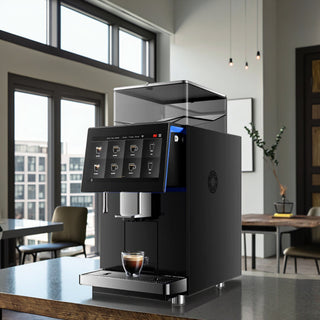
This model has no payment module, so treat it as part of breakfast rather than a revenue line. The bean-to-cup machines range covers the larger units.
Beer and wine
Alcohol from a machine is legal in some markets and not in others, and where it is allowed, the property's own license and age checks apply. The machine below scans an ID card before it releases a bottle, holds 180 to 216 items at temperatures from -3 to 25 °C, and uses a vacuum pick-up instead of a drop.

A hostel with a bar does not need one; a small hotel without a bar may. Confirm with your licensing authority before ordering, because some jurisdictions forbid unattended alcohol sales outright, ID scanner or not. For wine alone, a bottle machine with a lift holds 40 bottles of 750 ml.
Card, contactless or cash?
Take cards and phones first. International guests rarely carry local coins, and a machine that only takes cash loses exactly the late-arrival customer it was bought for.
Almost every machine in our vending machines range accepts cards, NFC wallets and QR payments, and several also take notes and coins. Keeping cash is a local decision. In a hostel full of students and backpackers, some guests still pay with coins; in a business hotel, cash acceptance mostly adds a coin box someone has to empty and a reason for a break-in.
Two technical details are worth asking about before ordering:
- The payment interface. Machines with an MDB-standard slot accept a wide range of card readers, so you can use the terminal your bank or payment provider supplies instead of the one fitted at the factory.
- The connection. Card payments and remote stock reports need a network. Lobby Wi-Fi drops at the worst moments, so a machine with a 4G module is the safer choice for a card-only setup.
Plan the refund path as well. When an item jams at 3am, the guest needs a phone number or a QR code on the machine that reaches someone. Cloud-managed machines let the owner check the sale remotely and refund the card the next morning, which settles most complaints before they reach a review site.
Where should a vending machine for hotels stand?
Put it in the lit area between the entrance and the stairs, within sight of a security camera, and at least a corridor away from the nearest bedroom. A compressor cabinet hums all night, and a dorm wall is thin.
Check three things on the plan before the delivery date. The first is a dedicated socket: 750 W for a combo cabinet, but a hot meal machine peaks with its microwave, and an outdoor pizza unit needs its own circuit. The second is the route in, because a 1950 mm cabinet has to pass through every door and turn on the way. The third is floor loading, particularly on an upper floor, since a full machine weighs far more than the cabinet alone.
In a hostel, the kitchen corridor often looks like the obvious spot. It is usually a worse one, because guests who are about to cook are not buying snacks. The entrance catches the arrivals, and the arrivals are the customers.
Should you buy a vending machine or let an operator place one?
Buy the machine if someone on your staff will restock it twice a week and you want to choose the stock. Let an operator place one if nobody has that time, and accept that the operator decides what goes in it.
| Own machine | Operator-placed machine | |
|---|---|---|
| Upfront cost | You buy the machine | Usually none |
| Sales income | All of the margin | A commission share, if any |
| Stock choice | Yours, including toiletries and local products | The operator's standard range |
| Restocking and cleaning | Your staff | The operator, on their schedule |
| Breakdowns | Your problem, with remote support from the maker | The operator's problem |
| Branding | Your wrap, your screen content | The operator's or a drinks brand's |
The catch for small properties is that operators place machines where the sales volume justifies the restock trip. A 20-room hotel or a 30-bed hostel may not qualify, or may get a drinks-only machine that ignores the toiletry shelf. That is usually the point at which owning makes sense.
If the machine is also meant to carry your brand, with the property's logo on the wrap and your own content on the screen, see the custom vending machines page. Branding changes the lead time but not the machine inside.
Where hotel vending goes wrong
- Buying for the lobby photo, not the 2am guest. A large cabinet full of chocolate with no water, no toothbrushes and no chargers looks busy and sells little.
- Cash only. It fails the late international arrival, who is the reason the machine exists.
- Glass on spirals. Bottles that drop into a tray break. Glass needs a lift or pick-up mechanism.
- No refund contact. A jammed item with no one to call turns a small loss into a one-star review.
- Placing it by the dorms. Compressor noise at night costs more in complaints than the machine earns.
For the rest of what a property buys once and lives with for years, from linen to laundry, see our guide to hotel supplies beyond the bed, and for the full build, the guide to opening a hotel.
Not sure which machine suits your night trade? Tell us the bed count, what is open nearby after midnight and whether you want to restock yourself, and we will suggest a machine and a starting stock list.


