

Asian restaurant equipment and supplies for cooking that happens at full gas — high-pressure wok ranges, extraction sized for the flame, refrigerated prep alongside, and warewashing that copes with what a wok section produces.
Thai, Chinese, Vietnamese and ramen kitchens differ on the menu and agree on the equipment: wok burners that actually reach wok heat, a rice cooker sized for a whole service, steam for the dim sum and stock side, and extraction heavy enough to cope with both.
Quantities assume a 70-seat room with two wok stations. Tableware is picked separately, since bowls and plates follow the cuisine rather than the kit. Send your floor plan and the covers you expect, and we adjust the counts before quoting.
Oval Platter
Black porcelain bowls for rice, noodles and soup — the plate a wok kitchen serves onto most.
Dining Chairs
Twelve sets seats roughly fifty covers, which is about what a single wok section can feed before the tickets start stacking up on the pass.
White bowls for broths and shared dishes, so the table reads as courses rather than one colour.
Pink gold / 6sets 24pcs
Cutlery for guests who do not use chopsticks — every Asian dining room needs both on the table.
28cm black
Rubber-faced, because a wok kitchen sends deep bowls of soup and noodles. A tray of those is the hardest load anyone carries across a dining room.
Booths along the wall for groups, which is how most tables in this format arrive.
Aimable spots so the food is lit and the room is not. A canteen lights the ceiling; a restaurant lights the plate.
6.5-inch speaker for LS-02 white
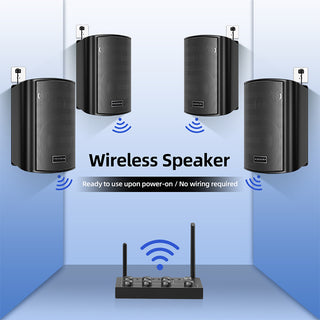
Even background music across the room, so nobody sits under the loud speaker.
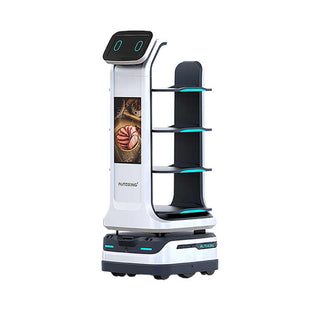
A running robot for a large floor — it carries the plates, the waiters keep the tables. Most useful in rooms where the walk from pass to table is long.
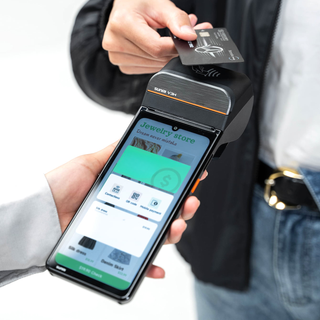
Standard Android POS software on a dual screen with the printer inside the body, so you pick your own delivery integrations instead of inheriting whatever came with the terminal.
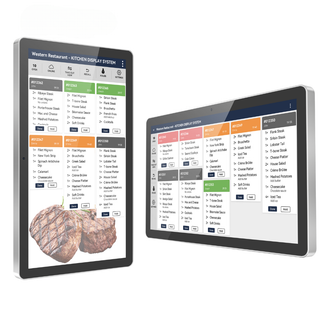
In a wok section a paper ticket is soaked within a minute of being spiked, so the order lives on a screen at the pass instead.
Handhelds for the floor — orders reach the wok station while the waiter is still at the table.
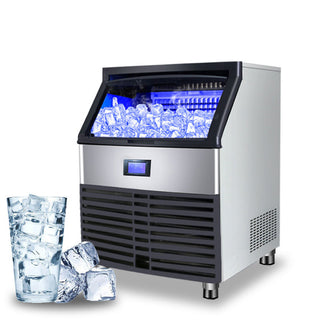
100 kg/24hours
Soft drinks and beer go out over ice through a whole service. Bagged ice runs out at the second sitting, and nobody leaves the pass to fetch more.
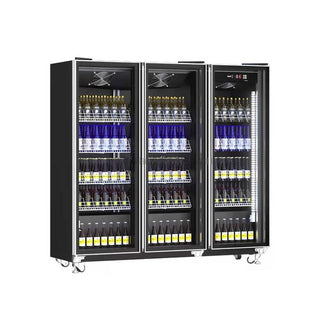
Three doors of beer and soft drinks where the guest can see them. Spicy food sells cold drinks, and people order the second one because it is standing there in front of them.
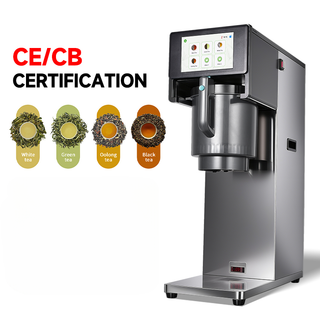
Free jasmine tea on every table is the house standard — brewed in batch, not cup by cup.
35L/H
Boiling water on tap for tea and service, so the kettle stops being a bottleneck.
Soft drinks poured to order instead of stocked in bottles. A wok restaurant sells more soft drinks than beer, and crates of bottles eat the fridge space the beer needs.
A screen menu for the lunch trade, where the list is six dishes and changes weekly. Reprinting a laminated board every Monday is how a wok kitchen ends up with last month's prices on the wall.
1 Taps
Cold lager on tap next to spicy food — a small countertop dispenser is all the room a wok kitchen has for it.
Air cooling
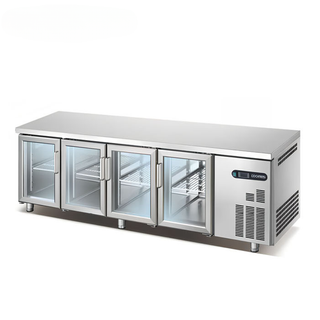
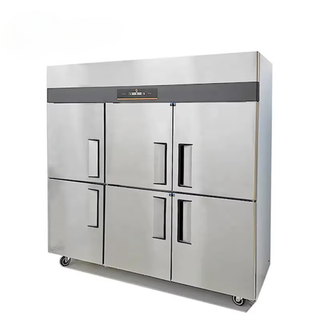
Four refrigerated doors under the worktop put the prepped mise within one turn of the burner. A wok dish is finished in ninety seconds and nobody has time to cross the kitchen for it.
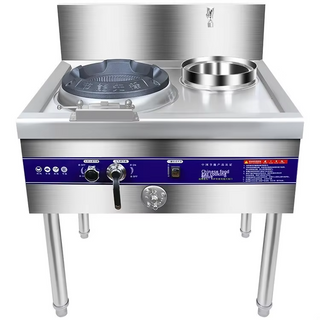
High-pressure stir-fry burners — the flame a wok needs to sear rather than stew. Two stations, because one wok is a single-dish-at-a-time kitchen.
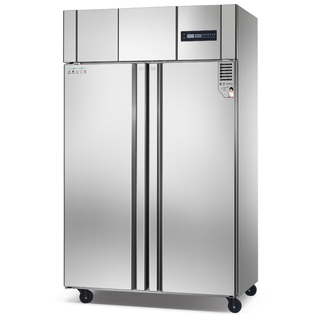
The day's produce, protein and prepped sauces in one reach-in beside the line. A wok kitchen preps in the morning for a service that fires in eight-minute bursts — the cook cannot be walking to a store room mid-dish.
201 Stainless Steel
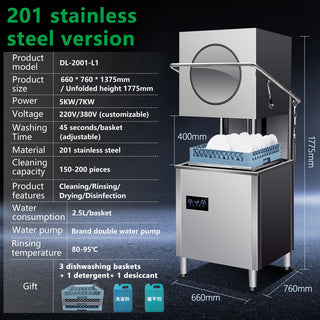
A rack clears every minute, which is roughly the rate bowls, plates and steamer trays come back from fifty covers eating in rounds.
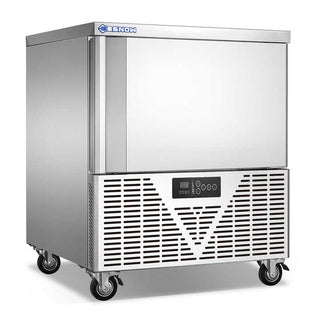
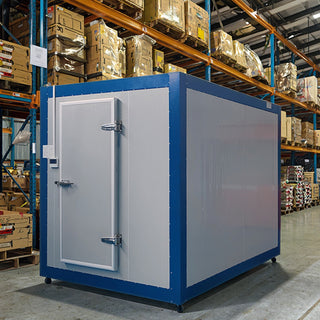
Half an Asian menu arrives frozen and has to stay that way until it hits the pan. A dumpling that thawed once and was refrozen splits in the oil and empties itself into it.
Stainless Steel 304
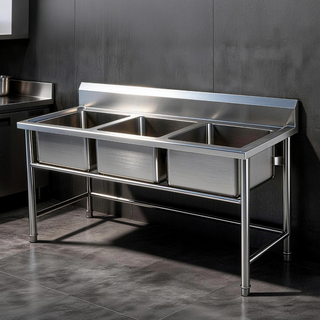
Woks and stock pots never see a machine, so these three bowls carry the wash, rinse and sanitise sequence for everything heavy in the kitchen.
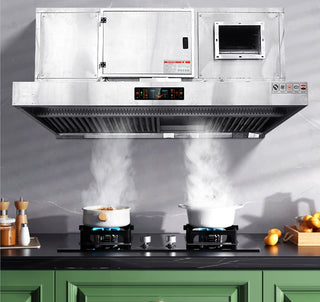
Wok cooking throws the heaviest vapour load of any technique in a commercial kitchen. At 6000 m3/h the room is still workable in the fourth hour of service, which is where an under-specified hood gives up.
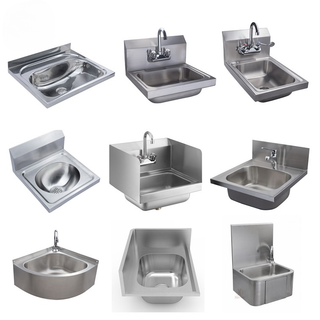
Raw protein gets portioned at the wok line, again on the prep bench and again at the wash-up, so each of those stations gets its own sink.
7L
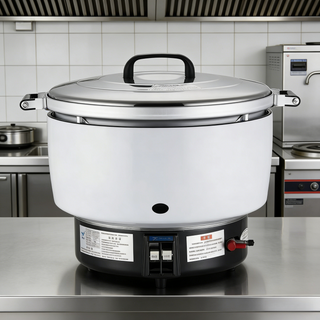
Gas rice cooker sized for a whole service. Rice is the one item that cannot run out mid-shift, and a domestic cooker will not carry 70 covers.
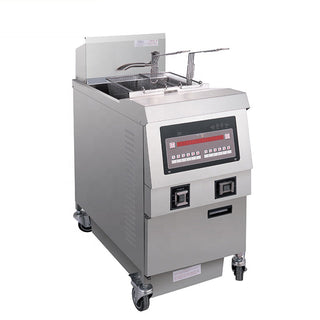
Two 25-litre wells beside the wok range: spring rolls and prawn crackers in one, battered meat in the other. Share the oil and the first sweet-and-sour of the evening tastes of the last one.
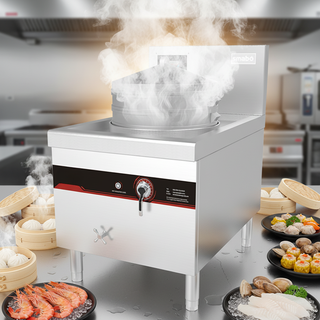
Six trays of steaming for dim sum, buns and vegetables — capacity that a wok station cannot cover without stopping.
300 kg/h
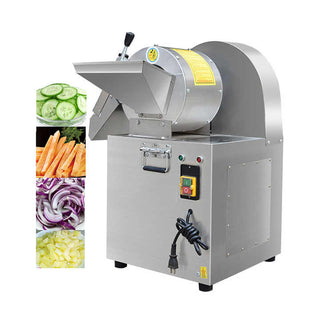
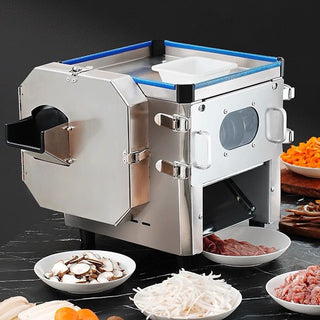
Between 300 and 800 kg an hour of vegetable prep decides whether the kitchen opens with one prep cook in the morning or three.
33 liters of pressure cooking for broth and braises, in hours rather than a full day.
850 W slicer, 3 to 8 mm — thin-sliced beef and pork for hotpot, stir-fry and ramen toppings.
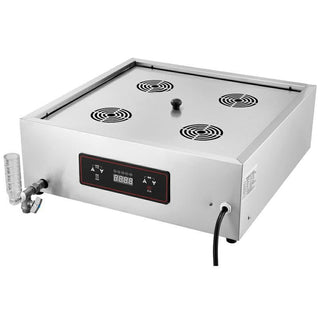
Seven induction wells for bao and dim sum baskets. Induction under each well means the steamer holds temperature between services instead of being relit.
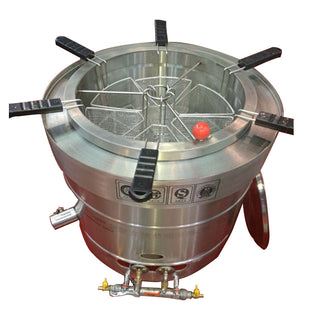
Six independent baskets for noodles and dumplings, so a noodle order does not wait behind a dumpling order in the same water.
Wall cabinet that sterilizes knives and boards between shifts — the piece an inspector looks for when the menu has raw protein on it.
A programmed wok that holds one recipe at one heat all night — it takes the repeat dishes off the line so the chef keeps the wok range for what needs a hand.
Noodles made in-house the same morning they are served. The texture difference is the reason a noodle house is worth a queue.
Four tiers of dim sum on the pass, at service temperature, without opening the big steaming cabinet.
Open burners beside the wok range for stocks, sauces and everything that simmers rather than flashes.
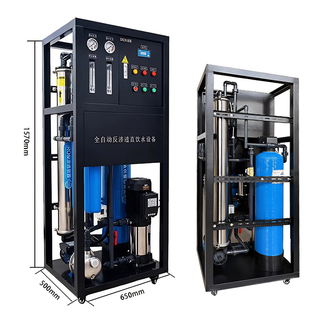
Steam, ice and tea all start from the mains here, and scale takes out a steamer or a boiler faster than any other fault in the room.
A knife that lives on the prep bench rather than being pulled off the pass, so whoever is breaking down vegetables at ten in the morning has something sharp to do it with.
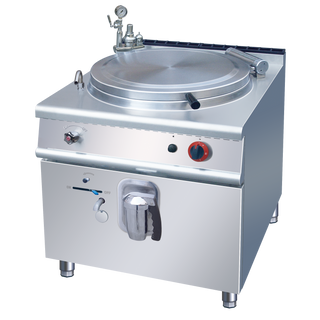
A 100-liter double-jacketed kettle for a ramen or pho operation where the stock is the product.
3 trays
House-made dumplings come off a production morning by the hundred, and pulling them through the freezing range fast is how that morning stretches to a week.
7MM
Slices, shreds and dices without changing machines. A wok menu is thirty dishes drawn from the same dozen vegetables, so prep is one long cutting job rather than several short ones.
Grinds prep waste at the sink instead of carrying it to the bin. A wok kitchen produces vegetable trim by the bucket.
Potstickers cooked in a single pass — sear, water, lid, done — so gyoza stop tying up a wok burner.
Portioned meat and marinades sealed for the walk-in — the cheapest way to stop prep waste.
Pak choi, sprouts and herbs arrive by the crate rather than the box, in a volume no reach-in holds for two days and none of it alive after three.
Air sterilisation over the prep area, where raw and finished food share a room.
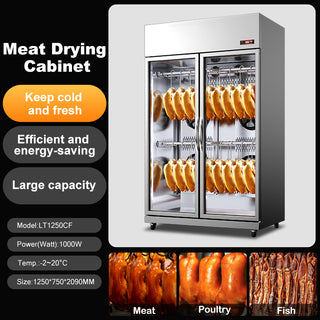
For a kitchen that hangs its own duck. Air-drying the skin overnight in moving cold air is what separates roast duck from roast meat, and a walk-in will not do it.
40*60cm (15.75*23.62in)
Ten backlit panels for a menu that runs to sixty dishes across noodles, rice and stir-fry. Posters swap from the front, so a sold-out line is off the board in a minute.
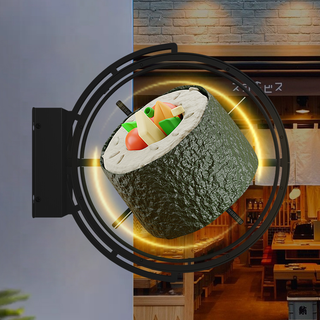
Fascia sign plus the plates at the entrance and the delivery door. Round faces read at an angle, which is how anyone walking a side street sees a sign at all.
Your name in neon on the wall — the thing that gets photographed and geotagged.
Double Sided / Rechargeable
The lit A-frame on the pavement that converts foot traffic into the first table of the evening.
Charges itself, so it can stand where the lunch trade walks rather than where the wiring reaches. A wok kitchen makes most of its money at midday, and midday is a footfall business.
A floating image of a wok on the fire, in the window. Asian kitchens sell the flame, and a printed photograph of noodles does not carry it.
Bowls, plates and serving ware are cuisine decisions — a ramen bowl and a dim sum plate are not interchangeable, and neither is what you serve them on. We stock the range and price it with the rest of the order.
Catalog prices at the quantities listed, excluding shipping, duties and installation. Send a request and we confirm current pricing and lead times for your build.
Request received
We are pricing the setup now and will come back with a quote and lead times, usually within one business day.
That did not go through
Something broke on the way to us. Try again, or write to sales@barequip.pro and we will pick it up from there.