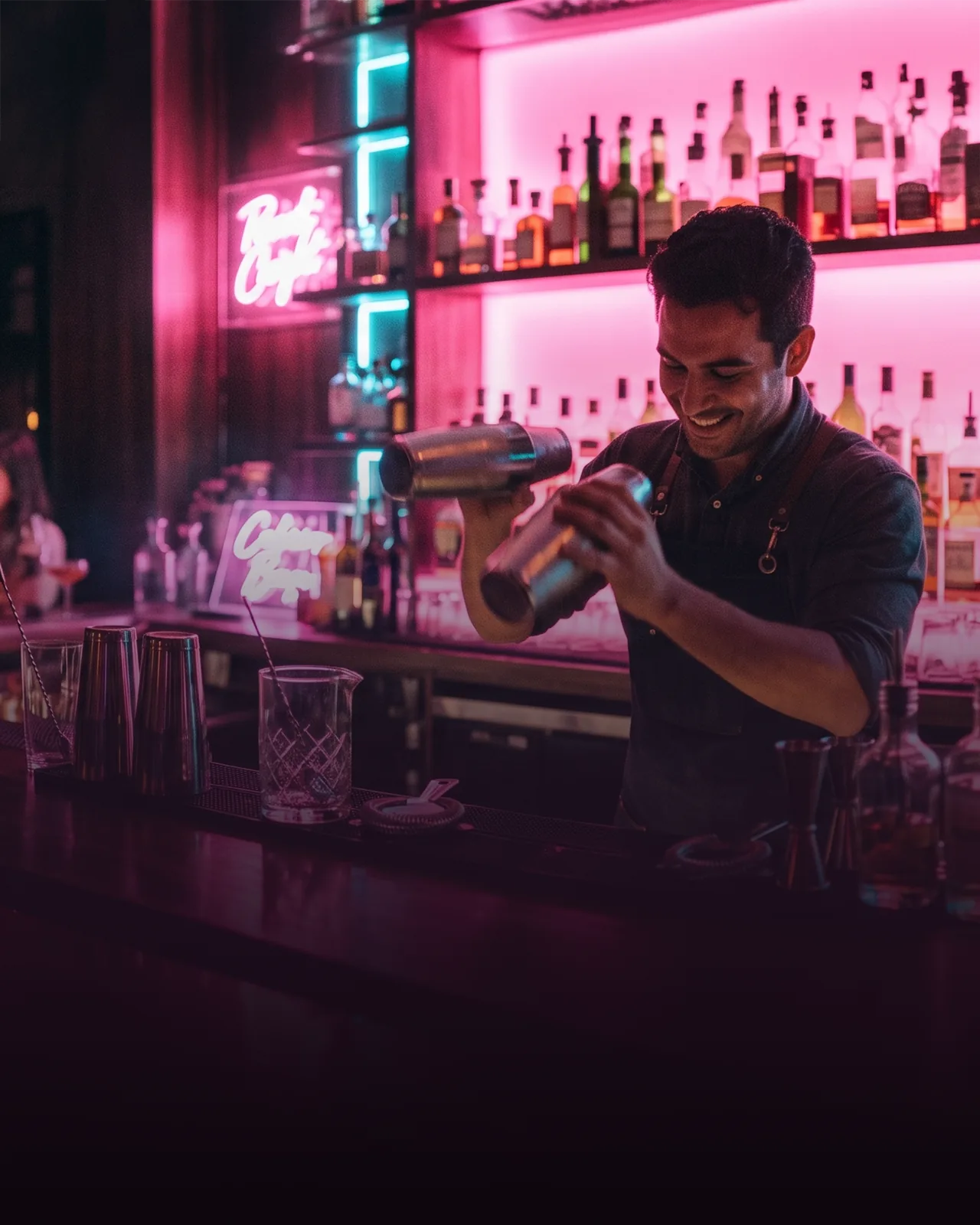


Count bar tools per bartender, not per bar. A station built for volume puts tin-on-tin shakers and marked jiggers at every position, with a second and third set cycling through the glasswasher.
At eleven on a Saturday a busy cocktail station has more tools in motion than on the rail. Two sets of tins are in the bartenders' hands, one is full of ice waiting for a drink, and another is in a glasswasher rack. A fifth has walked off on a server's tray. Buy bar tools for the number of bartenders and the station runs short by ten o'clock. Buy them for the number of drinks moving through it in an hour and it keeps up.
Volume changes what a good tool is, too. A shaker that looks beautiful on a home bar can be the slowest thing on a commercial one, and a gold-plated jigger that impresses on day one shows bare metal by month three.
Tin-on-tin or cobbler: which shaker survives a rush?
Tin-on-tin is the standard on busy bars. Two stainless tins, usually a large one of about 28 oz (830 ml) and a small one of about 18 oz (530 ml), seal with a tap of the palm and chill the drink fast. Steel cannot shatter into the ice well, and the tins nest, so a stack takes up little room on the back counter.
| Shaker | How it works | Speed at volume | Weak point | Where it fits |
|---|---|---|---|---|
| Tin-on-tin | Large and small stainless tins pressed together; separate strainer | Fastest; seals and opens with one strike | Takes a few shifts to learn the seal | Any busy cocktail station |
| Boston (tin on glass) | Tin over a mixing glass; separate strainer | Fast | Glass chips and breaks near the ice well | Bars that like the guest to see the build |
| Cobbler | Three pieces with a built-in strainer and cap | Slow; cap sticks when the metal is cold | Small strainer holes clog with pulp and mint | Hotel room service, events, low-volume bars |
| Parisian (French) | Two metal pieces, no built-in strainer | Medium | Can be hard to break apart; fewer sizes | Bars where the look of the shaker matters |
The cobbler's problem at volume is the cap. When the tin gets cold the metal contracts around it and the bartender loses seconds prying it loose, then the built-in strainer lets through ice shards and clogs on citrus pulp. Tin on glass is quick, but glass near an ice well is a risk every bar manager knows. One chipped mixing glass means emptying and melting the whole well, in the middle of service.
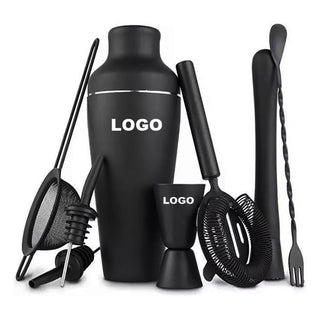
Kits built around a stainless Boston shaker bring the tins together with the smaller tools, so each position starts with a matching set. This one is an 8-piece matte black kit with a 600 ml shaker. Its minimum order of 12 kits suits a bar planning two or three positions with spares.
A station that shakes one drink hundreds of times a night, such as a milkshake or protein menu in a family venue, can hand that drink to a machine. A motorized shaker in 304 stainless mixes one or two cups hands-free, which frees the bartender for drinks that need judgment.

Measuring and straining tools that keep every pour the same
Consistency at volume comes from a jigger in every hand. Free pouring looks fast, but a bartender who pours a little long on every drink adds up to whole bottles the till never sees. A jigger also means the fortieth margarita tastes like the first.
Jiggers
Choose a double jigger with internal lines, so one tool covers the common measures. The Japanese style (tall and narrow, 30 and 60 ml, marked inside at 15, 22.5 and 45 ml) reads well at a glance and is harder to overpour than a wide bell. In the United States, 1 oz and 2 oz cups with half-ounce lines are the equivalent.
In the UK, gin, rum, vodka and whisky served on their own must be sold in 25 ml or 35 ml measures, or multiples, and the measure must be stamped or government-approved. Cocktails of three or more liquids are exempt, but most bars still keep a set of stamped thimble measures on the station for straight spirits.
Strainers and spoons
Each position needs a Hawthorne strainer that fits the small tin snugly, with a tight spring that holds back ice shards. Add a fine-mesh cone for double straining drinks with fruit, herbs or egg white, since those leave pulp that shows in a coupe. A julep strainer is only needed if the bar stirs in mixing glasses rather than tins.
Bar spoons of 30 to 40 cm reach the bottom of a large tin or mixing glass. Buy spoons with a solid, well-joined bowl, because thin stamped spoons bend in a few weeks of hard stirring and a bent spoon splashes. A dipper well with running water at each station keeps spoons clean between drinks without a trip to the sink.
| Tool | What to check | Why it matters at volume |
|---|---|---|
| Jigger | Internal lines, legible after washing | Measures without reaching for a second tool |
| Hawthorne strainer | Tight coil, fits the small tin | Stops ice chips; no gap at the rim |
| Fine strainer | Stiff mesh, rim that rests on the glass | Clean drinks with fruit or egg white |
| Bar spoon | 30–40 cm, solid bowl, no seam at the joint | Does not bend or trap residue |
| Muddler | Stainless or plastic, no varnished wood | Varnish flakes into the drink |
What ice tools belong at a cocktail station?
At minimum, a metal or plastic scoop for every ice well, and a way to make the ice formats the menu calls for. The scoop rule is absolute. Never scoop with a glass, because a chip of glass in cubed ice is invisible and the only safe fix is to empty the well. Keep the scoop in a holder or with the handle clear of the ice, as food codes generally require, though local rules vary.
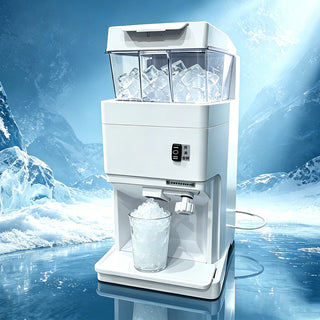
Crushed ice is where a station either keeps pace or stalls. A canvas Lewis bag and a mallet suit a quiet bar. For a menu with swizzles, juleps or tiki drinks, an electric crusher next to the well keeps up with the peak. The maker rates this 430 W unit at 6 kg a minute, which is well beyond what one station can pour.
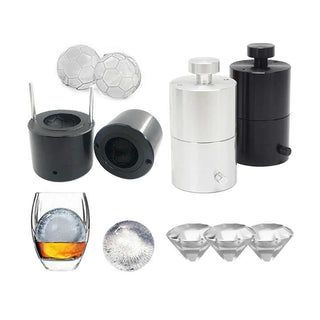
Large clear ice for spirits served on the rocks is the opposite problem, with low volume and a lot of presentation. A press shapes a block into a 60 mm sphere in seconds using the heat of its aluminum body, so the bar can prepare spheres to order instead of storing molded ones.
All of this assumes the cube supply is sized correctly. Our guide to choosing a commercial ice machine covers output per day and bin size, and the ice crushers collection lists output ratings side by side.
Bar tools that survive the glasswasher
Plain 304 stainless steel (also sold as 18/8) is the finish that lasts. It goes through a commercial glasswasher several times a shift, takes the heat of the rinse and the detergent, and comes out looking the same after a year.
Colored finishes vary more. Copper and gold plating are thin layers over steel, and the detergent and heat of a glasswasher wear through them at the rim and the base first. Matte black paint or powder coat chips when tins are struck together, which is how tin-on-tin shakers are opened hundreds of times a night. PVD coatings are much harder and hold up far better, so if the bar wants a colored set, ask whether the finish is PVD before ordering a full station's worth. If the supplier cannot say, keep the colored set for display and guest-facing moments, and run steel on the working rail.
Weighted tins (with a thicker base) hold their shape longer than thin ones, which dent after a few falls onto tile. A dented tin no longer seals and becomes the one nobody wants to use.
How many sets of bar tools does each station need?
Plan three of each shaker and jigger per bartender position, and two of the smaller tools. One set is in use, one is washing, and one covers a loss or a dent. The table below turns that into a count by volume.
| Drinks per peak hour | Bartender positions | Tin sets | Jiggers | Hawthorne + fine strainers | Bar spoons |
|---|---|---|---|---|---|
| Up to 60 | 1 | 3 | 3 | 2 + 2 | 2 |
| 60–120 | 2 | 6 | 6 | 4 + 3 | 4 |
| 120–200 | 3 | 9 | 9 | 6 + 4 | 6 |
| 200+ | 4 or more, two stations | 12+ | 12+ | 8 + 5 | 8 |
A dedicated barback changes the numbers more than anything else in the table. With someone running tools to the glasswasher and back all night, two sets per position are enough. Without one, add a fourth set of tins for every position, because the dirty ones pile up in the dump sink until the rush ends.
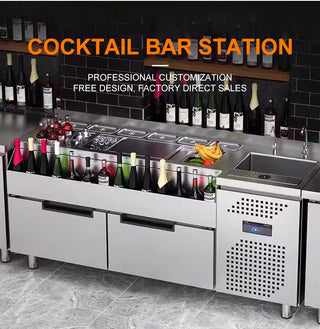
The tools also need a place on the station. A made-to-order refrigerated underbar gives each position its own ice well and speed rail, with a tool channel and dipper well built into the layout rather than added later. Our guide on how to open a cocktail bar covers how the menu decides the rest of that station.
For events and terraces, the same tool count applies to a mobile station. This stainless counter on casters is 180 cm long and 80 cm deep, enough for two positions working side by side.

The bar tools collection and the cocktail stations and underbar collection cover the rest of the rail.
Fitting out a station for a busy menu? Tell us how many drinks you expect in the peak hour and how many bartenders work it, and we will put together a tool count and an underbar layout to match.


