


In short: a rooftop pays according to how many months it trades, and that is the real question behind how to open a rooftop bar. The roof's load limit, the size of the lift and the wind at height decide that long before the cocktail list does.
On a clear evening in July, a rooftop bar sells itself; the view does the marketing and the queue forms at the lift. The same roof on a wet Tuesday in March is an empty deck with the parasols strapped shut, while the rent keeps arriving at the same rate. How to open a rooftop bar is really a decision about how much of the year that second picture covers.
Three constraints set the answer, and none of them is on the drinks menu. The roof has a load limit that caps both guests and heavy kit. Everything the bar uses arrives through one lift, or up the stairs. And wind at height behaves differently from wind at street level, which changes what can stand on the deck and when it has to come down.
Can the roof carry a bar?
Only a structural engineer can tell you, and that report is the first thing to pay for, before the lease is signed if you can manage it. Roofs are designed for the loads the architect expected, and a crowd standing shoulder to shoulder is one of the heaviest loads a floor can be asked to carry. Plenty of flat roofs were designed for maintenance access and a bit of snow, not for 150 people and a bar.
The engineer will want the full list of what goes up, so write it down honestly. People are the big number, but the kit adds point loads in awkward places:
- The bar counter with a loaded ice bin and bottle wells, plus under-counter fridges full of stock.
- Water: parasol bases filled for ballast, planters with wet soil, a hot tub or plunge pool if the concept has one. A liter weighs a kilogram, and that adds up fast.
- Structures. A louvered pergola sits on a few posts, so its weight arrives on small footprints. The aluminum model we carry is rated for a 200 kg/m² snow load, which is a useful figure to hand the engineer, because what the pergola can hold and what the roof under its posts can hold are separate questions.
- Kegs and gas cylinders, which get stored in one corner and quietly concentrate weight there.
The answer often shapes the concept: a roof that takes 60 standing guests but not 150 is a cocktail terrace with table service, not a party deck, and it's better to learn that from a report than after the fit-out.
Check the waterproofing too. Every fixing through the membrane is a future leak into someone else's office or hotel room below, which is why rooftops lean on ballasted bases and free-standing furniture.
Summer only, three seasons or all year: how long is your season?
Decide the season length before you buy anything, because it determines the fit-out budget and how you staff the place. A summer-only rooftop is a cheap build with a short earning window; an all-year rooftop is closer to building a room with a view.
| Summer only | Three seasons | All year | |
|---|---|---|---|
| Trading window | Roughly May to September, weather permitting | March or April to October or November | Every month, with a quieter winter |
| What the roof needs | Shade, a bar, secure storage | Partial cover, radiant heat, wind screens on the exposed side | A closable roof (louvered or retractable), side blinds, fixed heating |
| Where the money goes | Bar kit, furniture, parasols | Heaters and cover become the big-ticket lines | Structure and building work outweigh the bar equipment |
| Staffing | Seasonal team, hired each spring | A core team plus summer extras | Permanent staff, rotas like an indoor venue |
| Main risk | A wet June wipes out a quarter of the year | Cold snaps in shoulder months | Planning consent and structural cost for the cover |
Most rooftops that last end up in the middle column. The first summer pays, the operator notices that the terrace was empty from mid-September, and the second year's budget goes on heat and cover. Planning for three seasons from the start is cheaper than retrofitting it, because the power supply for heaters and the fixings for a pergola are easiest to install before the deck goes down.
An all-year rooftop in a cold climate is a different business. Once the roof closes and the blinds come down, it is an indoor bar with a view and gets inspected and staffed like one. It suits a hotel, which already has the lift and a guest base that wants a drink in January.
Which kit suits each stage is a separate question; start with our patio heaters and shade structures.
Everything goes up in the lift
A rooftop bar is only as fast as its lift. Every keg and bin bag makes the trip, and on a busy night the lift is carrying guests as well. Before choosing any equipment, measure the car: internal width, depth, height, door opening and rated load. Then check whether it is a goods lift you can book or a passenger lift the building shares.
Those measurements rule out more kit than budgets do. A fridge that won't fit the lift door gets craned or carried up, with building management's permission. Ask for crated dimensions, not unit sizes.
So design for as few trips as possible during service.
Make the ice on the roof
Ice is the heaviest thing a bar goes through in a night, and hauling bags up from a basement machine mid-service is where rooftop bars lose drinks. A machine on the roof, plumbed in, removes that trip entirely. Our air-cooled cube ice maker makes 80, 100 or 120 kg a day depending on the model, in a stainless body 600 by 700 mm at the base and 930 mm tall, which fits most service lifts.
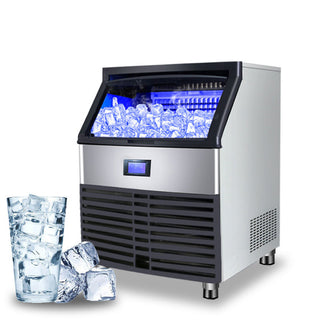
Two cautions for a roof. Air-cooled ice machines lose output as the surrounding air gets hotter, so a machine in the sun on a 32°C evening makes less ice than its rating; shade it, ventilate it, and consider the water-cooled condensing option the manufacturer offers. And size it to your hottest weekend, not an average night. Our guide to sizing an ice machine works through the numbers, and the full range is under ice makers.
Pour mixers from a box, not a bottle
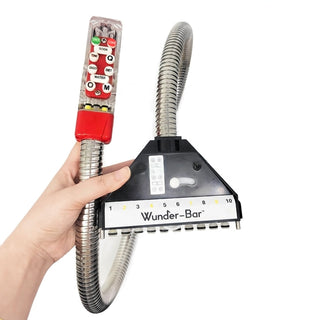
Soft drinks and mixers make up a big share of a rooftop's volume in the early evening, and in bottles they are heavy and leave glass to carry back down. A post-mix system turns syrup from bag-in-box packs into chilled soda at the gun, so the lift carries a few boxes instead of stacked crates. Ours has 10 buttons and an under-counter chiller holding 2 to 6°C; the chiller unit is 510 mm wide, 1,150 mm deep and 940 mm high, so check it against the lift door before ordering. More configurations are in soda guns.
Keep a night's stock cold behind the bar
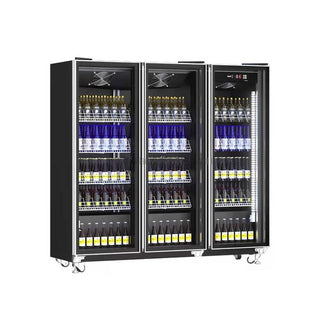
The rule of thumb for a rooftop is that the bar should hold everything it needs for a full service without anyone going downstairs. That means more chilled storage than a ground-floor bar of the same size. A three-door glass-fronted bar fridge covers beer, white wine and prepared mixers with fan cooling across 0 to 20°C. Keep it out of direct sun: a glass door facing west works hard on a summer evening, and the compressor will tell you about it.
Waste goes the other way. Empties and bins have to come down, ideally after close rather than through the guest lift at 10 pm, so plan a lockable holding area on the roof for glass and recycling. Other chilled options sit in display fridges.
What does wind do to a rooftop bar?
It shortens the evening and moves anything that isn't fixed. Wind is stronger at height than at street level and speeds up around parapets and plant rooms, so a gentle breeze in the street can be a gust on the roof. Menus and empty glasses on high tables go first; an open parasol catching a gust is a genuine hazard to guests and to people on the street below.
Good operators write a wind procedure before opening day. At a set wind speed the parasols close and get strapped; at a higher one, the exposed edge is cleared and tables move to the sheltered side. A cheap anemometer on the roof takes the guesswork out, and it means the duty manager is following a rule rather than arguing with a table of eight about their parasol.
Wind also decides the layout. Put the bar and the heavy kit on the sheltered side, keep glass screens on the prevailing-wind edge if the structure allows fixing them, and choose furniture heavy enough to stay put. Gas heaters struggle in strong wind too: the flame gets blown about and most of the heat disappears, which is one reason covered rooftops lean towards electric infrared fixed under the roof.
If the budget stretches to a closable roof, pick one rated for the site's worst days. The louvered aluminum pergola we supply is rated for winds up to 220 km/h with the blades closed, and zip blinds can be added on the windward sides. On a roof, that rating only counts if the fixings and the structure beneath are designed for the same load, which brings you back to the engineer.
Running service four floors up
Staffing a rooftop costs more per drink than staffing a street-level bar, because of the distance. Glass collection takes longer, runners spend time in the lift, and one bartender off the floor fetching stock leaves the bar short at the worst moment. Budget at least one more person per shift than a same-sized bar downstairs would need, and give that person the logistics: restocking, glass, the lift.
Table ordering helps on a big deck, because it stops the whole terrace from queuing at a single bar. The screens need to survive the setting. Our IP65 touch monitor is sealed at the front against rain and hosing, runs from -10 to +65°C, and mounts on a standard VESA bracket, so it can take orders at a covered bar or serving hatch. Its 350 cd/m² brightness is fine under a roof and weak in direct sun, so mount it in shade. Other formats are in interactive menus.

Food follows the same logic. Plates from a kitchen several floors down arrive cold, so most rooftops run a short menu finished at a small station up top.
After dark: lighting the deck without losing the neighbors
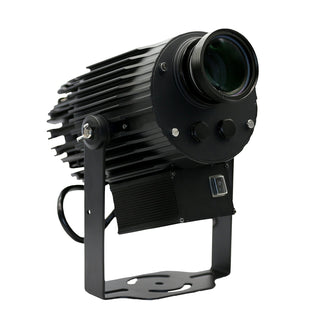
Evenings carry most of a rooftop's revenue outside summer, since the view at night is part of what people pay for. Lighting has to be rated for outdoors, and the brand can go on the deck too: a gobo projector throws a logo onto the floor, a wall or the underside of a canopy. The 150 W model we stock is IP65, throws from 5 to 150 m, dims, and rotates the image, which gives it enough output to stay visible against city light. Our guide to choosing a gobo projector explains how throw and wattage relate, and the range is under gobo projectors.
Sound is where rooftops lose their late hours. With no walls to contain it, music from a roof carries to windows several streets away, and a single organized group of residents can reshape a license at review. Fit a sound limiter from day one, point speakers down and in toward the seating rather than out at the skyline, and set an earlier cut-off for amplified music outside than inside. It's much easier to open quiet and add volume than to win back hours after a complaint.
How to open a rooftop bar that passes inspection
A rooftop needs the same approvals as any bar: business registration, a food-safety registration or permit, an alcohol license, and fire and premises sign-off. What changes is the emphasis. Inspectors and licensing officers spend their time on the roof itself, and the questions below are the ones to have answers for before they visit. We've drawn on four markets where rooftop bars are common: the UAE, the US, the UK and Australia.
"How many people will be up here, and how do they get down?"
Escape routes from an elevated floor get more scrutiny than anything else. In the UK you'll need a fire risk assessment that covers the roof terrace. In the US, the certificate of occupancy and fire-code occupancy limits set how many people can be on the roof, and a tight stair will cap your numbers regardless of the seating plan. In Dubai, Dubai Municipality and Civil Defence clearance cover fire safety; in Australia, a fire safety statement forms part of premises approval. Your engineer's load figure and the fire strategy's occupancy figure are separate limits, and the lower one is your capacity.
"Is the roof inside your licensed area?"
An alcohol license is tied to a defined area, so the terrace has to be in it. In the UK that is the plan attached to the Premises Licence from the council, with a Personal Licence holder named as Designated Premises Supervisor; the operating schedule and hours are central to the application, and it is advertised publicly. In Australia you apply to the state or territory liquor regulator for an on-premises license; in NSW, venues up to 120 patrons can use the dedicated Small Bar license, which suits a modest rooftop. In the US, the state ABC board issues the license, often with county involvement, and it is the slowest step, sometimes months and sometimes capped by quota. Add the roof to the application from the start rather than as a variation later.
"Where is alcohol actually allowed to be served?"
This question matters most in the UAE. Alcohol service in Dubai goes through Dubai Police GHQ and the Department of Economy and Tourism (DET), in Abu Dhabi through the Department of Culture and Tourism, and it is generally confined to hotels and licensed venues, with minimum distances from mosques and schools. That's why most rooftop bars in Dubai sit on top of hotels. A trade license with an F&B activity in an eligible zone comes first, and security staff need SIRA licenses.
"Who is serving, and are they trained?"
In Australia every staff member who serves alcohol needs a current RSA card, and in NSW it renews every two years from 2026. US venues need a health department permit and food-handler certification such as ServSafe, and UK Personal Licence holders need the APLH qualification and a basic DBS check. Seasonal rooftops hire a new team each spring, so build certification into the hiring timeline.
"What will the neighbors hear?"
Expect noise to be the tightest condition on the license. UK licenses for outdoor areas commonly carry noise conditions set through the licensing process; in Dubai, entertainment permits through the DET set the show type and hours, sound included; US cities often require a separate entertainment permit for amplified music; and music of any kind needs its own license, from PPL PRS (TheMusicLicence) in the UK, OneMusic Australia, or in the US from ASCAP and BMI, plus SESAC. Bring your sound limiter settings and speaker plan to the conversation; it shows the officer the problem is already handled.
Treat this as an overview, not legal advice. Outdoor-area rules, noise limits and fire requirements for elevated spaces vary by city and even by building, so confirm the current requirements with your local licensing authority and fire service before you design the space.
What gets bought in year two
Ask rooftop operators what they added after the first season and the list barely varies. Read it as a budget for day one.
Heat comes first, almost always. The first summer goes well, September turns cool, and the terrace empties by 9 pm while the indoor bar across the street stays full. The second-year purchase is a set of heaters and the electrical or gas work to run them, which would have been cheaper to put in before the deck was finished.
Cover comes next, usually in stages: side blinds on the windward edge, then a partial roof over the bar so it can keep serving through a shower. Operators who bought cheap parasols in year one often replace them with heavier cantilevers or a louvered section once they've watched the originals close every time the wind picked up.
Ice capacity is the third. The first machine was sized for an average night, and the hot weekends showed the gap. Most add a second machine or a larger bin rather than replacing the first, which is another reason to leave space and a water connection for it in the original layout.
Then the quieter purchases: lockable storage for cushions and furniture, because the building management didn't want them in the stairwell; a second service point at the far end of a long deck; and acoustic treatment or a better limiter after the first letter from the residents' association. None of these is expensive on its own. Together they are the difference between a rooftop that opened and a rooftop that works in March.
Building the rest of the venue as well? Our guide to opening a bar covers the full back bar, station by station.
Working out what your roof, your lift and your season allow? Send us the deck size, the lift dimensions and the months you want to trade, and we'll put together an equipment list that fits through the door and suits the weather.


