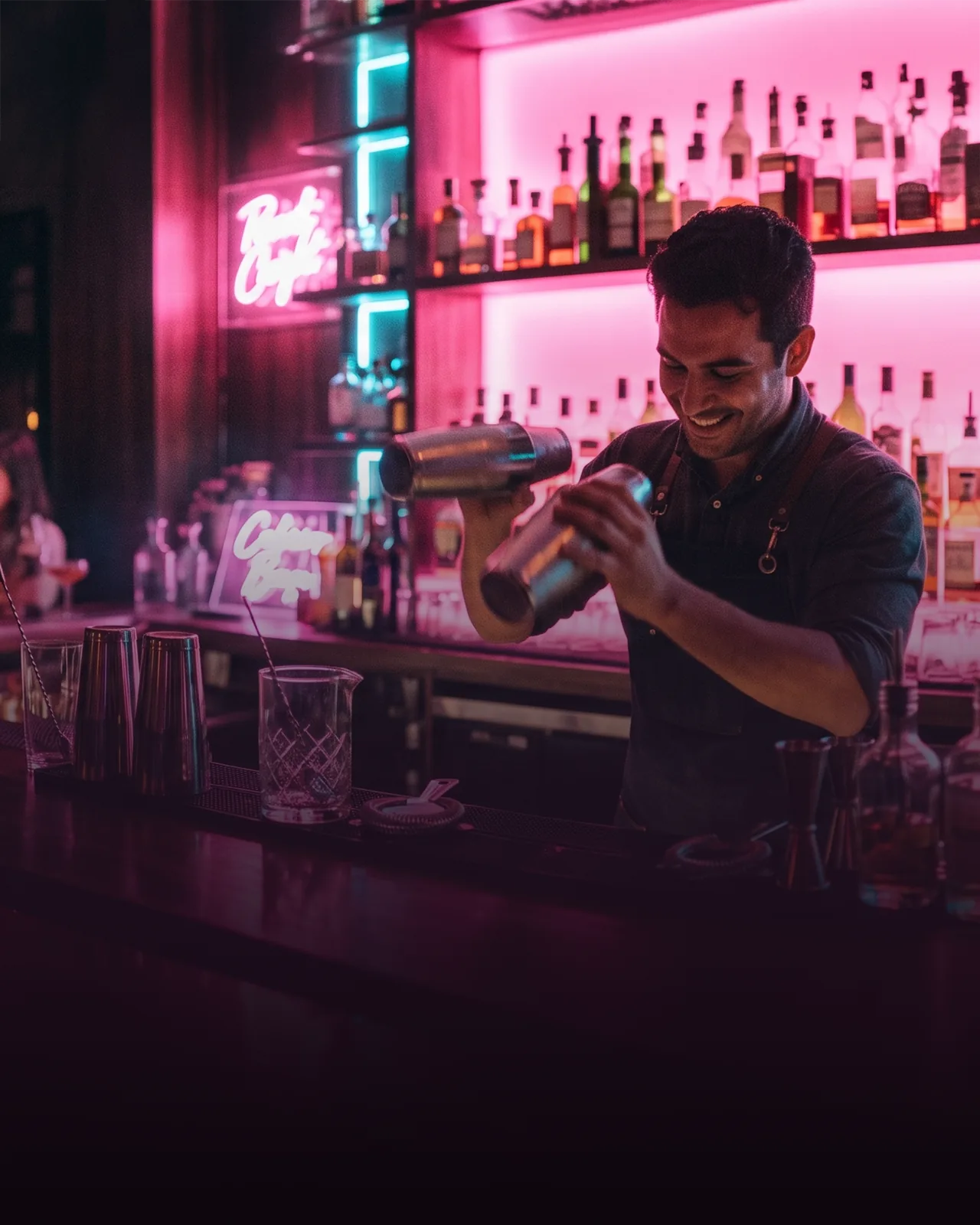


In short: put the griddle where guests can watch it cook. Planning how to open a creperie then means sizing the number of plates to the split between sweet crepes and galettes, with a cold line fast enough to keep them fed.
A cook pours a ladle of batter onto a round plate, turns a wooden spreader once, and a crepe appears the width of a dinner plate. People on the pavement slow down to watch. Half of them come in.
That moment is the marketing budget of a creperie, and it only happens if the griddle faces the street or the room. So when you work out how to open a creperie, start with the plates and where they stand, and let everything else follow: the menu, the number of cooks, the cold storage and even the licenses you need.
A creperie is also one of the lightest food formats to fit out. Nearly the whole menu comes off one or two hot surfaces, with no fryer, no oven line and usually no gas range. That makes the few pieces you do buy carry more weight, and it makes the layout decision (where guests stand relative to the cook) the most expensive one to get wrong.
The griddle is the shop window
Put the crepe plates at the front, where the queue and the dining room can see them. A creperie that cooks in a back kitchen sells crepes; one that cooks at the counter sells the act of making them, and guests pay for that difference without being asked.
The show is short and repeats all day. Batter goes down, the spreader goes round, the edge turns lacy, the filling goes on and the galette folds into a square around it. Every order is a small performance that the next guest in line has just watched, and it works as well on a six-year-old as on an office worker at lunch.
Designing for it is mostly a question of sightlines. The plates should be visible from the door and from the back of the queue, not only from the till, and the light over the station should be the brightest in the room, because that is where people look. The station's own layout, from guarding the hot plate to where a finished crepe lands, is a machine-level decision, and our crepe station buying guide covers it separately.
It also changes who you hire. In a kitchen hidden from view, a slow cook costs time. At a front counter, a cook who tears crepes in front of the queue costs reputation. Spreading a thin, even crepe takes practice, and a new hire needs quiet shifts to learn it before facing a Saturday. Budget that training time into opening, rather than learning it in public.
Our crepe, pancake and flatbread makers cover the plates themselves, from compact single units to floor cabinets with two plates.
Sweet crepes or buckwheat galettes: which menu pays the rent?
Most creperies need both, because each one sells at a different hour. Galettes made with buckwheat flour and a savory filling are a meal, so they carry lunch and dinner. Sweet crepes made with wheat batter are a snack or a dessert, so they carry the afternoon, the evening walk and the takeaway window.
A sweet-only shop is simpler and cheaper to open. It runs on wheat batter and a shelf of spreads, with a small amount of refrigeration behind them. It suits a kiosk near foot traffic, a seaside promenade or a slot inside a shopping center, where people buy something to eat while walking and the ticket is small but frequent.
A galette menu turns the shop into a restaurant. Ham, cheese, eggs, smoked fish and cooked vegetables need proper cold storage, and a galette complète holds the plate longer than a sugar crepe does. Guests sit down, order a drink and spend more per visit, which is the version of the format that supports a dining room and rent on a main street.
The split also decides how you handle gluten. Buckwheat has no gluten, and many guests will ask for galettes on that basis. That claim only holds if the buckwheat batter is kept apart from wheat: its own container, its own ladle, ideally its own plate, and staff who know why. If you cannot guarantee that separation, describe galettes as made with buckwheat rather than as gluten-free.
Write the menu before you order equipment, and count how many items on it are savory. That ratio decides both how many plates you need and how much cold storage sits behind them.
One, two or four griddles: sizing the creperie
The number of plates is the capacity of a creperie. One plate means one cook and one crepe at a time; four plates means two cooks, both lists running in parallel, and a dining room that can fill without the kitchen falling behind.
| Plates | Typical format | Who runs it | Menu it carries | What sits behind it |
|---|---|---|---|---|
| 1 | Kiosk, market stand, crepes added to a cafe counter | One cook, often also taking orders | Mostly sweet, a short savory list at most | Countertop topping rail, one reach-in fridge |
| 2 | Cafe-creperie with a small dining room | One crepier at the plates, one person on coffee and the till | Sweet and galettes cooked side by side | Refrigerated prep counter, reach-in fridge, espresso machine |
| 4 | Full creperie with table service | Two crepiers, each on a pair of plates, plus floor staff | Full galette and sweet lists at the same time | Long prep counter, two fridges or a cold room, plated service |
Move up a row when the queue, not the forecast, asks for it. A single plate is usually enough in the first months of a kiosk, and a second one can be added beside it once weekend lines show it is needed. A full dining room is different, because four plates dictate counter length, and extending the counter later means rebuilding it.
For a one-plate point that has to stand on its own, a griddle sold with its own serving station saves building a counter at all. This set runs on a standard supply at 2200 W, which suits a pop-up or a market pitch with a single electric hook-up.

For two or four plates, a range that runs from single to double units keeps the station consistent as it grows. The floor cabinet with two plates in this line draws 10 kW on a 220/380 V supply, so the electrical connection has to be planned with the fit-out rather than after it.

Power is the practical limit here. Four electric plates on one counter add up to a load most small shop units were never wired for. Ask an electrician for the available supply before you sign a lease, since upgrading it can take longer than the rest of the fit-out.
How do you keep the fillings up with the griddle?
Keep every filling cold and within reach of the cook, and prepare the batter the day before. The griddle sets the pace of service, but the cold line behind it decides whether the cook can keep that pace for two hours.
For one or two plates, a countertop refrigerated rail next to the plate holds the working stock in pans: grated cheese, ham, sliced mushrooms, fruit, spreads. This one keeps its contents at 2–8 °C and comes in lengths from 1.2 to 2 m, so it can match the width of the station.

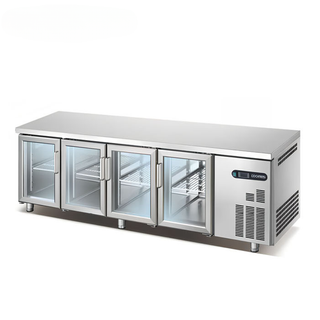
A full creperie with four plates needs more. A prep counter with refrigerated storage underneath gives the cooks a worktop at plate height and a stock of fillings below it, so restocking a pan is a bend rather than a walk. This four-door model is 2250 mm long, which runs the length of a two-cook station.
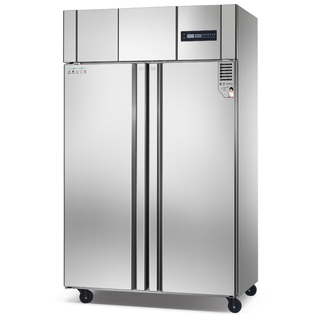
Behind the line, a reach-in fridge holds the day's back-up stock and the rested batter. A savory menu fills it quickly, since eggs and cured meats both need to stay cold. This double-door unit comes in sizes from 100 to 1000 L and can run in cooling or freezing mode, which lets a small shop use one cabinet for ice cream stock if needed.
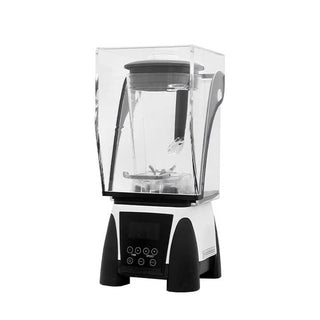
Batter has its own routine. Crepe and galette batters are mixed ahead and rested, ideally overnight, which gives a smoother crepe that tears less on the plate. A powerful blender mixes a lump-free batch quickly, and this one's 2 L glass jar suits a small shop mixing several batches in the evening.
Rest the batter under refrigeration in labeled containers, one for wheat and one for buckwheat, and pour it into jugs for service. A creperie that runs out of rested batter at 1 pm and mixes a fresh batch has to serve it unrested, and the regulars notice.
Our explainer on commercial refrigeration covers how to size the cold side for a line like this.
Drinks and ice cream beside the crepes
Drinks and ice cream lift the average ticket more than a longer crepe menu does. A guest who orders a sugar crepe alone spends a little; add a coffee or a scoop and the order grows without the plates working any harder.
Coffee comes first for most creperies, because it sells from morning to evening and pairs with anything sweet. A two-group espresso machine serves a small dining room without slowing the counter. This built-in model is rated for about 150 cups a day, which matches a creperie where coffee is a companion rather than the main business.

If coffee is set to become half your trade, the counter needs more thought than a creperie guide can give it. Our guide to opening a coffee shop that survives the morning rush covers the espresso side of the counter in full, and our espresso and coffee machines collection holds the grinders and machines that go with it.
Ice cream turns a sweet crepe into a plated dessert. A small display freezer on the counter shows the flavors and keeps them at serving temperature. This countertop unit holds -18 to -23 °C behind a sliding glass door and fits on a counter beside the plates.

Cider is the traditional pairing for galettes, and it is the one addition that changes your paperwork. A creperie that serves only food and soft drinks needs no alcohol license anywhere covered below; a bottle of cider on the menu brings one into play. Decide on cider before the fit-out, so the licensing runs in parallel with the build instead of delaying the opening.
Where the money goes in a creperie fit-out
The money concentrates in two places, the griddles and the refrigeration. Both carry the quality of every plate that leaves the counter, and both are hard to change once the counter is built, so they are the wrong place to economize.
The griddles set the menu's ceiling. A plate that heats unevenly produces pale, torn crepes at exactly the moment the longest queue is watching, and no amount of decor wins those guests back. Refrigeration is the other fixed cost, and on a savory menu it is also what an inspector checks first.
After those, the spend drops sharply. Hand tools (spreaders, spatulas, ladles) cost little and wear out, so buy spares. Takeaway packaging and signage are easy to change as you learn what sells. Decor matters for the room, but in a creperie the plates are the decoration people remember.
Plating deserves a line of its own in a sit-down creperie. A galette folded on a good plate reads as a restaurant dish and carries a restaurant price; the same galette on a paper tray reads as street food. Buy two or three core plate shapes in depth, so a busy lunch never runs short.

Where to hold back is simpler. Do not buy the second pair of plates before the first pair is busy, and do not build a dining room larger than the plates can feed. For the live price on anything above, the product card shows the current figure; for a full counter, our cafe equipment collection covers the rest of the room.
Which licenses does a creperie need in France, the UK and the US?
A creperie that serves food and soft drinks needs food-business registration, a food-safety system and premises approval, and no alcohol license. Cider or wine adds one. The table sets out how three markets handle each step.
| Requirement | France | United Kingdom | United States |
|---|---|---|---|
| Registering the business | Declare the food business to the local authority before opening | Register as a food business with the local council at least 28 days before opening | Business license from the city or county, plus a federal EIN |
| Food safety | A written HACCP food-safety plan | Environmental health inspection and a Food Hygiene Rating | Health department permit; food-handler or ServSafe certification for staff |
| Premises and fire | Public-access and fire-safety rules for a venue receiving the public | A fire risk assessment | Certificate of occupancy and fire-code occupancy limits |
| Late trading | Set locally | Hot food sold between 11pm and 5am counts as late-night refreshment and needs a Premises Licence | Set locally |
| If you serve cider or wine | A permis d'exploitation (mandatory training of about three days) plus a drinks license for fermented drinks such as the Licence III | A Premises Licence from the council and a Personal Licence holder as Designated Premises Supervisor | A beer-and-wine license from the state ABC board, often with county sign-off; the slowest step, taking months |
Two points stand out. In the UK, a creperie that trades late on a weekend street, selling crepes after 11pm, needs a Premises Licence even with no alcohol on the menu. In the US, the alcohol license is the step that decides the opening date, so apply for it first if cider is part of the plan.
Treat the table as an overview rather than legal advice, and confirm current requirements with your local authority before you commit to a site. Inspectors in all three markets check refrigeration temperatures and whether raw and ready-to-eat food are kept apart, which is one more reason to design the cold line before the decor.
Mistakes that cost a creperie its queue
Most creperies that struggle do not fail on the recipe. They fail on something around the plate, and it usually shows up in the first busy month.
- Hiding the griddle. Cooking in a back kitchen gives away the one piece of marketing the format hands you for free. Put the plates where the queue can see them.
- A menu longer than the plates can serve. Twenty galettes and fifteen sweet crepes on one plate means a queue that never shortens. Cut the list to what the plate count can cook at peak.
- One plate for two lists. If galettes are a real part of the menu, a single plate makes sugar-crepe customers wait behind lunch orders. Plan for a second one.
- Undersized cold storage on a savory menu. Eggs and ham need proper refrigeration, and a cook running to a back store mid-service is a cook away from the plate.
- Serving unrested batter. Mixing to order produces a crepe that tears and browns unevenly. Build the prep day around resting batter overnight.
- Calling galettes gluten-free without separation. A shared ladle makes the claim untrue. Keep a separate tub and ladle for buckwheat batter, and ideally a plate of its own.
- Deciding on cider after the fit-out. Adding alcohol late brings licensing that can hold the opening back by months in some markets.
- Opening before the cooks can spread. A new crepier needs practice on quiet shifts. Opening day in front of a queue is the wrong place to learn.
Get the plates in the right place with a cold line that keeps up, and a creperie can run with a very small team. A single skilled crepier at a well-built counter turns out a surprising volume from a small footprint, and that is the economics that makes the format worth opening.
Planning the counter for a new creperie? Tell us the menu split and the power supply at the counter, and we will spec the plates and the cold line behind them, including items sourced to order.


