

In short: most of a sports bar's night is sold in a few bursts around the game. Plan pour speed and a commercial broadcast subscription before decor: in how to open a sports bar, those two decide the takings.
Seven forty-five, fifteen minutes to kickoff. The room that held twenty people at six now holds two hundred, and every one of them wants a drink before the anthem. Forty-five minutes later the same crowd turns to the bar at once, with fifteen minutes of halftime to get served, back to their seats and ordered for the second half.
If you are working out how to open a sports bar, that quarter of an hour is the unit to design around. A cocktail bar sells steadily through an evening. A sports bar sells in three or four violent bursts, and whatever it fails to pour in those windows it does not sell later, because the guest who gave up at halftime is not ordering during the second half.
Everything else follows from that, from the draft system to the moment the kitchen fires its first basket.
Why the fixture list is your business plan
A sports bar's revenue follows the fixture calendar, not the day of the week. A Tuesday with a knockout match can outsell a Saturday with nothing on, and a quiet month between seasons can undo a strong one.
That makes the first planning job unusual for a bar. Before the lease, sit down with the season's fixtures for the sports your area actually watches and count the big nights. Local football or rugby, the national team, American football on a Sunday, a boxing card at two in the morning for a different crowd. Each draws a different number of people at a different hour, and the count tells you whether the room can live on match nights alone or needs a second identity for the rest of the week.
Most need the second identity. The venues that last treat the screens as the draw on match nights and fill the weeks in between with food and quiz nights. The ones that struggle go silent when the league breaks for the summer.
The calendar also sets staffing. A 250-guest room on a derby night needs six or seven people behind the bar at halftime and three on a dead Monday, so a rota built from an average week pays for idle staff on quiet nights and still runs short when it matters.
How fast does a sports bar need to pour?
Fast enough to serve most of the room within the fifteen minutes of halftime. That target sounds obvious, but it changes what you buy, because an ordinary tap with a bartender pulling pints one at a time sets a ceiling that a full room hits in the first five minutes.
Work it out before buying anything. Time a bartender on a well-balanced tap pouring and serving a round, count how many rounds one station clears in a minute, and multiply by stations and by fifteen. Compare that with how many people you expect to want a drink at halftime. The gap between the two numbers is what the draft system has to close.
There are three ways to close it, and a busy sports bar usually combines two.
More taps and more stations
The first is simply more pouring points on the same beers. Six taps of six different beers look generous, but at halftime they put one tap on the lager everybody orders. Duplicate the two best sellers across stations so two bartenders never wait for the same handle.
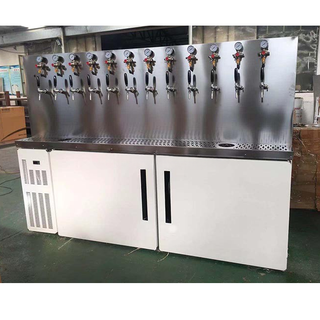
A large tap wall is the backbone of that approach. This mobile cooler carries 12 taps on a rear tap wall with two built-in glass rinsers, holding the kegs at 2 to 5 °C, which is the range where draft pours cleanly instead of foaming.
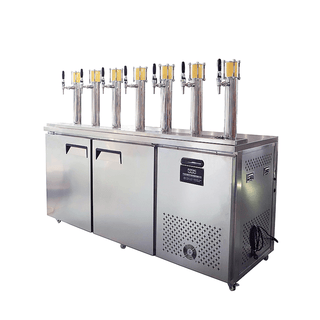
For a room that wants a fixed installation, a freestanding kegerator configurable from 2 to 12 taps does the same job with dual water-and-air cooling, holding the outlet at 3 to 5 °C under heavy draw. Cooling that holds temperature at the tap matters more here than anywhere, because a halftime rush pulls warm beer through lines that were cold a minute earlier.
Bottoms-up dispensing
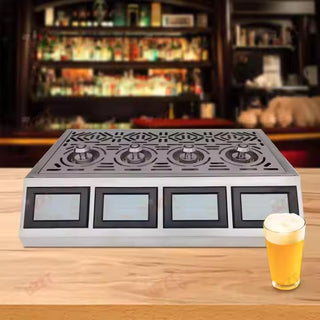
The second is a system that fills the glass from below. A bottoms-up dispenser pushes beer up through a magnetic valve in the base of a special cup, so the bartender places the glass and it fills itself with little foam. Units come with one, two or four filling positions, and the bartender is free to take payment while the glass fills.
The catch is the cups, which need a magnetic seal in the base and have to be bought and washed as a separate stock. Our comparison of beer dispensing systems sets bottoms-up against conventional taps and self-serve walls, including where each one stops making sense.
Self-serve taps
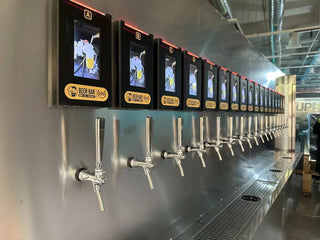
The third is to let guests pour. A self-serve beer wall charges by volume through a card or wristband, so the queue spreads across a row of taps instead of stacking up at the bar. This unit chills up to sixteen 20 L kegs at 0 to 5 °C and takes RFID wristbands or bank cards.
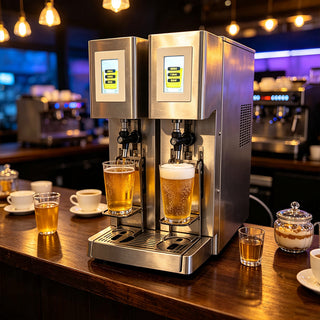
A single intelligent tap does the same at the scale of one beer, a cheap way to test whether your crowd takes to pouring its own.
Self-serve needs a responsible-service plan, because nobody is looking at the guest when they pour. Venues handle it with per-card volume caps and staff who authorize each card at the counter. Check what your licensing authority expects before installing it.
Whichever route you take, the draft system is only as fast as the lines behind it. Our guide on how to set up draft beer covers line balancing and gas pressure, and it is worth reading before the fit-out rather than after the first foamy match. If you are tempted by a budget unit, what a cheap kegerator costs shows where the savings come back as waste.
Screens and capacity at 100, 250 and 500 guests
Every seat should see a screen without anyone turning a chair, and the main screen should be readable from the back of the room. That rule sets the screen count, and room size sets the rest of the build. The table gives rough planning figures for three sizes of room on a big night.
| Guests on a big night | Screens | Draft and service points | Bottled cold | Kitchen | Behind the bar at halftime |
|---|---|---|---|---|---|
| About 100 | One large main screen plus 4 to 6 TVs | 6 to 8 taps, one bar with two stations | Under-counter coolers plus a small back-wall unit | One double fryer | 3 |
| About 250 | LED wall or 110 to 120 inch main screen plus 10 to 14 TVs | 10 to 12 taps, two service points, bottoms-up or a few self-serve taps | Full back wall of glass doors | Double fryer plus griddle | 6 to 7 |
| About 500 | LED wall plus 20 or more screens, zoned audio | 16 or more taps over three points, self-serve wall | Back walls at every service point, a cold room behind | Two fryer stations, a pressure fryer for wings | 10 or more |
Treat those as a starting sketch. A long narrow room needs more screens than a square one of the same area.
The main screen
An LED video wall is the only option that stays readable in a bright room with the lights up. This modular wall comes in pixel pitches from P1.9 to P4.81, runs at 5,000 cd/m² brightness with a 160° viewing angle, and builds to whatever size the wall allows.
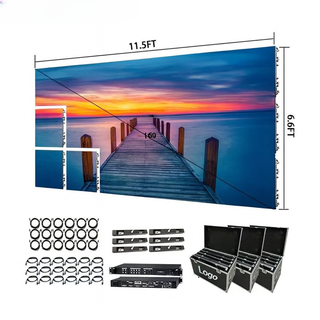
Pixel pitch is the number to choose carefully. A common rule of thumb is that the closest comfortable viewing distance in meters roughly equals the pitch in millimeters, so P2.9 looks sharp from about three meters back. A finer pitch costs more and only pays off where guests sit close to the wall.
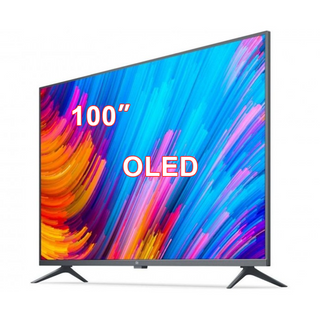
For a smaller room, a large-format commercial TV does the job with less installation work. This one comes in sizes from 85 to 120 inches in 4K with refresh rates up to 144 Hz, which keeps fast action smooth.
A projector suits a room you can keep dim, such as a back room hired out for fight nights. This 4K model throws 60 to 200 inches at 2,000 ANSI lumens, which works in a darkened space and washes out in daylight.

Sightlines and sound
Map the screens before the furniture. Sit in every seat on the floor plan, literally or with a laser measure, and move screens until there are no dead corners. Then put the high tables and standing rail where the crowd gathers, and the booths where diners sit through the whole match.
Sound needs zones. The main match should carry over a full room in the main area, a second zone can run a different game or music, and the manager needs a single control to switch which feed goes where. Browse the screens and projectors range to plan the mix, with the LED screens and video walls leaf for the main wall.
Cold bottles and clean glasses on the busiest night
Draft carries the volume, and bottles catch the guests who do not want to wait for it. The fastest service point in a sports bar is often a bartender pulling a cold bottle from under the counter and opening it in one move, which only works if the bottle is actually cold at 9pm.
That puts the fridges on the critical path, and sizing them for a match night is its own exercise: under-counter coolers at each station, restocked cold from a back-wall unit. The display fridges collection has both formats.
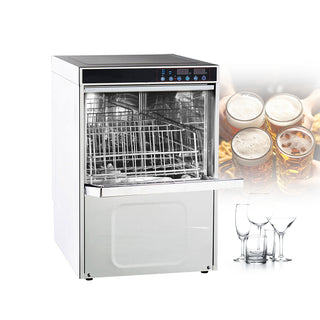
Glass is the loop that quietly caps pour speed. A room of two hundred sends empties back in waves, and when clean glasses run out, taps stop regardless of how many you installed. A front-loading glasswasher running 30 baskets an hour with an 85 °C rinse keeps pace with a mid-size room, and a second machine at the far service point shortens the walk.
Ice matters less than in a cocktail bar, since beer is most of the order, but every spirit and soft drink still runs through it. Size the ice maker for the busiest night and keep the bin away from the glasswasher's heat and steam.
What should a sports bar kitchen cook?
Food a guest can eat with one hand while watching, cooked in batches that land before the whistle. Wings and fries lead the demand. Burgers and nachos follow, and nearly all of it comes out of the fryer.
Timing is the part most kitchens get wrong. Halftime orders taken at halftime arrive when the second half has started, and the guest eats them watching the screen with a grudge. The venues that get it right take food orders from around the 35th minute, fire them so they land at the whistle, and run a short halftime menu built entirely on fryer items.
A double fryer with two 25 L tanks is the workhorse of that menu, with fries in one tank and wings in the other so flavors do not cross. It comes in gas or electric to suit the kitchen's supply.
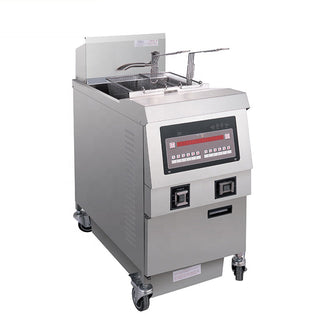
At the large end, a pressure fryer changes how wings are cooked. This 55 L electric unit lowers a full multi-tier rack into the oil and lifts it when the cycle ends, so one cook can run large batches without standing over the basket. It needs a three-phase supply, which is worth confirming with the building before ordering.
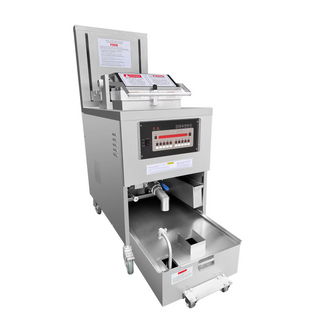
Fryer oil lasts longer and tastes cleaner when it is filtered daily, which on a match-heavy week is a job worth equipment rather than a sieve. The deep fryers range includes filtration carts alongside the fryers themselves.
Games for the nights without a match
The fixture calendar has gaps, and bar games are the cheapest way to give a room a reason to fill on those nights. Darts and table football suit a sports crowd because they are competitive and played standing up with a drink in hand.
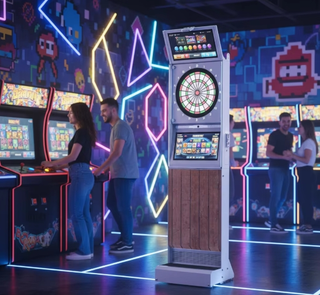
An electronic dart machine runs leagues and tournaments on its own. This one has dual 21.5-inch touchscreens, a backlit soft-tip board and WiFi, handles up to eight players and takes coins, so it earns on quiet nights without a member of staff running it.
A sit-down foosball table takes a corner that would otherwise hold two small tables. This LED-lit model is 200 cm long and seats two players, and it fits the room's look better than a battered pub table.
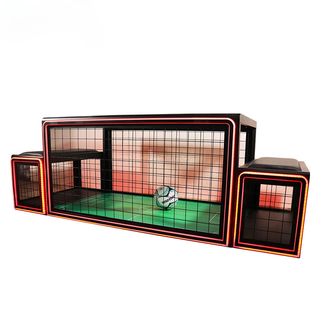
Keep games out of the main sightlines, since a dart player in front of the big screen on a match night starts an argument. The full bar games range has more options, from beer pong tables to arcade cabinets.
Where the budget goes before the first match
Two lines separate a sports bar's budget from any other bar's: the screen wall up front and the broadcast subscription every month after. Both scale with the room, and the subscription arrives whether the room is full or not.
The big one-off spends are the screens and the draft system, in roughly that order for a large venue and the reverse for a small one. The kitchen is mid-sized, since a fryer-led menu needs far less than a restaurant line. Glasswashers and bottle coolers are smaller spends that add up quickly across several service points. Current prices are on each product page, and the mix is what a custom quote is for.
The recurring side is where plans go wrong. Commercial broadcast packages are priced for businesses, often by venue size, and they sit on the budget every month of the season. Add them to the monthly costs alongside rent and wages from the first version of the business plan, not as an afterthought once the screens are up.
Our list of bar profit mistakes covers the running-cost errors that sink bars of every kind.
Licenses, and the separate right to show the match
A sports bar needs the same approvals as any bar, plus the right to show live sport to paying customers, which a residential TV subscription does not give. The alcohol license remains the slowest step and decides the opening date; the broadcast subscription decides whether the screens can show anything on it.
| Market | Alcohol | Food and premises | Showing live sport | Music |
|---|---|---|---|---|
| United States | State liquor license through the ABC board, often with county sign-off; slow, and quota-capped in some states. Federal TTB registration. | Business license and EIN; health department permit with ServSafe or food-handler certification; certificate of occupancy. | A commercial account with the TV provider, not a residential one. Pay-per-view events such as boxing need a separate commercial license from the event's distributor. | Licenses from the performing-rights organizations (ASCAP, BMI, SESAC). |
| United Kingdom | Premises Licence from the council plus a Personal Licence holder as Designated Premises Supervisor, qualified through the APLH award with a basic DBS check. | Food business registration at least 28 days before opening; Food Hygiene Rating inspection; fire risk assessment. | A commercial subscription from the broadcaster; residential accounts are not valid in a pub. A TV Licence for the premises. | TheMusicLicence from PPL PRS. |
| Australia | On-premises liquor licence from the state or territory regulator; every server holds a current RSA card, renewed every two years in NSW from 2026. | Council premises approval and food business notification; fire safety statement. | A commercial venue subscription rather than a residential one. | OneMusic Australia licence. |
Treat the table as an overview, not legal advice, and confirm current requirements with your licensing authority and the broadcasters in your market, because packages change between seasons. Screening sport on a home account is the mistake with the clearest downside: rights holders check pubs and bars, and the fines outweigh a year of the subscription it was meant to save.
Apply for the alcohol license first. Order the commercial broadcast package early enough that installation is done well before opening night, because a sports bar that opens without a signal has no reason to exist.
Instinct versus what works on match day
Most first-time mistakes in this format come from designing for an average evening in a business that has no average evenings.
| The instinct | What works |
|---|---|
| Six taps of six different beers to look generous | Duplicate the two best sellers on every station so nobody waits for one handle at halftime |
| Buy the biggest screen the budget allows | Spend on sightlines first; one huge wall with dead corners loses more than it wins |
| Use the existing home TV subscription until the bar is established | Budget a commercial package from the first month; residential accounts are not licensed for venues |
| Take halftime food orders at halftime | Take them from the 35th minute and fire so plates land at the whistle |
| Staff every night the same | Build the rota from the fixture list, heavy on big nights and light in between |
| One fridge for all the bottled beer | Under-counter coolers at each station, restocked cold from a back-wall unit |
| Rely on match nights alone | Fill the gaps in the calendar with games and quiz nights |
For the parts of the build every bar shares, from back-bar layout to spirits and glassware, the hub guide on how to open a bar goes through them zone by zone.
Planning a room around the match window? Tell us your capacity, the sports you will show and how many service points you have in mind, and we will size the screens and draft system for your busiest night.


