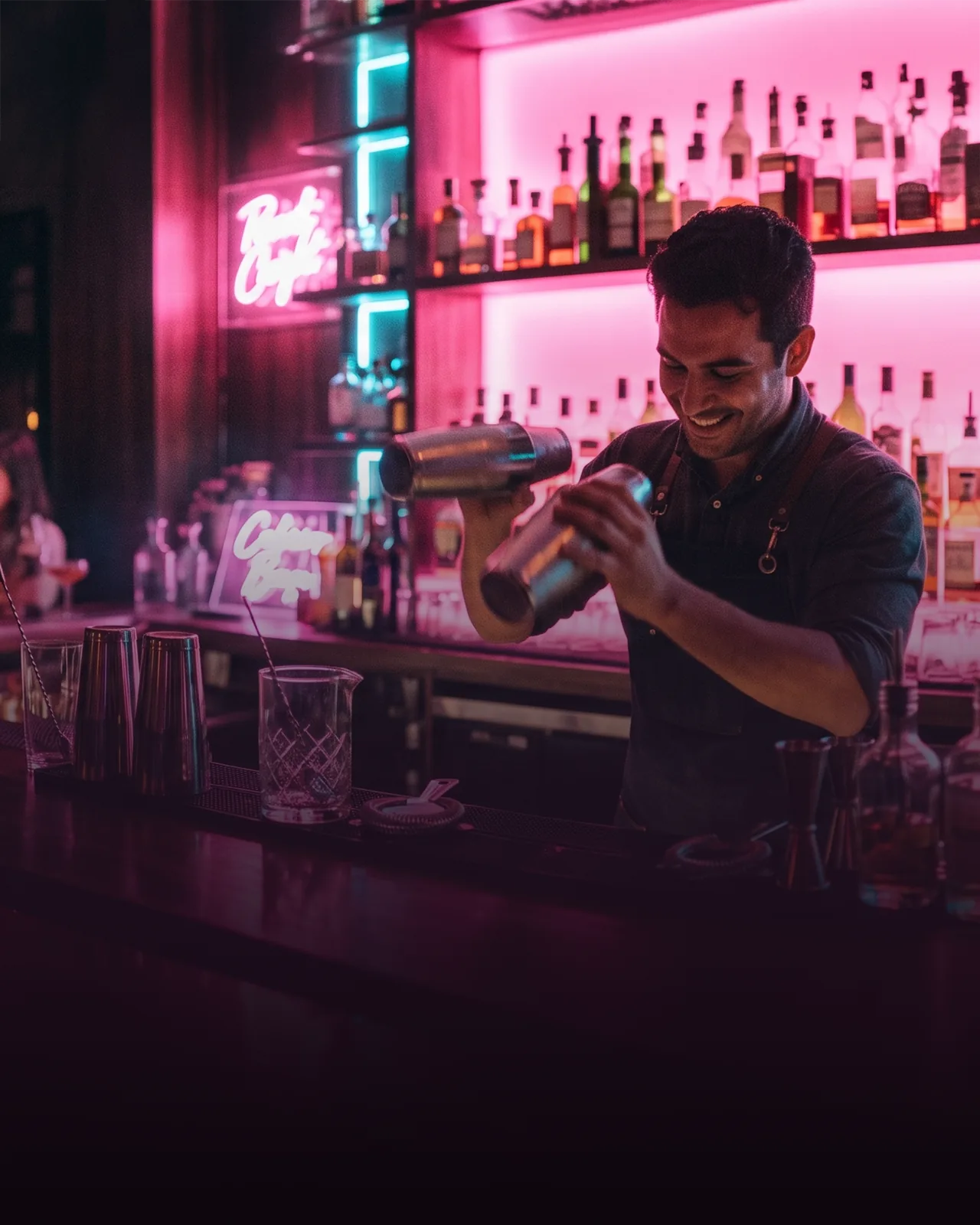


Every pub is judged on one pint. This guide to how to open a pub follows the beer from the cellar to the glass, then covers the bar around it, the kitchen, the room that keeps people in their seats, and the licences that set your opening date.
A stranger walks in, orders a pint, and decides inside two minutes whether this is now their local. Nothing else in the building gets that kind of scrutiny. The beer list can be perfect and the fit-out beautiful, but if the glass is warm, the head collapses, or the first pull comes up cloudy, the second pint gets bought somewhere else. Almost everything that determines how that pint lands happened before anyone poured it — in the cellar, along the line, and at the glasswasher.
That is the useful thing about opening a pub: the part guests judge hardest is the part you can control precisely. Rent, licence fees, and the state of the building swing wildly. Dispense equipment does not. So this guide follows the beer — cellar, line, tap, glass, hand — and then works outward to the rest of the bar, the kitchen, and the room, before the money and the paperwork.
What kind of pub are you actually opening?
Four formats trade under the word "pub," and they spend their money in different places. Settle yours before you buy anything, because it decides your tap count, your cellar, and whether you need a kitchen at all.
A wet-led local lives on draft and turnover: a handful of well-kept lines, deep glassware, and warewashing that keeps up with a beer crowd. A gastropub moves a third to half the budget into a real kitchen and treats the bar as support. A craft taproom runs many rotating lines, which sounds like fun and is really a cellar-management problem — more lines means more cooling, more cleaning, and more beer written off. A sports pub buys throughput and atmosphere: extra pour points, more ice, screens, and a room that can absorb a crowd arriving in one wave at kick-off.
Whatever the format, trace the actual service before you shop. A guest orders, and every step from keg to a clean, cold glass in their hand is a machine you either bought or skipped. Do it on paper and the spending order sorts itself out — it also stops you buying an eight-tap system you cannot drink through while running one under-sized glasswasher. Our bar equipment collection is arranged the same way, along the line of service.
The journey from cellar to glass
Everything the guest judges happens in the short run between the keg and their hand: the cellar holds the beer at the right temperature, the line carries it without warming, the tap pours it, and the glass either flatters it or ruins it. Get those four right and mediocre beer tastes good; get them wrong and great beer tastes tired.
The cellar decides the pint before the bar does
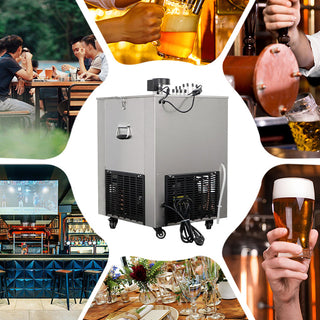
Draft beer is stored, not just poured, and where you store it shapes the whole build. If the kegs can sit close behind the bar, a kegerator does the job in one box: it holds them at serving temperature and feeds the taps directly. Our commercial draft kegerator comes in 4, 6, and 8-tap builds, which covers most independent houses. Four taps suit a small local; six to eight fit a busy pub with a proper range.
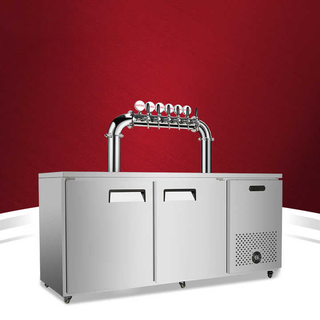
The traditional pub layout is different: kegs live in a cool cellar below or behind, and the beer travels. Over that distance the line has to stay cold the whole way, which is what a remote cooler and python does. Our commercial beer cooler and dispenser system runs six lines from a cellar to the bar, so you can pour a full range without kegs taking up space behind the counter. Spec the whole line — gas, cooling, tap towers — from the beer dispensing collection and the kegerator range.
Plan the cellar before the fit-out, never after. It needs cooling that holds temperature through a summer week, ventilation sized for CO2 safety, a floor drain, and a sensible run to the taps. Retrofitting cooling and drainage into a finished building is expensive, and in some listed or basement-free properties it is simply not possible — which is a reason to walk away from a site rather than a problem to solve later.
Taps you can actually keep fresh
Tap count is the most over-bought number in the trade. Every line is beer you have committed to selling before it tires, plus a cleaning cycle that costs you the beer sitting in that line each time. Twelve taps in a room that sells four kegs a week is not a range — it is stock going flat in public. Count backwards from weekly volume, and give yourself one flexible line for a guest beer rather than four.
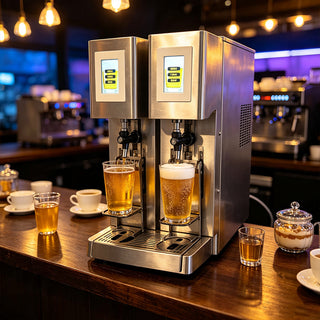
Self-pour changes the arithmetic in a high-volume room. Guests pull their own by the measure, which cuts the queue at the exact moment a bar is losing sales, and it meters what goes into the glass instead of what a tired hand estimates at midnight. Our intelligent self-serve beer tap system is built for that model; see the self-serve tap collection if the format fits your crowd. It suits stadium-style volume and tech-forward taprooms more than a quiet local, where the pour is part of the service.
The glass is half the pint
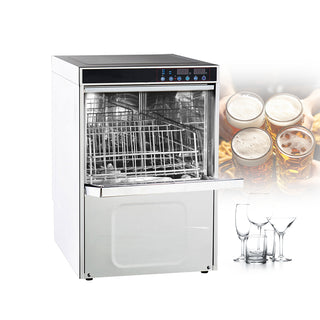
A pub gets through glassware faster than any other hospitality format, and the glass does more to the beer than most owners credit. Grease or detergent film kills a head on contact, so a purpose-built glasswasher matters more than a general dishwasher: it turns a basket around in a couple of minutes and rinses to a finish that lets the head stand. Our front-loading commercial glasswasher handles 30 baskets an hour, and the glasswasher collection scales up for a high-volume house. Add a glass dryer and polisher if your room sells stemware and cocktails alongside the beer.
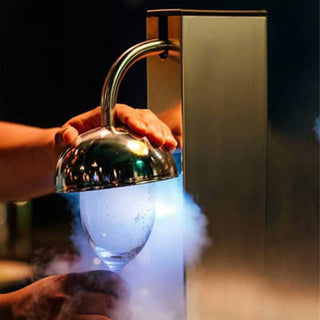
Then chill the glass. A frosted glass holds a pint colder for longer and reads as care before anyone tastes anything, which is why it has become a standard back-bar detail rather than a gimmick. Our CO2 glass froster is a vertical unit that fits the back bar and frosts a glass in seconds on demand — the glass chiller range covers other form factors, including a cube for a tighter counter.
Stock the glassware deeper than feels sensible. A Friday night eats it — breakage, guests wandering into the garden, glasses that never come back — and a bar running short at nine ends up pouring beer into whatever is clean. Buy your core pint shapes in depth from the glassware collection, and keep proper whiskey glasses and wine glasses for the other half of the drinks list.
Everything else behind the bar
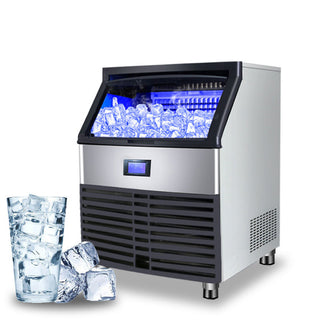
Beer is the headline, but a pub sells spirits, mixers, and soft drinks all night, and those need their own kit within reach of the pour position. Ice is the first of them and the one that fails first. Spirits, mixers, and a warm evening in the garden empty a bin far faster than a new operator expects, and once you are out, you are out for the night. Our commercial automatic cube ice maker makes 80 to 120 kg a day depending on the model — size it against your busiest night, not your average, from the ice maker collection.
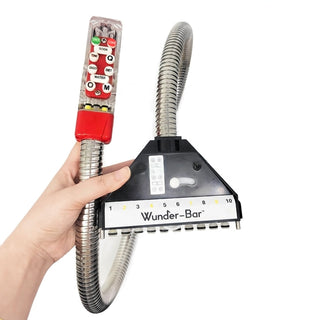
Soft drinks are where quiet margin hides. Buying colas and tonics by the bottle costs several times what the same glass costs from a post-mix system, which mixes syrup with carbonated water at the tap. Our 10-button post-mix soda gun with under-counter chiller pours ten lines from one gun and pays back fastest in a room that sells mixers all night. More options are in the soda gun collection.
Around those two sit the unglamorous pieces that decide whether staff ever leave the bar mid-service: a glass-door back-bar fridge for bottled beer and white wine from the refrigeration collection, an underbar station with a speed rail and a well from the bar station collection, a hand sink where the health inspector expects one, and a till setup that can take a round of eight without a queue forming behind it. Spec the POS system for your busiest twenty minutes, because a slow payment flow at last orders costs you the last round of the night.
Does a pub need a kitchen?
Not to trade, but food is usually what turns a marginal pub into a profitable one — it lifts spend per head, fills the dead hours between lunch and evening, and in several markets it changes what you are allowed to do with your licence. The question is scale. A wet-led local can do well with a short menu built on two machines; a gastropub needs a proper line and should be planned like a restaurant.
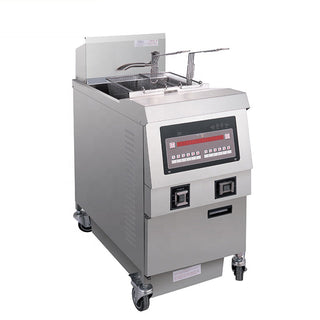
The fryer is the workhorse of pub food. Anything battered moves at the exact moment the bar is busiest, and a single small tank becomes the bottleneck the whole kitchen waits on. A double gives you two oils, so fish never flavors the chips. Our commercial double deep fryer holds 25 L and comes in gas or electric; the fryer collection covers the sizes either side.
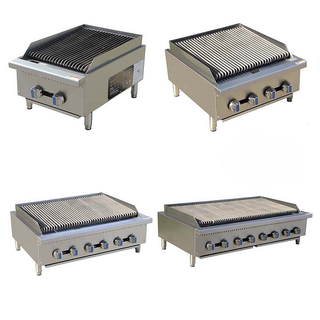
A charbroiler covers the rest of a classic menu — burgers, steaks, and the specials that carry a higher ticket than bar snacks. Real char is also the difference between pub food people order and pub food people tolerate. Our heavy-duty gas charbroiler is a countertop unit that pairs with the fryer to cover most of what a pub kitchen sells, and the grill collection and range collection extend it when the menu grows.
Two things to settle at drawing stage rather than later: extraction rated for open flame, and warewashing for plates as well as glasses. A glasswasher will not clear a food service — add a machine from the warewashing collection and a proper wash-up sink, and put the dish return where dirty plates actually land instead of across the room from it.
The room is what makes them stay
A pub earns on dwell time. The first pint is a transaction; the third one happens because nobody wanted to leave. That is a fit-out question as much as a drinks one, and it is the part of the build most equipment lists skip entirely.
Games give people a reason to stay standing at the bar for another round, and they earn on their own. A modern electronic dart machine keeps score, runs leagues, and takes coins or card, which turns a corner of the room into a revenue line and a reason for a weekly crowd. Our commercial electronic dart machine runs dual 21.5-inch touchscreens with WiFi for league play; the pub games collection also covers foosball, arcade tables, and the lighter drinking-game kit.

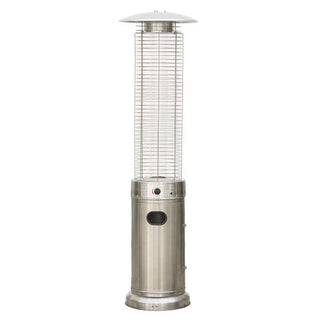
Outside space is the other multiplier, and in most climates it only works if it is heated. A covered, warmed terrace extends your trading season by months and absorbs the smoking crowd without emptying the room. Our commercial glass tube patio heater puts out 37,500 BTU with the flame visible through the tube, which does as much for the look of a garden as for the temperature. The outdoor heating collection covers larger patio and pergola setups.
Seating decides how long people last. Hard stools empty a room by ten; a mix of upholstered stools at the bar and booths along the wall gives you both the standing trade and the group that settles in for the evening. The bar furniture collection covers stools and booth seating in commercial-grade builds, which matters more than it sounds — domestic furniture in a pub is a twelve-month purchase.
How much does it cost to equip a pub?
Almost every number in a pub build follows from one decision: how many lines you pour. Tap count drives the dispense hardware, the cellar work, the glass turnaround, and the cold storage behind it. Cost the build from that number rather than from a shopping list.
| Lines you pour | Dispense setup | Cellar and cooling | What it drags with it |
|---|---|---|---|
| 2–4 (small local) | 4-tap kegerator behind the bar | No separate cellar needed; keg space and gas storage | One glasswasher; modest ice; core pint glassware |
| 6–8 (busy house) | 6–8 taps, kegerator or short remote run | Cooled cellar or dedicated keg room; python to the bar | Faster glass turnaround; froster; bigger ice; back-bar fridge |
| 10+ rotating (taproom) | Remote cooler, multiple lines, optional self-pour | Proper cellar cooling plus a weekly line-cleaning routine | Line waste on every clean; deep glassware; second pour point |
Read that as spending order, not a menu. Dispense and cellar work are the big-ticket end for any beer-led house, and they are the two things you cannot bolt on cheaply afterward. Glassware looks trivial per item and is one of the largest recurring costs in the building. A kitchen roughly doubles the equipment conversation, so decide about food before you sign a lease rather than after. And equipment is one line among several — the fit-out, rent, licence fees, and opening stock sit on top and vary far more by location than the kit does. Each product card carries its live price when you cost the real list.
Which licences does a pub need, and in what order?
The order matters more than the list, because one application takes far longer than the rest and everything else can run alongside it. File in this sequence:
- The alcohol licence, first and before anything else. In the UK that is a Premises Licence from the council, plus a Designated Premises Supervisor who holds a Personal Licence — and that personal qualification (an accredited APLH award, with a basic DBS check) has to be obtained before the application, so start it early. In Ireland a pub trades on a publican's licence from Revenue, granted only after a District Court certificate confirming the premises are suitable and you are a fit and proper person; because Irish licences are transfer-based, a new one usually means extinguishing an existing one, so most operators run this through a solicitor. In Australia pubs are licensed as hotels through the state regulator, and every person who serves alcohol needs a current RSA card. In Germany you need a Gaststättenerlaubnis under the Gaststättengesetz, tied to both the person and the premises, with a certificate of good conduct and an IHK hospitality briefing; several Bundesländer have simplified this into a notification, so confirm the current route with your local Gewerbeamt.
- Premises, planning, and fire. Building use, occupancy, and fire safety sit under the same approvals that gate your fit-out. In the UK a fire risk assessment is mandatory; in Australia you will need development consent from the council; in Germany noise limits under TA Lärm can force insulation as a condition of trading, especially in a residential street.
- Food registration, if you serve anything at all. UK operators register with the council at least 28 days before trading and should expect a Food Hygiene Rating inspection. Australia takes a council food-business notification, and most states require a certified Food Safety Supervisor. This one is free or cheap almost everywhere and easy to leave too late.
- Music, screens, and entertainment. Recorded music needs TheMusicLicence from PPL PRS in the UK and a OneMusic licence in Australia. Live music and late hours are usually conditions written into the alcohol licence rather than separate applications, so raise them in that first filing instead of coming back later.
Treat this as a map rather than legal advice. Documents, fees, and timelines differ by council, state, and Bundesland, and they change — confirm your own list with the licensing authority before you commit to an opening date. The rule that holds everywhere: the alcohol licence sets the date, so lodge it before the builders start, not when they finish.
Four numbers that decide whether a pub works
- Cellar temperature, held at 11–13 °C. Warmer and the beer foams away in the line; colder and it goes hazy and loses aroma. A cellar that drifts on a hot week undoes every other decision in this guide, which is why cooling capacity is a build item and not an appliance.
- Seven days between line cleans. That is the standard cycle, and every clean costs you the beer sitting in the line. Multiply it by your tap count and you have the running cost nobody budgets: a wall of rarely-poured taps quietly pours itself down the drain every week.
- Glassware stocked at roughly three times your seat count. One in use, one in the wash, one on the shelf. Anything less and a busy Friday ends with beer served in the wrong shapes, which is the cheapest possible way to look amateur.
- Ice sized to your hottest night, with headroom. Ice is the only thing on this list you cannot improvise at nine in the evening. Size the machine for the worst case and give the bin a home within reach of the pour position.
Pub, or something close to it?
Four neighbours share the cellar logic. A gastropub is a kitchen with a bar attached; a brewpub makes what it pours; a craft beer bar runs more lines and faster rotation; a sports bar sells screens.
Not sure what your bar and cellar actually need? Tell us the house you are opening — wet-led local, gastropub, taproom, or sports pub — how many lines you plan to pour, and whether the cellar sits behind the bar or below it. We will come back with an equipment list and a budget matched to that layout and your busiest night.


