

Burger restaurant equipment for a counter that has to clear a lunch queue: griddle and fryer under extraction, refrigerated prep at arm's length, ice, and a till under a lit menu.
A burger kitchen is judged on throughput at one moment: the lunch hour. This setup is built for it — a clamshell griddle that cooks both sides at once, two fryer wells, hot holding so the pass never waits, and a drinks line that covers shakes and diner coffee.
Quantities assume a 60-seat room doing roughly 200 covers a day with a delivery channel. Plates, baskets and packaging are picked separately, since they follow how much of the menu leaves the building. Send your floor plan and the covers you expect, and we adjust the counts before quoting.
Dining Chairs
Twelve sets seats roughly fifty, and a burger room turns a table in forty minutes, so the frame matters more than the upholstery.
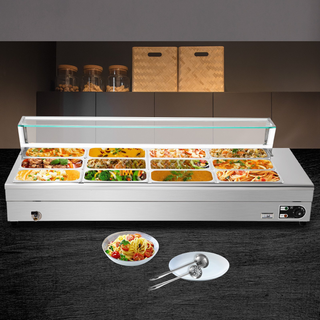
Twelve pans of hot holding for sauces, chili and the sides that cannot be cooked to order at lunch speed.
Vinyl-upholstered booth runs — the diner format, and more covers per square meter than loose tables.
Pink / 63 - 85cm
Stools for the window counter and the bar rail. A burger joint seats solo lunch trade along a window and turns those seats three times while a booth turns once.
Spots aimed at the tables and the counter. A burger looks like food under a warm beam and like a photograph of food under a flat ceiling panel.
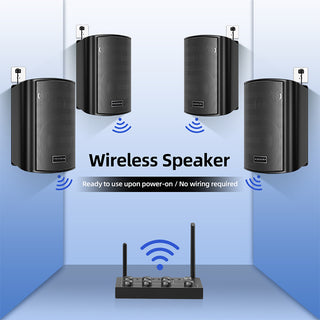
6.5-inch speaker for LS-02 white
Loud enough to cover the fryer and the extraction, quiet enough to order over. A burger room without music sounds like the kitchen it is.
Divided trays — the way a burger and fries actually get served in this format.
28cm black
Round trays for running food out and clearing it back. The anti-slip face earns itself near the fryer, where the floor is never quite dry.
Two dual-screen terminals with printers — one at the counter, one for delivery tickets. Standard Android POS software.
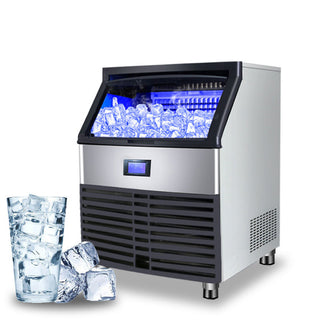
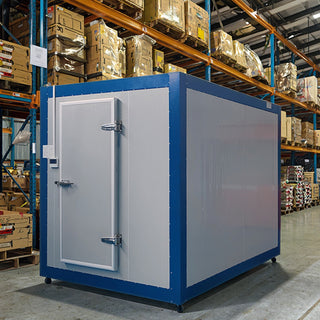
100 kg/24hours
Soft drinks and shakes both run off it, which puts demand well above what the seat count suggests. Eighty to a hundred and twenty kilos a day covers both.
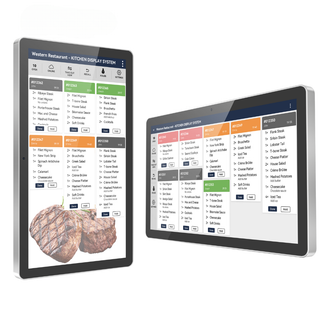
Orders on screens at the grill and the build station. With kiosks and delivery both feeding the line, paper stops working.
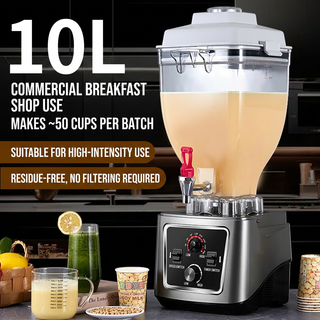
On a burger menu the shakes carry the highest margin on the board, and they are the one item a griddle and a fryer cannot produce between them.
8L
Two machines mean a shake order does not hold up the counter, because a thick malt takes longer to spin than the burger behind it takes to cook.
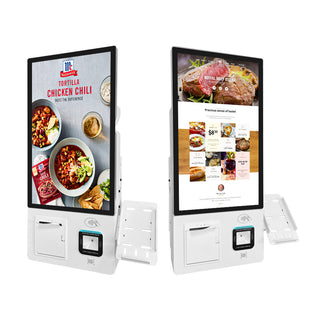
Wall kiosks with card readers take the simple orders off the counter queue entirely, which is where a burger joint's lunch bottleneck actually sits.
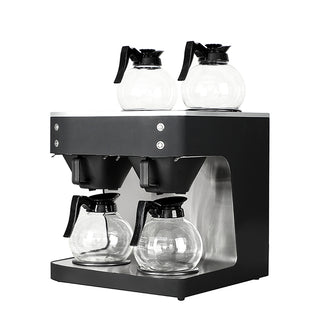
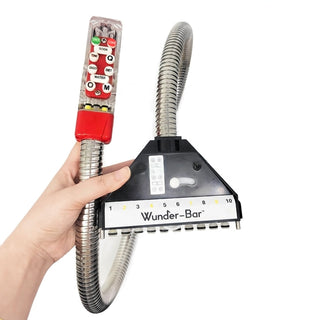
Diner coffee gets poured rather than pulled, and two jugs held hot let one person work the counter and the coffee at the same time.
Delivery orders travel further than the room does, and the printed clamshell is the only branding that arrives with the food.
Delivery is half the revenue here and the only half where the customer never sees the room, so the carrier does the work the room would have done.
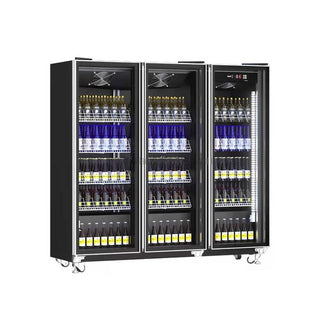
A drink is an add-on decided in the queue rather than at the table, so the bottles and cans sit lit and in the guest's eyeline while they order.
Ten buttons of soda and mixers on one hose instead of a fridge full of bottles.
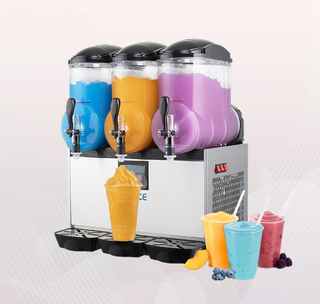
Three bowls of frozen drinks for the summer list — a counter seller that needs no staff time.
A burger room changes its specials weekly and runs limited-run burgers, so a printed board turns into a printing job every Monday.
10 L/h
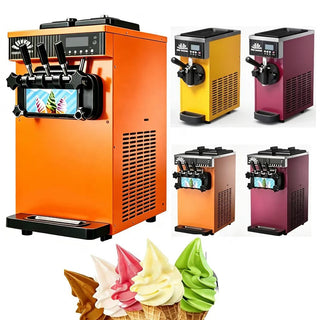
Soft serve for the dessert line and the kids' menu. It is the item that stops a family leaving after the mains and adds a course with no kitchen time in it.
1 Taps
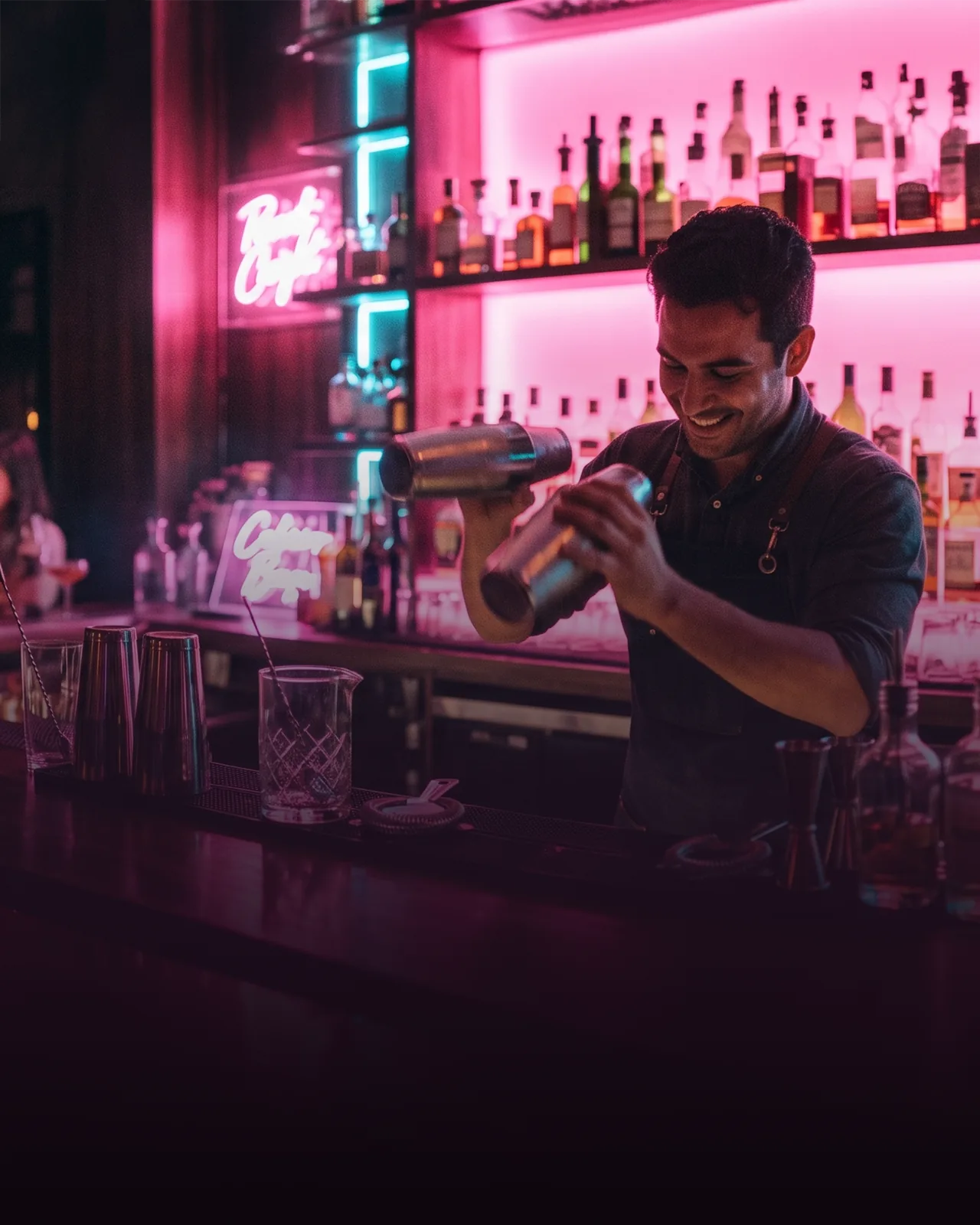
A few taps of beer turn a burger counter into an evening business rather than a lunch one.
Air cooling
Toppings in the well, patties in the drawers underneath, one step from the griddle. The build line works because nothing on it requires turning around.
Cooks the patty from both sides at once — roughly half the cook time of a flat griddle, and the reason a queue clears at one o'clock instead of half past.
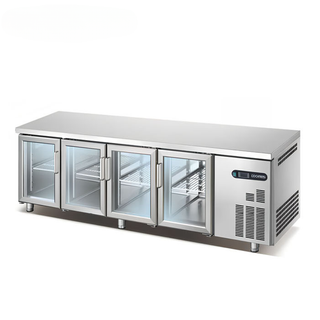
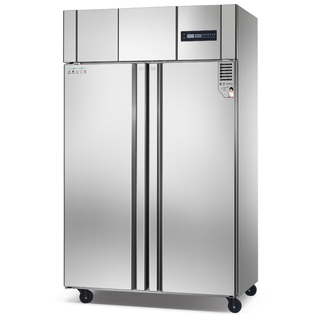
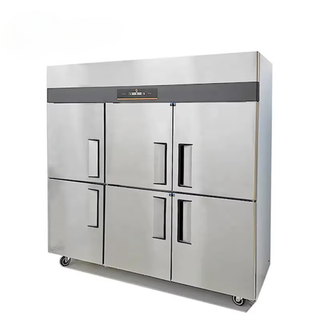
The day's mise en place, dairy and prepped patties. A burger kitchen portions patties ahead and holds them cold — the reach-in is what lets one person open the shop in the morning.
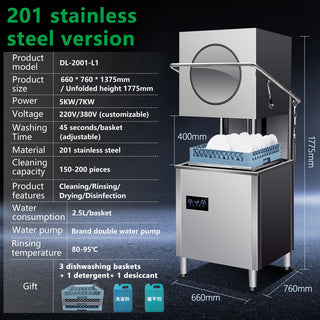
201 Stainless Steel
Plates, baskets and pans come back at a rack a minute at the end of a lunch service, and anything slower becomes the bottleneck the whole room waits on.
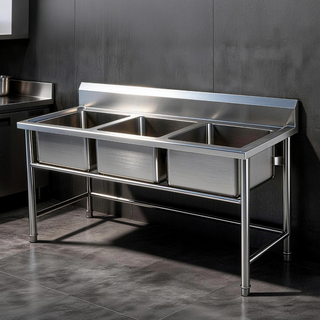
Stainless Steel 304
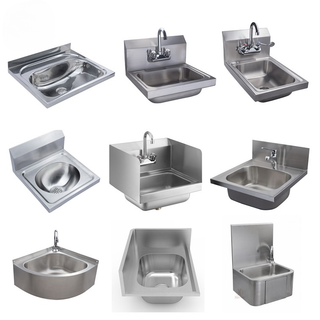
Griddle parts, pots and fryer baskets never see a machine, and all of them need the wash, rinse and sanitise sequence at the end of the night.
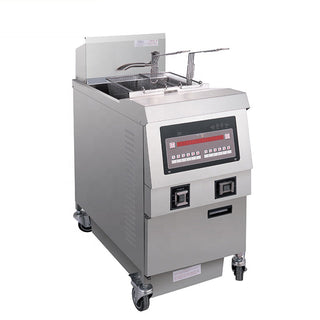
Two 25-liter wells: fries in one, everything crumbed in the other. Shared oil is what makes a fish sandwich taste of onion rings.
Fries and frozen stock run the fryer, and the fryer is the first thing to run dry on a busy day. This is its supply line.
Hand sinks on the line, at the counter and by the wash-up — an inspection item wherever raw meat is handled.
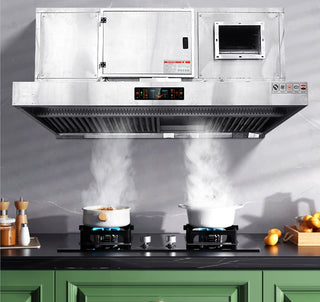
A griddle and a fryer together put more grease-laden vapour into the air than any other pairing in a small kitchen, and 6000 m3/h is sized against that.
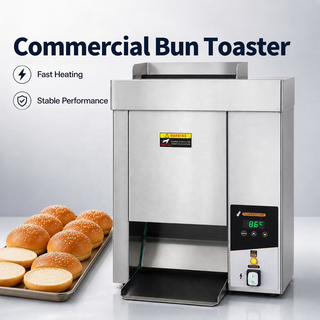
Buns toasted the same way every time, in a pass. A burger is judged on the bun as much as the patty.
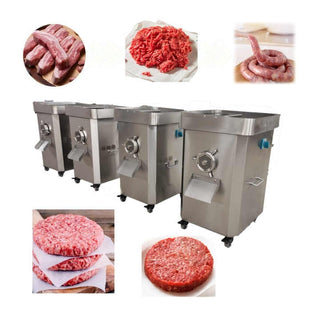
500 kg/h at 2500 W — house-ground patties from your own blend. It is the cheapest upgrade a burger menu can make.
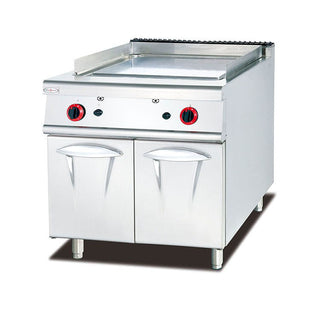
A smooth gas griddle beside the clamshell — buns, breakfast and the second burger line when one machine is not enough.
Grinds plate waste at the wash-up. A burger room fills a bin with buns and fries faster than anyone wants to carry it out.
CP-CB36-HD
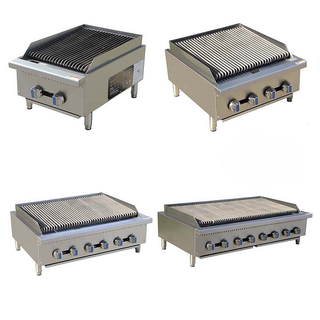
Char grill for the flame-grilled half of the menu and for chicken, which does not belong on the same plate as a smashed patty.
35 L/min
Filtered oil lasts two to three times longer and fries taste clean until close.
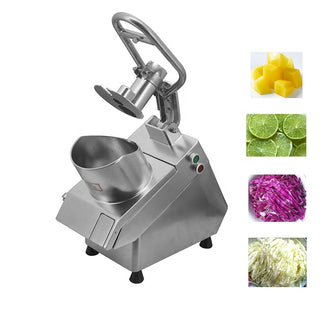
Onion, tomato and lettuce prepped in a machine rather than an hour of knife work before every service.
Chilled rail of toppings on the build line, at arm's reach of the grill.
3 trays
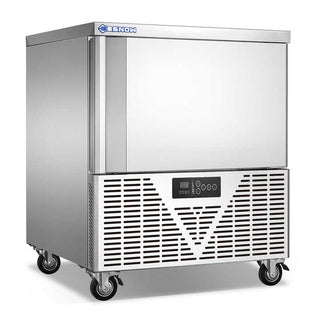
Patties made ahead in batches keep their texture only if they go through the freezing range fast, which is the whole reason for batching them.
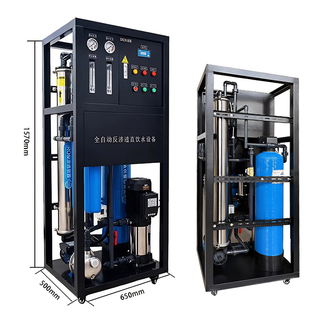
A burger room sells more soft drinks than anything else on the menu, and every one of them is mostly the local water supply, so it goes through a membrane first.
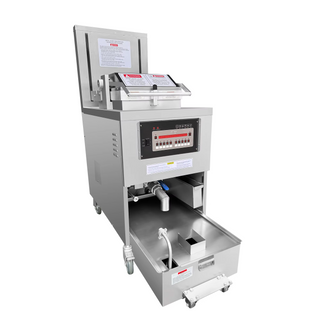
Pressure-fried chicken, if the menu runs a chicken burger against the beef one.
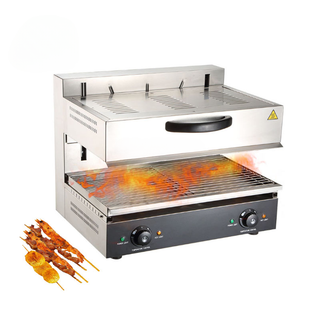
Overhead grill for melting cheese and finishing, so the flat top is not doing two jobs.
Patties portioned and sealed the day before service. A burger kitchen lives on the same weight every time, and a sealed stack holds its shape in the fridge.
Mince and buns arrive by the crate in this format, and a reach-in holds about a day and a half of either.
40*60cm (15.75*23.62in)
In counter service the board is the menu — nothing is handed to anyone. Ten panels hold the burgers, the sides and the meal deals that move the average ticket.
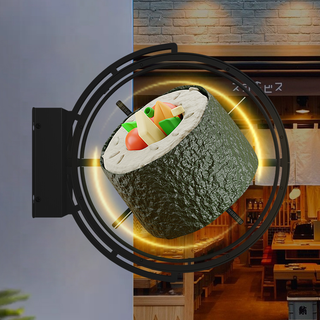
Round faces read at an angle, which is how a driver pulling into the car park sees a sign at all. The same fitting covers the door and the collection point.
A self-charging pavement sign that stands at the kerb without a trench. Evening trade decides whether a burger room is busy, and the kerb is where it gets caught.
Double Sided / Rechargeable
The lit board on the pavement carrying today's deal. It folds away at close, so it never becomes a fixture the landlord has to approve.
A burger room gets photographed with the tray in shot, and this is the wall that ends up behind it.
A burger turning in mid-air in the window. It works on exactly the impulse the shop trades on: someone walking past who was not hungry a second ago.
Baskets, plates and takeaway boxes follow your menu and your delivery share — a diner that plates and a joint that wraps buy differently. We stock and print both, and price them with the rest of the order.
Catalog prices at the quantities listed, excluding shipping, duties and installation. Send a request and we confirm current pricing and lead times for your build.
Request received
We are pricing the setup now and will come back with a quote and lead times, usually within one business day.
That did not go through
Something broke on the way to us. Try again, or write to sales@barequip.pro and we will pick it up from there.