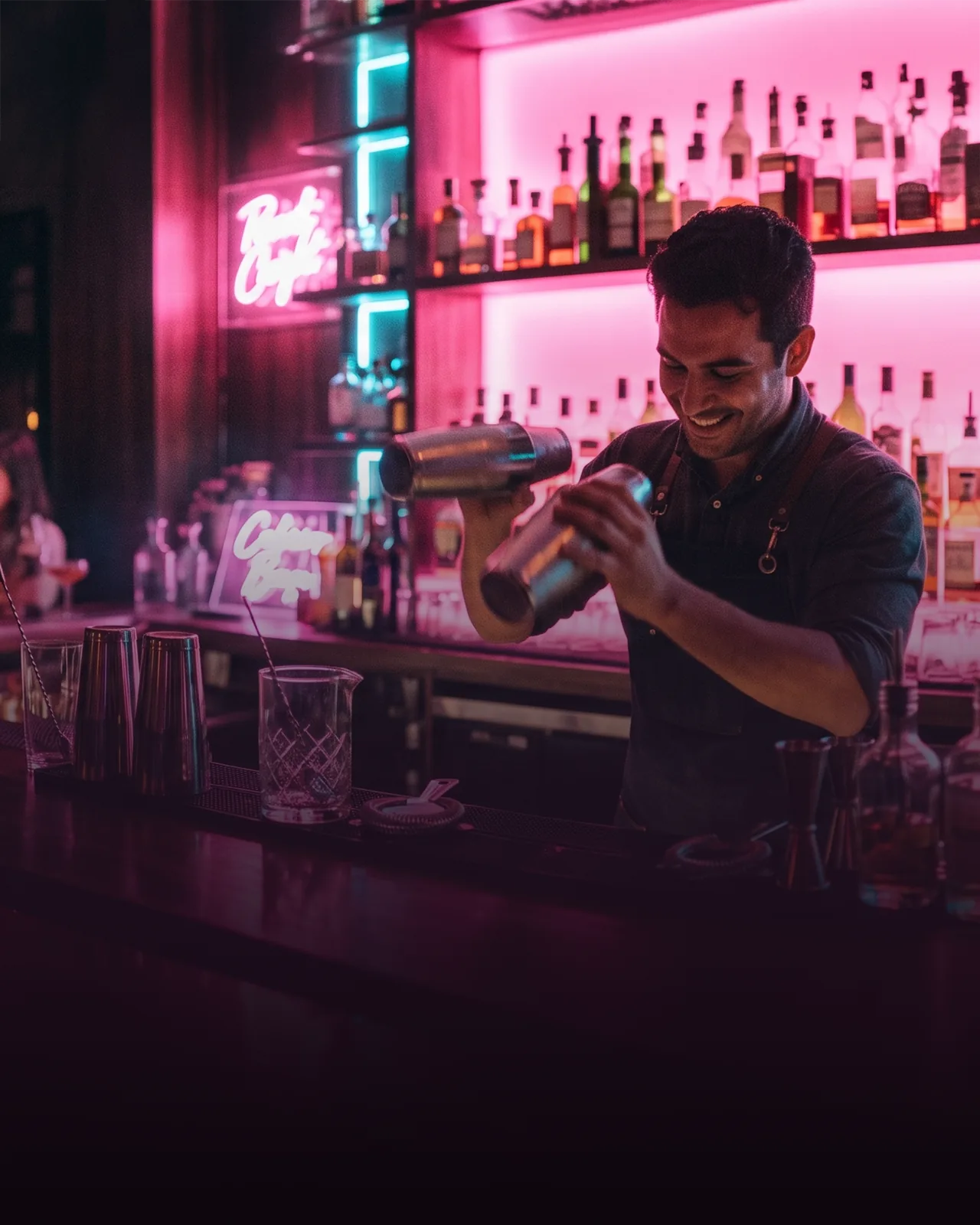


A hotel bar trades three different days before last call. This guide to how to open a hotel bar builds it that way — coffee counter, terrace bar, cocktail bar — and shows how the alcohol licence rides on the property itself.
Ask a hotel where its bar makes money and the answer is rarely the evening. The espresso machine in the lobby runs from six, the terrace sells cold drinks all afternoon to people who never leave the property, the cocktail hour is short and intense, and then a wedding takes over the function room and drinks four times the usual volume in ninety minutes. One counter, one team, four completely different jobs.
That is what makes a hotel bar its own build rather than a street bar with rooms above it. It runs longer hours than any standalone venue, serves a guest who is already paying you for something else, and is licensed through the property rather than in its own right. Spec it for a single glamorous evening and it will fail every morning. This guide walks the day in order, then the shared back-of-house that supplies all of it, the money, and the licence.
How is a hotel bar different from a street bar?
Three ways, and each one changes what you buy. The crowd is captive but keeps changing; the hours are far longer; and the licence belongs to the building rather than the bar.
A captive crowd is the whole opportunity. Guests are already on site, so every drink they buy from you is a drink they did not buy down the road — and unlike a street bar you are not fighting for footfall, you are fighting your own guest's decision to go out. That changes what wins: range and availability beat a specialist menu. The bar that can serve a decent flat white at seven, a cold beer at three, and a properly made negroni at ten will out-earn a beautiful cocktail room that is shut for two-thirds of the day.
Long hours also change the machine logic. A street bar buys for its peak and closes; a hotel bar buys for uptime, because it is open when every service engineer in the city is asleep and it cannot put a sign up saying the coffee machine is broken. Prefer equipment you can fix or swap fast, and build in a fallback for the two machines a hotel cannot trade without: coffee and ice. Most properties also run several service points — lobby bar, restaurant service bar, pool bar, banqueting — off shared cellar, ice, and glass-washing. Plan the back-of-house as a hub feeding outlets, not as one counter. Our hotel equipment collection and bar collection are organized that way.
Morning: the bar has to be a coffee shop
The first three hours of a hotel bar's day have nothing to do with alcohol. Breakfast coffee is the highest-volume drink service in the building, it happens under time pressure while guests are watching a clock, and it is the first impression of the property that day.
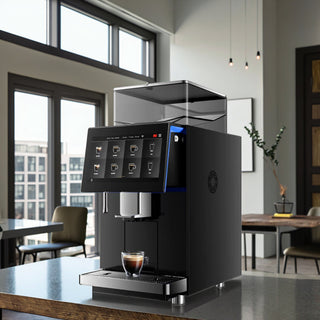
How you serve it depends on staffing. A staffed lobby bar wants a proper espresso machine and a barista; a breakfast room or a 24-hour lobby wants a machine a guest can operate alone at half past five without help. Our commercial self-service espresso machine runs a dual bean hopper at 20 bar and covers the unstaffed hours, which is where most complaints come from. The espresso collection carries the staffed alternatives, from built-in two-group units for a finished counter to a dual-jug filter brewer for volume breakfast service.
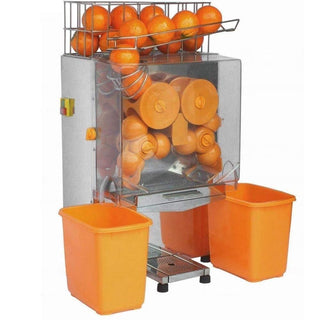
Fresh juice is the other breakfast expectation, and it is one of the few places a hotel can visibly out-class a chain. A press that squeezes to order in front of the guest reads as quality in a way a carton never will, and it takes no barista attention. Our automatic orange juicer is built for continuous breakfast service; the juicer collection covers cold-press and centrifugal options for a wider menu.
Afternoon: the terrace, the pool, and the quiet hours
Between eleven and six a hotel bar earns from people who are not going anywhere: guests working in the lobby, families back from the pool, a couple waiting for a room. It is the longest stretch of the day and the one most bar builds ignore entirely.
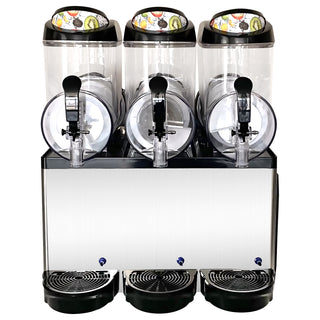
Frozen and blended drinks do disproportionate work here, especially in warm markets and anywhere with a pool. They photograph well, they carry a high margin, they suit alcohol-free service, and they sell to exactly the guest who is not ready for a cocktail. Our commercial frozen drink and slush machine holds a chilled bowl ready through the afternoon, and the slush machine collection scales from a countertop unit to a multi-bowl for a pool bar.
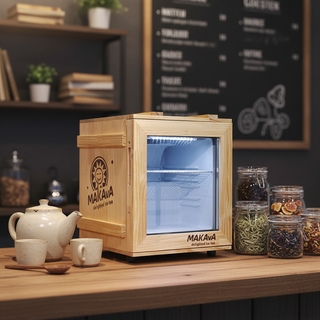
Grab-and-go matters more in a hotel than anywhere else, because guests will pay for convenience they cannot get outside the building. A glass-door merchandiser at the lobby bar sells bottled water, soft drinks, and snacks around the clock without a bartender lifting anything — and the same unit is what a modern in-room minibar program is stocked from. Our transparent-display beverage cooler makes the stock visible while holding temperature, and the minibar range covers the in-room side.
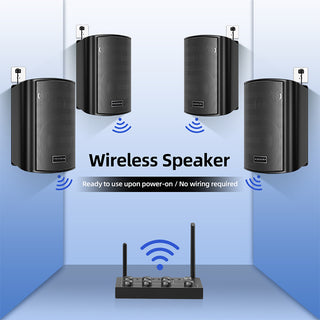
Two atmosphere items pay for themselves across this whole stretch. Background music turns a dead lobby into a room people sit in, and a distributed speaker system does it without a bar stereo audible only within a meter of the counter — our wireless background-music system zones it across areas. Pair it with a scent diffuser on the HVAC from the fragrance collection, which is how the properties that feel expensive achieve it.
Evening: the part everyone plans for
The cocktail hours are short, busy, and the only part of the day most hotel bar plans account for. The equipment brief is consistency more than craft: the same drink has to arrive the same way whether it is made by your best bartender on Friday or by the one person on shift at half past midnight.
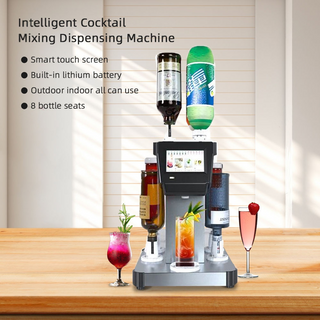
Automation carries that. A machine pouring measured, pre-programmed builds keeps quality flat across shifts and absorbs a function rush without extra staff. Our fully automatic cocktail machine comes as an 8- or 13-bottle unit; the cocktail automation collection covers the rest, and a proper shaker kit plus a double speed rail keep the hand-built side fast.
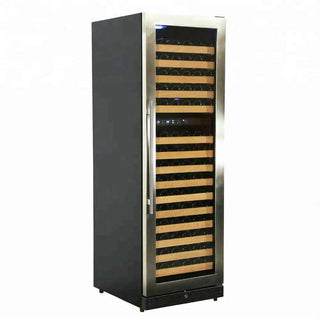
Wine carries more weight in a hotel than in almost any bar, because the restaurant, room service, and banqueting all draw on the same list, and guests judge a property by whether the white arrives cold. A dual-zone cabinet holds reds and whites at their own serving temperatures and doubles as a visible statement of the cellar. Our 166-bottle dual-zone wine refrigerator gives depth and control in one unit; larger built-in walls are in the wine cabinet collection.
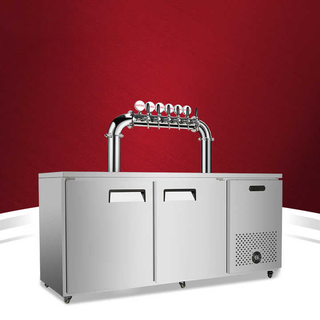
Draft beer earns its place even in an upscale property. It pours faster than bottles, function crowds drink it by the round, and the margin beats bottled every time. Our commercial draft kegerator comes in 4, 6, and 8-tap builds — size it by how many outlets pull from the same cellar, not by the lobby bar alone, and spec the line from the beer dispensing collection.
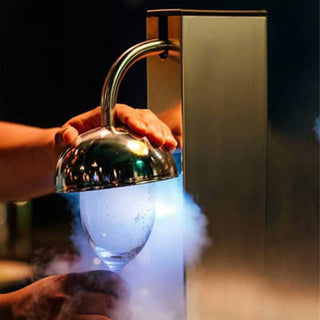
Finish with the details guests read as luxury for very little money: a frosted glass for a nightcap, proper stemware, and a gobo projector throwing the property's mark or an event's name onto a wall for a function. Our CO2 glass froster chills a glass in seconds at the station, and the whiskey glass and cocktail glass ranges cover the pieces a hotel bar is judged on.
The back-of-house that supplies every outlet
Everything above is what a guest sees. What decides whether it works is shared infrastructure, and it is sized for the whole property rather than for the counter you are standing at.
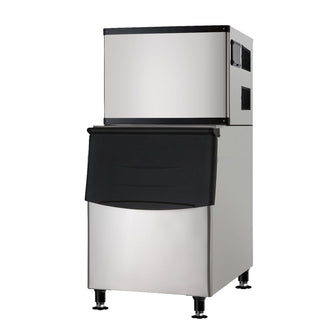
Ice comes first. A hotel draws ice for the lobby bar, the restaurant, room service, the pool, and every function, and those demands peak together on exactly the day you can least afford a shortage. Size the machine for the property, not the bar. Our commercial ice maker produces up to 450 kg a day with a 125 kg bin, which is the scale a mid-size hotel actually runs at; the ice maker collection covers undercounter units for satellite outlets.
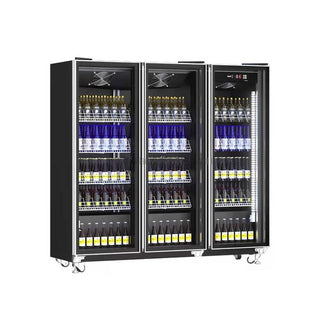
Cold storage behind the bar is what stops staff walking to a cellar mid-service. A glass-door back-bar fridge keeps bottled beer, white wine, and mixers in reach and visible for stock checks at handover — our three-glass-door bar refrigerator is the standard choice, with bulk holding from the refrigeration collection.
Then two systems that are pure hotel. Glass-washing has to serve several outlets, so put the machine where dirty glass actually returns and give satellite bars their own undercounter unit from the glasswasher collection rather than a trolley run across a lobby. And billing has to reach the room: a handheld terminal that posts a drink to a guest folio at the table is the difference between a poolside order and a guest deciding it is too much trouble. Our handheld POS terminal does that job, with fixed stations in the POS collection.
What does it cost to fit out a hotel bar?
The number follows from how many service points the bar has to feed, not from the size of the counter. One lobby bar in a small property is a contained build; the same brief in a resort means several bars sharing a cellar, and the shared infrastructure becomes the expensive part.
| Property | Service points | What the bar has to cover | Where the money concentrates |
|---|---|---|---|
| 30–60 keys, city or boutique | One lobby bar | Breakfast coffee, all-day soft drinks, evening cocktails | Coffee and cocktail kit; one ice machine; glassware |
| 100–200 keys, full service | Lobby bar, restaurant service bar, banqueting | All of the above plus room service and functions | Shared cellar and ice; wine storage; a second glasswasher; draft |
| Resort or multi-outlet | Lobby, pool, restaurant, events | Long hours across separated outlets, outdoors included | Distribution — ice and cold storage at every point, plus duplication for uptime |
The trap in that third row is duplication. A pool bar 80 meters from the cellar needs its own ice, its own cold storage, and its own glass-washing, or staff spend the shift walking. Budget for a second small version of the back-of-house, not for a longer walk. Two other lines rarely get costed at all: uptime — a backup coffee machine and spare kegs for a property that cannot go dark — and the recurring cost of glassware across outlets that all break it. Equipment is one line among many in a hotel build; the fit-out, licensing, and opening stock sit on top. Each product card carries its live price when you cost the real list.
How is a hotel bar licensed?
Differently from a street bar, and usually more favorably. The right to pour typically attaches to the property and its classification rather than to a bar-only permit — which in some markets is the difference between being licensed and not being licensed at all. Three questions settle it.
Can the property be licensed for alcohol at all?
In the UAE this is the whole question. Alcohol service is tightly controlled and generally confined to hotels and specifically licensed venues, so a hotel is one of the few channels that exists — in Dubai, permissions run through Dubai Police GHQ together with the Department of Economy and Tourism, which also sets your hotel classification; in Abu Dhabi it is the Department of Culture and Tourism. Minimum-distance rules from mosques, schools, and religious sites apply to the site itself, so this is a question to answer before buying a building. In the UK, US, and Australia the answer is normally yes, with the caveat that US licences run through a state ABC board, can take months, and are sometimes quota-capped — file first, build second.
Who has to hold the licence, and with what qualification?
In the UK, the property needs a Premises Licence and a named Designated Premises Supervisor holding a Personal Licence, which requires an accredited APLH award and a basic DBS check obtained before you apply. In Australia, an on-premises licence comes from the state regulator, and every person who serves alcohol needs a valid RSA card — including the food-and-beverage staff you would not think of as bartenders. In the US, the licence sits with the business, with federal TTB registration alongside the state permit. In the UAE, the venue is licensed rather than the individual, but security staff need SIRA licences and food handlers need health cards.
What about room service, minibars, and late hours?
This is where hotel licensing gets specific, and where operators get caught. Serving a drink to a room, stocking a minibar, and pouring at two in the morning are not automatically covered by the same permission that lets you run a lobby bar. Ask the licensing authority directly how each is treated, and get the answer in writing before you print a room-service menu — several jurisdictions handle service to residents differently from service to the public, and the difference decides whether a guest can order a nightcap after the bar closes. In the UK, hot food or drink sold between 11 pm and 5 am is separately "late-night refreshment" under the same Premises Licence, so raise it in the original application rather than varying the licence later. Music in public areas needs its own licence everywhere — TheMusicLicence from PPL PRS in the UK, OneMusic in Australia, ASCAP with BMI and SESAC in the US.
Alongside all of that sits the accommodation regime the bar lives inside: fire safety for sleeping guests, food-business registration, and premises approvals. Treat this section as a map rather than legal advice, and confirm the detail with your own licensing authority — the rules differ by council, state, and emirate, and they change.
What hotels come back to buy in year two
The pattern in re-orders is more useful than any list of mistakes, because it shows what the first build actually got wrong.
The most common second purchase is coffee capacity. A machine specced for the bar turns out to be feeding breakfast for two hundred people, and the property adds either a second machine or an unstaffed unit for the hours nobody covers. If your breakfast service is anywhere near full occupancy, buy that capacity at the start — it is cheaper than the reviews.
The second is ice, and it is always the same story: the machine was sized for the lobby bar and not for the property. A wedding, a heatwave, and a full restaurant land on one Saturday and the whole building runs dry. The third is outdoor and poolside service, which properties routinely discover is their best margin only after a season of carrying trays from an indoor bar — at which point they buy a satellite station with its own ice and cold storage, and wish they had run power and water to that corner during the fit-out.
The fourth is unglamorous and universal: glassware, in volume, because a hotel loses it to the pool, the rooms, and the function floor at a rate no street bar experiences. Order deeper than the bar's own service requires and re-order on a schedule rather than when a shift runs short.
Planning the bar side of a property? Tell us the key count, how many service points you intend to run — lobby, restaurant, pool, functions — and whether the property trades year-round or by season. We will come back with an equipment list that separates what each outlet needs from what the shared back-of-house has to carry, and a budget built around your busiest day rather than an average one.
For the bar fundamentals in more depth — dispense, cold storage, warewashing, glassware — our hub guide on how to open a bar covers the standalone build this one flexes from.


