


In short: how to open a patisserie is a cold question before it is a baking one. Almost everything on the counter was finished yesterday and kept alive by refrigeration, so the fridges, the blast chiller and the display case decide the business more than the oven does.
At half past five the oven is still cold. What is happening instead is a chef opening four fridges: mousse set overnight, crémeux firmed, sponge cut, glaze warmed to 35 °C. By seven the counter is full, and almost nothing on it was made this morning.
That is the difference between a patisserie and a bakery, and it is the one most first-time owners miss. A bakery is an oven business — dough goes in hot, product comes out and sells the same day. A patisserie is a refrigeration business, where components are made in advance, held at controlled temperatures, and assembled into something that has to look perfect and then survive eight hours in a display case.
Which means the equipment list looks nothing like people expect. The oven is real but modest. The cold is where the money and the risk both sit.
How long does each product actually live?
Shelf life is the organizing principle of a pastry kitchen. Every product falls into a band, and the band decides what equipment has to exist for it to be viable.
| Band | Products | What keeps it alive | What it costs you |
|---|---|---|---|
| Hours | Choux filled with cream, mille-feuille, anything crisp meeting anything wet | Assemble to order; hold components separately | Labor at peak, and waste if you guess wrong |
| One day | Fruit tarts, glazed entremets, macaron once filled | Chilled display at +2 to +4 °C, controlled humidity | Daily production rhythm; nothing carries over |
| Three to five days | Ganache-based, pound cakes, viennoiserie dough retarded | Reach-in cold and a retarder-proofer | Discipline on dating and rotation |
| Weeks to months | Unfilled shells, sponge bases, laminated dough, mousse before glazing | Blast freezing, then frozen storage | Freezer capacity — and the honesty to use it properly |
Read that as a production plan rather than a storage note. The bottom band is what makes a small patisserie survivable: components frozen properly on a quiet Tuesday become Saturday's counter without a night shift. A kitchen that cannot freeze well is a kitchen that has to make everything twice a week, with the staffing bill to match.
The equipment that buys you time
Four machines exist to move product between those bands, and they are the ones worth buying properly.
The blast chiller comes first, and not for the reason most people give. Its safety job is real — cooked custards and creams have to come down through the bacterial danger band quickly, typically from about +70 °C to +3 °C within ninety minutes. But its commercial job is bigger: freezing fast enough to form small ice crystals is what lets a mousse or a sponge come back out weeks later without weeping.
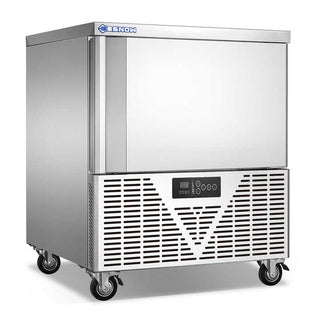
Slow freezing in a storage freezer does the opposite, and you find out at the moment the product thaws in front of a customer. This is the single piece of equipment that separates a patisserie that can plan from one that improvises daily.
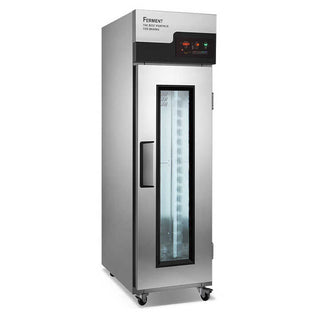
The retarder-proofer is the second. Laminated dough — croissant, pain au chocolat, anything with butter layers — is made a day ahead and held cold, then brought up to proof on a timer so it is ready when the oven is. It turns a 3 a.m. start into a 6 a.m. one, which over a year is the difference between keeping staff and replacing them.
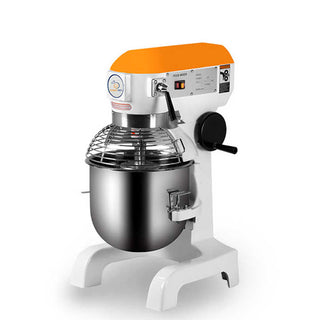
The mixer is third, and it is the piece people under-buy most consistently. Pastry work runs from meringue at high speed to heavy dough at low, and a machine sized to the average batch stalls on the largest one. Planetary mixers step in capacity for a reason — buy the size your biggest recurring batch needs, not the one your average does.
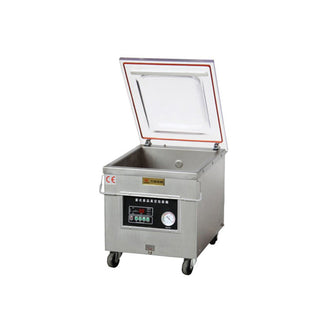
Vacuum packing is fourth and least glamorous. Sealed components freeze without burn, defrost cleanly and carry a date on the bag, which is the mundane detail that keeps stock rotation honest.
The oven is smaller than you think
A patisserie oven does less work than a bakery oven and does it more precisely. Volume is not the constraint; evenness and control are.
A convection oven with steam injection handles the range a pastry kitchen actually needs — viennoiserie in the morning, tart shells and sponges through the day, meringue at low temperature for hours. The fan is what makes it viable, because a full rack of tart shells has to color identically or the counter looks wrong.
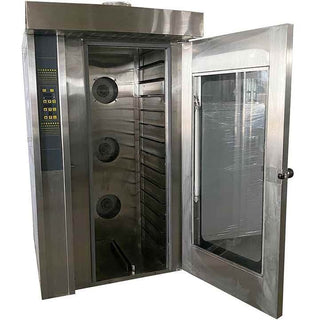
What matters more than the model is where it sits. An oven radiates, and a pastry kitchen is a cold room with a hot box in it: put the oven next to the chocolate bench and you will spend the summer fighting your own tempering. The full ovens range covers convection and deck builds if you are comparing.
Deck ovens enter the picture only if bread is a real part of the offer. They hold and radiate heat from a stone base, which is what a hearth loaf needs and what a mousse cake never will.
Why the display case is a patisserie's real shopfront
In most food businesses the display is presentation. In a patisserie it is the product's habitat for the whole trading day, and it decides whether what you made at six still looks worth its price at four.
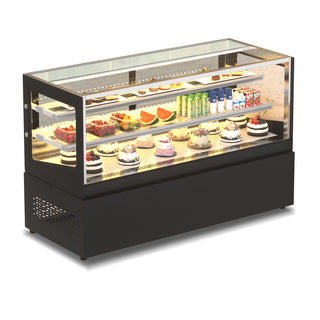
Three things separate a good case from a bad one. Temperature stability around +2 to +4 °C, so glaze does not sweat and cream does not soften. Humidity control, because dry air cracks glaze and macaron shells while wet air makes pastry limp — this is why serve-over patisserie cases cost more than sandwich cabinets that look similar. And lighting that shows color without heating the shelf, which rules out anything running warm at close range.
Size it to a day's production plus a quarter. A case that is full at nine and bare at two tells customers they arrived too late; a case that is still full at closing tells them the pastry is old, whether or not it is. Our guide to commercial refrigeration covers the difference between display cold and storage cold in more detail — and why using one as the other goes wrong.
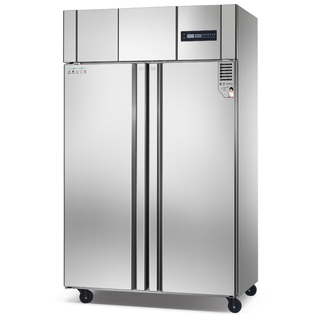
Behind the case, storage cold does the unglamorous half. Components, butter, cream, fruit and dough all need reach-in space, and pastry is the section that most often needs a little frozen and a little chilled in the same footprint.
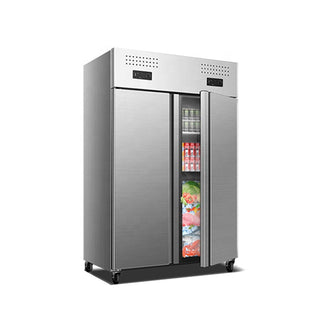
For a kitchen producing at any scale, a full reach-in earns its place beside it.
How to open a patisserie in a small unit
Most patisseries are smaller than the equipment list suggests, and they work because the kitchen is organized by temperature rather than by task.
The cold corner holds the fridges, the freezer, the blast cabinet and the chocolate bench. The hot corner holds the oven and the proofer. The wet corner holds sinks and the dishwasher. Crossing between them constantly is what makes a small pastry kitchen unbearable, so the layout question is simply: how many times a day does someone walk from the mixer to the fridge?
Assembly and finishing want a bench away from both extremes and away from the door. Glazing at 35 °C in a draught is a losing fight, and mirror glaze is the least forgiving thing a small kitchen does.
Then there is the front. A patisserie can trade as a pure counter — no seats, no coffee — and many of the best ones do. Adding seating and coffee turns it into a café with a pastry kitchen attached, which is a different staffing model and a different licence conversation. Our guide to opening a coffee shop covers that side if the plan is both, and opening a bakery covers the oven-led half of the trade that a patisserie deliberately leaves out.
How wide should the range be?
Narrower than instinct suggests. Every additional line in a patisserie is not one more product — it is one more component chain, with its own shelf life, its own place in the fridge and its own waste line at close.
A useful discipline: count components rather than products. Six products built from nine shared components is a manageable kitchen. Six products built from twenty-two components is a kitchen that will be behind by Thursday, and the customer cannot see the difference between the two.
The commercial argument points the same way. A short range sells out, and selling out is what makes a counter feel worth queuing for. It also fixes the waste problem structurally rather than by discounting at four in the afternoon, which trains customers to arrive late and pay less.
Where range does pay is in seasonality. Rotating three products a season keeps regulars returning without permanently widening the component list, and it gives the kitchen something to photograph. That is a different thing from carrying forty lines because a competitor does.
One more consideration that catches people: wholesale. Supplying two cafés looks like free revenue on top of the counter, and it changes the production plan completely — fixed volumes on fixed days, delivery in the morning, and packaging that survives a journey. It works, but decide it deliberately rather than accepting the first order that walks in.
What does it cost to open a patisserie?
Three lines carry most of the budget, and they are not the three people expect.
The refrigeration package is first — display case, reach-in cold, freezer and the blast cabinet together usually outweigh everything else in the kitchen. This is the line to protect, because every one of those pieces is holding product that has already cost you labor.
The fit-out is second and it is the one that varies wildly. A unit that was previously a food business already has drainage, extraction, power and a grease trap; a retail shell has none of them, and installing them costs more than the equipment that connects to them. The cheapest patisserie to open is almost always the one taking over from another food business, and it is worth paying more rent for that.
Labor is third and it is a running cost that behaves like a capital one. A pastry chef is a skilled hire, and the production plan you choose decides how many you need — which loops straight back to the freezing question. A kitchen that can produce ahead runs on fewer people at saner hours than one that makes everything fresh each morning.
The oven, the mixer and the small equipment together are a smaller share than most first budgets assume. Each product card carries its live price if you want to build a specific list. The café and patisserie range covers the counter side, and blast chillers the production side.
One more line that behaves like a hidden cost: packaging. A patisserie sells fragile product that has to leave the shop intact, and boxes, inserts, ribbon and bags are a recurring spend that first budgets rarely carry. It is also the piece of the experience the customer photographs at home, so it is worth designing rather than defaulting to whatever the wholesaler stocks.
And plan for the first quiet January. Pastry trade is seasonal almost everywhere — Christmas and spring holidays carry the year, and the weeks after them are thin. Opening with enough working capital to survive one slow quarter is a more useful safeguard than any equipment upgrade.
Allergen labelling, step by step
A patisserie handles nuts, egg, dairy, gluten and soy — usually all of them, often in the same room. That makes allergen control the compliance area where pastry differs most from other food retail, and it is the one worth building as a routine rather than a document.
- Write the recipe down before you sell it. Allergen information has to come from a specification, not from memory. Anything sold without a written recipe cannot be labelled accurately.
- Record what each supplier ingredient contains. Chocolate couverture, nut pastes and even glucose can carry "may contain" statements that pass straight through to your product.
- Decide what is prepacked and what is not. The rules differ. In the UK, food prepacked for direct sale carries a full ingredient list with allergens emphasized under Natasha's Law; loose product sold from a counter can give the information another way, but it still has to be given.
- Label the case, not just the box. A customer choosing at the counter needs the information before they choose, which usually means ticket labels or a clearly signposted folder.
- Control cross-contact physically. Separate boards, separate piping bags and a nut-free order of work matter more than a disclaimer, and inspectors look at the workflow rather than the wording.
- Train everyone who serves. The person on the counter answers the question, and "I think it's fine" is the answer that ends up in a news story.
Around that sit the ordinary approvals. In France — where pâtissier is a protected artisanal trade — registration usually runs through the Chambre de Métiers et de l'Artisanat alongside the food-business declaration and an HACCP plan, and the artisan and "fait maison" designations carry rules about what your signage may claim. In the United Kingdom, register with the local council at least 28 days before opening; registration is free, an Environmental Health inspection follows, and cream-based products put your cold-chain records under real scrutiny. In the United States, expect a health department permit, manager-level food-safety certification and a certificate of occupancy — and note that cottage-food rules allowing home baking generally do not cover a cream-based storefront. In Australia, notify the local council, appoint a Food Safety Supervisor where your state requires one, and expect close attention to temperature records under the Food Standards Code.
Treat that as an overview rather than legal advice, and confirm the detail with your local authority — requirements and timelines differ by council, state and country.
What the instinct says, and what the fridge says
| The instinct | What actually happens |
|---|---|
| Spend the budget on the oven | The oven runs two hours a day; the cold runs twenty-four, and the cold is what holds the product |
| Buy a storage freezer instead of a blast cabinet | Slow freezing wrecks texture, and the customer finds out at the moment of thaw |
| Get the display case that fits the budget | An unstable case sweats glaze by lunchtime and the counter looks tired at its busiest hour |
| Make everything fresh every morning | A 3 a.m. start you cannot staff twice — freezing components is the reason small patisseries survive |
| Add coffee and seats to lift revenue | A different business with different licensing, staffing and cleaning; decide it deliberately, not gradually |
| Widen the range to attract more customers | Each extra line is another component chain, another shelf life and another line of waste |
If you are starting from nothing, buy the blast cabinet and the display case first, keep the range short enough that every product sells out, and let the oven be the least interesting purchase in the room.
Working out how much cold your production plan needs? Tell us your range, your daily counter volume and how far ahead you want to work, and we will spec the chilling, freezing and display together.


