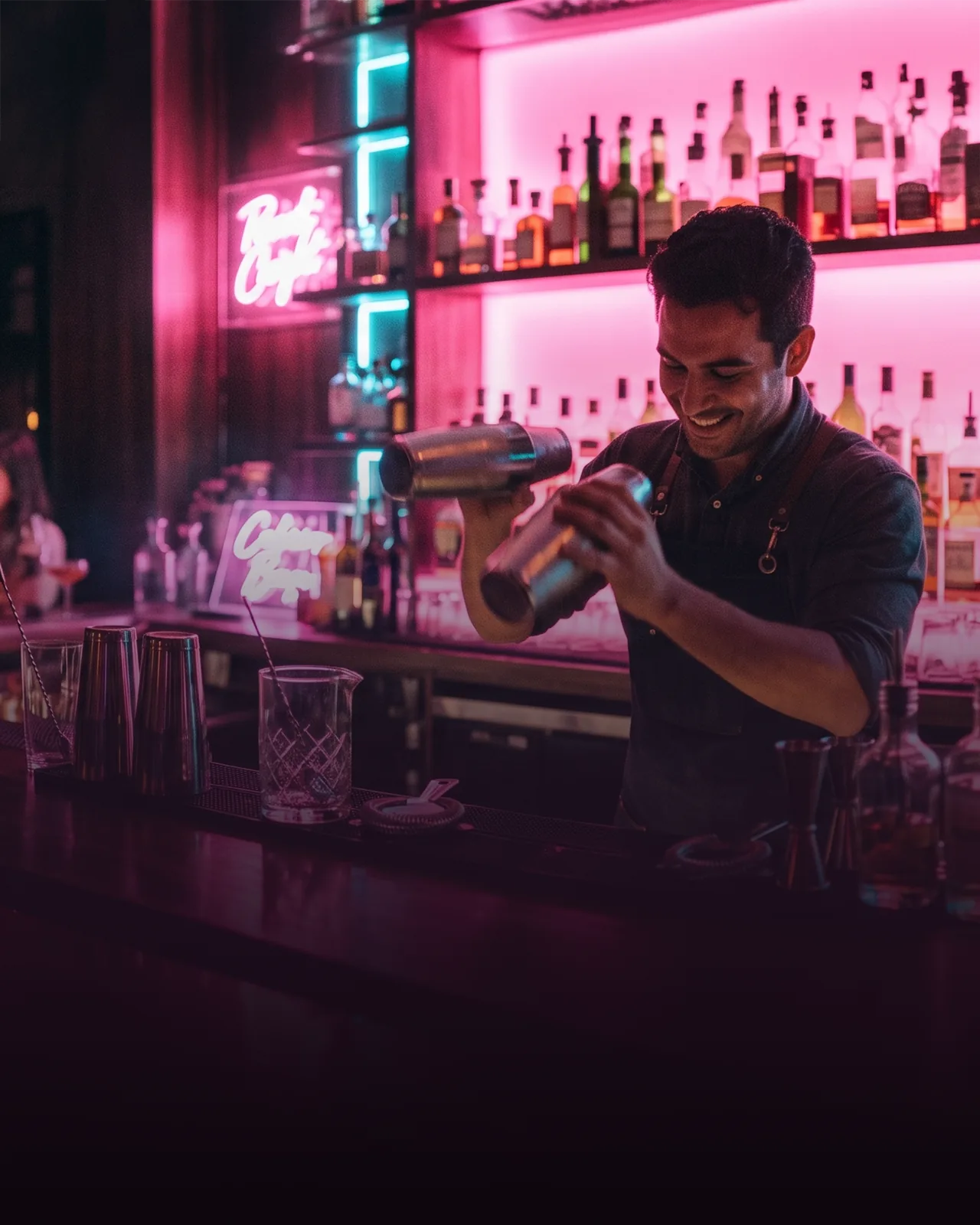


Working out how to open a lounge bar starts with dwell time. Guests who stay three hours order a third round only if drinks reach the sofa without a wait, the music leaves room to talk, and the light is low but still readable.
Picture a group of four on a corner sofa at 9:40pm. They arrived at eight, they are halfway through a second round, and the next ten minutes decide whether they order a third or ask for the check. The cocktail list has little to do with it. What matters is whether a server walks past at the right moment and whether they can still hear each other.
That is the working problem behind how to open a lounge bar. A cocktail bar sells the drink and a club sells the night, while a lounge sells the time in between. Revenue arrives in rounds, and the number of rounds a table orders is set by how long it stays and how easy the room makes it to order again. Everything in the build either lengthens that stay or shortens it.
Why does the third drink decide a lounge bar's numbers?
Because the first two rounds are the ones every bar gets, and the third is the one a lounge is designed to earn. A guest who drinks at roughly one glass per forty-five minutes and leaves after ninety minutes buys two. The same guest staying two and a half hours buys three or four from the same seat, under the same rent.
That extra round costs the venue very little, since the seat and the server were already paid for. So a lounge that raises average dwell time by an hour is growing its sales on a nearly fixed cost base, and that growth is what the format is built on.
The flip side is that a lounge turns tables slowly by design. On a busy night you cannot make up for a short stay with a second sitting, because the room never really turns. If guests leave after two rounds, the lounge takes the revenue of an ordinary bar while paying for sofas and table service. So the details below are about keeping people seated and making reordering effortless, rather than about pouring faster.
Table service is the product, so plan its route
In a lounge the guest rarely walks to the bar, so every drink travels to them. That makes the path between the bar and the farthest sofa the most important line on the floor plan, and it should be drawn before the furniture is chosen.
Map a round trip. A server takes the order at the table, sends it to the bar, waits at a pickup point, carries a tray across the room and clears the empties on the way back. Each step has a place in the room. If the order has to be walked to a till, the server leaves the floor. If the pickup point is in the middle of the bar rail, the server queues behind standing guests. If the glass drop is on the far side of the bar, clearing blocks the bartender.
Handheld ordering removes the first detour. A terminal the server carries sends the order straight to the bar printer or screen and takes payment at the table, so a group can split the check without anyone standing at a counter. In a room where people stay for hours, that saves more trips than it would at a busy rail.
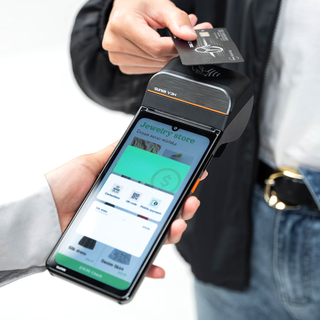
The terminal runs Android 13 with a 6.75-inch screen, a 3,100 mAh battery and a built-in thermal printer, so the check can be printed at the table. The wider range of POS systems covers the fixed station behind the bar that the handhelds report to.
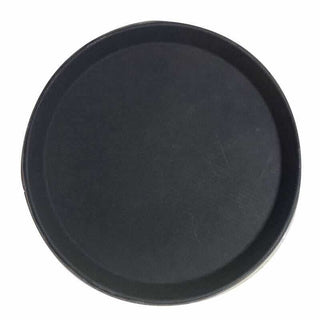
Trays are the other half of the route. Anti-slip trays let a server carry a full round of stemware between low tables without a spill, and they are bought in quantity because they disappear into the dish area on a busy night.
Seats, servers and stations at 40, 80 and 150 covers
The size of the room changes the service model more than it changes the drinks list. The table below is a planning sketch for a lounge running full table service on a busy night; your own numbers depend on the menu, the floor shape and how many guests stand.
| Seats | Floor staff | Behind the bar | Service stations | Sound zones | Ice planning |
|---|---|---|---|---|---|
| 40 | 2 servers | 1 bartender | 1 pickup point at the end of the bar | 1, with a separate level for the bar | One cube machine in the 80–120 kg/day class covers most nights |
| 80 | 3–4 servers | 2 bartenders, one dedicated to service tickets | 1 service well with its own ice and garnish | 2–3 (bar, main floor, booths) | Upper end of that class, or a second machine for backup |
| 150 | 6–8 servers plus a runner | 3 bartenders on two stations | 2 service wells, one per side of the room | 3–4, plus a separate feed for any private area | A larger machine with a storage bin, and a second one for resilience |
The jump from 40 to 80 seats is where a dedicated service bartender appears, because one person cannot make drinks for both the rail and a full floor without one side waiting. And at 150 the room splits in two. With one bar at one end the far tables wait for every round, so large lounges add a second station or put the bar mid-floor.
Capacity also has a licensing edge. In New South Wales the Small Bar licence covers venues up to 120 patrons, so an 80-seat lounge with standing room fits comfortably under it while a 150-seat room does not. Check the local threshold before fixing the seat count.
How loud should a lounge bar be?
Quiet enough that a table of four can talk without leaning in. As a working rule, if guests at the same table have to raise their voices, the music is too loud for a lounge, whatever the playlist.
Loud rooms get louder on their own, because guests speak up over the music and the operator turns the music up again to stay above them. The result is a room that feels busy for an hour and exhausting after two, which is exactly the wrong curve for a format that earns in the third hour.
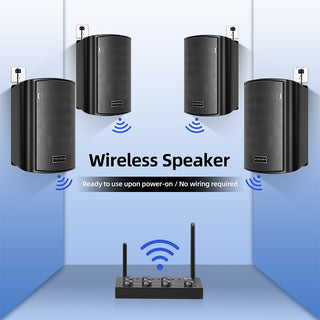
The fix is distribution rather than power. Many small speakers at a low level spread sound evenly, so the music sits under conversation at every table and no seat is next to a loud box. A wall-mounted background speaker with a 6.5-inch driver and 50 W output is sized for exactly this job, and several on separate zones let you keep the booths quieter than the area around the bar.
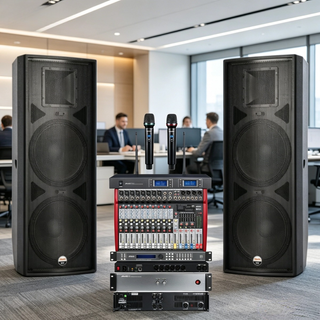
A full PA belongs in a lounge only if it hosts DJ nights, live sets or private events with speeches. An all-in-one system that pairs 15-inch speakers with its own mixer and a wireless microphone covers those nights and stays off on ordinary evenings.
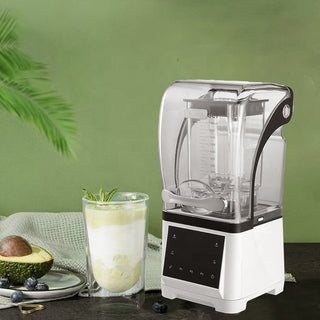
The loudest thing in many lounges is not the music at all but the blender. A frozen drink blended on an open bar cuts across every conversation within reach. A blender with a sound enclosure keeps that noise inside the hood; this 2.2 kW model has a 1.8-liter jar and a closing sound cover.
Soft surfaces do the rest. Upholstered seating and heavy curtains absorb the reflections that make a hard-walled room ring, and acoustic panels deal with a hard ceiling. The sound systems range covers the speakers; the absorption has to be designed into the fit-out.
Light that holds people in their seats
Lounge lighting has two jobs that pull against each other. It has to be dim enough that the room feels intimate after dark, and bright enough at each table that guests can read the menu, see their drinks and see each other's faces.
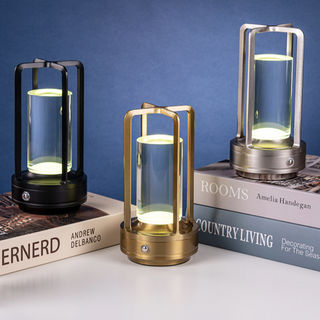
The answer is local light rather than overhead light. A lamp on every table lights the faces at that table and very little else, so the room reads as dark while each group sits in its own pool. Cordless rechargeable lamps make this practical, because there is no cable to run across a floor that gets rearranged for private hire. This one gives 240 lumens at 3500K with a color rendering index of 90 and dims by touch.
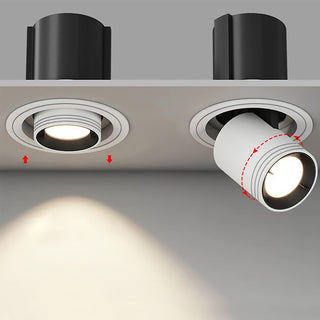
Accent light picks out what you want seen, like the back bar, artwork or a feature wall. Anti-glare track spotlights such as this 30 W unit, with a 24° or 36° beam and CRI 90, put light on a surface without shining into guests' eyes. Note that this model is listed as non-dimmable, so put it on its own circuit and control the level with how many heads you switch on.
Plan at least two lighting scenes, one for early evening and one for late, and move between them gradually. Our piece on the lighting mistake that makes guests leave covers why a room that is too bright or too dark shortens the stay. The commercial lighting and decorative lamps ranges cover both layers.
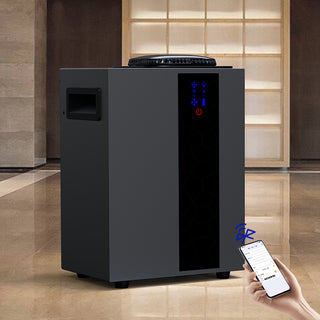
Scent is the quietest layer. A diffuser connected to the ventilation spreads a low, consistent fragrance, which covers the smell of a busy bar and gives the room a character guests remember. This app-controlled model covers up to 4,000 m³ with a cold-air atomizer rated under 38 dBA, so it adds nothing to the noise level.
A bar built around service stations
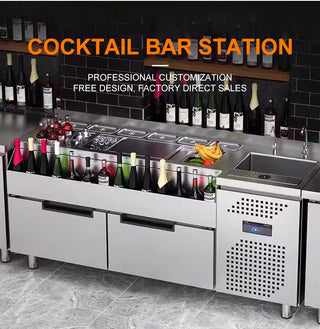
A lounge bar mostly serves servers. Guests at the rail are a minority of the drinks, so the bar should be laid out around the points where orders arrive and trays leave, with the rail as a secondary concern.
The core of that layout is the service well, a station at the end of the bar where a bartender works through tickets with ice and garnish at hand and the house spirits in the speed rail. Servers collect from a marked pickup spot beside it and never cross into the bartender's space. A refrigerated underbar unit is the usual base for it, with cold storage for mixers and juices under the work surface.
Ice volume follows the number of drinks, and a lounge uses more of it than its pace suggests. Slow-sipped drinks get refreshed, cocktails are shaken and strained over fresh ice, and a room that stays late keeps drawing on the bin long after a fast bar would have closed its rush. This air-cooled cube machine is rated at 80, 100 or 120 kg per day depending on the configuration.
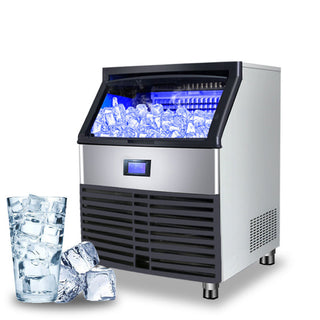
Our guide on how to choose a commercial ice machine works through daily output and bin storage for larger rooms.
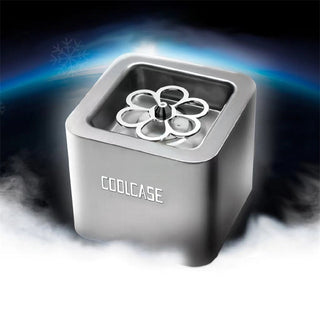
A chilled glass matters more here than in a fast bar, because the drink sits on a low table for half an hour. A CO2 froster at the service well chills a glass in seconds and handles around ten a minute, which keeps pace with a busy round.
For signature drinks that sell in volume, an automatic cocktail machine takes some of the repetitive building off the bartender. The 8- or 13-bottle model dispenses 150–180 ml in about ten seconds, but it has no cooling of its own, so bottles need to be pre-chilled. It suits a short house list that sells heavily on weekends.
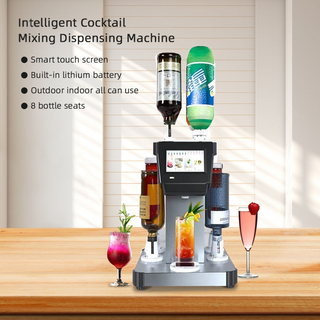
The full cocktail stations and underbar range covers speed rails and refrigerated bases. If the drinks program is the main draw, our guide on how to open a cocktail bar goes deeper into the station itself.
Seating that holds a table for three hours
Lounge seating has to stay comfortable at hour three, stand up to daily hospitality use and let a server reach every table. Domestic sofas fail the second test within a season, because their frames and foam are not built for ten hours of use a day.
Booths and banquettes do most of the work. They define zones, give groups a sense of their own space and can be built to the exact shape of the room, including awkward corners that loose furniture wastes. This commercial booth seating uses a solid wood frame with high-density foam and is made to order to the shape of the room.

Around them, armchairs at small tables suit couples, and a few bar seats serve solo guests who want to talk to the bartender. The booth seating and tables and chairs ranges cover the main types.
Very low coffee tables look relaxed but make guests lean down for drinks and servers crouch to set them down. A table closer to seat height keeps drinks within reach and makes service faster, which quietly shortens the gap between rounds.
If the room also works as a members-only space or a hotel lounge, our guide on how to open a private members club covers the membership model built on the same idea of guests who stay.
Where the budget goes in a room built for sitting
A lounge spends differently from a standard bar. A smaller share goes to high-output drinks equipment and a larger share goes to what guests sit in and look at, because that is what keeps them there.
Seating and the fit-out around it are usually the largest single spend, since commercial upholstery is made to order and the room is full of it. Sound and lighting come next, and they are cheaper to install correctly during the fit-out than to retrofit, because cabling and circuits sit inside walls and ceilings.
The bar itself is a moderate spend. The ice machine and the service well are essentials, as are a froster and a quiet blender; an automatic cocktail machine is optional and pays only for a high-volume house list. Handheld terminals and trays cost little and pay back in faster reordering.
Current prices sit on each product card above. Rent and licensing are separate lines and vary much more by city than the equipment does.
Licensing requirements in the UAE, UK, US and Australia
A lounge bar is licensed like any other on-premises alcohol venue, and in every market the alcohol license is the step with the longest lead time. Lounge bars are common in the markets below, which also show how differently the same format is regulated.
| Market | Alcohol license | People and training | Premises and food | Watch for in a lounge |
|---|---|---|---|---|
| UAE | Dubai: Dubai Police GHQ with the Department of Economy and Tourism (DET). Abu Dhabi: Department of Culture and Tourism (DCT). Service is generally confined to hotels and licensed venues. | Health cards for food handlers; SIRA licenses for security staff | Trade license with F&B activity and eligible zoning; Dubai Municipality inspections and Civil Defence clearance | Minimum-distance rules from mosques, schools and religious sites; DJ nights or shows need a DET entertainment permit covering show type, hours and sound |
| United Kingdom | Premises Licence from the local council | Personal Licence for the Designated Premises Supervisor (APLH Level 2 plus a basic DBS check) | Food business registration at least 28 days before opening; Food Hygiene Rating inspection; fire risk assessment | Late hours and regulated entertainment sit in the Premises Licence operating schedule; recorded music needs TheMusicLicence from PPL PRS |
| United States | State liquor license through the ABC board, often with county sign-off; federal TTB registration | Food-handler or ServSafe certification | Business license and EIN; health department permit; certificate of occupancy | The slowest step, sometimes quota-capped; many cities need a separate entertainment or cabaret permit for amplified music; ASCAP, BMI and SESAC licenses for music |
| Australia | On-premises liquor licence from the state or territory regulator; NSW Small Bar licence up to 120 patrons | RSA card for every person serving alcohol (in NSW, renewed through an online refresher course) | Council premises approval and food business notification; fire safety statement | Seat count against the Small Bar threshold; OneMusic Australia license for recorded music |
Treat this table as an overview rather than legal advice, and confirm current requirements with the local authority, because the documents and timelines change from one council or emirate to the next. Start the alcohol application before the fit-out, since it is usually what decides the opening date.
Where lounges lose the third round
- Servers who cannot see their section. If a server has to walk away to check on half their tables, finished glasses sit untouched. Keep sections small and visible from one standing spot.
- Orders walked to a till. Every trip to a fixed terminal takes a server off the floor. Handheld ordering keeps them in the room where the next order is.
- Music that climbs through the night. A room that starts at conversation level and ends at shouting level empties early. Set a ceiling for each zone and hold it.
- An open blender beside the seating. One frozen drink can interrupt every table near the bar. Use a sound enclosure or move blending out of earshot.
- Overhead light only. A room lit from the ceiling is either too bright to relax in or too dark to read the menu. Put light on the tables.
- Pickup in the middle of the rail. Servers queuing behind standing guests slow every round. Give them a marked station at the end of the bar.
- Coffee tables too low to serve. Guests stop reaching for drinks they cannot reach, and servers slow down at every table.
Planning the wider build as well? Our guide on how to open a bar covers the full bar fit-out zone by zone, for formats where the rail matters more than the sofa.
Planning a room where people stay all evening? Send us the seat count, the floor plan and how you want service to run, and we will match the service stations, and the sound and lighting, to the way your room works.


